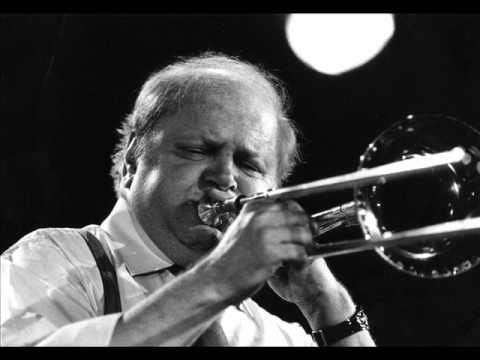
Nick Lowe, Bruce Springsteen, Lucinda Williams : (What’s So Funny ‘Bout) Peace, Love and Understanding?

A true message always gets through.

Sometimes it just takes a while.

Over 40 years a Song can, starting out as an unremarked track on a little regarded album from a little known Band, become a veritable anthem recorded hundreds of times and exalted in concert by the great and the good from The Boss to Bill Murray to Mavis Staples.

My own relationship with today’s featured Song began many decades ago in my teenage gig going years.

Loyal readers of The Jukebox will know that I have made a series of House moves in the last few years before settling happily here in our South Downs hideaway.

One of the ‘finds’ of the moving process was a notebook with the title, ‘Gig Diary 1970 – 1975’ emblazoned in red ink on the cover.

Leafing through this historically important artefact I see that in that period I saw Nick Lowe with his then Band, Brinsley Schwarz, on stage at The Marquee, The Roundhouse, The Lyceum, The Hope & Anchor, The Torrington and The Edmonton Sundown among many other venues.

Embed from Getty Images

I was, of course, also buying their Albums as soon as they came out and looking at the sleeve of, ‘The New Favourites of … Brinsley Schwarz’ from 1974 I see 2 large red asterisks next to track 1, ‘ (What’s So Funny ‘Bout) Peace, Love & Understanding’.

I should tell you that the double asterisk was a very rare accolade indeed!

From the very first time I heard it I knew that this was a breakthrough Song for Nick Lowe –  a Song that would get up and walk away by itself into History.

A Song I have sung along with scores of times during Nick Lowe concerts and many hundreds of times at home through all the stages of my life.

Sometimes when the world did indeed seem a wicked place and this Song quickened my search for the light to counter the darkness all around.

‘ ….. There’s one thing I want to know:

What’s so funny ’bout peace love & understanding?

Ohhhh ….
What’s so funny ’bout peace love & understanding’


Nick Lowe has said that this Song represented his first truly original idea as a songwriter and that having had that idea he realised that his task was then not to mess up the song by trying to be too clever – let the song flow naturally.

Brinsley himself on masterful rhythm guitar, Ian Gomm on chiming hats off to Roger McGuinn Guitar (and heavenly vocal harmony arrangement).

Bob Andrews on hats off to Garth Hudson keyboards with Billy Rankin on martial drums,

Together with Nick on Bass they hit a dead bullseye.

I remember walking back to the tube station in the rain after the first time I heard this song all the while serenading bemused passers by with:

‘ … Is all hope lost?
Is there only pain and hatred, and misery?
And each time I feel like this inside,
There’s one thing I want to know:

What’s so funny ’bout peace love & understanding? Ohhhh
What’s so funny ’bout peace love & understanding?’

That’ll do as a definition of an Anthem for me!

Image result for brinsley schwarz group 1974 images

Once a true Song arrives it begins to find its audience.

In Liverpool in the early 70s when Brinsley Schwarz played their gigs an intense young man with a burning desire to get his songs heard was always at hand  – Elvis Costello (then Declan McManus).

In Nick Lowe he found an established songwriter who was willing to take the time to listen and provide encouragement to an unknown novice.

So, in 1978 as Elvis’ career began to gain momentum, he turned to an old favourite written by his Producer, Nick Lowe.

The result was a call to arms, flamethrower version, that launched Nick’s great song into the American market and the consciousness of American songwriters and singers.

Elvis, characteristically, located the anger within the song accompanying the philosophical musing of the Brinsley’s original.

No one can ignore this take on the Song!

In a sense sending a song out to the world is like throwing a message in a bottle into the ocean – the tides and currents take over and you never know where it will end up.

Remarkably, in 1992, Nick’s Song ended up as part of the soundtrack of the film, ‘The Bodyguard’ featuring Whitney Houston and Kevin Costner.

Everyone will remember Whitney’s Diva take on Dolly Parton’s, ‘I Will Always love You’ many fewer will have noted the presence of, ‘What’s So Funny ..’ sung by Curtis Stigers.

For Nick the bonanza was that the soundtrack LP sold an astonishing 44 Million copies transforming his bank balance at a stroke!

He must have reflected as the royalty cheques steamed in that his decision a decade earlier (prompted by manager Jake Rivera) to buy sole rights to his publishing was a very wise move indeed.

Among the song writing community picking up on the mysterious power of the song was Lucinda Williams.

For walk on, walk on, though you’re bruised and battered, just makes me want to cry, heart on the sleeve directness you just can’t beat Lucinda!

Now, if you want to be uplifted, to take heart as you ponder the trials and struggles ahead there can be no better source of inspiration than Mavis Staples.

Mavis’ voice with its inherent power makes you want to fight the good fight whatever the odds and however bleak the outlook.

With virtuoso guitarist Robben Ford she makes real the Song’s call for harmony – sweet harmony.

Hope will never slip away while Mavis is around!


Did someone say Anthem?

It is a truth universally acknowledged in the music world that if there’s an anthem to be sung, a rallying cry to be roared out, that Bruce Springsteen is going to be on hand to do just that.

It’s particularly pleasing to me to see him trading vocal lines and guitar licks with the great John Fogarty here.

Hard to be down hearted when this version gets cranked up!


Nick Lowe never concludes a concert without playing, ‘What’s So Funny …’ so its been a difficult task to choose the clip to showcase how he plays his masterpiece in his maturity.

But, I kept coming back to the Lion in Winter version where he is accompanied by fellow Brits Paul Carrack and Andy Fairweather Low.

There is wisdom and grace here aplenty.

Straight to the heart.

Straight to the heart.

What’s so funny ’bout peace love & understanding? Ohhhh
What’s so funny ’bout peace love & understanding?

Few thing in life are certain.

Yet, one thing I can tell you – the next time Nick Lowe comes to town I’m gonna be in the front row and ready to sing with all the spirit I can muster:

As I walk through
This wicked world
Searchin’ for light in the darkness of insanity.
I ask myself

Is all hope lost?
Is there only pain and hatred, and misery?
And each time I feel like this inside,
There’s one thing I want to know:

What’s so funny ’bout peace love & understanding? Ohhhh
What’s so funny ’bout peace love & understanding?
And as I walked on
Through troubled times

My spirit gets so downhearted sometimes
So where are the strong
And who are the trusted?
And where is the harmony?

Sweet harmony.
‘Cause each time I feel it slippin’ away, just makes me want to cry.
What’s so funny ’bout peace love & understanding? Ohhhh
What’s so funny ’bout peace love & understanding?

So where are the strong?
And who are the trusted?
And where is the harmony?
Sweet harmony.

‘Cause each time I feel it slippin’ away, just makes me want to cry.
What’s so funny ’bout peace love & understanding? Ohhhh
What’s so funny ’bout peace love & understanding?

And then I’m gonna shake Nick’s hand and say Thank You.
 

Jukebox Jive with : Mark Bedford of Madness (Our House, My Girl)

I am delighted today to feature Mark Bedford, the Bass Player for Madness, in the ‘Jukebox Jive With … ‘ series.

It was a pleasure to converse with such a patient, thoughtful and generous interviewee. I would award Mark the high Jukebox accolade of RGB (Right Good Bloke) which in my estimation far outranks the OBE and such beribboned gongs handed out by the Queen!

Embed from Getty Images

It is no exaggeration to say that Madness, now with a 40 year history as a Band with some time outs for rest, recuperation and diversions, have become fixtures in the imaginations and memories of the entire British Nation.

It’s not simply a matter of the 15 top ten hits in the UK and the ubiquity of their albums in homes all over the world.

It’s the way their presence through the folk like memorability of their songs,  the quirkily brilliant videos and carnivalesque live appearances has made them seem like part of more than one generations extended family.

In a real sense many of us have grown up with Madness with them sound tracking the joys and terrors of ageing.

Their role as, ‘National Treasures’ has been officially certified by their performances at such red letter day occasions as the Queen’s Diamond Jubilee Concert at Buckingham Palace, the closing ceremony of the London Olympics and the farewell celebrations to mark the last day of programming from the original BBC Television Centre.

What has impressed me most about them is their creative energy – their ability to continually grow as musicians, songwriters and performers.

They have emphatically not fallen into the trap, which has captured many veteran bands, of becoming witting or unwitting cartoon versions of their former selves.

Madness today are still properly restless and minded to surprise themselves and their audience with new material and the vigour with which they present their gem filled catalogue.

And what a catalogue!

Starting out as devotees of Ska and Rock Steady from Jamaica they expanded their tonal palette to include Music Hall exuberance, downbeat drama documentaries, lyrical and lovelorn romantic ballads, risqué end of the pier jollity, sharp situation comedies (a la Clement and le Frenais), surreal pantomime and state of the nation proclamations.

Oh, and you can sing along and dance to all of them!

On the very rare occasions when I can be persuaded to attempt karaoke (usually fuelled by too much Tequila) I always chose a Madness song – invariably, ‘Our House’ because I can be certain that as soon as I launch into:

‘Father wears his Sunday best, Mother’s tired she needs a rest ..’

my own reedy warbling will instantly become a full throated choir singing;

‘The kids are playing up downstairs, Sister’s sighing in her sleep,

Brother’s got a date to keep, he can’t hang round …

then the roof’s durability is tested as the whole ensemble (including the moody ones who never sing) roars out:

‘Our house in the middle of our street

Our house in the middle of …’

Our House has instant memorability yet repays repeated listening to savour the superb song craft and the layers of feeling embedded in the lyric, melody and performance.

We can all recognise this family – the nuances of the relationships and the truth that comfortable familiarity and subdued foreboding can coexist.

Naturally Mark has insights into Madness in all their dimensions denied to the outside observer. So, it as a genuine privilege to prompt his  thoughts in our interview.

IJ – Was there a musician who inspired you to want to be a musician yourself?

MB-

Well, indirectly, it was Ian Hunter of Mott the Hoople.

Embed from Getty Images


I had seen them on Top of the Pops. I liked their songs and I liked the way he sang – ’And you look like a star but you’re still on the dole’, from, ‘All the way from Memphis’ was really intriguing.

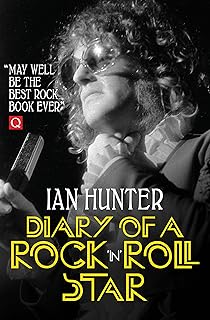
I found out he had a book out so I went to Compendium Books in Camden Town and bought ‘Diary of A Rock ’n’ Roll Star’.

Image result for diary of a rock n roll star cover images


I read it and thought this is what I want to do. Unfortunately I was only 14, so I practised the bass and had to wait for a couple of years.

As far as playing Bass goes I, like everyone, adored Motown’s James Jamerson.

David Hayes, long time Bass Player with Van Morrison was an important influence.

Image result for david hayes bass player images

On the UK scene when I was starting out I took note of the playing of Bruce Thomas with Elvis Costello and Norman Watt Roy with Ian Dury.

The drummer Kieran O’Connor and pianist Diz Watson also taught me a lot.

Reflecting on my career as a musician I’ve come to realise how important it is to be generous to other musicians and how such generosity benefits all concerned.

IJ – What was the first record you just couldn’t stop playing?

MB

Technically, ‘Dark Side of the Moon’.

Given my age I straddled Punk, so there were key records pre and post.

At school I listened to Steely Dan, Neil Young (‘After the Goldrush’ is still one of my favourite records) and Little Feat.

Once Punk erupted I was a massive Clash fan and listened to a lot more reggae. 

I also couldn’t stop playing Elvis Costello’s first album.

IJ – Was there a radio station/radio show/live venue that was important in introducing you to the music you love?

MB

My first radio memory: Eating breakfast, before going to school and listening to Tony Blackburn play Motown records on Radio One.

Of course, if you were a music fan listening to John Peel was compulsory.

Things were a bit more lax in the 70s. When we were in our teens, me and a group of friends used to sneak into pubs and listen to music.

At the time it seemed that every pub in North London had a back room with a band playing in it. I soaked up a lot of musical education in the Hope & Anchor, Dingwalls and The Carnarvon Castle.

We widened our repertoire and then started going to the Sunday concerts at The Roundhouse. These were amazing.  

IJ What was the first record you heard by one of your contemporaries that made you think – ‘Wow .. they’ve really got it!’

MB

‘Ghost Town’, The Specials. A giant step forward. We felt this really raised the bar for our generation of bands. It was addictively listenable while putting over a strong political message.


IJ – Looking back over your career which 3 albums are you most pleased with?

MB The first one, ‘One Step Beyond’ because it showed us we could do it.

Going in to the studio to make our debut we were nerveless. We really had the songs down from playing them live so we didn’t go in for any timewasting, ‘noodling’!

Producers Alan Winstanley and Clive Langer made important contributions. Alan was very adept technically and Clive had a musically interesting and empathetic mind. They were an excellent combination.

The second album, ‘Absolutely’ because it was written under such time-pressure but produced some brilliant songs (it is my favourite Madness record).

And, of course, ‘the last one’. (which as of 2018 was ‘Can’t Touch us Now’)

IJ – Similarly which 3 songs are you most pleased with?

MB

These Singles, because they helped us take a step forward: ‘My Girl’, ‘Grey Day’ and ‘One Better Day’. 


My Girl showed the reflective side of Madness.

This is a domestic love song about the kind of real stop/go hesitant love so many of us have experienced.

Mike Barson’s melody owes something to Elvis Costello’s, ‘Watching The Detectives’ though the mood is more discomfited male puzzlement rather than noir threat.

‘I found  it hard to say … she  thought I’d had enough of her …

‘Been on the telephone for  an hour … we hardly said  a word  …

’Why can’t she see she’s lovely to me ….

’Why can’t I explain … why do I feel this pain?

Been there Brother! Been there!


Grey Day though recorded in 1981 was conceived in 1978.

It shows Madness were atuned to a sense of dread that seemed to hang heavily in tne air at that time for a host of economic and political reasons.

It might properly be called a dystopian diorama or Orwellian vision of a society where it’s casualties are treated as though they were invisible.

But, though the central character is made black and bloody he endures.

He endures . He endures.


One Better day was born with Mark running down a chord sequence on guitar. Given the era it was then recorded onto a cassette in Suggs house.

Something about the melody suggested the wistful atmosphere of the song.

Now it’s a rare person who doesn’t feel as if they’ve seen better days.

Yet as the song makes clear even in the most desperate circumstances one better day may be right before us.

If you take the time to look around.

The feeling of arriving when you’ve nothing left to lose.

One better day.

IJ – What was your greatest ever live show?

MB

Madstock, Finsbury Park, 1992. A home coming, a farewell and a rebirth, all at the same time. There wasn’t a dry eye on stage. (The concert reunited the original band for the first time since 1984).

IJ – Nominate one artist who you think is criminally under rated?

MB

Robert Wyatt. From Soft Machine, Matching Mole to his solo stuff – so much of it so beautiful. What a voice.


Mark plays the Bass on this classic recording. It’s probably Elvis Costello’s most poignant lyric perfectly married to Clive Langer’s plangent melody.

There were clearly powerful emotions present in the studio that day – beautifully offered up in Robert Wyatt’s vocal and Mark Bass playing.

One of those records that hangs in the air long after it has finished playing.

Mark told me that he would love to have Madness and Robert collaborate.

I fervently second that proposal.

IJ – Nominate one record (by yourself or anyone else) to take up an honoured place as A 100 on The Immortal Jukebox.

MB –  ‘It’s Too Late To Stop Now’, Van Morrison. Specifically, ‘St Dominic’s Preview’

It’s the record I learnt to play the bass to and still practise to. I know every single note of it. And I have such a close emotional attachment to it.

It’s the manual on how to play together as a band. The interplay between the musicians is fantastic.

And, as a lovely circular story – A couple of months ago I was sent a message, through Mez Clough Van’s current drummer, by David Hayes, the bass player who is on the record.

Speechless. 

Regular readers of The Jukebox will know my reverence for Van. I have written that ‘Too Late to Stop Now’ is the greatest double live album of all time.

I’m delighted Mark seems to agree with me!

Mark is right on the money in referring to the miraculous interplay between the members of The Caledonia Soul Orchestra as they support and inspire their mercurial leader.

St Dominic’s Preview seems to me to a prophetic prayer yoking dreams of youth and the enigmas of maturity.

No sense in trying to force a linear narrative on it.

Surrender, surrender and be uplifted.

Thanks again to Mark for participating in Jukebox Jive.

It seems to me that Mark and all the members of Madness have been fortunate in finding each other and in the chemistry of their combination.

And, fortunately for us they have shared their gifts generously with each other and with us.

Long may they run.

Notes :

The Classic line up of Madness:

Chris Foreman – Guitar

Mike Barson – Keyboards

Lee Thompson – Saxophone

Daniel Woodgate – Drums

Graham ‘Suggs’ McPherson – Lead Vocals

Mark Bedford – Bass

In addition to the albums referred to above I am particularly fond of:

’The Rise & Fall’, ‘The Dangermen Sessions Vol. 1’ and, ‘The Liberty of Norton Folgate’.

Bobby Bare, Arthur Alexander, Tom Jones, Pam Tillis : Detroit City

People leave Home for all kinds of reasons.

As many reasons as there are people.

Running from.

Running To.

In search of safety.

In search of Danger.

Wherever they go, for whatever reason, no one ever forgets the Home they left.

Even, especially, if they can never go back there again.

Except in dreams.

Everyone has those dreams.

Jimmy :

When Daddy got home from the War he was sporting a chest full of medals.

Trouble was now he had only one arm and poison headaches near enough every day.

Makes running a small farm damn near impossible.

Some people say that’s what turned him mean.

Those folks mustn’t have known him before the War.

He’d always been mean as a mean rattlesnake on his meanest day.

Don’t know how Momma put up with him.

Except she’s one of them people who when she makes a promise she means to keep it.

For richer, for poorer, in sickness and in health.

Drunk or sober.

Arms around or fists Flying.

Me, I had to take mean when I was a Kid and I put up with it, for Momma’s sake, when I  could have fought back.

Then, one blue hour of the morning I decided it was time to take a freight train north.

Leave them fields of Cotton far, far, behind.

It’s a long way from Lubbock to Detroit.

Cotton field to Car Factory.

Ford or Packard or Chrysler.

Momma never would leave Daddy or Texas for that matter.

Detroit’s got jobs.

Jobs that pay.

A man can make his way.

Another thing Detriot’s got – Baseball.

The Tigers.

See if Al Kaline is as good as they say.

Don’t doubt they got Jukeboxes I can pump some quarters into.

Surely they got some Hank Williams and some Buddy Holly.

I wrote a letter to Mary Margaret saying I’d send for her when I’d made my fortune.

Shouldn’t be more than a couple of years.

A couple of years.

We will still be young.

Left a note promising Momma I’d write home every week.

That’s a promise I mean to keep.


Henry :

They say working a shift at Ford is hard work.

Well, not if you spent years picking Cotton.

That is work.

Back breaking work in the Sun.

Cotton Fields at dawn and dusk can seem beautiful.

But, when you’re working in them until you drop it’s a cruel beauty.

Oh, sure, we ain’t slaves no more.

Might as well be.

Might as well be.

Stay in line.

Stay in step.

Lower your eyes.

Move aside Boy!

Mississippi Goddam.

Strange fruit hanging from Southern trees.

School children sitting in Jail.

Some say a change is bound to come.

But when?

How many people got to die first?

Not sure if I even hear the murmur of a prayer.

Gonna ride that freight train North.

To Detroit City.

Where a man can get a Man’s job.

Now, I know Detroit ain’t no paradise.

Still have to have be alert, wary.

But, plenty of us up there now.

They call it the great migration.

Add me to the number.

They got Baseball there.

The Tigers.

One of our own Jake Wood on the team.

Like to sit in the bleachers and cheer him Home.

Maybe after the game find a bar with a good Jukebox.

Hit the buttons for Ray Charles and John Lee Hooker.

One scotch, One bourbon, One beer.

Got to leave a lot of family behind.

Promised Momma I’d write and that’s a promise I’ll keep.

Soon as I can I’ll send for Wilma.

If I make enough money and things change down here maybe I’ll come back one day.

Everybody dreams of Home even if living there was a nightmare.

Gareth :

Mining villages are very close knit communities.

Everyone knows you.

And your Mam and your Da and all your brothers and Sisters.

At least they think they know you.

My Granda was a miner.

My Da is a miner.

My Brothers went down the pit too.

But not me.

Passed the scholarship exam to go to Grammar School.

Some people are just naturally good at Sport.

I’m just naturally good at writing essays and passing exams.

i was never going down the pit.

College.

Cardiff.

A new world.

Finding out who you really are.

Getting to know yourself.

Or, admitting something you always knew about who you were – what you were.

He was a sailor from Detroit.

Couldn’t help myself.

Love is Love is Love.

So, I moved to Detroit.

I write Home to Mam and Da and tell them how well I’m doing.

Let slip that I’ve met a very nice girl and maybe …

I can trust them not to read between the lines.

I go to Tiger Stadium to see Baseball.

It’s not the Arms Park but you do get that sense of a crowd becoming a community.

There’s a bar nearby with a good Jukebox.

Don’t think anyone back Home will have heard of Smokey Robinson – but I bet one day they will.

Amazing how often I dream of Home.

Maybe I’ll go back for a visit.

Next year.

Or the year after.

Linda :

When I was 16 I was just filled to bursting with dreams.

And, none of those dreams were about living a quiet life at Home.

No dreams about Cotton fields and calling on kinfolks to see how they’re doing.

No dreams about settling down with the quiet boy who lit up every time he saw me.

No dreams about catching the train South with my heart pounding louder and louder and louder with every turn of the wheels.

No, No, when I was 16 my dreams were about a life filled with colour and fanfares in far away Detroit City.

Detroit, where I would make my own money, in my own way.

Detroit, where people would see me as my own person, not – oh that’s the third Henderson  Sister.

Detroit, where I would find a man who would make every day feel like a holiday.

Nearest I get to a holiday now is when I put Patsy Cline on The Jukebox.

I write home every week.

In my letters life must seem glamorous up here.

I don’t talk about the man, the men, anymore.

I wonder if they can read between the lines?


I want to go home
I want to go home
Oh, how I want to go home

I want to go home
I want to go home
Oh, how I want to go home

I want to go home
I want to go home
Oh, how I want to go home

I want to go home
I want to go home
Oh, how I want to go home.

Notes :

Danny Dill and Mel Tillis wrote the Song.

Bobby Bare’s typically laconic Version from 1963 gave him his first top 10 Country Hit launching a career filled with expertly chosen songs examining the joys and pains of living an everyday life.

Detroit City was Arthur Alexander’s last recording for the Dot Label In 1965.

No one has ever sung with such quiet, affecting passion.

Tom Jones has always had the capacity to give dramatic burnish to a Song and it is cheering that in his autumnal years he is turning more and more to songs that allow him to express that side of his talents.

Pam Tillis has carved out an impressive career of her own. Her reading of her Father’s Song honours them both.

By happenstance I see I have published this post on Pam’s Birthday.

Many happy returns!

Alan Gilzean RIP : Elegance and Flair make for a Football Legend.


There are no heroes like the heroes of your youth.

And, none you miss more when they die.

The image of Alan Gilzean playing for Spurs alongside Jimmy Greaves always floods my mind and heart with sunlight.

To watch him play in his heyday was a rare and true privilege.

Just the mention of his name made you feel that sport and life could be expressed with elegance and style without any loss of effectiveness.

in his honour and with endless thanks I Reblog my earlier tribute to a unique footballer and a very fine man.

May he Rest In Peace.


http://Embed from Getty Images

Elegance as a quality in life, sport and the arts is hard to define but easily recognised. It’s surely something to do with speed of thought, economy of movement, grace under pressure.

The elegant glide to triumphs without overt strain so that we catch our breath and sigh, ‘that’s how to do it!’. And, having seen the elegant work their magic with such panache we queue up to see them do it again so we can exclaim I was there and saw them do it.

Fred Astaire in every dance routine of his career. Lester Young launching into a saxophone soliloquy, Barry Richards caressing the cricket ball to the boundary, Barry John casually wrong footing an entire All Black defence.

P G Woodhouse crafting a perfect inimitable paragraph. Maria Bueno conjuring a Wimbledon winner.

The elegant performer wins your heart and your allegiance to their cause. This is not a matter of statistics, of heaped titles or medals but of indelible memories, stories of famous feats to be retold to your own and the following generations.

My own exemplar of elegance is the one and only Alan Gilzean a footballer whose fabled history at Dundee, Spurs and for Scotland feels more wondrous as each season passes.

At Dundee he scored an incredible 169 goals in just 190 games between 1959 and 1964. He was the glory of the best side they ever had under the tutelage of the great Bill Shankly’s brother, Bob.

With the Dark Blues he won the the league title in 1961/62 and the following year he was the spearhead of their thrilling run to the semi-final of the European Cup where they lost to the eventual winners – the lordly AC Milan.

At the end of 1964 the ever shrewd Bill Nicholson bought him for Spurs where he was to remain until the endof the 73/74 season. The Spurs fans quickly came to adore Gily recognising a player who met their demand for style as well as success.

In no time he was lionised as the King of White Hart Lane – a title he will hold in perpetuity!

The statistics relate that he scored 133 goals for Spurs in 429 games and that he was a member of the sides that won an FA Cup, two League Cups and a EUFA cup.

But, with Alan Gilzean it’s not the numbers that you remember it’s the breathtaking elegance of his play – the way he could amaze you game after game with the subtlety of his footballing imagination.

He insouciantly brought off feats of skill and technique that other fine players could only dream of – leaving opponents admiringly bemused and teammates exhilerated.

Alan Gilzean was to use a fine Scots term a supremely canny player. He seemed to have an advanced football radar system that allowed him to know exactly where he was in relation to his markers and his team mates.

He could compute the trajectory of any pass that came towards him on the ground or in the air and instantly assess whether the ball should be held up or delivered on.

He had exquisite touch on the deck regularly wrong footing defenders before setting up goal chances for himself or one of his strike partners.

His sense of football space and keen eye for opportunity made him one one of the great collaborators.

He forged a legendary striking partnership (the G men!) with the peerless Jimmy Greaves who profited greatly from Gilzean’s vision.

No one has ever been better at coolly converting chances into goals than Jimmy Greaves and Gilzean provided him with a wealth of those chances.

Indeed, Jimmy has called Gilzean the best player he ever worked with – some accolade. Where Jimmy was all poise and deadly sureness Gilzean’s other principal strike partner, Martin Chivers, was all power and swagger. Gilzean was a superb foil to both.

One of Alan’s great attributes was his ability to change the direction of play to open up seemingly closed paths to goal. He was the master of the shimmy, the feint and the dummy – leaving many a defender bewildered and bamboozled in his wake.

He turned the back-heel into an art form and won the plaudits for artistic impression from the White Hart Lane faithful.

However, the defining skill of his genius was his heading of which he was the supreme master.

To watch Alan Gilzean working his way through his heading repertoire was an intensely pleasurable privilege.

The power header, the precisely placed in the corner of the net header, the chance on a plate for Jimmy header, the eternal glory of the Gilzean glancing header and the masterpieces that were the Gilzean back headers will forever define the art and science of heading a football.

He seemed to intuitively understand a geometry too complex for Euclid when it came to directing headers.

Given his eminence and elegance as a player I propose some additions to the language to reflect his unique contribution to footballing and sporting culture.

Gilzean: Noun – A sporting term for a perfectly executed back header or back heel gemerally resulting in a goal being scored.

Gilzean: Verb – To display enormous technical skill with nonchalance.

Alan Gilzean was brave, hugely talented and gave unstintingly of those talents.

He is a footballing immortal whose legend will burn bright wherever elegance and beauty of style are celebrated.

God bless you Alan Gilzean.

Further reading: Happily there is an excellent book on our hero, ‘In Search Of Alan Gilzean: The Lost Legacy of a Dundee and Spurs Legend’ by James Morgan.

Jukebox Jive with Garland Jeffreys : Getting The Story Through


I’m delighted today to launch a new Feature, ‘Jukebox Jive with …’.

The aim is to provide an insight into the social and musical roots of artists close to the heart of The Jukebox.

It is a special pleasure that we begin with Garland Jeffreys for I have been an avid fan of his work for over 40 years!

Garland generously spared an hour of his time for a telephone interview with me to discuss his influences, his mentors and contemporaries and the records he most cherishes from his own catalogue.

Delightfully he also frequently broke into song down the line from New York to illustrate his answers.


Embed from Getty Images


Garland is a singer, songwriter and performer of immense talent.

Someone who was best friends with Lou Reed and regularly called up on stage by Bruce Springsteen.

People, ‘In the Know’ know what a great artist Garland is!

He has written dozens of haunting songs which provide searching insights into what it is to live an engaged modern life.

Drawing on the traditions of Jazz, Blues, Rhythm and Blues, Doo-Wop, Reggae and Soul his work shines a forensic light onto the issues of The Working Life, Race and Class, Love and Sex in post World War 2 America as refelected in the Nation’s premier City – New York.

Garland was born in June 1943 and grew up in Brooklyn’s Sheepshead Bay. His heritage was a mixture of Black, White and Puerto Rican – not forgetting a trace of Cherokee!

It’s undoubtedly the case that such a complex heritage gave Garland an outsider status – too black to be white, too white to be black.

While this provided a series of challenging scenarios in his youth it had the artistic advantage of making him a sharp and subtle observer of the world around him.

His parents were hard working people who instilled in him a love of music and pride in doing a job well.

Perhaps it’s better at this point to allow Garland to tell you himself; through his wonderfully warm and affectionate memoir song, ‘14 Steps To Harlem’ what it was like growing up in the 50s and 60s in such a household.


IJ – Who was the Artist who called your own voice (as Bob Dylan’s was called by Woody Guthrie)?

GJ :

Well, I grew up in a house filled with music.

My Mother loved Duke Ellington, Dinah Washington and Frank Sinatra.

I loved those and discovered for myself someone as great as Nina Simone who I used to see perform at The Village Gate.

All this stood me in very good stead later when I shared a stage with Jazz Giants like Sonny Rollins and Carmen McRae – you should have heard our duet on, ‘Teach Me Tonight’ (Garland croons … should the teacher stand so near, my love)

There’s a depth in Jazz I’m mining to this day.

I always could sing so naturally I sang along to the radio – those fabulous R&B, Doo-Wop and Rock ‘n’ Roll songs saturated the New York air.

If I have to pick one I’ll go for Frankie Lymon – he was a hell of a singer and he was my size!

Frankie could really sing and not just the uptemp hits everyone remembers but also heart rending ballads like, ‘Share’.

Frankie sang songs filled with energy and sweetness and you knew he was talking about the real life lived out on the New York Streets.

A record I just couldn’t stop playing?,,,

Well I’d have to say Frankie Lymon (don’t forget The Teenagers) with, ‘I’m Not a Juvenile Delinquent’.


IJ – Was there a Radio Station/Radio Show that was important in introducing you to the Music you love?

GJ :

We all listened to WINS and especially to Alan Freed’s Moondog Show.

I loved the Sports coverage on WINS too.

I was a true Brooklyn Dodgers fan – proud to say I was there in 1947 when Jackie Robinson played his first Major League game at Ebbets Field!

Later on I used to go to see broadcasting legend Bob Fass at the WBAI Studios

I went there a few times with the great Bass Player, Richard Davis, who played on my own records as well as being the instrumental star of Van Morrison’s Astral Weeks.

Richard was a great musician but a humble man.

He was something of a mentor for me as was Paul Griffin (who played Piano on Dylan’s Like A Rolling Stone among many other classic recordings).

Of course, I was close with Lou Reed from our days at Syracuse University – boy were we the odd couple!

IJ : What was the first record made by one of your contemporaries that made you think – Wow they’ve really got it!

GJ :

Oh, Yeh … Bob Dylan’s ‘Don’t Think Twice It’s Alright’.

I’m a couple of years younger than Bob Dylan.

I used to go to and play at New York Folk Clubs like The Gaslight and Gerde’s.

I saw him then. He has always been a fascinating character.

Managing to be a fantastic self promoter without obviously being one.

He had a unique style and his songs just made sense of the times we were living in.

He wasn’t afraid to be challenging politically and in personal relationships.


IJ : Which of your own Records was the first to turn out exactly how you wanted it to?

GJ :

I’d have to say that would be, ‘Ghost Writer’ from 1977.

That was an inspired record – the whole album where everything came together. The songs, my singing and the musicians I played with all playing at a peak.

Songs like, ‘Cool Down Boy’, ‘Why – O’ and, ‘Spanish Town’ said something then and they still do.

Dr John’s on there and David Spinoza.

Hugh McCracken who played Guitar and Harmonica deserves a lot of credit.

Sadly he died 5 years ago now – that’s the way when you’ve been in the music world as long as I have.

Ghost Writer as an individual song tells my story.

A New York City Son trying to make my way while having fun.

Someone who knows about tradition in Literature – Shakespeare, Spencer and Sydney and who knows that there’s a poetry in the streets that demands to be expressed.

I agree with you that Ghost Writer is a, ‘Blue Hour’ song – a vision that comes from the ghosts whispering in that hour that’s the last of the night or the first of the morning.

I also love that Dub Reggae feel we got down.


IJ – What other albums make up your top 3?

GJ :

‘Escape Artist’ from 1981 and, ‘The King of In Between’ from 2011.

As to individual songs I would have to go for, ‘Wild in the Streets’ which was a breakthrough song for me and something of a New York City Anthem.

It’s a Song every audience expects me to play and I make sure not to disappoint them.

I still love it – I make sure to play it straight just like I recorded it.

From more recent times I’m proud of  ‘Coney Island Winter’ which says a lot about modern America and stands up for people who need to be stood up for.

Garland started that menacing whispered intro…

This is a classic.

A Song alive, vibrating, with the energy of the Streets.

An energy that can be exhilarating  but which can also be threatening and at times even fatal.

It’s a song that has the beat, beat, beat of the summer sun and of hot young blood.

A song to be sung on the stoops and the fire escapes and on the baking roofs.


Garland was nearly 70 when he made one of his very best albums, ‘The King of In Between’.

What’s almost miraculous about this record is that it has the energy and rage of youth combined with the craft and wisdom of maturity.

‘Coney Island WInter’ has the unstoppable power of a Locomotive yet has a profound tenderness towards those left behind by a cruel and heedless system.

It’s a story that happens every day that only a rare storyteller could make come so thrilling alive.


IJ – What was your greatest ever Live Show?

GJ :

A show that really stands out for me was one from The Ritz in NYC with The Rumour backing me up.

Those English guys can really play! (the partnership is brilliantly captured on the Rock ‘n ‘Roll Adult CD)

IJ – What Song by another Artist do you wish you had written?

GJ :

For it’s simplicity, its power and its endless playability I would have to say, ‘Gloria’ by Van Morrison in his days with Them.

A Million Garage Bands can’t be wrong!

IJ – Who’s an under rated Artist we ought to look out for?

GJ :

Garland Jeffreys ! (Seconded! The Immortal Jukebox)

IJ – Nominate a Song – one of your own or by someone else to take up the A100 slot on The Immortal Jukebox.

GJ :

Garland Jeffreys – ‘Ghost Writer’.

IJ – Anything you’d like to add?

GJ :

Sure – I’d like to say that I’m forever grateful to all my fans and supoorters. I’ve spent my life trying to make the very best music I can and that’s what I’m always going to do.

Oh ..and if you’re starting out as a musician I’d advise you to protect your copyrights!

Start  your own record company. Of course the main thing you’ve got to do is love the music, the writing and the performing.

Wise words. Wise words.

New York has had many great chroniclers.

For my money Garland deserves his place among them.

His songs have an urban strength and urgency tempered by empathy for the outsiders and also-rans so often unblinkingly passed by.

Songs can be so many things.

For me Garland’s songs have been lifeboats when the tempest raged, lamps to light the way to a safer shore and ladders to climb up to the Stars.

What moves me most is the sense that I am witnessing a unique voice and vision telling me hard won truths.

Jackie Robinson said that the most luxurious possession, the richest treasure anyone can have is their dignity.

Garland has assuredly joined Jackie in that All Star Dugout.

Today, June 29, is Garland’s Birthday.

Happy Birthday Garland – may your Songs always be sung.


Notes :

Many thanks to Claire Jeffreys for setting up the Interview.

Thanks too to Mick Tarrant for the introduction.

A Garland Jeffrey’s Playlist :

In addition to the tracks above I regularly play

‘I May Not Be Your Kind’

‘One-Eyed Jack’

‘Matador’

‘Jump Jump’

‘Miami Beach’

‘Don’t Call Me Buckwheat’

‘Hail Hail Rock ‘n’ Roll’

‘I Was Afraid of Malcolm’

”Til John Lee Hooker Calls Me’

‘Roller Coaster Town’

That would make a hell of a mix CD!


The Meters : Mardi Gras Magic – They All Asked For You

This week it’s been school holiday time here.

So, you hope for blue skies, warm winds and sun kissed picnic afternoons.

Dream on!

From dark and glowering daytime skies fell apocalyptic rain.

Scouring winds shook the trees which at night stood spectrally shrouded in deep mist.

Though we had never heard him before a mournful dog, let’s properly call him a Hound, assaulted our ears with low moans interspersed with window rattling barks.

Nothing for it but to dream of a different clime filled with balmy magnolia scented breezes and the appetising aroma of crawfish boils.

Nothing for it but to dream of a City, The Music City, filed with rambling musicians and revelling crowds all in thrall to the rhythm.

The Rhythm.

Time to reside in the City of Dreams.

Time to take a Streetcar named Desire.

Time to sing and dance abondonly in the streets and on the corners.

Time to get in the Groove.

Time to join a people who have syncopation, swing, funk, soul and the blues in their very bones.

Time to Meet De Boys on the Battlefront.

Come on, Come on!  let’s go, courtesy of the mighty Meters, to The Mardi Gras!


Embed from Getty Images

*

Eh, la-bas!

Crawfish etouffee!

Red Beans and Rice!

Creole Gumbo!

And, in case you’re wondering – They All Asked For You.

They even enquired about You.

They All Asked For You.


Whatever ails you I’m Hear to tell you that’ll heal you!

There are many classic Mardi Gras songs (see my playlist in Notes below) but the one that always does it for me is the one that was the sensation of the 1976 Mardi Gras – They All Asked For You by the Meters.

Why?

Well, because it makes me smile until my face aches.

Because it makes me laugh right out loud.

Because it makes me happy in a gloriously goofy way.

Because it makes me dance and want to dance right out the door into the street grabbing passers by as I go!

Because it makes me want to lead a chant of Crawfish Etouffee! Creole Gumbo!

Because I want to hear it on a loop and dance until I fall down with exhaustion.

The Meters are guardians of The Rhythm.

They live inside it.

On Drums and Vocals – (Joseph)  Zigaboo Modeliste!

Embed from Getty Images

*

Drummer is to modest a term for Ziggy.

He is an artist in Rhythm.

They All Asked For You works it’s hypnotic way with you through his mastery of the irresistible second line rhythm.

And, if there’s a better name anywhere on this planet than Zigaboo Modeliste let me know.

On Bass and Vocals and production smarts – George Porter Jr.

Embed from Getty Images

*

When George plays the Earth sighs … now that’s a grounded rhythm.

You can hear the Spanish Tinge and the Creole, Native American and African American rhythmic heritage on every note George plays.

More than that you can feel it in the soles of your feet and deep in your guts.

On Guitar and Vocals – Leo Nocentelli.

Now the story goes that it was Leo who brought, ‘They All Asked For You’ to the Band – though he may have sung them a somewhat more bawdy version than the one you hear here!

Embed from Getty Images

*

Leo’s lazy, back bayou licks thread generous joy all through the song.

On Keyboards and Vocals – Art Neville.

Embed from Getty Images

*

Art is of course one of the dynasty of great musicians named Neville.

It’s his rolling, rhapsodic piano that gives the tune its sweep you away to paradise flow.

On Congas, percussion and Vocals – Cyril Neville.

Embed from Getty Images

*

Cyril has much, much Mojo.

When I’ve seen him in concert he throws out a force field of rhythm and bonhomie that grabs you – uplifting every molecule of your being.

We should also credit the Producer of this Mardi Gras Classic – none other than the peerless Alan Toussaint (whose Mother was Naomi Neville).

When a song is as popular as They All Asked For You it is bound to generate a ton of cover versions.

Given the centrality of the marching band tradition to Mardi Gras I’ve chosen a take featuring a gallery of New Orleans Jazzers.

Leading the Band is Big Bill Bissonnette – trombonist and drummer and crusader for classic New Orleans Jazz.


Image result for big bill bissonnette images

Prominently features on Trumpet – Milton Batiste.

Milton was a light up the room as soon as he walked in ball of energy.

His pedigree included being one of the original Shuffling Hungarians backing up the quintessential New Orleans pianist Professor Longhair.

Image result for milton batiste images

Are you ready to get grooving in the second line?

Aw do it !

Do it!

Eh la- bas!

Crawfish Etouffee!

Creole Gumbo!

You know what – Praise Be! As I look out the window now the rain has stopped.

The mist has cleared.

The Hound has howled his last howl.

Skies are blue.

The winds are warm.

Where’s that picnic basket!

Make sure to pack the King Cake and the Absinthe Frappe.

It’s Mardi Gras time!

Notes :

Immortal Jukebox Mardi Gras Playlist :

Professor Longhair – Go To The Mardi Gras & Big Chief

Earl King – Street Parade

Al Johnson – Carnival Time

Sugar Boy Crawford – Jock -A – Mo

The Hawkettes – Mardi Gras Mambo

Bill Sinigal – Second Line

Smokey Johnson – It Ain’t My Fault

The Wild Tchoupitoulas – Meet De Boys on the Battlefront.

The Wild Magnolias – Handa Wanda & New Suit.

i guarantee you’ll have a hell of a Party!

The Meters ‘Funkify Your Life’ Anthology CD will do exactly what it says!

Toots & The Maytals : Pressure Drop

‘When I got out of jail I had a sense of injustice. [Pressure Drop] is a song about revenge : if you do bad things to innocent people, bad things will happen to you.’ (Toots HIbbert)

( Jackie Jackson, Bass player on Pressure Drop) : ‘In 1975 we supported The Who playing to 90,000 people in California. The crowd just stood there staring – like they were going to have us for their supper. We said – what the hell are we going to do? Someone suggested opening with Pressure Drop.

The Place erupted!’ 

You reap what you sow.

You really do.

The temptation is to deceive yourself that whatever you want to do, no matter the disastrous effect it has on other lives, is just fine.

Just fine.

But, Life, God, The Universe, will not be mocked.

Oh, you might ‘get away’ from retribution for years and years and years believing you have been granted special  immunity.

But, but, but … me and Toots & The Maytals are here to tell you, directly and with vigour that sooner or later, sooner or later, the wind will change, tne water will rise, the flames will appear and you will be consumed.

Toots doesn’t seek revenge like a warrior rejoicing in his own strength and the defeat of those who have done him harm.

Rather, with certain faith and with joy in his heart he celebrates the truth that balance will always be restored.

It’s just a matter of Time.

The glass will record the approaching storm

The Pressure will Drop.

Look out Brother.

Look out!

The Pressure is most assuredly gonna Drop on you!


What a glorious riot!

Toots as a singer and songwriter seems to me to be a natural mystic.

Underpinning all his performances and recordings is a gospel fervour, a preacher’s call seeking an open hearted Amen from his audience.

And, tell me who, who, in tne whole wide world, swept away by the majestic vocals and rhythmic ecstasy of Pressure Drop, will fail to shake the rafters with Amen after Amen after Amen!

Toots was a veteran of the ska and rocksteady scenes and a Founding Father of Reggae when he came to record Pressure Drop for producer Leslie Kong in 1969.

Incredibly, Pressure Drop was cut live in tne studio in one take.

Toots an inspirational figure and born leader dives straight in introducing the melody with the most brilliant and affecting humming ever committed to tape.

The Maytals, Raleigh Gordon and Jerry Mathias, empathetically echo and urge Toots forward throughout every beat of the record.

Together they became an unmatched rhapsodic vocal trio bursting with love of life and music.

Keeping everything bubbling away at exactly the right temperature was the exquisite guitar of Huck Brown, the soul deep bass and drums of Jackie Jackson and Winston Grennan and the majestic Organ of Winston Wright.

Pressure Drop is one of those rare songs that has organic unity – it just flows.

Now, if you ever get the chance to see Toots & The Maytals live – don’t hesitate just go!

Take the plane, take the train, drive.

But, even if you have to walk all the way – get there.

Because Toots live is an experience of unbounded Joy.

Oh, and make sure to wear the right shoes.

Because from the minute he hits the stage you’re gonna be up out of your seat – lurching, laughing and dancing until you think you can’t dance no more.

Then Toots will start humming and kick off Pressure Drop and you’ll find yourself dancing like you’ve never danced before.


Notes :

Chris Blackwell the founder of Island Records has called Toots HIbbert, ‘One of the purest human beings I’ve met in my life, pure almost to a fault.’

Toots served an 18 month prison sentence in 1966/67.

In 2013 Toots received a serious head injury from a bottle thrown at him from the crowd.

Knowing the reality of life behind bars he had the purity of heart to write to a Judge requesting that the perpetrator not be sent to Prison as this would only increase Toots own pain and suffering.

Many listeners were introduced to Toots through the inclusion of Pressure Drop on the magnificent soundtrack record of the 1972 film, ‘The Harder They Come’ which also includes superb tracks from Jimmy Cliff and Desmond Dekker. No collection is complete without The Harder They Come.

While I was writing this post I was listening to ‘54-56 Was My Number’ a career spanning Toots & The Maytals anthology from the Sanctuary Label.

Toots & The Maytals have made some of the most uplifting and heartening Records ever issued.

Check out  ‘Funky Kingston’ and, ‘Toots & The Maytals in Memphis’ – Records that will immeasurably boost your well being and become treasured lifetime companions.

Bruce Springsteen, Chuck Berry, Ronnie Lane & Emmylou Harris : You Never Can Tell

When you are young you think you know.

You know how the world works.

You know just how things are going to turn out.

But you find out the world is a much stranger place than you thought.

People – your parents, your friends, your one and only love, strangely decide to behave in ways you never expected.

The 16 year old school no-hoper strangely turns out to a world-beater by 25.

Volcanos erupt. Impregnable Walls are torn down.

True Love sometimes turns out to be exactly that.

You learn not to make such definite snap judgments.

When things happen you didn’t see coming you’re not outraged.

Instead you smile a wry smile and say ’C’est La Vie – it goes to show you never can tell’.


And, if you’re a great songwriter reflecting wryly on life and love you decide to write a song filled with acute observation, humour and wisdom.

At least, that’s what you do if you’re Chuck Berry – even if you’re in Prison when the inspiration strikes.

Embed from Getty Images

Chuck was, of course, a writer of both inspiration and deliberation.

There’s immense craft in the song.

The story is told in four short verses.

‘C’est la vie say the old folks, it goes to show you never can tell’ is an arresting and immediately memorable lyric hook neatly and beautifully rhythmically encapsulating the moral of the song.

The AAAA Rhyme scheme is used with finesse and wit building up rhyme by rhyme a complete picture of the situation.

Chuck delights in marrying his New Orleans Creole Rhythm with a French name for teenage spouse, Pierre, and playfully using both madamoiselle and Madame, in the correct order, to signify that the truly in love couple have indeed rung the chapel bell.

So, married life begins with a well stocked Collerator just crammed with those dinners they wolfed while watching their favourite shows. I wouldn’t be surprised if they mixed that ginger ale with something a little more potent!

I was delighted to discover that ‘Coolerator’ was a genuine brand name (see image below) and that the refrigerators were manufactured in Duluth – making it certain that they would have been known to Bob Dylan and very likely stocked in the family electricals store.


It was a teenage wedding, and the old folks wished them well
You could see that Pierre did truly love the mademoiselle
And now the young monsieur and madame have rung the chapel bell
“C’est la vie”, say the old folks, it goes to show you never can tell
They furnished off an apartment with a two room Roebuck sale
The coolerator was crammed with TV dinners and ginger ale
But when Pierre found work, the little money comin’ worked out well
“C’est la vie”, say the old folks, it goes to show you never can tell
They had a hi-fi phono, boy, did they let it blast
Seven hundred little records, all rock, rhythm and jazz
But when the sun went down, the rapid tempo of the music fell
“C’est la vie”, say the old folks, it goes to show you never can tell
They bought a souped-up jitney, ’twas a cherry red ’53
They drove it down to Orleans to celebrate the anniversary
It was there that Pierre was married to the lovely mademoiselle
“C’est la vie”, say the old folks, it goes to show you never can tell


Chuck always delighted in his references to US Car Culture and I have to admit that from the first moment I heard You Never Can Tell I sorely longed for a ‘Cherry Red ‘53’!

Embed from Getty Images

I haven’t got mine (yet).

But, I surely did get me a fine Hi Fi Phono and boy, as all my neighbours will tell you, did I let it blast!

And, taking pride of place among my 700 or so 45s there will always be a high stack of Chuck Berry singles.

Because he was the greatest songwriter of the primal Rock ‘n’ Roll era and because nothing lifts the spirits like three minutes of prime Chuck Berry!

Consider that You Never Can Tell was preceded by, ‘No Particular Place To Go’ and succeeeded by, ‘Promised Land’ – a run of classics that would have worthily constituted a lifetime’s achievement for another songwriter/performer.

Image result for coolerator images

I should draw your attention to the glorious piano playing of Johnnie Johnson for once foregrounded in this song.

Released from dramatic guitar playing duties Chuck concentrates his genius on his sly and smooth vocal.

Image result for 1950s hi fi images

Of course, it was a given that once a new Chuck Berry song hit the airwaves and Jukeboxes that a flood of cover versions would appear.

So many to choose from for our Immortal Jukebox!

Let’s kick off with Emmylou Harris and her aptly named Hot Band more than kicking up their heels!


Emmylou and Co hit that shuffle rhythm from the get go don’t they.

Glenn D Hardin on piano and Hank Devito add colour with England’s own Albert Lee providing the stellar guitar.

What an apprenticeship in the big time this was for the young Rodney Crowell!

Naturellement he was in love with Emmylou  – putting him in company with all red blooded music fans of the time!

Now we let the arm come down on something really special.

You want a demonstration and distillation of the spirit of Rock ‘n’ Roll?

My Lords, Ladies and Gentlemen and Jukebox afficianados the whole world over I give you the one and only Ronnie Lane with Slim Chance!


Now that’s a New Orleans second line party!

That’s ginger ale laced with the very finest bourbon!

That makes the big toe in your boot shoot straight up to the sky!

Every time Ronnie Lane strapped on his bass and stepped to the microphone he put his whole heart and soul into his performances exuding sheer glee in the music he was making.

The same holds true for Bruce Springsteen.

I love this version of You Never Can Tell from Leipzig in 2013.

Bruce takes the crowd request and coaches the initially sceptical Band until they produce a wonderfully ragged celebration of Chuck Berry’s anthem.

Chuck Berry will always be the heartbeat of Rock ‘n’ Roll.

Thank God apostles like Bruce Springsteen, Ronnie Lane and Emmylou Harris ensured that the message still resounds.


And, even today, somewhere in Chicago or Cairo someone is saying – you know we could really do a killer version of that Chuck Berry ‘C’est La Vie’ song.

It goes to show you never can tell where a great song will end up except that it will surely keep traveling on.

Bob Seger, Dave Edmunds (& for one night only Bob Dylan!) : Get Out Of Denver

Well, I think it’s fair to we have been in the fast lane for the last two Jukebox Posts.

So, it would probably be sensible to pull over, take a breath, and relax with a dreamy ballad I could wax all lyrical about.

That would be sensible.

But, Brothers and Sisters, I’m here to tell you I’m going to do no such thing.

No such thing.

Instead while the fires are blazing and our hearts are burnin’ burnin’ let’s get those wheels really spinning!

Time to get the motor running.

Head out on the highway.

Adventure is bound to come our way.

Let’s drive all night under the Moon until the Sun comes up.

Let’s roar through Nebraska whinin’.

Let’s head out for the mountains.

Let’s drive so fast the fields will feel like they’re bending over.

Let’s worry about absolutely nothing.

Absolutely nothing.

Not even if the rear view mirror picks up flashing red lights and the air resounds with sirens screaming.

Because all the red lights and screaming sirens in the world don’t make no difference when you’re driving a Ferrari Enzo.


Image result for red ferrari enzo images

Oh Boy are we gonna get out of Denver.

The speed dial is gonna cruise past 200 miles an hour.

We’ll have to pinch each other just to see if we was dreaming.

Bye, Bye, Bye, flashing lights and sirens screaming.

Bye, Bye, Bye.

We’re getting straight outta Denver.

Straight outta Denver.

Fire her up Bob!

Fire her up!


Bob Seger is the real deal.

He did all the hard yards in his native Detroit.

Learning how to lead a band that could drive an audience stone crazy.

Writing songs that spoke plain truth about the real lives people led and the lives they wanted to lead.

Bob Seger – an honest working man speaking directly from that experience and illuminating it with melody and lyric and colossal drive.

A Home Town hero in Detroit for years and years before the rest of the world woke up to his extraordinary talent.

Embed from Getty Images

One of those who knew a Rock ‘n’ Roll classic when he heard it was Dave Edmunds.

Dave is plugged into the very DNA of Rock ‘n’ Roll.

He is entirely capable of playing every instrument himself as with I Hear You Knocking.

But, get him onstage with sparring partner Nick Lowe and a dynamite drummer like Terry Williams and you can guarantee your wheels will be spinnin’ spinnin’ shootin’ sparks all around.

Embed from Getty Images

From 1977’s ‘Get It’ Dave’s riotous take on Get Out Of Denver.

Go! Go! Go!


From time to time I’m asked – what’s the greatest double live album of all time?

Now, that’s easy – Van Morrison’s, ‘Too Late To Stop Now’ for the genius of his singing across multiple musical genres and the empathetic brilliance of The Caledonia Soul Orchestra.

But, when I want the pure adrenaline rush of listening to a great Band setting the woods and ballroom on fire I always turn to Bob Seger’s ‘Live Bullet’ recorded in 1975 at The Cobo in Detroit.

When I perfect the time travel machine one of my first stops is going to be Detroit September 1975 so that I can go absolutely nuts the moment I hear Bob sing:

’I still remember it was autumn and the moon was shinin’ ….’


Fast forward to March 16 2004 Detroit’s State Theatre.

Bob Dylan, a mere 15 years into the, ‘Never Ending Tour’ has seemingly completed his encore with the incomparable one-two punch of, ‘Like A Rolling Stone’ and, ‘All Along The Watchtower’.

Embed from Getty Images

But, there’s a surprise in store even for fanatical Bob Cats who know every song Bob has ever played and who compile lists of songs he just might do one day (guilty).

For tonight, for one night only (or more circumspectly we might say for at least the next 14 years) Bob and the band – Larry Campbell, Freddie Koella (much missed by me), Richie Hayward, George Recile and on Bass that night – Tony Garnier launch to the roaring delight of the assembled Detroiters full tilt into, ‘Get Out Of Denver’


Bob must have learned that the day before had been officially declared Bob Seger Day by The Governor and decided to tip his hat in the best way possible from one songwriter and bandleader to another.

Bob, as we should know by now, is pretty much familiar with every great song that’s been written over the last two hundred years or so.

That’s why I have dubbed him The Keeper Of American Song.

It’s also worth noting that Bob Seger has said that the first artist who really got to him was Little Richard.

And, legendarily, Bob Dylan’s High School Yearbook records his ambition was to, ‘Join Little Richard’.

Hearing the two Bobs burnin’ burnin’ through Get Out Of Denver we can be sure both of them have joined Little Richard in the highest halls of Rock ‘n’ Roll’

‘Get out of Denver better go go, Get out of Denver go ….

The Clash, The Stray Cats, Bobby Fuller : I Fought The Law

‘I wrote it in my living room in West Texas ones sandstormy afternoon. It took me about 20 minutes’ (Sonny Curtis)

West Texas is wide open.

When the wind blows, and it blows a lot, sand storms swirl.

After February 3rd 1959 there was another sound in the swirling sandy wind.

The sound of a Ghost – the Ghost of Buddy Holly.

Embed from Getty Images


Buddy Holly’s music woke deep passions and ambitions in a Minnesota kid who locked eyes with him in one of the last concerts he ever played.

Buddy Holly’s music woke deep passions and ambitions in two Liverpool teenagers who wanted to write and play their own songs and have a group just like The Crickets.

Buddy was the greatest Rock ‘n’ Roller ever to come out of Texas and though his sound echoes all over the world it’s in Texas that his Ghost speaks loudest.

Speaking in the song of the hot sun and the West Texas Wind.

Sonny Curtis knew Buddy well.

He had played with him and recorded with him.

So, when the plane went down that tragic day it seemed natural for The Crickets to turn to Sonny as a new Cricket and songwriter.

Image result for sonny curtis images


The first post Buddy Crickets album, ‘In Style’ was recorded in New York in 1959 and issued the following year.

Driving up to the Big Apple Jerry Mauldin and Jerry Allison asked Sonny if he had any songs for the new record.

Well .. I got this song, ‘I Fought the Law’ – I wrote last year, ain’t even written it down, kind of a country song, goes like this:

A-breaking rocks in the hot sun
I fought the law and the law won
I miss my baby and a good fun
I fought the law and the law won
I left my baby and I feel so bad
Guess my race is run
She’s the best girl that I’ve ever had
I fought the law and the law won
A-robbin’ people with the zip gun
I fought the law and the law won
I needed money ’cause I had none
I fought the law and the law won
I left my baby and I feel so bad
Guess my race is run
She’s the best girl that I’ve ever had
I fought the law and the law won
I fought the law and the law won.


Wow! They could all tell this was some song.

A bad boy who ain’t so bad.

The best girl he he ever had.

An armed robbery that goes wrong.

The inexorable reach of the law.

But, not as a country ballad.

No, this needed some of that Buddy bounce.

Bright guitars, rock ‘n’ roll drums, a bright clear vocal (Earl Sinks would take care of that) and a killer chorus.

Put all that together and you’ve got a hell of a record.


And, it was a hell of a record.

It’s just that in 1960 the great record buying public in all its wisdom wasn’t listening closely to The Crickets anymore and neither were the radio programmers.

So, no hit for The Crickets and no royalties for Sonny Curtis.

Yet, as Jukeboxers know, a true message always gets through – it’s just a matter of how long it takes.

There is, of course, another audience for Songs.

An audience that hears things the public don’t always cotton onto straight away.

The audience of other songwriters and performers who hear a song and think – I know just how to do this one and really make it come alive.

So in 1962 Milwaukee’s Paul Stefan with The Royal Lancers issued a charming, if underpowered, version on Citation Records which won local approval.

A couple of years later Sammy Masters on Kapp recorded it Western recitation style.

Sonny still didn’t really have any royalties to bank but the message was rising above a whisper now.

And, the message was heard loudest and clearest of all by Bobby Fuller under the hot sun back in El Paso Texas.

Image result for bobby fuller images


Bobby was a natural rocker who loved the sheer sound of guitars turned up high supported by a driving beat and vocals that grabbed your attention from the get go and never let up.

And, Bobby likes to experiment in his basement – layering the instrumental and vocal sound until it rang out like lightning.

Bobby’s sharp ears heard, ‘I Fought the Law’ and he got to work.

He produced a demo, in 1964, that would lay the template for his monster hit of 1966 (the subsequent 1964 45 put out on his own Exeter label was a hit in the El Paso area but to my mind it is flatter, less resonant than the wonderful demo below).

it’s obvious that Bobby has been listening to the likes of The Ventures and Dick Dale as well as good old Buddy.

Now El Paso knew just how great a song this was.

All the elements of a classic were now in place.

What Bobby and the song needed now was a more punchy recording in a better studio along with national distribution and publicity.

Enter Bob Keane of Del Fi and Mustang Records who had lost his brightest star, Ritchie Valens, in the same crash that took away Buddy.

Setting up in Los Angeles Bobby, brother Randy (bass) Jim Reese (guitar) and DeWayne Quirico on drums laid down an all time rock ‘n’ roll classic that has the drive of the 50s forefathers with added 60s colour and brightness.

This one takes off like a dragster and smashes through the winning tape still accelerating.

Once this one got heard on the radio there was no stopping it and by mid March 1966 it was a top 10 hit.


I make that 132 seconds of Rock ‘n Roll bliss!

Sheer Bliss.

Of course, I can’t think of a occasion I’ve put this on my turntable and played it only once!

Eight years after that sandstormy day, at last, the royalties began to flow for Sonny Curtis.

A true message always gets through.

Always.

Now, you would think such a triumph would presage a stellar future for Bobby – especially as he was such a clued up musician, strong vocalist and a brilliant live performer.

However, those dreams died, in very dubious circumstances indeed, when in July 1966 Bobby was found, asphyxiated and doused in petrol in his car.

The official verdict was suicide.

It seems highly likely that it was malign forces, outside the Law, who took Bobby’s life away and shattered a very promising career.

Time moved on and music went through many phases.

British Beat. Folk Rock. Pyschedelia, Country Rock, Prog Rock, Glam Rock.

By the mid 70s in London a new generation of musicians and incendiary would be musicians intuited that it was time to get back to basics and hit the stage at a hundred miles and hour and let the audience catch up if they could.

Punk Rock was a two fingered salute to the worthy, corporate, Rock establishment.

Get out of the way!

Move it on over!

A new Gang’s in Town.

And, pogoing furiously in clubs all over London, it seemed to me that the coolest Gang and the one which truly understood the essence of real Rock ‘n Roll was The Clash.

Embed from Getty Images

Joe Strummer, Mick Jones, Paul Simonon and Topper Headon.

Joe and Mick took a trip to San Francisco in mid 78 to work on the second Clash album, ‘Give ‘Em Enough Rope’.

The Automatt Studio was furnished with vintage Jukeboxes and the record the needle dropped on the most for Joe and Mick was none other than Bobby Fuller’s I Fought The Law.

A true message always gets through.

I Fought the Law, in July 1979, would be the first Clash single issued in America and their first track to gain significant radio AirPlay.

This is truly a magnificent racket!

This one uses premium rocket fuel.

Best to strap yourself in before hitting the play button here!


I imagine it never occurred to Sonny that a bunch of West London Bad Boys would really whip up a Wild West Texas Typhoon on that song he wrote 21 years before!

Nor, that a bunch of American Rebels, The Stray Cats, would find their feet in London perfecting a raunchy Rockabilly attack that could ensure any song they took on would leave earth’s gravity in a single bound.

Brian Setzer, Lee Rocker and Slim Jim Phantom palyed with such sheer Joy in their live shows.

Whenever they played near me I was at the head of the queue and ready to elbow my way to my preferred front row centre stage spot!

The message still gets through.


Oh yes.

The message still gets through.

Crosing Continents and Oceans.

Vaulting Mountains.

Wherever there’s a bunch of musicians who need to ride the whirlwind the message gets through.

It came through on a clear channel to Mano Negra who fell on it like ravenous wolves howling at The Moon.

Ojo! Ojo! Ojo!

This Train ain’t gonna stop – stand well clear or you’ll get your head blown clean off!


And, if you’ve got your head blown off the least you can do is dance until the rest of your body runs out of blood to pump.

So, to conclude lets rock the joint with two scorching live takes on I Fought the Law.

First off The Clash flash flooding the senses.

Now, the man who put his stamp all over this song for all eternity – Bobby Fuller (dig those groovy dancers all you hep cats and kittens!).


One last word of advice to all you Bad Boys and Bad Girls out there – forget going robbing with a Zip Gun, a Six Gun or a Shotgun.

If you fight the law you’ll find the law wins.

No, get yourself a six string and crank it up to 11 and sing with all your heart for Sonny Curtis and Bobby Fuller:

I fought the law and the law won
I fought the law and the law won.

I fought the law and the law won
I fought the law and the law won.

Notes :

Other versions of I Fought the Law I approve of you might care to check out :

Bruce Springsteen, Tom Petty, Nanci Griffith with The Crickets, John Mellancamp, Mike Ness, The Grateful Dead.

Bobby Fuller – His tragic death was a great loss to music.

In many ways he’s the musical bridge between Buddy Holly and John Fogerty of Creedence Clearwater Revival.

I have two Box Sets ‘Never To Be Forgotten’ from Del Fi and ‘Texas Tapes Revisited’ – both crammed with rocking gems.

Sonny Curtis – Though I Fought the Law is his most valuable copyrighted Song Sonny has penned several other significant Songs including, ‘Walk Right Back’ for The Everly Brothers.