*
Van Morrison, twinned with Bob Dylan, has been the pole star illuminating my love of twentieth century popular music.
Untold hours, since I was a teenager, spent listening to the treasure house of his recordings and attending scores of live performances have given me some of the signal pleasures of my life.
The powerful nourishing river of his music, fed by deep tributaries, has carried me into love and appreciation of many, many great musicians and the traditions they came out of and worked within.
His deep respect, love and practitioner’s knowledge of the blues, rhythm and blues, gospel, soul and folk music which he has demonstrated repeatedly throughout his career have been an education and a blessing.
From the first moment I heard Van sing, ‘Brown Eyed Girl’ in the early 1970s on the Saturday lunchtime show of the estimable, ‘Emperor Rosko’ on BBC radio and was catapulted into transcendent joy I have been an obsessive follower of his musical journeys and a grateful beneficiary. ‘Voyages Around Van’ will be a series tracing some of those journeys.
When Van Morrison at his best sings a song, one of his own or one from one of his approved forebears or contemporaries that has somehow called to him, you are forced to stop, take heed and listen with true bodily and spiritual attention rather than the mere overhearing it can be so easy to lapse into when listening to lesser music.
The rewards more than justify the effort.
Certain songs from other artists have clearly captivated Van’s imagination to the extent that he has felt compelled to record them and return to regularly in concert – mining them for deeper levels of meaning throughout his career.
One of these is the bewitching ballad, ‘Dont Look Back’ Van found within the catalogue of an artist who has profoundly influenced him; his elder brother in the blues, John Lee Hooker.
A discussion of that song will follow very shortly!
In the meantime as a treat on a glorious summertime in England day here’s Brown Eyed Girl – the original lightning strike that lit a still blazing flame.
Muhammad Ali is a sporting and cultural star to outshine Sirius.
He has become a totemic figure occupying significant space in the global collective consciousness and our dreams. Many of us have measured out our youth, maturity and now old age following and being inspired by his legendary deeds and the generosity of talent, heart and spirit he has expended in his regal life.
In the brilliance of his life and career the lives of many others from an extraordinarily diverse range of backgrounds have been illuminated.
The Supporting Cast series of posts will spotlight some of these lives.
David Remnick in his excellent book on Muhammad Ali calls him the King Of The World which seems entirely appropriate to me. And, like Kings from time immemorial Ali has had inner and outer courts seeking and competing for his attention, his financial largesse and his affection.
Beyond the courts there have been multitudes who have witnessed his reign and interacted with him directly and indirectly as bitter enemies, flag waving supporters, sceptical observers and head shaking in wonder historians.
Again, like a King he has had to face internal dissension and threats to his crown from dangerous outside and foreign sources – opponents within the boxing ring and from society at large.
He has had his trusted advisers, his jesters and his nay saying doubters. He has survived it all and not without heavy cost triumphed against all these forces to end his days in seemingly serene repose.
Enter in Act 1 aged 30 from Fayetville West Virginia weighing 192 pounds, Tunney Hunsaker! The date was October 29th 1960 when Eisenhower was in the last dwindling days of his presidency and the seemingly endless promise of JFK’s new frontier was about to begin.
The venue was Ali’s home town of Louisville Kentucky. Some 6000 souls can say they were present at Ali’s professional boxing debut and Tunney Hunsaker’s cameo role in his legendary career.
Hunsaker was by then already an air force veteran and the Police Chief of Fayetville.
He had turned Pro in 1952 and following a promising early start, winning ten of his first dozen bouts, he had taken a long lay off between the middle of 1953 and 1958.
On his return he was coming off a series of 6 straight losses including one against Ernie Terrell when he laced on the gloves to fight Ali. Ali’s management team, like all those wanting to ease a serious prospect into his career, wanted a match that would teach the young cub something about the pro game but not one that would place him in any serious danger of defeat.
Hunsaker was there to be a literal and metaphorical range finder. He was an honest and durable fighter but not one blessed with outstanding talents.
Ali was starting his professional life after a stellar amateur history. He had over a hundred contests under his belt and he was just back from Rome with a gold medal around his neck.
He was also the proud owner of a hatful of golden gloves titles – all these triumphs attained while still a teenager. His early trainers, Joe Martin and Fred Stoner, knew he was something special but how far could he go? Tunney Hunsaker was the first step on the unfolding story which would answer that question.
As Tunney stood in his corner looking across the ring the young Ali he saw was a superb physical specimen. Six foot three in height and weighing 186 pounds with the sheen of youthful fitness and condition.
More than that he had a personal aura, a glow that said this is somebody who will make a mark on the world.
Hunsaker’s hope would have been the knowledge that frequently lions of amateur boxing do not deliver on their promise in the brutal mans world of pro boxing. Most of them will not become contenders let alone champions.
Did this jive talking flashy pink Cadillac kid from Louisville have a true fighting heart? Could he take a heavyweight punch and recover?
Hunsaker was not to know that Ali, at this stage of his career, virtually lived in the gym spending long sweat soaked hours forging the fighting skills that he would so thrillingly display in the decades ahead. Or that he had a fighter’s heart as big as his imagination which was virtually limitless.
The six rounds of the bout were an education for both fighters. Ali learned that a heavyweight punch did hurt but that he coud handle the pain and not let it distract him from his work.
Hunsaker learned that the kid was much faster with his jab, his movement and his thought than any boxer he had ever faced. All his old pro tricks, the holding and pushing and feints were to no avail against an opponent who had talent and fitness to burn.
Tunney Hundaker became the first pro to learn the hard way how Ali’s lightning jab and the slashing combinations of punches that followed could sap the body’s strength and befuddle the mind.
At the end of the fight Hunsaker was bloodied and well beaten and Ali elated and looking forward to a future as a champion of champions. Hunsaker with typical honesty admitted that Ali was just too good and predicted that he would become heavyweight champion of the world.
We all know what happened later for Muhammad – tales of impossible glory, triumph and tragedy celebrated in story, song and myth.
But what became of Tunney Hunsaker after he had banked the three hundred dollars he got for the fight and the caravan moved on?
Well, he had six more fights winning two before he faced his final opponent in the ring, Joe Shelton, in his home state on April 6th 1962. He lost this fight when he was knocked out in the tenth and then faced the toughest battle of his life as he lapsed into a coma from which he did not emerge for nine days.
His fighting heart and devoted medical care pulled him through and he returned to Fayetville to resume his role as a community cop for decades after. He was inducted into the law enforcement hall of fame and was thrice awarded the title of Sunday School teacher of the year.
Tunney Hunsaker died on April 27th 2005.
There is a bridge named after him crossing the New River Gorge. He served his sport and his community with steadfast courage and loyalty and won their respect and affection.
That’s an epitaph any one of us would be proud of.
This post dedicated on Father’s Day to my Dad, Wally Hickey, with whom I spent many happy times discussing the life and lore of Muhammad Ali.
Famously, at the live show captured on Get Your Ya Yas Out Mick Jagger informs the patrons that,’Charlie’s good tonight ain’t he!’. Well yes Mick he certainly was and then some.
Charlie Watts has been the heartbeat of the Rolling Stones for half a century and more providing calm craft in the midst of all the hoopla and madness.
While he has surely seen about everything a man can see he has remained steadfastly and stoically himself.
A wry, unimpressable observer who loves to listen to his beloved jazz and play the drums with the scratchy rhythm and blues band who somewhat to his amazement transformed themselves into the greatest rock and roll band the planet has ever produced.
Charlie’s role in the band is crucial to the DNA of the band’s unique sound. Keith is released to sway and swagger to his heart’s content because Charlie is always there behind him urging him on and on while being ready to catch him if like an over ambitious trapeze flyer it looks like he might fall.
Whatever else has changed that partnership has endured and thrived through the years ensuring the distinctive leery vitality of the band remains in rude good health
One of the many glories of the Stones is the majestic way in which they build and hold tension in their rockers – say Tumbling Dice or Brown Sugar. You’ll notice how groups covering the Stones almost always rush and ruin the songs because they can’t match the rhythmic control marshalled by Charlie.
While he is the engineer driving the awesome power of the Stones streamliner in full flight he is also the brakeman making sure they make it round the sharp turns safely and arrive on time at their destination.
The listening audience are taken up, held and thrilled as the band, anchored by Charlie, progress through their set taking care to pace themselves – allowing ballad breaks before the celebrated avalanche ending sends everybody home exhausted and elated.
Charlie Watts is the zen master of rock drumming. His inherent restraint, informed by the jazz heritage he so treasures, allows him to play what needs to be played and nothing more.
He is at the service of the music, the sound and the dynamic shape of the individual song. No band has been better served by its drummer than the Rolling Stones.
So, as the Rolling Stones embark on one more last hurrah Charlie will endure the travelling, the media and the endless waiting for the wonderful pleasures of those few hours on stage when he can just play the music along with his faithful companions of so many years.
Charlie was fabulous in 1964, fantastic in 1974, fervour filled in 1984 and 1994 and remained unflashily fluent in 2004. Things will be no different in 2014.
So, if you’re in the audience make sure that you really put your hands together for the drummer!
Elegance as a quality in life, sport and the arts is hard to define but easily recognised. It’s surely something to do with speed of thought, economy of movement, grace under pressure.
The elegant glide to triumphs without overt strain so that we catch our breath and sigh, ‘that’s how to do it!’. And, having seen the elegant work their magic with such panache we queue up to see them do it again so we can exclaim I was there and saw them do it.
Fred Astaire in every dance routine of his career. Lester Young launching into a saxophone soliloquy, Barry Richards caressing the cricket ball to the boundary, Barry John casually wrong footing an entire All Black defence.
P G Woodhouse crafting a perfect inimitable paragraph. Maria Bueno conjuring a Wimbledon winner.
The elegant performer wins your heart and your allegiance to their cause. This is not a matter of statistics, of heaped titles or medals but of indelible memories, stories of famous feats to be retold to your own and the following generations.
My own exemplar of elegance is the one and only Alan Gilzean a footballer whose fabled history at Dundee, Spurs and for Scotland feels more wondrous as each season passes.
At Dundee he scored an incredible 169 goals in just 190 games between 1959 and 1964. He was the glory of the best side they ever had under the tutelage of the great Bill Shankly’s brother, Bob.
With the Dark Blues he won the the league title in 1961/62 and the following year he was the spearhead of their thrilling run to the semi-final of the European Cup where they lost to the eventual winners – the lordly AC Milan.
At the end of 1964 the ever shrewd Bill Nicholson bought him for Spurs where he was to remain until the endof the 73/74 season. The Spurs fans quickly came to adore Gily recognising a player who met their demand for style as well as success.
In no time he was lionised as the King of White Hart Lane – a title he will hold in perpetuity!
The statistics relate that he scored 133 goals for Spurs in 429 games and that he was a member of the sides that won an FA Cup, two League Cups and a EUFA cup.
But, with Alan Gilzean it’s not the numbers that you remember it’s the breathtaking elegance of his play – the way he could amaze you game after game with the subtlety of his footballing imagination.
He insouciantly brought off feats of skill and technique that other fine players could only dream of – leaving opponents admiringly bemused and teammates exhilerated.
Alan Gilzean was to use a fine Scots term a supremely canny player. He seemed to have an advanced football radar system that allowed him to know exactly where he was in relation to his markers and his team mates. He could compute the trajectory of any pass that came towards him on the ground or in the air and instantly assess whether the ball should be held up or delivered on.
He had exquisite touch on the deck regularly wrong footing defenders before setting up goal chances for himself or one of his strike partners. His sense of football space and keen eye for opportunity made him one one of the great collaborators.
He forged a legendary striking partnership (the G men!) with the peerless Jimmy Greaves who profited greatly from Gilzean’s vision. No one has ever been better at coolly converting chances into goals than Jimmy Greaves and Gilzean provided him with a wealth of those chances.
Indeed, Jimmy has called Gilzean the best player he ever worked with – some accolade. Where Jimmy was all poise and deadly sureness Gilzean’s other principal strike partner, Martin Chivers, was all power and swagger. Gilzean was a superb foil to both.
One of Alan’s great attributes was his ability to change the direction of play to open up seemingly closed paths to goal. He was the master of the shimmy, the feint and the dummy – leaving many a defender bewildered and bamboozled in his wake.
He turned the back-heel into an art form and won the plaudits for artistic impression from the White Hart Lane faithful.
However, the defining skill of his genius was his heading of which he was the supreme master.
To watch Alan Gilzean working his way through his heading repertoire was an intensely pleasurable privilege. The power header, the precisely placed in the corner of the net header, the chance on a plate for Jimmy header, the eternal glory of the Gilzean glancing header and the masterpieces that were the Gilzean back headers will forever define the art and science of heading a football.
He seemed to intuitively understand a geometry too complex for Euclid when it came to directing headers.
Given his eminence and elegance as a player I propose some additions to the language to reflect his unique contribution to footballing and sporting culture.
Gilzean: Noun – A sporting term for a perfectly executed back header or back heel gemerally resulting in a goal being scored.
Gilzean: Verb – To display enormous technical skill with nonchalance.
Alan Gilzean was brave, hugely talented and gave unstintingly of those talents.
He is a footballing immortal whose legend will burn bright wherever elegance and beauty of style are celebrated.
God bless you Alan Gilzean – long may you amble!
Further reading: Happily there is an excellent book on our hero, ‘In Search Of Alan Gilzean: The Lost Legacy of a Dundee and Spurs Legend’ by James Morgan.
Bard: A tribal poet – singer skilled gifted in composing and reciting verses of satire and eulogy on heroes and their deeds.
‘Craftsmanship names an enduring, basic human impulse, the desire to do a job well for its own sake’. (Richard Sennett)
‘Some guys got it down …. Paul Brady …. Secret heroes’. (Bob Dylan)
Paul Brady harbours and husbands extraordinary talents. He is a great singer of traditional ballads in the Irish and American traditions able to breathe life into ‘set texts’ through his exquisite instrumental and vocal control and his natural discretion.
These craft skills allow him to reveal the often buried wit, vigour, romance, tragedy and flat out strange power of those remarkable works composed by the great ‘Anon’.
He is also an accomplished guitarist with the quiet unflashy discipline of the skilled accompanist who can anchor a tune setting a virtuoso fiddler like Andy McGan free to fly.
He also has driving rock ‘n’ roll chops learned through ingesting whole the riffs and rhythms of the Shadows and Chuck Berry as a youth.
As far as traditional ballad performance goes Paul Brady’s version of Arthur McBride is rightly regarded as an enduring triumph.
It was wholly appropriate that he performed it at the recent Dublin memorial evening for the late keeper of the Irish word hoard, Seamus Heaney.
Heaney would have understood how the seeming ease of Paul Brady’s performance of Arthur McBride was based on a deep understanding of the ballad form and hard hours spent honing his instrumental and vocal craft.
It takes a great artist to make the artful seem artless.
The song is an Irish tall tale featuring protagonists Arthur and the unnamed narrator encountering a military recruiting party led by a bumptious sergeant as they take the early morning air one Christmas day.
The Sergeants blandishments and promises of glory, riches and female favours are satirically shown to be counterfeit coin by Arthur who though he chooses not to join the army would clearly have been a first class barrack room lawyer had he chosen to enlist.
Arthur and his friend turn the tables on the sergeant and the unfortunate little drummer boy leaving them bloody backed on the beach and the boys then merrily continue their seasonal stroll.
The drummer boys instrument, his ‘rowdeydowdow’ having been made a playful football bobs uselessly in the tide. The song represents a victory for the native over the coloniser, of hedge school wit and satire over the prepared script. Brains beats bullshit.
Paul Brady’s performance of the ballad as shown here is peerless. Nothing is pushed too hard, the song virtually seems to sing itself with Brady as the pilot who knows every ripple of the tide and currents as he steers the song home.
Now he allows a little drift, now he touches the tiller, now he adjusts the tempo and volume to bring out the full salty tang of the song. His guitar playing throughout is astonishingly deft and alert to every nuance of feeling.
Arthur McBride is a big song filled with lovely sly dramatic touches which Paul Brady inhabits with unshowy assurance.
Listening to the song you naturally follow the arc of the narrative and feel yourself drawn in to the world it presents. In traditional song Paul Brady wears the bards cloak teasing out the shape and character of the song sure in its proven potency to cast a spell over its audience.
As a contemporary songwriter he has at least two hatfuls of wonderful songs and he is the author of two certifiable classics; the euphoric ‘Crazy Dreams’ and the heart rending ‘The Island’.
He has also found himself in demand as a supplier of quality material for artists of the calibre of Tina Turner (Steel Claw, Paradise Is Here) and Bonnie Raitt (Luck Of The Draw, Not The Only One).
Paul Brady’s songs are imbued with deep feeling set within satisfyingly well carpentered structures. They are the product of inspiration shaped by a craft won through a thorough musical education.
Paul Brady’s songs are built to last and last they will.
This is not a matter of tricks or sleight of hand but of a deep understanding in his mind, in his heart, in his hands and fingers and in his voice that real songs truly speak to and of the lives we lead both above and below the public surface.
To produce these songs he draws upon traditional practice and the craft techniques of which he is a master. He is then free to follow his inspiration wherever it leads and to choose the right tools for the task at hand.
Like his Irish near contemporary Van Morrison he can mesmerically summon the spirits to open up the terrestrial and mystical landscapes of Ireland. Like Van he is a canny songsmith finding the particular combinations of lyric, melody, rhythm and vocal attack needed to make a song take off on record and in performance.
A perfect example of this is, ‘Crazy Dreams’ one of the great ‘leaving my hometown’ songs where he lights out for the territory to find out if his those dreams of independence, of self realisation in a new world, can be made to come true.
The song has a thrillingly heady melody and a rhapsodic rhythm always flowing forward like waters heading for the falls.
Paul Brady’s vocals achieve tremendous excitement for the listener because of the way he maintains his setting at intense simmer rather than boil.
You can feel the gathering impulse to follow the dream in every second of the performance. Ringing, dazzling guitars and shimmering keyboards surf atop drums which drive the dream forward.
He’s leaving behind the Joycean snow falling on the Liffey, the fog of familiarity that shrouds his true identity as he packs his suitcase filled with his own dreams not those of his city, his friends and his family.
Now is the time for one last look back – closing the door on the hesitations of the past before turning definitively to the future.
Now is the time to drink champagne with your darling companion until you both fall down. Tomorrow the dream comes alive.
This is a journey we all have to take for someone elses’s dreams get you nowhere.
The Island is a miraculous piano centred meditation on the pain and futility of civil wars yoked arfully to a deeply tender love song. In this song Paul Brady incandescently evokes a triumph of love over hate.
As an Irishman he knows the power of death fixation (the young boys dying in the ditches) yet he hymns the nurturing power of another love which finds its expression in lovemaking by the healing waters of the ocean.
His vision for his neighbours rejects a future built on slogans, tombstones and twisted wreckage. Rather, it looks to a future illuminated by the simple dreams we all have for ourselves and our families.
Our children deserve to inherit a country not mired in the hurts and traumas of the past. In so doing Paul Brady willingly takes on tne role of the holy fool opposing the zealots who are willing to sacrifice anyone and everything to achieve their utopian goals.
The simple message of the song is choose love – be prepared to be a fool for love.
Paul Brady’s sublime vocal in this song is filled with bruised tenderness. Who would not want to go to the Island when the invitation is sung with such alluring enticement?
Throughout the song the prayerful piano piano (by the late Kenny Craddock) invokes the redemptive balm of the love of one person for another.
If that’s a foolish faith so be it.
Paul Brady’s performance of this wonderful song makes that faith affectingly real and welcoming.
Paul Brady is a great musician whose work has firmly placed him in the front rank of the the bardic company of Ireland.
An Irish Bard is something to be.
Recommended listening:
Paul Brady has never made a bad record. Here are a few of my favourites with key tracks in brackets.
Paul Brady/Andy Irvine (Mary And The Soldier)
Welcome Here Kind Stranger (The Lakes Of Pontchatrain, Paddy’s Green Shamrock Shore)
Hard Station (Crazy Dreams, Busted Loose, Nothing But The Same Old Story)
True For You (Helpless Heart)
Trick Or Treat (Nobody Knows, Trick Or Treat)
Back To The Centre (The Island, The Homes Of Donegal)
The Missing Liberty Tapes a 1978 live recording stands as a high peak of Irish acoustic based music making.
Footnote August 2014:
Thanks to the man himself for reading this post and setting up links from his twitter and Facebook accounts. This post has become the most popular to date in the history of the blog!
One thing leads to another. The other morning I was listening to the glory that was the early 1940s Duke Ellington Orchestra playing, ‘Harlem Air Shaft’ – a four minute masterpiece evoking a world and a culture with thrillingly eloquent charm.
As the music faded the numbskulls (remember them?) in my brain, unbidden, went searching among my memory cells for other Dukes. Slim files came back marked : Duke of Wellington and Duke of Windsor. Middle size files had the titles Duke Fakir, David Duke, Duke Robillard and John ‘Duke’ Wayne.
However the two really bulky files bore the legends, ‘Duke Of Earl’ (a guaranteed jukebox selection for the future) and Duke Snider – the latter one of my very favourite baseball players from my favourite sports team of all time – the late, much lamented, Brooklyn Dodgers.
Here’s a fanfare for the Duke:
There have been few better times and places to have been a baseball fan than New York in the 1950s. The New York Yankees, the New York Giants and the Brooklyn Dodgers and their fanatical supporters played out an intense rivalry which was illuminated with iconic moments of drama in a series of historic pennant races and world-series finals.
The names and feats of players such as Yogi Berra, Don Mueller and Jackie Robinson are indelibly imprinted on the memory of baseball aficionados. However, it was the star centre-fielders for these teams – Mickey Mantle, Willie Mays and Duke Snider, who has died at the age of 84, who came to personify the arguments about which team should have superior bragging rights in the big apple.
Mantle was all explosive power and glamour while Mays was superhumanly enthusiastic and athletic. Duke Snider, the pride of Brooklyn , was a complete player with stellar achievements in all aspects of batting along with brilliant fielding skills combining speed and poise with a whiplash throwing arm.
In the four seasons, 1954-57 that Snider, Mantle and Mays went head to head as centre-fielders it was the Duke who hit the most homers and drove in the most runs. Indeed, throughout the entire 1950s it was Snider who slugged the most home runs (320) and RBIs (1031) as well as placing second in runs (970).
These numbers gave powerful ammunition to Brooklyn ’s blue collar fan base ‘them bums’ in the ceaseless argument as to whose centre-fielder was the best.
The Duke, named so by his father at the age of 5, was born far from Brooklyn in Los Angeles in 1926 (where ironically, chasing revenue, the Dodgers would relocate in 1958). From his early youth he excelled as an all round sportsman and it was no surprise when he was signed out of high school in 1943 by the Dodgers.
Following a brief period in the minors and military service in the navy he made his first appearance in blue in Ebbetts Field the legendary, now demolished, home of the Dodgers in 1947.
Ebbets Field with its short right field fence was ideally suited to a left handed power hitter like Snider and he would go on to become a regular home run hitter there. It was 1949 when he firmly established himself in the team and he was a fixture thereafter until he left in 1962.
During that time he became a key member of a great inter-racial team, a band of brothers, which included heroes such as Pee Wee Reese, Jackie Robinson, Roy Campanella and Gil Hodges. The glories, trials and tribulations of this remarkable team were immortalised in Roger Kahn’s classic memoir/history ‘The Boys of Summer’.
This team despite regularly winning the National League Pennant seemed fated to fall at the last hurdle, usually at the hands and bats of the hated Yankees, in their quest to be World Series champions.
The mantra of the long suffering Brooklyn fans became ‘Maybe next year’. In 1955 the dream at last became reality when the Dodgers triumphed against the Yankees with the Duke’s magnificent contribution being four home runs and seven runs batted in.
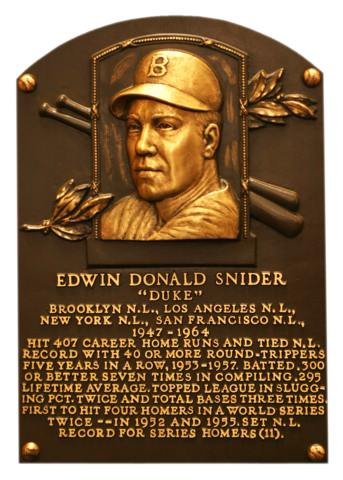
He became the only player to have twice hit four home runs in the fall classic having previously accomplished the feat in 1952 (though still on the losing team!)
Prior to the relocation of the Dodgers to Los Angeles , which the citizens of Brooklyn have never forgiven, it was fittingly the Duke who hit the last home run in the iconic stadium.
A combination of injuries and the design of the LA stadium meant that he was never the player he had been in Brooklyn on the West Coast though he was a member of the 1959 World Series Championship team. After leaving the dodgers in 1962 he played briefly for the New York Mets and the San Francisco Giants before retiring in 1964.
In his career as a whole he hit 407 home runs and was eight times selected as an all star. After retirement as a player he worked as a scout and later as an announcer for the Montreal Expos.
His global achievements were duly recognised in 1980 when he was elected into the Valhalla of Baseball – the Hall of Fame.
The ‘Duke of Flatbush’ will always be remembered for his heroic feats wearing No 4 for the boys of summer whose legend only grows brighter as the years roll on.
Edwin Donald (Duke Snider) born 19 September Los Angeles Ca
The silence before the song starts is one of expectation and anticipation. Sometimes the silence after the song has finished is one of satisfaction, resolution and even joy.
When that happens you have a record that enters your personal pantheon – one you will return to over and over again.
Good beginings set the emotional mood of a song and should intrigue the listener ; beckoning them to lean forward and open up their hearts and minds.
Good endings deliver on the promise of their beginnings and close a song like a ship after a long journey safely docking in its home port – ready to sail again.
Dylan’s Tom Thumb’s Blues is the first from my own pantheon (more to come later!). It seem to me to begin and end exceptionally well.
Feel free to comment suggesting your own favourites.
Nobody tells stories like Bob Dylan.
This pearl comes from his mid 60s golden period when miracles emerged from his mind with machine gun rapidity leaving everyone else breathless in his rear view mirror.
Neither he nor any one else has ever caught up.
The song opens with entwined burnished mid tempo rolling piano and guitar lines evoking a journey to a humid landscape where unknown fevered delights and dreads lie in wait for the traveller as he voyages through the enervating, sticky exotic heat.
Dylan delivers the opening lines with his patented, langorous, half-past one in the morning, half a bottle of tequila to the good, come – hither charm.
‘When you’re lost in the rain in Juarez And it’s Eastertime too And your gravity fails And negativity don’t pull you through’
Now, tell me you don’t want to know what happens next?
Some five minutes later we have have been treated to a magic lantern show spotlighting Rue Morgue Avenue, the legends of the mysterious St Annie and the entrancing Sweet Melinda, watched Angel being picked up, avoided the cops and sweated the booze and drugs out.
Tom Thumb, of course, remains unmet and unmentioned.
Throughout the song the band provide a supporting magic carpet of sound that allows Dylan to spin a narrative where he is simultaneously in the thick of the nightmarish action and serenely floating above it all.
The peerless Paul Griffin plays piano with wonderful rhythmic assurance while Mike Bloomfield’s guitar glistens throughout like liquid poured gold.
Al Kooper’s organ provides the aura while Bobby Gregg’s railroad drums provide momentum for a song that in all other respects seems to have escaped temporality.
As the song concludes we come to understand that either the singer will have to go home or he will die a lonely exile’s death.
Bob Dylan, no stranger to Homer, knows that all Odysseys must end.
The weary hero has to return home – even if he’s not exactly sure what kind of welcome awaits him there.
Everyone said they’d stand behind me When the game got rough But the joke was on me There was nobody even there to bluff I’m going back to New York City I do believe I’ve had enough
In Bob Dylan’s life, though he has criss-crossed the globe pursuing his vocation, all paths eventually lead back to New York ; the city where Robert Zimmerman truly became Bob Dylan and where he was launched into artistic immortality.
There are several epic live versions of the song. You should seek out two in particular.
The song was a staple of the astounding 1966 tour. The Manchester version features Dylan’s spectacularly swooning, surely he’s going to fall over now stoned vocals where syllables are seemingly stretched to infinity. Garth Hudson’s provides the all enveloping organ which seems to lift Bob to the heavens, if he wasn’t high enough already!
There is a further deeply committed and intense performance that occurred on Dylan’s return to New York City soon after 9/11.
Uncharacteristically, he precedes the song with a spoken introduction acknowledging his debt to the city – a debt he and the band discharge to the full in a performance that has a glorious ragged grandeur that electrifies the Madison Square Garden crowd.
‘In the social production of their life, men enter into definite relations that are indispensable and independent of their will … It is not the consciousness of men that determines their being, but, on the contrary, their social being that determines their consciousness.’
(Karl Marx)
‘Those who best know human nature will acknowledge what strength light hearted nonsense gives to a hard working man.’
(Coleridge)
‘So Fred said, ‘Let’s have a cuppa tea And we said, ‘Right – oh’
(Myles Rudge/Ted Dicks)
There have been innumerable ethnographic, sociological, psychological, political, historical and even psycho-geographic studies describing the nature and peculiarities of the English working man.
Some of these have even been readable by people not chained and bound in the salt mines of academia.
I plead guilty to having a few feet of shelf space dedicated to the subject myself.
However, I would advise anyone looking to gain an acute insight into the character and mores of said working man to look no further than Bernard Cribbins classic, forensically brilliant examination of the subject in his 1962 recording, ‘Right Said Fred’.
‘Right Said Fred’ belongs to that now rare and frequently derided genre – the comedy record. Fair enough – most comedy records are only funny in the deluded imaginations of their creators and even those that are mildly amusing barely warrant a single repetition let alone an honoured place on the Immortal Jukebox.
Right Said Fred is the exception that proves the rule.
This song, written by Myles Rudge and Ted Dicks and performed with perfect comic panache by Bernard Cribbins is laugh out loud hilarious and has me smiling and laughing every time even though I must have heard it a hundred times or more over the last 50 years.
It is also the kind of song that makes you feel good about your fellow man – who turns out to be just as clueless as you. It is a song that makes you glad to be alive.
Context: English life and working practices in the pre Beatles era were openly structured around universally recognised, if not universally accepted, class and status divisions.
Everyone knew their place even if they detested the whole system and were actively planning to subvert it.
Most people, especially blue collar workers, didn’t think too much about how the system came into being – instead they wanted to play the system for their own advantage, to win small battles every day and put one over the bastards who would grind you down if you gave them half a chance.
Here’s the situation out of which the chaos and comedy of good intentions gone awry proceeds. Three workmen; Fred (the Foreman), Charlie (the Charge Hand) and our unnamed narrator arrive at a house to move a large piece of furniture, which though never formally identified, is probably a piano.
This is an awkward, beligerantly heavy thing that will test the limits of their strength, their willpower, their know – how, their patience and their camaraderie. And, the structural integrity of the house itself.
Ted Dicks provides an easy to whistle, all-together now, nudge-nudge, springy music hall melody set to an ironically bouyant rhythm.
Sound effects – heaving labour, creaking stairs, boinging springs and collapsing walls and ceilings were furnished by the record’s producer, George Martin.
in his pre – Beatles incarnation as the boss of Parlophone Records and a comedy specialist already having logged hits with Peter Ustinov, Peter Sellers, Rolf Harris and Charlie Drake.
Myles Rudge, the lyricist, provides a narrative that is economical and full of clever, acute comic details using a propulsive, instantly memorable rhyme scheme which in concert with his partner’s musical hooks virtually guarantees the song will lodge deep in your brain.
The song is then delivered by Bernard Cribbins, a wonderfully droll comic actor rather than a singer, as a shaggy – dog story using alternate tones of baffled irritation and relaxed nonchalance.
As each verse progresses Cribbins in virtuoso style subtly ups the tempo and rhythmic attack to mirror the enfolding disaster. Let the mayhem begin!
Obviously, they begin by trying to lift it but, despite Fred and our narrator, one on each end, striving might and main together they, ‘couldn’t even lift it’. Oh dear, they could be in for a long day here!
So, planning, strategy, and tactics will be required – and you can’t begin to address such weighty matters without the essential fortification of English life, the elixir that punctuates all activity and transforms the perception of all situations – a cup of tea!
One of the first things you learn when joining any group of working men is that the tea-break is a sacred rite and not to be trifled with on any account.
In an increasingly atomised society drinking tea remains one of the only pursuits shared by virtually the whole population. Something like 100 million cups of tea are downed by the English every single day of the year!
Fred, restored by his first cup of tea, decides that reinforcements are required – so Charge Hand Charlie is called up from,’the floor below’ and noisily ascends to join his fellow workers.
However, Charlie’s presence and further straining, heaving and of course complaining prove of no avail. They were getting nowhere. Only one thing for it – another cup of tea!
Charlie, refreshed, has a think (always a dangerous thing) and suggests that all the handles need to be removed and moreover, in an inspired phrase, ‘the things what held the candles’. Sadly it did no good.
Our narrator sagely reflects that, ‘he never thought it would’. The English working man has always expected that the best laid plans of his supposed superiors will inevitably end in dismal failure even as he carries out these plans with shrugged shoulders.
The ‘I told you so’ or, ‘There’s a surprise’ is generally uttered only under the breath or mimed to their mates via a barely raised eyebrow.
They proceed to take the feet and even the seat off. That should have got them somewhere but no it did not! Time for another cup of tea. Energised, Fred realises that if they are going to shift the, ‘so – and – so’ they will have to take a door off.
They succeed with this despite the bad twinges they experience taking off the hinges (having a bad back is virtually a badge of honour for the English working man). Sadly, this too got them nowhere and so they down another cup of tea.
Fred is now begining to get exasperated and declares with warlike intent, ‘that there wall is gonna have to go’! But, even with it all down they were no further forward. They retreat and have another cup of tea.
At this point Charlie has another think and in a seemingly inspired brainwave opines that he has got a sort of feeling that if only they could remove the ceiling it would only be a matter of using a rope or two and they could solve all their problems and, ‘drop the blighter through!’.
Fred, and he will come to bitterly regret this, agrees to Charlie’s madcap plan with electric enthusiasm.
Before you can draw breath Fred equipped with a crowbar is climbing up a ladder and laying into the ceiling with many a mighty blow!
Oh dear, Oh dear, Oh dear. Inevitably, a half of ton of rubble falls on top of Charlie’s unprotected dome.
What state Fred is then in and what his hopes for recovery are we never learn.
Charlie and our narrator decide the piano will remain unmoved and, pausing only for another cup of tea, they go home.
As they saunter homeward our narrator wryly notes that Fred has a tendency to be hasty and that you, ‘never get nowhere if you are too hasty’. The piano will just have to be left amidst the dust and rubble on the landing.
No doubt the whole saga will make for a lengthy anecdote down the pub where mugs of tea will be replaced by pints of beer.
Cheers!
(Warning and Disclaimer: Fred and his crew flagrantly breach many health and safety regulations during the course of the song. DO NOT try to follow their example at home!).
Scorecard:
Pianos moved: 0
Doors removed: 1
Walls removed: 1
Ceilings destroyed: 1
Serious injuries: 1
Houses trashed: 1
Cups of tea drunk: 6
Notes and Comments:
‘Right Said Fred’ reached No 10 in the UK charts in July 1962. It followed a previous hit, ‘Hole In The Ground’ also written by Rudge and Dicks which had gone one place higher in February of the same year.
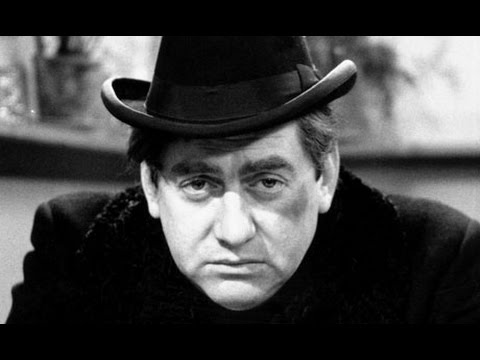
The latter song again mined the seam of chippy working class humour: detailing the confrontation between a hole-digging workman and a snooty bowler-hatted official who observed that, ‘you are digging it round and it ought to be square’.
The workman after taking a drag on his cigarette replied that his hole was fine and he just couldn’t bear to dig it elsewhere. The song concludes with the workman noting with quiet satisfaction that the hole is now gone; the ground is smooth and beneath it is the bloke in the bowler hat!
The whole story is brilliantly told by Bernard Cribbins in well under two minutes.
Noel Coward, a connoisseur if there ever was one of the comic song, chose,’Hole In The Ground’ as one of his ‘Desert Island Discs’. It has also been suggested that the Count Basie Band heard the song when touring the UK and became great fans.
Rudge and Dicks:
Myles Rudge (1926 – 2007) was an all purpose post-war entertainment professional having worked as an actor and scriptwriter for radio and TV. He had a particularly productive working relationship with Kenneth Williams.
His only other hit song with Dicks was the children’s song, ‘A Windmill In Old Amsterdam’ which is not recommended for listening by anyone over the age of 5.
Ted Dicks (1928 – 2012) had an art school and theatre background. In addition to his work with Rudge he wrote film and TV theme songs. The most notable of these was for the cult children’s TV series, ‘Catweazle’ – another beloved baby boomer classic!
Bernard Cribbins has now attained the BAFTA clutching status of,’national treasure’ in British life.
On TV he has appeared in everything from, ‘Dr Who’ to, ‘The Wombles’ and, ‘Jackanory’.
On film apart from three of the Carry On series he has appeared in two classic comedies with Peter Sellers, ‘Two Way Stretch’ and, ‘The Wrong Arm Of The Law’.
He also had a key role as Perks the railway station assistant in Lionel Jeffries’ family film masterpiece, ‘The Railway Children’.
His name in any list of credits is a very welcome sign and a virtual guarantee of pleasure.
Graham Parker, even in the doldrums of a thirty year plus career in music, has always written and performed his songs with shattering commitment.
And, especially when partnered (not supported) by the astonishingly resourceful and committed group of musicians known as The Rumour, he made records and played concerts between 1975 and 1981 that will stand as peaks of rock excellence in the passionate tradition of Bob Dylan and Van Morrison.
Parker, a scrawny Englishman with electric energy, has generally punched above his weight as a singer and performer – always reaching out for the perfect dramatic expression of the emotions and narratives contained within his extensive songbook.
His ace to play is a thrillingly soulful voice which can plead for, pledge, and command love.
Parker ‘s vocals lend colour, weight and dynamism to his songs whether in his tender yearning ballads (‘Fool’s Gold’) his wide screen technicolour story epics (‘Watch The moon Come Down’) or in his helter- skelter, jump-on or be run over rockers (‘Soul Shoes’).
A Graham Parker vocal at his best has instantly recognisable authority (you know he really means it!) without sacrificing his vulnerability or sense of wonder.
The Rumour: Brinsley Schwarz (guitar), Martin Belmont (guitar), Bob Andrews (keyboards), Andrew Bodnar (bass) and Steve Goulding (drums) combine impressive musical chops with the rare ability to really listen to each other and their lead singer.
So, the songs they play have an organic texture that allows them to breathe, build and bloom into flesh and blood life. This is a band committed to each other and their craft.
It’s no accident that they took their name from a song by The Band – the ultimate exemplars of co-operative built to last music making in the rock era.
In their heyday Parker and the Rumour were a match for any live band in the world and their classic albums – Howling Wind and Squeezing Out Sparks – were astounding examples of rock songcraft.
In reaction the hip critics raved, the cogniscenti queued and fellow artists like Bruce Springsteen listened hard. However, lacking irresistible hits, a clearly defined commercial image and extensive radio play the great British and American publics and the music moguls were never convinced.
Eventually the grind of endless touring without commensurate reward took its inevitable toll.
Graham Parker relocated to the Woodstock area and settled down in every sense proceeded to record a series of intelligent and well wrought albums that satisfied his audience without troubling the mass market.
Almost every one contained a song or two most songwriters would have killed for and all featured singing that could lift or break your heart.
The Rumour went their separate ways and found niches that satisfied their varied needs for full time involvement in music.
And that’s where the story might have ended. Another band, much loved and fervently recalled, that as time went by became more of a myth and less of a reality.
Until, out of the blue, a crowd funded documentary led to a one off reunion for Parker and some of the band and a decision that a reunited GP and The Rumour would record another album – now known as, ‘Three Chords Good’.
To add to the twilight zone like sense that, ‘something weird is happening here’ it turned out that the actor/director Judd Apatow, a longtime fan, thought he might usefully cast Graham Parker as a once revered rocker beloved by the mid-life crisis hero in his movie ‘This is 40’.
In the movie the hero gets his favourite band together. So, through the magical power of Hollywood Graham Parker and the Rumour after a thirty year lay off trod the boards together again and found that they still had the elusive chemistry that makes a band really special.
They might have gained a few pounds and gone grey hair but musically they still snarled and burned and perhaps now had more control and swing – better able to know when to push and when to throttle back.
New songs were written and recorded for ‘Three Chords Good’ which emerged as a set of beautifully conceived and played songs worthy of the band’s history.
Given all the above – why not tour again and see if the old soul shoes could still tear up the dance floor?
So, conscious of my own grey hair and how desperately I wanted GP and the Rumour to be once again the great band who had often made an in concert reality of the challenge presented in taking on Sam Cooke’s ‘Let’s Have A Party’ I took my seat in the Shepherd’s Bush Empire with no small amount of nervousness.
From the first, everything’s in place, burnished opening chords of the endlessly yearning ‘Fool’s Gold’ it was obvious that this was a band and a singer that were not simply leaning on memories of former glories.
Rather, here was a band of brothers who were, almost anazedly, finding that they could still make their songs come freshly alive as new creations.
You could see old friends in the audience turning to each other with face-splitting grins mouthing ‘My god they really still have got it!’
Their mojo was definitely still working and song by song they burned up the stage and lit up our night. Particular highlights included a scorching take on Howling Wind featuring Brinsley Schwarz’s barbed wire guitar and Bob Andrews just this side of crazed keyboards alongside GP’s anguished vocal.
A new song ‘Snake Oil Capital of the World’ showed Parker’s vocals could still have sarcastic bite and that the Rumour could keep him on his toes through the controlled intensity of their playing.
During ‘Discovering Japan’ Steve Goulding and Andrew Bodnar showed what a potent rhythm section they were with the former’s powerhouse drumming especially impressive.
The expressionist drama of ‘Watch the Moon come down’ captured the whole outfit in magesterial form switching from relaxed vamping to all out attack with fluent ease – the theatre seemed bathed in spectral moonlight.
Martin Belmont, a giant figure who always looks as if he is just about to start a fight, played throughout with lyrical beligerance and on a swooningly intense ‘Local Girls’ his guitar rang out to the rafters.
The showstopping ‘Dont Ask Me Questions’ proved, if proof were needed, that Graham Parker does have a heart full of soul and the vocal graces to arouse shivers in his audience.
His songs can also summon whole audience to passionately sing as his ragged but righteous chorus. No-one left the gig without having been moved and delighted at witnessing a true renaissance.
Looking back, the concert acted as a series of triumphant demonstrations of Graham Parker and The Rumour’s passion, skill and sheer determination to do honour to themselves, their heritage, their new songs and their audience.
Not that this audience needed much winning over. I have never felt such waves of such pure affection travelling between an audience and the stage. Indeed at times the band seemed taken aback by the overwhelming reaction their heroic playing produced.
There was a real sense that the Empire was filled with people on and off stage celebrating the good times of old and deliriously happy to be creating, not recreating, new peaks of experience.
Graham Parker and The Rumour have weathered their storms, come to terms with the rollercoaster of good and bad fortune and come through into a new world.
Sometimes, although you properly never believe this in youth, love can be lovelier the second time around!






 The Immortal Jukebox