St Paul tells us when we are grown to adulthood that it’s time to put away childish things.
As a guide to moral conduct that may well be sage advice.
There are choices to be weighed in the balance.
There are responsibilties to be shouldered.
There are strengths and weaknesss to be acknowledged.
There are trials, torments and traumas to be survived.
Yes, you need to look at the spinning world with a cool appraising adult eye if you are to navigate it safely.
And yet … we all carry the child we once were within our skins and deep in our psyche.
There is a knowing, an untutored first poetic knowing, known and retained by that child, we would all do well to tap into throughout all our adult days.
You should never be so old not to want to fly away on a magpie’s wings and hop that freight train in the hall all the way down to New Orleans in the fall.
All the way to New Orleans in the fall.
Tom Waits tells crazy stories blazing with drunken truths.
Tom Waits tells crazy stories blazing with sober, artful lies.
Tom Waits tells crazy stories that make perfect sense to the labouring adult crying out for rest and the blithe bubble blowing child within you.
Tom Waits tells the best damn stories you ever heard and Kentucky Avenue is one of his very best.
The song is brilliantly composed and sung in the continuous present we live in during our childhood days.
The characters who populate the story are ordinary figures and at the same time shadow thrown giants looming on the young mind’s eye.
Eddie Grace’s old Buick is rusting on his drive and Eddie don’t drive no more but Wow! you know those holes in the side … they’re bullet holes! (From the time when Eddie ran with the mob – how do ya think he got that limp?).
Mrs Storm looks at at the world from behind fly blown curtains and she don’t talk to no one not even the mail man since that son of hers went missing in the war.
He used to keep that lawn of hers so perfect it was greener and truer than Augusta.
Sshhh … don’t put a toe on that lawn – she will stab you with a steak knife if you do!
When you are a child you haven’t exhausted your capacity for pleasure and your sense of wonder is acute.
Man, half a pack of Lucky Strikes and a packet of macadamia nuts is more treasure than Long John Silver ever dreamed of.
When you’re a child you don’t have to be told you’ll live forever you just know – let’s go ever to Bobby Goodmanson’s and jump off the roof!
And .. oh oh .. the secrets. The secrets.
Hilda plays strip poker when her mama’s across the street and (he told me and he don’t ever lie) Joey Navinsky says she put her tongue in his mouth.
And … oh oh … when you got just one friend, a blood brother … you own the world. The world them others don’t even see … seems like they walking around stone blind.
Let me tie you up with kite string, I’ll show you the scabs on my knee!
Fabled adventures are born every new Dawn – watch out for the broken glass, put your shoes and socks on,and come along with me
Let’s follow that fire truck, I think your house is burning down!
Let’s go down to the hobo jungle and kill some rattlesnakes with a trowel (It ain’t dangerous at all ..).
And, oh oh … when you’re having adventures you don’t calculate repercussions – don’t you just love the sound of breaking glass?
We’ll break all the windows in the old Anderson place!
We’ll steal a bunch of boysenberrys and smear ’em on your face .. how great we’ll look!
And, ah ah .. when you give and get presents as a child they are like no presents you’ll ever get again:
‘I’ll get a dollar from my mama’s purse, buy that skull and crossbones ring
and you can wear it round your neck on an old piece of string.’
The things we did and the things we nearly, nearly did!
Remember that time we spit on Ronnie Arnold and flipped him the bird or the day we would have slashed the tires on the school bus if the janitor hadn’t woken up!
That’s the kind of thing you do when you’re Blood Brothers (funny how you’re much closer to your Blood Brother than the brothers in your house – you don’t share your dreams and secrets with them!)
I’ll take a rusty nail, scratch your initials in my arm and show you how to sneak up on the roof of the drugstore.
And … oh oh .. when you see with the eyes of a child you see with a clarity .. a vision it’s so easy to lose as your eyes grow accustomed to the adult world:
I’ll take the spokes from your wheelchair, and a magpie’s wings
And I’ll tie ’em to your shoulders and your feet
I’ll steal a hacksaw from my dad, cut the braces off your legs
And we’ll bury them tonight out in the cornfield
Just put a church key in your pocket
We’ll hop that freight train in the hall
We’ll slide all the way down the drain
To New Orleans in the fall
Thank you Tom for reminding me of how a Magpie’s wings can take you places a 747 never could.
And for letting me keep looking out for that freight train in the Hall.
Let you into a secret … one day I’m gonna ride it all the way down to New Orleans.
Before night comes each of us must work, in our few days, the work we were uniquely created to accomplish.
Surely, that’s exactly what the late Aretha Franklin did in singing with such splendour and grace from earliest childhood until the last year of her life.
Enormous gifts were bestowed on Aretha.
The triumph of her life was in her acceptance, nurture and stewardship of those gifts.
In so doing she became the greatest female singer in popular music since the Second World War.
Her profound legacy can be found in scores of breathtaking performances and in the inspiration she gave to fellow musicians and singers as well all of us privileged to hear her in our lifetimes.
When Aretha sang she summoned up her whole humanity to insist upon, to imperiously demand our attention!
R – E – S – P – E – C – T!
R for Roots :
Aretha’s roots lay in Church.
Her Father, the Reverend C. L. Franklin was a celebrated Baptist preacher – immensely influential in the community through his recordings, radio and touring appearances. New Bethel Church in Detroit was visited by all the great and good of the Gospel world.
Chuch and Choirs and Quartets.
In Church wide eyed young Aretha took into her deepest being the rhythms and dynamics of her Father’s Sermons, the soaring exultation of the choirs.
Aretha conquered far flung worlds in her career but she never strayed in her heart far from that Church in Detroit.
From her Father and the Gospel tradition she knew that singing was Important.
An important aspect of sacred drama.
Important to her, important to a whole community – the heart of Life.
Throughout her life when Aretha sat down at her beloved piano or took centre stage her very presence and every note she sang, every breath she took had the force of a sworn Vocation.
She knew from the Bible and increasingly from her own personal life that this world could be a vale of tears, a place of sore trial and torment.
But, she knew there was a further shore.
She knew that in turmoil she could turn to song to guide her there.
She believed that though you might be abandoned by all who you relied on there was yet a hand that would reach out for yours and gently lead you Home.
E for Ecstacy :
Rapture. Euphoria. Exultation!
Listening to Aretha on record or in person gave you the opportunity to stand outside yourself transcending the cares of your everyday shackles.
Filled with the spirit Aretha pierced the veil.
Filled with the spirit Aretha gave us glimpses of no time, glimpses of Eternity.
Filled with the spirit Aretha lifted herself and her audience into other worlds.
Filled with the spirit Aretha called out to us to respond with all our hearts.
FIlled with the spirit Aretha made us reciprocate her urgency to be understood, to be respected, to be heard.
Filled with the spirit when she sang Aretha was always reaching, reaching, reaching.
S for Soul :
If you gotta ask you don’t know what it is.
Aretha not only had Soul in her recordings and performances she came to define its essence.
She sang as a woman in full.
A woman who was unaffaid to expose her vulnerability.
A Woman Of Heart and Soul.
A Woman of blood and bone and guts and unabashed carnality.
A Woman who could shout and scald, scream or tenderly whisper.
A Woman who could thrillingly fuse the sacred and the secular to examine and embody our deepest emotions.
P for : Politics
Like Bob Dylan says we live in a Political World.
Aretha grew up knowing Martin Luther King.
Her Father ordained Jesse Jackson.
Aretha was an inspiration to all the struggles for Civil Rights.
Civil Rights and Respect for African Americans.
Civil Rights and Respect for Women.
Civil Rights and Respect for The Poor.
With Aretha’s Voice At your back and in your heart no barrier could seem insurmountable.
E for : Eternity
The greatest artists stop time when they sing.
Most music, most art is ephemeral.
It is given to very few to add to the cairn Human Beings have added to the treasures of Eternity.
Aretha has beyond all question added significantly to that cairn.
C for : Choir and Community
When Aretha sang she was always singing to a surrounding community.
A community including fellow singers and musicians and fellow pilgrims.
Even alone at the piano there was a senses that she was singing to Another.
In her singing offering up gifts.
In her singing offering pleas for redemption.
In her singing offering cries of supplication.
In her singing offering heartfelt sorrow.
In her singing shouting to be heard – to be heard and answered.
T for : Thankfulness
Aretha was fully aware of the plenitude of her gifts and was properly grateful for them.
Looking back at her wondrous career we should be properly grateful too.
Now that she has crossed over we are all immensely in her debt.
Over 40 years a Song can, starting out as an unremarked track on a little regarded album from a little known Band, become a veritable anthem recorded hundreds of times and exalted in concert by the great and the good from The Boss to Bill Murray to Mavis Staples.
My own relationship with today’s featured Song began many decades ago in my teenage gig going years.
Loyal readers of The Jukebox will know that I have made a series of House moves in the last few years before settling happily here in our South Downs hideaway.
One of the ‘finds’ of the moving process was a notebook with the title, ‘Gig Diary 1970 – 1975’ emblazoned in red ink on the cover.
Leafing through this historically important artefact I see that in that period I saw Nick Lowe with his then Band, Brinsley Schwarz, on stage at The Marquee, The Roundhouse, The Lyceum, The Hope & Anchor, The Torrington and The Edmonton Sundown among many other venues.
I was, of course, also buying their Albums as soon as they came out and looking at the sleeve of, ‘The New Favourites of … Brinsley Schwarz’ from 1974 I see 2 large red asterisks next to track 1, ‘ (What’s So Funny ‘Bout) Peace, Love & Understanding’.
I should tell you that the double asterisk was a very rare accolade indeed!
From the very first time I heard it I knew that this was a breakthrough Song for Nick Lowe – a Song that would get up and walk away by itself into History.
A Song I have sung along with scores of times during Nick Lowe concerts and many hundreds of times at home through all the stages of my life.
Sometimes when the world did indeed seem a wicked place and this Song quickened my search for the light to counter the darkness all around.
‘ ….. There’s one thing I want to know:
What’s so funny ’bout peace love & understanding?
Ohhhh …. What’s so funny ’bout peace love & understanding’
Nick Lowe has said that this Song represented his first truly original idea as a songwriter and that having had that idea he realised that his task was then not to mess up the song by trying to be too clever – let the song flow naturally.
Brinsley himself on masterful rhythm guitar, Ian Gomm on chiming hats off to Roger McGuinn Guitar (and heavenly vocal harmony arrangement).
Bob Andrews on hats off to Garth Hudson keyboards with Billy Rankin on martial drums,
Together with Nick on Bass they hit a dead bullseye.
I remember walking back to the tube station in the rain after the first time I heard this song all the while serenading bemused passers by with:
‘ … Is all hope lost? Is there only pain and hatred, and misery? And each time I feel like this inside, There’s one thing I want to know:
What’s so funny ’bout peace love & understanding? Ohhhh What’s so funny ’bout peace love & understanding?’
That’ll do as a definition of an Anthem for me!
Once a true Song arrives it begins to find its audience.
In Liverpool in the early 70s when Brinsley Schwarz played their gigs an intense young man with a burning desire to get his songs heard was always at hand – Elvis Costello (then Declan McManus).
In Nick Lowe he found an established songwriter who was willing to take the time to listen and provide encouragement to an unknown novice.
So, in 1978 as Elvis’ career began to gain momentum, he turned to an old favourite written by his Producer, Nick Lowe.
The result was a call to arms, flamethrower version, that launched Nick’s great song into the American market and the consciousness of American songwriters and singers.
Elvis, characteristically, located the anger within the song accompanying the philosophical musing of the Brinsley’s original.
No one can ignore this take on the Song!
In a sense sending a song out to the world is like throwing a message in a bottle into the ocean – the tides and currents take over and you never know where it will end up.
Remarkably, in 1992, Nick’s Song ended up as part of the soundtrack of the film, ‘The Bodyguard’ featuring Whitney Houston and Kevin Costner.
Everyone will remember Whitney’s Diva take on Dolly Parton’s, ‘I Will Always love You’ many fewer will have noted the presence of, ‘What’s So Funny ..’ sung by Curtis Stigers.
For Nick the bonanza was that the soundtrack LP sold an astonishing 44 Million copies transforming his bank balance at a stroke!
He must have reflected as the royalty cheques steamed in that his decision a decade earlier (prompted by manager Jake Rivera) to buy sole rights to his publishing was a very wise move indeed.
Among the song writing community picking up on the mysterious power of the song was Lucinda Williams.
For walk on, walk on, though you’re bruised and battered, just makes me want to cry, heart on the sleeve directness you just can’t beat Lucinda!
Now, if you want to be uplifted, to take heart as you ponder the trials and struggles ahead there can be no better source of inspiration than Mavis Staples.
Mavis’ voice with its inherent power makes you want to fight the good fight whatever the odds and however bleak the outlook.
With virtuoso guitarist Robben Ford she makes real the Song’s call for harmony – sweet harmony.
Hope will never slip away while Mavis is around!
Did someone say Anthem?
It is a truth universally acknowledged in the music world that if there’s an anthem to be sung, a rallying cry to be roared out, that Bruce Springsteen is going to be on hand to do just that.
It’s particularly pleasing to me to see him trading vocal lines and guitar licks with the great John Fogarty here.
Hard to be down hearted when this version gets cranked up!
Nick Lowe never concludes a concert without playing, ‘What’s So Funny …’ so its been a difficult task to choose the clip to showcase how he plays his masterpiece in his maturity.
But, I kept coming back to the Lion in Winter version where he is accompanied by fellow Brits Paul Carrack and Andy Fairweather Low.
There is wisdom and grace here aplenty.
Straight to the heart.
Straight to the heart.
What’s so funny ’bout peace love & understanding? Ohhhh What’s so funny ’bout peace love & understanding? Ohhhh What’s so funny ’bout peace love & understanding?
Few thing in life are certain.
Yet, one thing I can tell you – the next time Nick Lowe comes to town I’m gonna be in the front row and ready to sing with all the spirit I can muster:
As I walk through This wicked world Searchin’ for light in the darkness of insanity. I ask myself
Is all hope lost? Is there only pain and hatred, and misery? And each time I feel like this inside, There’s one thing I want to know:
What’s so funny ’bout peace love & understanding? Ohhhh What’s so funny ’bout peace love & understanding? And as I walked on Through troubled times
My spirit gets so downhearted sometimes So where are the strong And who are the trusted? And where is the harmony?
Sweet harmony. ‘Cause each time I feel it slippin’ away, just makes me want to cry. What’s so funny ’bout peace love & understanding? Ohhhh What’s so funny ’bout peace love & understanding?
So where are the strong? And who are the trusted? And where is the harmony? Sweet harmony.
‘Cause each time I feel it slippin’ away, just makes me want to cry. What’s so funny ’bout peace love & understanding? Ohhhh What’s so funny ’bout peace love & understanding? Ohhhh What’s so funny ’bout peace love & understanding?
And then I’m gonna shake Nick’s hand and say Thank You.
Then, Brothers and Sisters, I do Know, I most assuredly Know that the resulting record is one of the greatest Singles ever made!
That’s what I Know.
Listen and you’ll Know too.
And, when you Know, as we all Know – You just Know.
Notes :
Little Richard:
recorded ‘I Don’t Know …’ in Los Angeles in 1965.
He had, of course, already given nuclear energy to the launch of Rock ‘n’ Roll in the mid ‘50s.
Here he draws upon his Gospel and R&B roots with all those hours listening to Brother Joe May, Sister Rosetta Tharpe and Billy Wright informing the volcanic steam heat of his performance.
Perhaps only James Carr singing, ‘Dark End Of The Street’ matches Richard on this record for soul searing intensity.
Don Covay :
was gifted as singer, songwriter and producer. He had a particular mastery of the Soul Ballad.
His Father was a Baptist Preacher and his first forays into public performance was with his family Gospel Quartet, The Cherry Keys.
Classics he wrote include:
‘Mercy, Mercy’ (covered by The Rolling Stones),
‘Chain Of Fools’ and ‘See Saw’ for Aretha Franklin,
‘That’s How I Feel’ for The Soul Clan
’Pony Time’ (a No 1 for Chubby Checker)
’Letter Full Of Tears’ for Gladys Knight
’Its Better to Have and Don’t Need (Than Need and Don’t Have) is a magnificent song he put out under his own name.
The version he cut of ‘Mercy, Mercy’ with The Goodtimers In 1964 featured Jimi Hendrix.
At one time Don gloried in the role of Valet and Driver for Little Richard.
Jimi Hendrix :
Appeared like a meteor into the consciousness of the Rock world yet he had served his time on the ‘Chitlin’ Circuit’ backing up a host of R&B and Soul acts.
His hook up with Little Richard was short lived – in part no doubt because Richard was not a man to be upstaged by a flamboyantly brilliant guitar player able to play solos with his teeth!
Billy Preston :
Billy had been a part of Little Richard’s constellation since the early 60s when he was still a teenager. In Hamburg The Beatles looked on in awe as Richard tore up the joint with his crazed vocals while Billy hit grooves that seemed to affect gravity itself.
At the end of their career together it seemed there was little they could all agree on – except that Billy Preston trailed Joy all around him and that he was a hell of a musician.
I am delighted today to feature Mark Bedford, the Bass Player for Madness, in the ‘Jukebox Jive With … ‘ series.
It was a pleasure to converse with such a patient, thoughtful and generous interviewee. I would award Mark the high Jukebox accolade of RGB (Right Good Bloke) which in my estimation far outranks the OBE and such beribboned gongs handed out by the Queen!
It is no exaggeration to say that Madness, now with a 40 year history as a Band with some time outs for rest, recuperation and diversions, have become fixtures in the imaginations and memories of the entire British Nation.
It’s not simply a matter of the 15 top ten hits in the UK and the ubiquity of their albums in homes all over the world.
It’s the way their presence through the folk like memorability of their songs, the quirkily brilliant videos and carnivalesque live appearances has made them seem like part of more than one generations extended family.
In a real sense many of us have grown up with Madness with them sound tracking the joys and terrors of ageing.
Their role as, ‘National Treasures’ has been officially certified by their performances at such red letter day occasions as the Queen’s Diamond Jubilee Concert at Buckingham Palace, the closing ceremony of the London Olympics and the farewell celebrations to mark the last day of programming from the original BBC Television Centre.
What has impressed me most about them is their creative energy – their ability to continually grow as musicians, songwriters and performers.
They have emphatically not fallen into the trap, which has captured many veteran bands, of becoming witting or unwitting cartoon versions of their former selves.
Madness today are still properly restless and minded to surprise themselves and their audience with new material and the vigour with which they present their gem filled catalogue.
And what a catalogue!
Starting out as devotees of Ska and Rock Steady from Jamaica they expanded their tonal palette to include Music Hall exuberance, downbeat drama documentaries, lyrical and lovelorn romantic ballads, risqué end of the pier jollity, sharp situation comedies (a la Clement and le Frenais), surreal pantomime and state of the nation proclamations.
Oh, and you can sing along and dance to all of them!
On the very rare occasions when I can be persuaded to attempt karaoke (usually fuelled by too much Tequila) I always chose a Madness song – invariably, ‘Our House’ because I can be certain that as soon as I launch into:
‘Father wears his Sunday best, Mother’s tired she needs a rest ..’
my own reedy warbling will instantly become a full throated choir singing;
‘The kids are playing up downstairs, Sister’s sighing in her sleep,
Brother’s got a date to keep, he can’t hang round …
then the roof’s durability is tested as the whole ensemble (including the moody ones who never sing) roars out:
‘Our house in the middle of our street
Our house in the middle of …’
Our House has instant memorability yet repays repeated listening to savour the superb song craft and the layers of feeling embedded in the lyric, melody and performance.
We can all recognise this family – the nuances of the relationships and the truth that comfortable familiarity and subdued foreboding can coexist.
Naturally Mark has insights into Madness in all their dimensions denied to the outside observer. So, it as a genuine privilege to prompt his thoughts in our interview.
IJ – Was there a musician who inspired you to want to be a musician yourself?
MB-
Well, indirectly, it was Ian Hunter of Mott the Hoople.
I had seen them on Top of the Pops. I liked their songs and I liked the way he sang – ’And you look like a star but you’re still on the dole’, from, ‘All the way from Memphis’ was really intriguing.
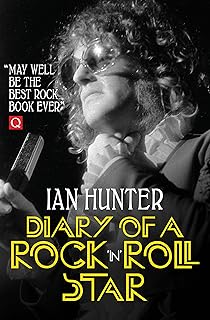
I found out he had a book out so I went to Compendium Books in Camden Town and bought ‘Diary of A Rock ’n’ Roll Star’.
I read it and thought this is what I want to do. Unfortunately I was only 14, so I practised the bass and had to wait for a couple of years.
As far as playing Bass goes I, like everyone, adored Motown’s James Jamerson.
David Hayes, long time Bass Player with Van Morrison was an important influence.
On the UK scene when I was starting out I took note of the playing of Bruce Thomas with Elvis Costello and Norman Watt Roy with Ian Dury.
The drummer Kieran O’Connor and pianist Diz Watson also taught me a lot.
Reflecting on my career as a musician I’ve come to realise how important it is to be generous to other musicians and how such generosity benefits all concerned.
IJ – What was the first record you just couldn’t stop playing?
MB –
Technically, ‘Dark Side of the Moon’.
Given my age I straddled Punk, so there were key records pre and post.
At school I listened to Steely Dan, Neil Young (‘After the Goldrush’ is still one of my favourite records) and Little Feat.
Once Punk erupted I was a massive Clash fan and listened to a lot more reggae.
I also couldn’t stop playing Elvis Costello’s first album.
IJ – Was there a radio station/radio show/live venue that was important in introducing you to the music you love?
MB –
My first radio memory: Eating breakfast, before going to school and listening to Tony Blackburn play Motown records on Radio One.
Of course, if you were a music fan listening to John Peel was compulsory.
Things were a bit more lax in the 70s. When we were in our teens, me and a group of friends used to sneak into pubs and listen to music.
At the time it seemed that every pub in North London had a back room with a band playing in it. I soaked up a lot of musical education in the Hope & Anchor, Dingwalls and The Carnarvon Castle.
We widened our repertoire and then started going to the Sunday concerts at The Roundhouse. These were amazing.
IJ – What was the first record you heard by one of your contemporaries that made you think – ‘Wow .. they’ve really got it!’
MB –
‘Ghost Town’, The Specials. A giant step forward. We felt this really raised the bar for our generation of bands. It was addictively listenable while putting over a strong political message.
IJ – Looking back over your career which 3 albums are you most pleased with?
MB – The first one, ‘One Step Beyond’ because it showed us we could do it.
Going in to the studio to make our debut we were nerveless. We really had the songs down from playing them live so we didn’t go in for any timewasting, ‘noodling’!
Producers Alan Winstanley and Clive Langer made important contributions. Alan was very adept technically and Clive had a musically interesting and empathetic mind. They were an excellent combination.
The second album, ‘Absolutely’ because it was written under such time-pressure but produced some brilliant songs (it is my favourite Madness record).
And, of course, ‘the last one’. (which as of 2018 was ‘Can’t Touch us Now’)
IJ – Similarly which 3 songs are you most pleased with?
MB –
These Singles, because they helped us take a step forward: ‘My Girl’, ‘Grey Day’ and ‘One Better Day’.
My Girl showed the reflective side of Madness.
This is a domestic love song about the kind of real stop/go hesitant love so many of us have experienced.
Mike Barson’s melody owes something to Elvis Costello’s, ‘Watching The Detectives’ though the mood is more discomfited male puzzlement rather than noir threat.
‘I found it hard to say … she thought I’d had enough of her …
‘Been on the telephone for an hour … we hardly said a word …
’Why can’t she see she’s lovely to me ….
’Why can’t I explain … why do I feel this pain?
Been there Brother! Been there!
Grey Day though recorded in 1981 was conceived in 1978.
It shows Madness were atuned to a sense of dread that seemed to hang heavily in tne air at that time for a host of economic and political reasons.
It might properly be called a dystopian diorama or Orwellian vision of a society where it’s casualties are treated as though they were invisible.
But, though the central character is made black and bloody he endures.
He endures . He endures.
One Better day was born with Mark running down a chord sequence on guitar. Given the era it was then recorded onto a cassette in Suggs house.
Something about the melody suggested the wistful atmosphere of the song.
Now it’s a rare person who doesn’t feel as if they’ve seen better days.
Yet as the song makes clear even in the most desperate circumstances one better day may be right before us.
If you take the time to look around.
The feeling of arriving when you’ve nothing left to lose.
One better day.
IJ – What was your greatest ever live show?
MB –
Madstock, Finsbury Park, 1992. A home coming, a farewell and a rebirth, all at the same time. There wasn’t a dry eye on stage. (The concert reunited the original band for the first time since 1984).
IJ – Nominate one artist who you think is criminally under rated?
MB –
Robert Wyatt. From Soft Machine, Matching Mole to his solo stuff – so much of it so beautiful. What a voice.
Mark plays the Bass on this classic recording. It’s probably Elvis Costello’s most poignant lyric perfectly married to Clive Langer’s plangent melody.
There were clearly powerful emotions present in the studio that day – beautifully offered up in Robert Wyatt’s vocal and Mark Bass playing.
One of those records that hangs in the air long after it has finished playing.
Mark told me that he would love to have Madness and Robert collaborate.
I fervently second that proposal.
IJ – Nominate one record (by yourself or anyone else) to take up an honoured place as A 100 on The Immortal Jukebox.
MB – ‘It’s Too Late To Stop Now’, Van Morrison. Specifically, ‘St Dominic’s Preview’
It’s the record I learnt to play the bass to and still practise to. I know every single note of it. And I have such a close emotional attachment to it.
It’s the manual on how to play together as a band. The interplay between the musicians is fantastic.
And, as a lovely circular story – A couple of months ago I was sent a message, through Mez Clough Van’s current drummer, by David Hayes, the bass player who is on the record.
Speechless.
Regular readers of The Jukebox will know my reverence for Van. I have written that ‘Too Late to Stop Now’ is the greatest double live album of all time.
I’m delighted Mark seems to agree with me!
Mark is right on the money in referring to the miraculous interplay between the members of The Caledonia Soul Orchestra as they support and inspire their mercurial leader.
St Dominic’s Preview seems to me to a prophetic prayer yoking dreams of youth and the enigmas of maturity.
No sense in trying to force a linear narrative on it.
Surrender, surrender and be uplifted.
Thanks again to Mark for participating in Jukebox Jive.
It seems to me that Mark and all the members of Madness have been fortunate in finding each other and in the chemistry of their combination.
And, fortunately for us they have shared their gifts generously with each other and with us.
Long may they run.
Notes :
The Classic line up of Madness:
Chris Foreman – Guitar
Mike Barson – Keyboards
Lee Thompson – Saxophone
Daniel Woodgate – Drums
Graham ‘Suggs’ McPherson – Lead Vocals
Mark Bedford – Bass
In addition to the albums referred to above I am particularly fond of:
’The Rise & Fall’, ‘The Dangermen Sessions Vol. 1’ and, ‘The Liberty of Norton Folgate’.
Wherever they go, for whatever reason, no one ever forgets the Home they left.
Even, especially, if they can never go back there again.
Except in dreams.
Everyone has those dreams.
Jimmy :
When Daddy got home from the War he was sporting a chest full of medals.
Trouble was now he had only one arm and poison headaches near enough every day.
Makes running a small farm damn near impossible.
Some people say that’s what turned him mean.
Those folks mustn’t have known him before the War.
He’d always been mean as a mean rattlesnake on his meanest day.
Don’t know how Momma put up with him.
Except she’s one of them people who when she makes a promise she means to keep it.
For richer, for poorer, in sickness and in health.
Drunk or sober.
Arms around or fists Flying.
Me, I had to take mean when I was a Kid and I put up with it, for Momma’s sake, when I could have fought back.
Then, one blue hour of the morning I decided it was time to take a freight train north.
Leave them fields of Cotton far, far, behind.
It’s a long way from Lubbock to Detroit.
Cotton field to Car Factory.
Ford or Packard or Chrysler.
Momma never would leave Daddy or Texas for that matter.
Detroit’s got jobs.
Jobs that pay.
A man can make his way.
Another thing Detriot’s got – Baseball.
The Tigers.
See if Al Kaline is as good as they say.
Don’t doubt they got Jukeboxes I can pump some quarters into.
Surely they got some Hank Williams and some Buddy Holly.
I wrote a letter to Mary Margaret saying I’d send for her when I’d made my fortune.
Shouldn’t be more than a couple of years.
A couple of years.
We will still be young.
Left a note promising Momma I’d write home every week.
That’s a promise I mean to keep.
Henry :
They say working a shift at Ford is hard work.
Well, not if you spent years picking Cotton.
That is work.
Back breaking work in the Sun.
Cotton Fields at dawn and dusk can seem beautiful.
But, when you’re working in them until you drop it’s a cruel beauty.
Oh, sure, we ain’t slaves no more.
Might as well be.
Might as well be.
Stay in line.
Stay in step.
Lower your eyes.
Move aside Boy!
Mississippi Goddam.
Strange fruit hanging from Southern trees.
School children sitting in Jail.
Some say a change is bound to come.
But when?
How many people got to die first?
Not sure if I even hear the murmur of a prayer.
Gonna ride that freight train North.
To Detroit City.
Where a man can get a Man’s job.
Now, I know Detroit ain’t no paradise.
Still have to have be alert, wary.
But, plenty of us up there now.
They call it the great migration.
Add me to the number.
They got Baseball there.
The Tigers.
One of our own Jake Wood on the team.
Like to sit in the bleachers and cheer him Home.
Maybe after the game find a bar with a good Jukebox.
Hit the buttons for Ray Charles and John Lee Hooker.
One scotch, One bourbon, One beer.
Got to leave a lot of family behind.
Promised Momma I’d write and that’s a promise I’ll keep.
Soon as I can I’ll send for Wilma.
If I make enough money and things change down here maybe I’ll come back one day.
Everybody dreams of Home even if living there was a nightmare.
Gareth :
Mining villages are very close knit communities.
Everyone knows you.
And your Mam and your Da and all your brothers and Sisters.
At least they think they know you.
My Granda was a miner.
My Da is a miner.
My Brothers went down the pit too.
But not me.
Passed the scholarship exam to go to Grammar School.
Some people are just naturally good at Sport.
I’m just naturally good at writing essays and passing exams.
i was never going down the pit.
College.
Cardiff.
A new world.
Finding out who you really are.
Getting to know yourself.
Or, admitting something you always knew about who you were – what you were.
He was a sailor from Detroit.
Couldn’t help myself.
Love is Love is Love.
So, I moved to Detroit.
I write Home to Mam and Da and tell them how well I’m doing.
Let slip that I’ve met a very nice girl and maybe …
I can trust them not to read between the lines.
I go to Tiger Stadium to see Baseball.
It’s not the Arms Park but you do get that sense of a crowd becoming a community.
There’s a bar nearby with a good Jukebox.
Don’t think anyone back Home will have heard of Smokey Robinson – but I bet one day they will.
Amazing how often I dream of Home.
Maybe I’ll go back for a visit.
Next year.
Or the year after.
Linda :
When I was 16 I was just filled to bursting with dreams.
And, none of those dreams were about living a quiet life at Home.
No dreams about Cotton fields and calling on kinfolks to see how they’re doing.
No dreams about settling down with the quiet boy who lit up every time he saw me.
No dreams about catching the train South with my heart pounding louder and louder and louder with every turn of the wheels.
No, No, when I was 16 my dreams were about a life filled with colour and fanfares in far away Detroit City.
Detroit, where I would make my own money, in my own way.
Detroit, where people would see me as my own person, not – oh that’s the third Henderson Sister.
Detroit, where I would find a man who would make every day feel like a holiday.
Nearest I get to a holiday now is when I put Patsy Cline on The Jukebox.
I write home every week.
In my letters life must seem glamorous up here.
I don’t talk about the man, the men, anymore.
I wonder if they can read between the lines?
I want to go home
I want to go home
Oh, how I want to go home
I want to go home
I want to go home
Oh, how I want to go home
I want to go home
I want to go home
Oh, how I want to go home
I want to go home
I want to go home
Oh, how I want to go home.
Notes :
Danny Dill and Mel Tillis wrote the Song.
Bobby Bare’s typically laconic Version from 1963 gave him his first top 10 Country Hit launching a career filled with expertly chosen songs examining the joys and pains of living an everyday life.
Detroit City was Arthur Alexander’s last recording for the Dot Label In 1965.
No one has ever sung with such quiet, affecting passion.
Tom Jones has always had the capacity to give dramatic burnish to a Song and it is cheering that in his autumnal years he is turning more and more to songs that allow him to express that side of his talents.
Pam Tillis has carved out an impressive career of her own. Her reading of her Father’s Song honours them both.
By happenstance I see I have published this post on Pam’s Birthday.
Well, you could say we are mainly Oxygen, Carbon, Hydrogen, Nitrogen, Calcium and Phosphorous.
Add some pinches of Potassium, Sodium, Sulphour, Chlorine and Magnesium.
Just the tiniest amounts of Boron, Chromium, Cobalt and Copper.
Traces of Flouridine, Iron, Iodine, Manganese, Silicon, Selenium, Vanadium, Molybdenum, Tin and Zinc.
Scientifically that’s absolutely the case.
Still, I prefer to think we are, each of us, a whirling constellation of dreams and memories.
Dreams beget memories and memories beget dreams.
We are star shine, dreams and memories.
Just before you go to sleep – a shimmer in the mind.
Just before you wake up – slow spools of overexposed film.
A Life lived in a landscape of dreams and memories.
Sometimes pin sharp with hallucinatory detail.
The grain of the kitchen table, the fragrance of your mother’s perfume, the bark of a long dead dog, the leathery feel of your father’s hands.
Sometimes drifting in and out of focus – colours merging and fading.
The faces of the children you played with, snatches of skipping rhymes, the clang of trolley buses passing by.
Tracking shots, jump cuts, slow motion.
And, the landscape of dreams and scudding memories is so often the landscape of childhood.
A landscape that will never leave you.
When we are very old and our powers are failing we will forget today’s appointment and the name of the current political leaders.
But, until our last gasped breath we will remember the intensity of the light in our youth.
We will remember the sounds of our childhood home and street.
We will remember the breeze blowing our hair awry and the sound of the wind outside our window in the deep dark of night.
However old you become you will always in some sense remain the child you were all those years ago.
The child who will be your secret companion and your deepest mystery.
And, if you are a songwriter – an individual given to times of silent thought – you will find yourself returning over and over and over again to that landscape in search of that companion and that mystery.
If you are Grant McLennan you will recall a schoolboy coming home.
Home.
Through fields of cane.
Fields of Cane.
To a house of tin and timber.
Tin and Timber.
And in the sky a rain of falling cinders.
A rain of falling cinders.
Falling cinders that will fall, fall, fall all around you all your life.
If you are Grant McLennan you will dream up a hypnotic guitar riff in the key and time signature of memory and write a classic song of recalled childhood and the greatest song ever to come out of Australia.
If you are Grant McLennan living in a world of books and music and silent times in thought you will write, ‘Cattle and Cane’ and you will be certain of immortality as a songwriter.
I recall ….
Grant recalled his childhood when he was far from Home, Queensland and Australia when he wrote Cattle and Cane.
In 1982 he was staying with fellow expatriate Nick Cave on whose guitar he conjured the unforgettable guitar figures threaded all through Cattle and Cane.
With Robert Forster (his song writing partner) and Lindy Morrison on drums as The Go Betweens the song was recorded in Eastbourne in 1983.
Forster added the enigmatic last verse identifying the heart of the song as both the consolations of Home and the sense of aloneness you feel when Home is far away.
Home first became far away for Grant when he went away to Boarding School leaving the fields of cattle and cane far behind.
Boarding school where he would never forget losing his father’s watch.
In silent times of thought he will have returned to the rain of falling cinders and the sky above his Home.
Dreaming in the night he will have returned on the virtual train to the fields of cattle and cane and been blessed by the rain of falling cinders.
Those dreams of home will have flashed brighter when he left Australia in search of his chance.
Recalling the genesis if the song Grant McLennan said in 1983:
‘I wrote (the song) to please my mother. She hasn’t heard it yet because my mother and stepfather live (on a cattle station) and they can’t get 240 volts electricity there, so I have to sing it over the phone to her.’
The beauty of the lyrical imagery is fully matched by the melody and rhythm.
Opening with a riff that seems to signal a dive into the subconscious the song builds and builds through the verse until there is a feeling of breathless elation.
This a song which has the space and time stretching quality of dream.
Further, longer, higher, older.
Further, longer, higher, older.
The adult and the child co-exist and find peace with each other.
For the duration of the dream and the song they live together surrounded by fields of cattle and cane.
Fields of Cattle and Cane.
For the duration of the dream and the song they live again in a house of tin and timber.
A House of Tin and Timber.
A House that will always shine bright in the memory.
And, Boy and Man, dreaming their dreams, they stand under the sky and a rain of falling cinders.
A Rain of falling Cinders. that will never stop falling,falling, falling.
There is the quality of an anthem about Cattle and Cane.
An anthem to an Australia that is both real and mythic.
The anthemic ‘Australiana’ nature of the song is very well captured in the version by Jimmy Little.
A Song that can be deeply personal and an anthem for us all is some Song.
So, ‘Cattle and Cane’ tales up an honoured place on The Immortal Jukebox as A45.
I’ll leave you with a glorious live version with Grant and Robert diving deep ….
‘I recall a schoolboy coming home
Through fields of cane
to a house of tin and timber
And in the sky
A rain of falling Cinders ….
In memory of Grant McLennan 12 February 1958 – 6 May 2006.
Elegance as a quality in life, sport and the arts is hard to define but easily recognised. It’s surely something to do with speed of thought, economy of movement, grace under pressure.
The elegant glide to triumphs without overt strain so that we catch our breath and sigh, ‘that’s how to do it!’. And, having seen the elegant work their magic with such panache we queue up to see them do it again so we can exclaim I was there and saw them do it.
Fred Astaire in every dance routine of his career. Lester Young launching into a saxophone soliloquy, Barry Richards caressing the cricket ball to the boundary, Barry John casually wrong footing an entire All Black defence.
P G Woodhouse crafting a perfect inimitable paragraph. Maria Bueno conjuring a Wimbledon winner.
The elegant performer wins your heart and your allegiance to their cause. This is not a matter of statistics, of heaped titles or medals but of indelible memories, stories of famous feats to be retold to your own and the following generations.
My own exemplar of elegance is the one and only Alan Gilzean a footballer whose fabled history at Dundee, Spurs and for Scotland feels more wondrous as each season passes.
At Dundee he scored an incredible 169 goals in just 190 games between 1959 and 1964. He was the glory of the best side they ever had under the tutelage of the great Bill Shankly’s brother, Bob.
With the Dark Blues he won the the league title in 1961/62 and the following year he was the spearhead of their thrilling run to the semi-final of the European Cup where they lost to the eventual winners – the lordly AC Milan.
At the end of 1964 the ever shrewd Bill Nicholson bought him for Spurs where he was to remain until the endof the 73/74 season. The Spurs fans quickly came to adore Gily recognising a player who met their demand for style as well as success.
In no time he was lionised as the King of White Hart Lane – a title he will hold in perpetuity!
The statistics relate that he scored 133 goals for Spurs in 429 games and that he was a member of the sides that won an FA Cup, two League Cups and a EUFA cup.
But, with Alan Gilzean it’s not the numbers that you remember it’s the breathtaking elegance of his play – the way he could amaze you game after game with the subtlety of his footballing imagination.
He insouciantly brought off feats of skill and technique that other fine players could only dream of – leaving opponents admiringly bemused and teammates exhilerated.
Alan Gilzean was to use a fine Scots term a supremely canny player. He seemed to have an advanced football radar system that allowed him to know exactly where he was in relation to his markers and his team mates.
He could compute the trajectory of any pass that came towards him on the ground or in the air and instantly assess whether the ball should be held up or delivered on.
He had exquisite touch on the deck regularly wrong footing defenders before setting up goal chances for himself or one of his strike partners.
His sense of football space and keen eye for opportunity made him one one of the great collaborators.
He forged a legendary striking partnership (the G men!) with the peerless Jimmy Greaves who profited greatly from Gilzean’s vision.
No one has ever been better at coolly converting chances into goals than Jimmy Greaves and Gilzean provided him with a wealth of those chances.
Indeed, Jimmy has called Gilzean the best player he ever worked with – some accolade. Where Jimmy was all poise and deadly sureness Gilzean’s other principal strike partner, Martin Chivers, was all power and swagger. Gilzean was a superb foil to both.
One of Alan’s great attributes was his ability to change the direction of play to open up seemingly closed paths to goal. He was the master of the shimmy, the feint and the dummy – leaving many a defender bewildered and bamboozled in his wake.
He turned the back-heel into an art form and won the plaudits for artistic impression from the White Hart Lane faithful.
However, the defining skill of his genius was his heading of which he was the supreme master.
To watch Alan Gilzean working his way through his heading repertoire was an intensely pleasurable privilege.
The power header, the precisely placed in the corner of the net header, the chance on a plate for Jimmy header, the eternal glory of the Gilzean glancing header and the masterpieces that were the Gilzean back headers will forever define the art and science of heading a football.
He seemed to intuitively understand a geometry too complex for Euclid when it came to directing headers.
Given his eminence and elegance as a player I propose some additions to the language to reflect his unique contribution to footballing and sporting culture.
Gilzean: Noun – A sporting term for a perfectly executed back header or back heel gemerally resulting in a goal being scored.
Gilzean: Verb – To display enormous technical skill with nonchalance.
Alan Gilzean was brave, hugely talented and gave unstintingly of those talents.
He is a footballing immortal whose legend will burn bright wherever elegance and beauty of style are celebrated.
God bless you Alan Gilzean.
Further reading: Happily there is an excellent book on our hero, ‘In Search Of Alan Gilzean: The Lost Legacy of a Dundee and Spurs Legend’ by James Morgan.
My son and I – The Two Toms – are about to set out on a trip, actually a Pilgrimage to the Far North.
To God haunted Northumbria.
The land of Celtic saints and the Roman Wall.
The land of St Cuthbert, St Aidan, St Oswald and Bede.
Oak Groves, high moorland, the Cheviot Hills.
Bluebells, Campion, Hawthorn.
The rushing sibilant waters of the Tyne, the Tweed, the Coquet and the Rede.
Lindisfarne and the Farne Islands – thin places where eternity whispers in the wind.
Ringed Plovers, Redshanks, Turnstones and Oystercatchers.
It’s a Pilgrimage I’ve made many times now drawn by History and deep friendship.
I’m by nature a Pilgrim.
I need to be physically present in those places, landscapes, which have challenged and nurtured the Souls of Pigrims for thousands of years.
There are two other Pilgrimages I’m planning.
First, The Way of St James.
The Camino, from my front gate to Santiago de Compostella.
More than a thousand miles.
That one requires a lot of research before I’m ready to go (though you’re never really ready – one morning you just have to tie your cloak, take up your Staff and go!).
The other Pilgrimage will be far easier to organise.
Across the Irish Sea to Ulster.
With Van Morrison, a Pigrim Soul if there ever was one, sign posting the Way.
The Way to Coney Island.
Coming down from Downpatrick to visit St Patrick’s grave and maybe a few scoops in Mullan’s Bar.
On and On and On.
Stopping off at St John’s Point.
Birdwatching – scanning the Sky for Arctic Terns, Red-throated and Great Northern Divers, Curlew and Purple Sandpipers.
Stop off at Strangford Lough early in the morning.
On and On and On.
Drive through Shrigley enjoying the craic and taking pictures as we go.
On to Killyleagh.
At Lecale District we’ll take a breath and read the papers.
On and On and On as Pilgrims must.
Over the hill to Ardglass.
Glorying in the sunshine carrying the light that has shone for thousands and thousands of years on Pilgrims – lighting their Way.
In case we get famished before dinner let’s stop of here for a couple of jars of mussels and some potted herrings.
On and On and On we go heading on over the hill, lit up inside, heading towards Coney Island.
Living, Being, in the moment, sunlight streaming, all the time journeying towards Coney Island.
Wouldn’t it be great if it was like this all the time?
Wouldn’t it!
Take it away Van.
A moment of eternity captured.
That’s what Van can do.
Epiphanies.
Time present.
Time past.
Time Future.
Captured in 120 seconds or so.
Cymbals, Strings, G and F.
Harp and Guitar.
Summoning up the previous time – the 1950s – before the career, before the fame.
A day trip with his Mother.
Images that enter the Soul – if you will allow them to.
Intimations of Immortality.
With Mussels and Potted Herrings.
Breathing life into reverie and reminiscence – Van Morrison.
Here’s Van demonstrating that there is a sense of humour animating the Visions.
And here’s another Son of Ulster, Liam Neeson, with a sonorous version.
On and On and On.
Things won’t ever be great all the time – this side of Paradise.
Be grateful for the Epiphanies.
Have Faith Pilgrim.
Have Faith.
On and On and On.
On and On and On.
Notes :
The Musicians on Van’s original recording are :
Van Morrison – vocal, guitar
Clive Culbertson – Bass Guitar
Neil Drinkwater – Synthesiser
Roy Jones, Dave Early – drums, percussion
Arty McGlynn – guitar
There is an excellent short Film set on Coney Island. ‘The Shore’ directed by Terry George and starring the brilliant Ciaran Hinds.
This Post for my boon companions of The Way – Tom & Ian.




 The Immortal Jukebox