The Ultimate Irish Ballad : The Boys of Barr na Sraide & The Kingdom of Kerry

Happy St Patrick’s Day!

La Fheile Padraig Sona Daoibh!

‘Being a Kerryman, in my opinion, is the greatest gift that God can bestow on any man. When you belong to Kerry you know you have a head start on the other fellow.

In belonging to Kerry you belong to the elements, to the spheres spinning in the Heavens. You belong to History and Language and Romance and Ancient Song. It is almost unbearable being a Kerryman and it is an awesome responsibility.’  (John B Keane)

‘And sleeping time or waking time ’tis there I long to be

To walk again that kindly street, the place I grew a man

With the boys of Barr na Sraide who hunted for the wran’  (Sigerson Clifford)


There are 32 Counties on the Island of Ireland.

Each fiercely proud of their own distinctive landscape and culture.

There are 4 ancient provinces : Ulster, Connacht, Leinster and Munster each with a storied history.

But, there is only one Kingdom.

Only one Kingdom.

The Kingdom of Kerry.

Kerry is a Kingdom of Mountains and Lakes and the Sea.

Embed from Getty Images

Kerry is a Kingdom of Poets and Playwrights.

Kerry is a Kingdom of Soldiers, mystic Monks and Polar Explorers.

Embed from Getty Images
 

Kerry is a Kingdom of Horsemen and the greatest Gaelic Footballers who have ever laced a boot.
Kerry is a Kingdom of Brosnans, McElligotts, O’Sullivans, Kellihers, Foleys and Fitzgeralds.

Kerry is a Kingdom of breathtaking beauty which nurtures dreaming souls.

Dreaming souls like the poet Sigerson Clifford who wrote one of the most heart-piercing ballads in the canon of Irish song, ‘The Boys of Barr na Sraide’.

A song which reminds us of those halycon days, now cherished in the memory, when our lives had no print or plan.

Days, long passed now, spent with the Anam Cara of youth.

Now, like chaff in the wind, The Boys of Barr na Sride, have scattered to the streets of London or Boston or Sydney with the Home Place of Cahirciveen visited in their sleeping time or in waking time reverie.

And, as they dream, they will harmonise with the wonderful Kerry tones of Muireann Nic Amhlaoibh as along with her companions in Danu she takes us, once again to the top of the street where the boys gather to set the world to rights before they set off to hunt for the Wran on St Stephen’s Day.

For the Home Place of Kerry now may lie miles and miles and years and years away from where you stand today but its landscapes, the richness of its language, the romance of its history and the lilt of its song will always, always, lie deep in the heart as long as there are spheres spinning in the heavens.

Our Painting today is by Paul Henry (1876 to 1958). His engagement with the Irish landscape, its seas and its coast have left an indelible mark on the Irish imagination.
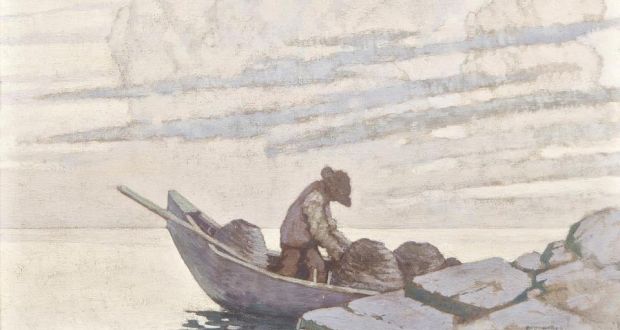


This post dedicated to all the living O’Sullivans, Foleys, Fitzgeralds, Kellihers, Brosnans and McElligotts and to all of those sleeping in Kerry’s green fields.

In memory of Joan O’Sullivan Hickey, proud native of Killorglin in Kerry, who I will meet again when the wheel of life runs down and peace comes over me.


Photos in descending order:

Carrantuohill Mountain at 3,046 Feet the highest in Ireland.

One of my proudest accomplishments is to have climbed it early one morning after a night of intensive training with my cousin Michael in Falvey’s Bar in Killorglin.

Killarney lakes at sunrise as seen from ‘Ladies View’

Slea Head, Dingle.

Brendan Kennelly (born 1936). Poet and Professor Emeritus at Trinity College. His collection, ‘The Man Made of Rain’ is never far from my reach.

John B Keane (1928 to 2002) Playwright, Publican, Storyteller of genius.

Monastic Settlement Skellig Michael – The home of a monastery for a dozen monks from the 6th to the 12th Century. A World Heritage Site and a liminal place between worlds.

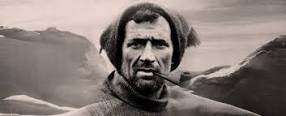
Tom Crean (1877 to 1938) Polar Explorer with Scott and Shackleton and a Homeric Hero.

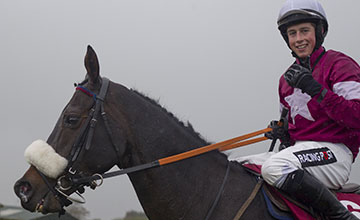
Bryan Cooper (born 1992) A Jockey I have sometimes entrusted my shirt to. His 3 winners at Cheltenham in 2013 allowed me to lay in a grand store of fine shirts for many a year.

Mick O’Connell (born 1937) in Valentia. A natural aristocrat in his bearing. Legendary Gaelic Footballer for Kerry. Selected for the GAA’s All Ireland Team of The Century. My uncle Joe (RIP) said he was the greatest player who ever lived and I never argued with my Uncle Joe.

Sigerson Clifford (1913 to 1985) Poet and Playwright. Reared in Cahirciveen. His, ‘Ballads of a Bogman’ has added many treasures to the Kerry Word Hoard.

Muireann Nic Amhlaoibh (born 1978) is a superlative singer in her native Irish and in English. All her recordings with Danu and solo come unreservedly recommended.
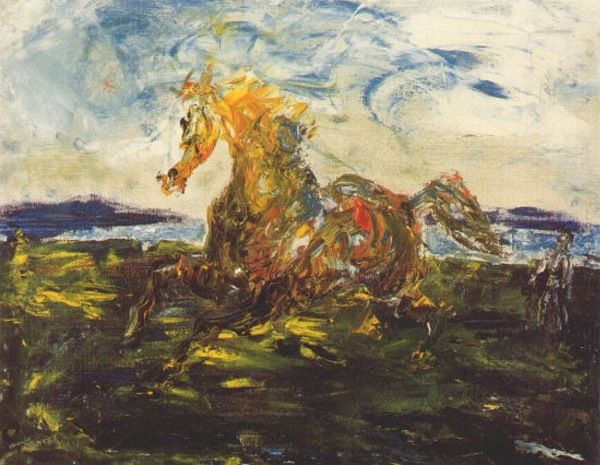
 

Christy Moore : The Cliffs of Dooneen, Jack B Yeats – Mystic Horse


The Home Place.

Never more real and vivid than when recollected in the imagination.

We are our memories.

And, our memories, particularly those which carry the most emotional charge, are constantly being selected, edited and recast.

The stream of memory is never stilled.

The genesis of a song, a poem, a story or a painting begins in an insistent whisper from the memory.

A whisper which cannot be ignored.

Such a whisper was heard in the 1930s by Jack McAuliffe from Lixnaw in County Kerry as he sat sat in a cottage near Dooneen Point.

In response he wrote a poem that became the ballad, ‘The Cliffs of Dooneen’.


The key duty of an creative artist is to closely attend to those whispers and make them real in words on the page, notes in the air or brush marks on the canvas.

And, the truth of the song or the poem or the painting is the truth of the imagination and cannot be reduced to the mundane metric of exact measurement.

You may not be able to see Kilrush and Kilkee form the Cliffs of Dooneen with the naked eye but I defy anyone alive not to see them, clear as the light of dawn, in the mind’s eye when conjured up with lyrical tenderness by Christy Moore and Planxty (featuring the heart piercing piping of Liam O’Flynn)

So too the trembling hare and the lofty pheasants making homes for their young.

And, whoever you are, wherever you are, however far you have traveled from your own native home far away from the mountains and away over the foam you will have within you memories of all the kind people you have left behind.

In the quiet watches of your dreams you will bathe in the streams and the meadows of your youth.

And, when you hear, ‘The Cliffs of Dooneen’ you will find yourself singing along with a full heart and tears in your eyes.

‘You may travel far far from your own native home

Far away o’er the mountains far away o’er the foam

But of all the fine places that I’ve ever seen,

There’s none to compare with The Cliffs of Dooneen

Take a view o’er the water fine sights you’ll see there

You’ll see the high rocky slopes on the West coast of Clare

The towns of Kilrush and Kilkee can be seen

From the high rocky slopes at The Cliffs of Dooneen

Its a nice place to be on a fine Summer’s day

Watching all the wild flowers that ne’er do decay

The hare and lofty pheasant are plain to be seen

Making homes for their young round The Cliffs of Dooneen

Fare thee well to Dooneen fare thee well for a while

And to all the fine people I’m leaving behind

To the streams and the meadows where late I have been

And the high rocky slopes of The Cliffs of Dooneen’


The featured Painter today is Jack B Yeats (1871 to 1957)

We return to the theme of The Horse in Irish culture.

I have seen many thousands of horses in my life yet I have never seen a horse so thrillingly, mystically, alive as the horse in Jack B Yeats painting above.


Paul Brady & Liam O’Flynn – The Rocks of Bawn

Christmas. New Years Day. Spring Solstice. Lent.

Easter. Midsummer Day. First leaf fall. First fall of snow.

Way markers of the passing year.

As the shadows lengthen, as they do for us all, you appreciate all the more the opportunity to celebrate with those dear to you now and remember those vanished like the melting snow so dear in the memory.

Each new feast chiming with all those that have gone before in the quickening parade of our lives.

If you are Irish, or of Irish stock, St Patrick’s Day is a true red letter day.

On my twitter account (@thomhickey55 – sign up now if you’re not signed up already!) I describe myself, among other things, as, ‘Almost Irish’.

That’s because though I was not born in Ireland both my parents and all my forebears were.

So, I unhesitatingly believe that whatever literary or rhetorical gifts I possess are drawn from a deep Celtic well.

My mother told me a million stories and taught me how to tell them too.

My Dad taught me how to listen to the important things that are always said in silences.

So, as I did last year (checkout those posts later) in the run up to St Patrick’s Day on the 17th I’m going to feature some favourite Irish songs, singers and musicians.

As a bonus this time each post will also feature the work of a distinctive Irish Painter/Artist.

The theme for the songs this year is Place. Landscape.

Ireland is a country where there is a deep and abiding attachment to place.

Especially the Home Place.

The Irish, wherever they may travel (and they have traveled all around the globe) never forget the Home Place.

Embed from Getty Images

*


The place where their family had its roots.

The landscape they knew so intimately which glows bright in their dreams even if they haven’t seen it with their waking eyes for decades.

Sometimes the Home Place was left to foster ambition.

Sometimes the Home Place was left because of poverty.

No one ever left without a backward glance.

Returning no one spies the coast from the air or from the rail of a ship without a salmon leap of the heart.

Today’s song, ‘The Rocks Of Bawn’ is sung by Paul Brady previously the subject of an extensive profile on The Immortal Jukebox.

Embed from Getty Images

*

No apologies for featuring him again.

Great traditional songs require a singer to bring great gifts of empathy and relaxed concentration to them.

Paul Brady is such a singer.

His style is not to impose himself upon the song but rather to surrender to the soul of the song.

To centre himself in the heart of a song and let its wonders bloom.

Here he is joined by the great Uilleann Piper, Liam O’Flynn, who carries on the tradition of masters like Willie Clancy and Seamus Ennis.

Embed from Getty Images

*

I can think of no instrument more haunting than the Uilleann Pipes.

Together they produce a performance which stills the heart and which will linger long in the spirit.

No live is so  charmed that it will be without some thankless ploughing.

And you never will be able for to plough The Rocks Of Bawn’.

Nothing brings the Home Place so vividly to mind as a song you heard in your youth.

‘And you never will be able for to plough The Rocks Of Bawn’.

Nothing will set tears a flowing more readily than a song you heard in your youth.

And you never will be able for to plough The Rocks Of Bawn’.

Nothing will remind you more of the longing child within you still than a song you heard in your youth.

And you never will be able for to plough The Rocks Of Bawn’.


The Artist featured today is the late Basil Blackshaw (1932 to 2016)

Born in Glengormley Antrim and reared in Boardmills County Down.

His paintings both his portraits and his evocations of country life and sports throb with life and colour.

Ireland loves The Horse.

There are few pleasures more sovereign for an Irishman than to cheer home to victory an Irish Horse, schooled by an Irish Trainer and ridden by an Irish Jockey to victory in The Gold Cup or The Grand National.

There are few silences so companionable as those spent watching would be champions exercising on the gallops in the breaking light of a winter morning.

Basil Blackshaw brings such a scene tenderly to life in his, ‘Morning Exercise’


Ella Mae Morse – Some Broad! Boogie, Blues & Rock ‘n’ Roll Pioneer!

Los Angeles 1946.

A Bar.

One you’d think twice about going into.

Smoky, dimly lit. The clink of glasses.

Low conversation.

In the background the sound of a Jukebox.

Voice Over:

‘The suit don’t fit so good these days.

If you tussle with Tojo you’re apt to drop a few pounds.

Still alive.

Which is more than you can say for Kelly, Kowalski and Sanchez.

They wont ever see Memphis or Macomb or Marshall again.

One thing I can tell you I ain’t never going back to Omaha.

I’m going to sit right here and drink until they throw me out of here and come back tomorrow and do the same again.

The best thing about this bar is that they leave you alone.

No one wanting to hear your life story if it’s about anything other than booze or broads or sports.

You can tell without asking who’s seen action. It’s in the eyes.

The most athletic thing I do these days is dance. When I get the chance.

Since I got back I been doing some catching up on the music scene.

The Jukebox here is stuffed with those records made out here on the West Coast.

Capitol Records.


Now, some days I ain’t exactly bursting with energy.

But, I find a handful of Nickels and The Jukebox a pretty good cure for all my ills.

And, there’s this singer, Ella Mae Morse.

Now she’s everything plus.


She can sure shake a tail-feather. 

And she can sing just about anything.

Swing, Ballads, Blues, Country tunes and that Boogie-woogie.

Sometimes she seems to squeeze ’em all together so she’s singing like no one you’ve ever heard before.

If you were listening on the radio you’d be hard pressed to know whether she was white or black.

She gets my nickel every time.

Ain’t no fighter like Joe Louis. Ain’t no Ballplayer like Ted Williams.

Ain’t no singer like Ella Mae Morse.

I gotta tell you if she snapped the whip I would make the trip and no mistake.

I gotta feeling I’m goin’ to be listening to Ella Mae for the rest of my days.

Here, time I was hitting the mattress. Have a handful of Nickels on me.

This one here from ’42, ‘Cow- Cow Boogie’, was just about the first record out on Capitol and the first record for Ella Mae. They couldn’t press enough!

See ya down the road a piece. Down the road apiece.’

End credits play …..


http://www.youtube.com/watch?v=p7a5hSjyvQk

Ah.

Ah, comma ti, ii, yi, aay, comma ti, yipply, yi, aay
Get along, get hip, little doggies indeed!

A Number One million seller!  Capitol Records well and truly launched.

Ella Mae was only 17 and this was the first take.

Johnny Mercer (who knew a thing or two about songs and recording) quashed her protests that she could do better by flatly stating – you can’t, nobody could.

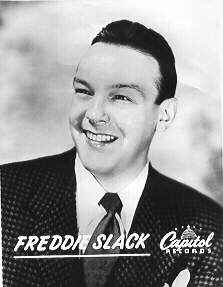
That’s the great Freddie Slack on piano.

The song came courtesy of Boogie-woogie guru Don Raye and Gene De Paul.

Jazz giant Benny Carter had a hand in it too.

From the get go you can hear that Ella Mae has just got IT. Man, has she got IT.

She was born in 1924 in Mansfield Texas. Her father, an Englishman was an accomplished drummer who may have gifted her a way with rhythm – but he didn’t stick around long.

Ella Mae and her mother, a fine pianist, moved to Paris Texas in the early 30s.

Growing up she listened and sang every kind of music and from the age of 9 she was up on stage performing.

In 1939 she joined Jimmy Dorsey’s Band but as he found out though Ella Mae looked every inch a woman and though she sang with astonishing maturity she was in fact only 14 years old.

Freddie Slack, then in the Dorsey Band, remembered her when he was signed to Capitol in 1942.

And, the rest, is as they say, History.

It was hard for Capitol to know how to frame Ella Mae’s career as she straddled so many styles and genres.

Making superb sides was the easy part (checkout, ‘Buzz Me’, ‘Get On Board, Little Chillun’ and ‘Patty Cake Man’) finding a marketable hit was more problematic.

In 1946 she was reunited with Freddie Slack and together they made a record which must have set Richter dials quivering, ‘The House of Blue Lights’.


http://www.youtube.com/watch?v=0sUZd6D64dA

That’s Don Raye duetting with Ella Mae on the jive talk introduction.

From then on it’s Freddie’s fleet fingers, a solid gone rhythm section and sultry Ella Mae wailin, scattin and generally setting the world on fire!

I don’t know about you but as soon as this starts up I’m lacing up my boots and getting ready to broom on down to my local knocked out shack on the edge of town.

Hep musicians recognised a classic when they heard one and covers of, ‘Blue Lights’ must number in the hundreds (my favourites being those of Jerry lee Lewis, Asleep At The Wheel and Chuck Berry).

Some sages say you can clearly see Rock ‘n’ Roll emerging in the grooves of, ‘Blue Lights’ and they won’t find me starting a fist fight about that.

As the 40s closed out Ella Mae continued to record arresting sides for Capitol (‘Pine Top Schwartz’ and, ‘Pig Foot Pete’ demand your attention) before retreating from the music business while she married and raised three children in short order.

She was back in 1951 with another prime slice of proto Rock ‘n’ Roll – a cover of Jack Guthrie’s 1947 hit, ‘Oakie Boogie’.

The Orchestral backing was under the baton of Nelson Riddle and Speedy West played typically brilliant pedal steel.


Whatever the tempo with Ella Mae you know you’re in for a deluxe trip.

The musicians behind her must have thought; right guys let’s really tear it up this gal can take care of herself.

Boy howdy were they right!

In 1952 she had another million seller with, ‘Blacksmith Blues’ utilising the combined skills of Billy May and Nelson Riddle.

In 1953 she recorded a knock out, hopped up, track called, ’40 Cups of Coffee’ which has always been a winner for me.


Truth to tell when Ella Mae steps up to the microphone I can’t imagine needing any kind of stimulant. She made over proof records that’ll have your head and heart spinning every time you hear them.

In 1954, a dozen years into her recording career Ella Made made one of the first and, let’s not beat about the bush, one of the greatest Rock ‘n’ Roll era albums of all time, ‘Barrelhouse, Boogie and the Blues’.

This is an astounding work demonstrating that Ella Mae had all the sass and style of the very best rhythm and blues singers.

It was way ahead of its time and for a white woman unprecedented and I would hazard still unequaled.

Foced to choose just one gem from this treasury I’ve selected the epochal, ‘Rock Me All Night Long’.

Who could resist such an invitation? Not me Bub!

And, that was more or less that.

Ella Mae had more children and her 15 year recording career with Capitol came to a close in 1957.

But, without doubt the music she made there will always live wherever a Jukebox is plugged in.

When Ella Mae calls the plays you’d be mad not to dig her ways!

She gets my Nickel every time.

Notes:

Bear Family and Rev-Ola have fine single CD compilations of Ella Mae’s Capitol years.

Being the besotted fan I am I couldn’t live without the magnificent 5CD 134 track set produced by Bear Family in 1997. Go on treat  yourself!

It is also well worth checking IMDb for her appearances on film as an actress and as featured singer.


Guitar Visionary Kelly Joe Phelps plays Bob Dylan & Leadbelly

‘… Kelly Joe Phelps plays, sings, and writes the blues. HOLD UP before you lock that in – forget about songs in a twelve bar three chord progression with a two line repeat and answer rhyme structure – though he can certainly do that when he wants to.

I’m talking about a feeling, a smoky, lonesome, painful – yet somehow comforting groove that lets you know that you are not alone – even when you’re blue. Play on brother.’ (Steve Earle)

Embed from Getty Images

‘I’ve heard Kelly Joe mention that he’s been inspired by people like Roscoe Holcomb, Robert Pete Williams, Dock Boggs, Mississippi Fred McDowell, and others. He seems to have absorbed all this (and all kinds of other stuff as well) and come back with something all his own.

Sounds like he’s coming from the inside out. The bottom up. He’s not just playing ‘AT’ the music or trying to recreate or imitate something that’s happened in the past. He seems to have tapped into the artery somehow. There’s a lot going on in between and behind the notes. Mystery. He’s been an inspiration to me.’  (Bill Frisell)

Modern music is saturated by the sound of you know what’s coming next, auto tuned, multi-tracked guitars.

Drowning in this aural tide you can forget that, in the right hands, the guitar can be a questing instrument; an instrument which can sound the depths of human emotions in this life of dust and shadows.

When Kelly Joe Phelps plays the guitar whether slide or finger picking what you hear is the sound of a musician who has indeed tapped into the artery.

I first encountered him more than two decades ago now at the tiny 12 Bar Club in London’s equivalent of Tin Pan Alley, Denmark Street.

Standing a couple of feet away from him I was able to read, as he tuned up, the scrawled set list at his feet. It included:

‘Goodnight Irene’, ‘The House Carpenter’, ‘Hard Time Killing Floor Blues’, ‘When The Roll Is Called Up Yonder’.

Fueled by my early evening libations I leaned towards him and said, ‘Wow, you’re going to have to be very good indeed to hold us with those songs without someone muttering every two seconds, ‘… Not as good as so and so’s version.’

Sensibly, he answered only with a wry smile before stilling the room in in the next hour with an astonishing display of instrumental virtuosity harnessed to a deep emotional understanding of both the Blues and the Gospel traditions.

Songs that were veritable foundation texts (in some hands museum pieces) came shockingly alive as Kelly Joe fearlessly explored the territory they opened up – voyaging wherever his heart and fertile musical imagination took him.

Listen now to his version of the canonical classic Leadbelly’s, ‘Goodnight Irene’ and marvel at the deliberate beauty and power of deep sea sway he brings to it.

Ever since I heard this take on Irene this is the one that plays in my dreams.


Born in the dwindling days of the 1950s Kelly Joe began his musical career as a bass player in modal and free Jazz combos where the ability to improvise and react to your fellow musicians was paramount.

At the same time, as an alert listener, he was immersing himself in the core deep works of artists like Blind Willie Johnson, Mississippi John Hurt, Fred McDowell and Dock Boggs.

Artists who made singing in the blood music which still casts a profound spell. Taking the slide guitar as his vehicle to explore this universe he began to cast spells of his own.

Kelly Joe’s music is all about reaching, reaching, for the other shore.

Listening to Kelly Joe play James Milton Black’s 19th Century hymn, ‘When The Roll Is Called Up Yonder’ there can be no doubt that we are brought in soul’s sight of that other shore.

Now, if you are a musician of Kelly Joe’s class and intuitive understanding of what makes the songs of the , ‘Old Weird America’ so profound and eternally relevant you will struggle to find such rich material in contemporary songbooks.

Happily, the Keeper of American Song, Bob Dylan, has laid down a storehouse of mystery filled dancing spells which musicians of spirit will always want and need to explore.

Bob once said that he saw himself a song and dance man. Kelly Joe takes him at his word here whirling, ‘Mr Tambourine Man’ round a mystic Maypole.

As his career has progressed Kelly Joe has featured more original material. His own fine songs show how deep he has drunk at the well of the blues and gospel masters.


Kelly Joe’s music is filled with ancient lore and wholly alive in the here and now.

Surrender to his spell.

Notes:

There is a handy 2 CD Kelly Joe compilation, ‘Roll Away the Blues’ on the Nascente label which I highly recommend.

My own favourites in his excellent catalogue are:

‘Lead Me On’

‘Roll Away the Stone’

‘Shiny Eyed Mr Zen’

‘Beggar’s Oil’

‘Brother Sinner and the Whale’

Kelly Joe is a transfixing live performer. Seek out You tube for some wonderful clips.

Guitar buffs should seek out his finger picking tutorials.


Fats Domino : Now in his 90th Year!

Fats Domino, Rock ‘n’ Roll Forefather is now in his 90th year.

Thinking of all the immense pleasure his music has given me and millions of others I could not let such an august anniversary pass without a full salute from The Immortal Jukebox.

So, I am reblogging my previous tribute.

I also want to pay homage to the magnificent saxophonist Herb Hardesty who died just before Christmas last year.

That’s Herb you can hear soloing on, ‘Ain’t That A Shame’ and, ‘I’m Walking’ and that’s him too playing one of the most perfect parts in all Rock ‘n’ Roll on, ‘Blue Monday’.

As a birthday treat I am adding what may be my all time favourite Fats track – ‘Be My Guest’.

A record which beautifully illustrated the sheer joy woven into every bar of a Fats Domino record.

A record which demonstrated the glorious camaraderie of the Fats Domino Band.

A record which, especially in the wildly addictive horn breaks, virtually provides the corner stone sound for Ska to develop in Jamaica in the 1960s.


http://www.youtube.com/watch?v=XUSibSbOZDE

Had I been born in Louisiana in the 1920s I know what I would have done with my life if I had survived World War Two intact and by fair means or foul accumulated a decently thick bankroll.

I would have bought a roadhouse on the outskirts of New Orleans.

Let’s call it, ‘The Blue Parrott’. And, all the dollars I spent and all the hands I hired would have had but one aim – to make the Parrott the jumpinist, jivinist, most joyful Joint for hundreds of miles around.

Embed from Getty Images

On the door and looking out for trouble before it becomes TROUBLE is an ex Marine called Tiny who stands six foot six and weighs in at 250 pounds. Tiny stormed the beach at Guadalcanal and came home with a limp and a chest full of medals.

Tiny never gets mad but he does get mean. No matter how drunk the drunks get and no matter how tough they think they are when they’re drunk no one, no one, thinks they can take Tiny down. Tiny maintains good order.

Behind the bar is Pops. Pops has looked sixty years old since I was six. He always will. Pops has heard and nodded sympathetically at every hard luck story ever told as he pours another shot of alcoholic redemption. Everyone know Pops understands. Everybody loves Pops. Pops has never touched a drop.

Out of sight in the Kitchen is Ferdy our chef. Ferdy don’t talk much. In fact he rarely says a word. Nobody cares about that because Ferdy can cook. Really cook.

So people who don’t come for the booze or the company or the music come anyway because they can’t resist Ferdy’s food. He will have you licking your lips just inhaling the aromas from his Gumbo, Jambalaya, crawfish étouffée and shrimp creole.

In the corner there’s a Wurlitzer Jukebox primed to pump out Hank Williams, Joe Turner, Louis Jordan and Harry Choates until the wee small hours.

I must, of course, have live music. A Roadhouse needs a House Band. So, I want a Band that’s has rural roots and city smarts.

I want a Band that folks will want to dance to, to listen to, to cry into their drinks to, to fall in love to, to remember the good and bad times in their lives to, to stare out the door and dream of another life to.

A Band people come to see the first night they get home from the Service or the Slammer so they can believe they really are home.

I want a Band that can whip up a storm one minute and lull a baby to sleep the next. I want a Band that you can stand to listen to three nights a week for year after year.

I want the Band to have a front man who makes people feel good just looking at him.

Embed from Getty Images

I want a drummer who lives in and for rhythm.

Earl Palmer

I want saxophone players who can play pretty or down and dirty as the song demands.

Embed from Getty Images Embed from Getty Images

I want a guitar player who never shows off but is so good he makes other guitar players despair and consider taking up the banjo. I want a Bass player who everybody feels but nobody notices.

I want a piano player who has the left hand of a deity and the right hand of a angel on a spree. I want the piano player to sing with such relaxation that it seems like he is making up every song on the spot.

Embed from Getty Images

I want the Band to have a secret weapon in a songwriter and arranger who knows all the music of the past and has worked out a way to make the music of the future from it.

Embed from Getty Images

I want Fats Domino, Earl Palmer, Herb Hardesty, Red Tyler, Lee Allen, Ernest McLean, Frank Fields and Dave Bartholomew.

I want, and will have, the best damn Band that ever came out of New Orleans – The Fats Domino Band!

http://www.youtube.com/watch?v=lHunRdJnrWs

Well, well, well …. Wah, Wah, Wah, Wah, Wah, Wah.

Baby that is Rhythm and Blues and Baby though you didn’t realise it at the time – Baby that is Rock ‘n’ Roll.

By my reckoning Fats Domino’s, ‘The Fat Man’ recorded in December 1949 in New Orleans and co-written with Dave Bartholomew and blues history is the first great record of the 1950s.

Some things are immediately apparent. Fats Domino sings with overflowing charm while his piano combines surging boogie-woogie with irresistible triplet flourishes. Right about here the great Earl Palmer invents Rock ‘n’ Roll drumming with his driving backbeat which lifts the Band and our spirits until his final fill decisively says, ‘That’s All Folks’ and you rush to cue it up again.

For the musically sophisticated there’s an excellent analysis of the crucial role of Fats Domino’s Band in the development of Rock ‘n’ Roll in Ned Sublette’s book, ‘The Year Before The Flood: A Story of New Orleans’.

For the rest of us all we need to understand is that Earl Palmer’s bass and snare drum attack owed a lot to the style of New Orleans Parade Bands and that the way the whole Band locked into its rhythmic parts drew on Cuban, ‘Latin’ traditions to create something new under the sun in the Crescent City.

Listening here it’s abundantly clear that this is a Band that really does know its way around and that we should sign up now for a glorious cruise into the future. Of course, New Orleans picked up on Fats first with some 10,000 citizens putting their money down to buy, ‘The Fat Man’ in the first fortnight after its issue. A million or so sales followed as the entire United States fell under Fats’ spell.

We scroll forward half a decade now to a record which still sounds dew fresh 60 years after it was recorded in 1955. ‘Ain’t That A Shame’ was an instant classic and the passage of time has only added to its charms.

Fats grew up speaking Creole French and that must be a factor in his immensely winning vocal style. The Lower Ninth Ward where Fat’s family settled after moving Vacherie still retained a country feel despite its proximity to the city. So there always remained something of the relaxed rural about Fats nature.

Maybe that explains why I can’t think of anyone in the entire history of Rock ‘n’ Roll who exudes such bonhomie as Fats. As soon as he starts to sing the clouds part and the sun lights up clear blue skies. It’s an amazing gift he shares with his great New Orleans forebear Louis Armstrong. His piano adds further shimmer and dazzle.

Herb Hardesty has a lovely sax part here which always has me sets me gleefully swaying along with him and the Band. It seems the recording was compressed and speeded up to ensure favour with the mainstream (white) audience. Well, that sure worked!

‘Ain’t That A Shame’ is regularly used in movies to evoke the1950s most notably in George Lucas’ best film, ‘American Graffiti’.

Not too long after it was issued at 251 Menlove Avenue Liverpool the first song full time teenage rebel and would be rocker John Lennon learned to play was none other than, ‘Ain’t That A Shame’. John would formally tip his hat to Fats in his essential covers record, ‘Rock ‘n’ Roll’.

Following the major success of ‘Shame’ both through Fats version and Pat Boone’s cover the doors to the pop world swing widely open and Fats, always guided by Dave Bartholomew, took full advantage with a series of huge hits that had global impact.

Blue Monday tells a tale we all know all too well. Oh, I’ve had many, many, of those Sunday mornings when my head was bad yet I still grinned at the apparition in the mirror and concluded as the Seltzer fizzed that it was all worth it for the time that I had.

Naturally while reflecting that the awful ordeal of Monday would have to be faced I consoled myself that Fats knew and understand my feelings and somewhere in the grooves of his song lay the promise of the next, sure to be even better, weekend to come. This is one of the great vamping grooves that engages you from the get go to the thumping valedictory chord.

Blueberry Hill had been recorded many times before Fats took permanent ownership of the song in 1956. Fats and the Band invoke a bitter sweet recollection of the trajectory of love; part rural reverie, part lazy post love making langour. Their collective vocal and instrumental sound glides you through the song like an expertly piloted pirogue.

One last song. From the pen of superb singer and songwriter Bobby Charles the hypnotic marvel that is, ‘Walking to New Orleans’. String arrangement courtesy of Milton Bush. The relaxation maintained throughout with the sure groove could only be Fats Domino. This is one of those songs that the entire family sings along to when we are on long car journeys!

http://www.youtube.com/watch?v=Q2ezJmPdsTA

Fats Domino was and remains the King of New Orleans. The unique rhythmic signature of the city resounds joyfully through every bar of every Fats Domino recording.

They ought to put a statue up in the Lower Ninth and name a Square and a Bridge or two after him. He deserves nothing less.

Some personal memories to conclude.

In the late 1970s I went to see Fats Domino in concert at London’s Hammersmith Odeon. I only decided to go at the last minute and despite my silver tongue couldn’t persuade any of my hipper than hip friends to accompany me.

I was marooned up in Row YY at the very back of the Upper Circle. Friendless and far from the Bar. None of that mattered once Fats opened up with, ‘I’m Ready’. For the next hour or so as Fats played standard after standard with wit, playful power and affectionate authority I transcended to a state of near nirvanic bliss.

It was a rain soaked night but I waited for an hour after the show outside the Stage Door just to call out, ‘Thanks and God Bless You Fats!’ as he got into his bus.

That night remains one of my benchmark nights for musical excellence and personal happiness. Thanks and God Bless you Fats.

Now that there is more than a distinguished tinge of grey in my beard I lean more and more on the sovereign, reliable pleasures of life.

A good night’s sleep next to the woman I love; a mug of fresh brewed coffee in the morning, a walk on the common, the poetry of Herbert, Heaney and Hopkins. A glass of Malt Whiskey as the sun sets. The films of John Ford and Buster Keaton and the good humoured, life affirming, music of Antoine Fats Domino.

And, echoing Fats I’m ready, willing and able to follow this regime until someone puts out the big light.


Seth Lakeman: ‘Solomon Browne’ – Cornwall, Lifeboats, Life, Death, Pride & Heroism

‘Greater love hath no man than this, that a man lay down his life for his friends.’ (Gospel of Saint John)

‘The greatest act of courage that I have ever seen, and am ever likely to see, was the penultimate courage and dedication shown by the Penlee [crew] when it manoeuvred back alongside the casualty in over 60 ft breakers and rescued four people shortly after the Penlee had been bashed on top of the casualty’s hatch covers. They were truly the bravest eight men I’ve ever seen, who were also totally dedicated to upholding the highest standards of the RNLI.’ (Lt Cdr Russell Smith US Navy Pilot)

‘Now, never had a lifeboat fought in vain
She could have made a dash for port but she tried again
All sixteen perished in that mighty wave
It tossed them overboard into a watery grave.’  (Seth Lakeman)

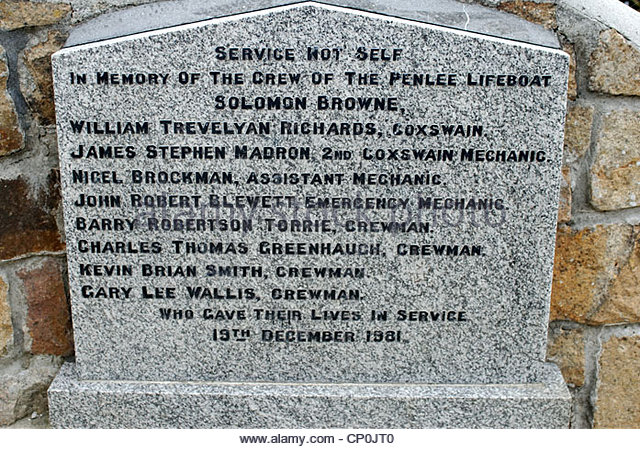
mousehole-cornwall-uk-memorial-to-the-crew-of-the-penlee-life-boat-cp0jt0

This past week I have been taking time off in the far, far West of England.

Actually, just about as far west as the land extends before it cedes to the dominion of the mighty Atlantic Ocean.

Cornwall. Kernow.

Kernow a’gas dynergh. Welcome to Cornwall.

A land. A proud Kingdom.

A Kingdom with a language and proud history of its own.

A Kingdom of capes and jagged rocky shores.

A Kingdom of Celtic crosses and Celtic saints.

A land of of standing stones, barrows, carns, quoits, fougos, healing wells and martial forts.

A wild Kingdom where even the all conquering Roman Army feared to tread.

A Kingdom where for centuries men dug deep into the earth and under the sea to mine Tin.

A Kingdom where for centuries men put to sea in all weathers to bring Fish back to Harbour.

A Kingdom where for centuries smugglers under cover of darkness outwitted the Excise Men.

A Kingdom surrounded by and held in the spell of the Ocean.

A spell that can enchant. But, also a spell that can lead to doom.

So, in Cornwall the Ocean is celebrated, feared and respected.

For every time mankind leaves the land to voyage upon the ocean safety is being exchanged for peril.

For the Ocean has ancient power beyond power.

For the Ocean is restless and relentless.

And wholly indifferent to the fate of puny man and all the arts of seamanship.

Embed from Getty Images

So, before venturing out on the pitiless Ocean and while voyaging on that Ocean it is wise to be forewarned as to what lies in store by listening to, ‘The Shipping Forecast’.

The Shipping Forecast is a BBC radio programme which every day at 00.48, 05.20, 12.01 and 17.54 hrs broadcasts weather reports and forecasts for the 31 sea areas around the coast of the British Isles.

For many, like me, listening to the Shipping Forecast at 00.48 has become a form of meditation.

First with the lullaby of Ronald Binge’s, ‘Sailing By’ musical theme then with the comforting, familiar litany of:

Viking, North Utsire, South Utsire, Forties,

Cromarty, Forth, Tyne, Dogger,

Fisher, German Bight, Humber,

Thames, Dover, Wight, Portland, Plymouth,

Biscay, Trafalgar, Finisterre, 

Sole, Lundy, Fastnet, Irish Sea, Shannon,

Rockall, Malin, Hebrides, Bailey,

Fair Isle, Faeroes, Southeast Iceland.

The clip below lasts for 13 minutes so you may want to dip in for just a few minutes to get the idea (though I’m sure many of you will find yourself in thrall to to its poetic rhythm and listen to the end).


For some though, playthings of the wanton Wind and Ocean, the message of the Shipping Forecast foretells peril and doom.

Life in terror and horror giving way to watery death.

So it was on 19 December 1981 with 60 foot waves whipped up by hurricane force winds of up to 100 miles per hour that the RNLI Penlee Lifeboat, from Mousehole, launched to attempt a rescue of the crew and passengers of the stricken MV Union Star as it was blown helplessly across Mount’s Bay towards the rocks of Boscawen Cove.

Rescue by helicopter in such treacherous conditions had proved impossible.

So the call went out to the Penlee Lifeboat Station where it was answered by an 8 man volunteer crew of the Solomon Browne.

Answered by experienced seamen who knew in their stout hearts that to launch on such a night was to stare death squarely in the face.

Answered by Lifeboat Men who conscious of the extreme conditions still chose, not for gain or glory, to risk their own lives for those unknown to them who were in peril on the sea.

There were 8 crew and passengers on the MV Union Star and 8 crew aboard the Solomon Browne that fateful night. And, before the sun rose again over Mount’s Bay 16 lives had been lost – swallowed whole in the insatiable maw of the Atlantic Ocean.

Such a tale of tragedy and heroism cries out to be commemorated and honoured in a folk ballad.

Seth Lakeman writing and performing with a steady head, a full heart and all the energy at his command has given us a superb ballad which has the rare combination of narrative drive and emotional empathy. It can be found on his excellent record, ‘Poor Man’s Heaven’.


The crew of the Solomon Browne, under the command of coxswain Trevelyan Richards, despite the ferocity of the conditions repeatedly went alongside the MV Union Star.

It appears from the last radio contact that they had succeeded in getting 4 people off but that all were lost in the attempt to rescue the other 4 aboard the coaster.

May they all rest in peace.

There are dark days and black nights when all of us may be tempted to despair at the tawdry and selfish nature of much of modern life.

Yet, the life, death and courage of the crew of the Solomon Browne should serve to remind us that the best of us are capable of awesome courage and that there are still those prepared to risk their own lives for others.

Within a day of the loss of the Solomon Browne enough people from Mousehole had volunteered to form a new Lifeboat crew.

Despair is an indulgence.

If we have courage. If we have faith. If we have love we can voyage through the darkest night and the stormiest seas.

‘That lifeboat thundered through an angry sea was called Solomon Brown and her company’.

May their tale be told for ever more.


Dedicated to the memory of the crew of the Solomon Browne:

Trevelyan Richards (Coxswain, Trawler skipper)

Stephen Madron (Second Coxswain, Ships Pilot)

Nigel Brockman (Assistant Mechanic, Fisherman, fish Auctioneer)

John Blewett (Emergency Mechanic, Telephone Engineer)

Kevin Smith (Crewman, Merchant Seaman)

Barrie Torrie (Crewman, Fisherman)

Charlie Greenhaugh (Crewman, Landlord of the Ship Inn)

Gary Wallis (Crewman, Fisherman)

and to those who lost their lives on the MV Union Star :

Henry Morton (Captain)

James Whittaker (Mate)

George Sedgwick (Engineer)

Anghostino Verressimo (Crewman)

Manuel Lopes (Crewman)

Dawn Morton 

Sharon Morton

Deanne Morton

Every day and night the crews of RNLI Lifeboats stand ready in all weathers to come to the rescue of those in peril on the Sea.

Please support them with a donation if you can.

With thanks to Gerry and Sue for so generously providing a wonderful home away from home in Cornwall.


Curtis Mayfield & Major Lance express the inexpressible : Um, um, um, um, um, um!

‘Now that I’m a man I think I understand sometimes everyone must sing this song

Um, um,um, um, um, um,

Um, um, um, um, um, um,

Um, um, um, um, um, um,

Um, um, um, um, um, um’

The songwriting genius of Curtis Mayfield and the seductive tones of Major Lance combine to create a Chicago Soul masterpiece and an anthem for us all in these, ‘interesting times’.


It may not surprise long term readers of The Jukebox to learn that I am a compulsive journal keeper.

I read a lot of newspapers and subscribe to a wide selection of specialist magazines which I scrupulously annotate before I make journal entries trying to pin down my version of posterity.

To make it easier to look up one of my particular interests later I prefix every entry with a code letter.

So, if an entry concerns Ireland an ‘I’ precedes the text. My memorials of notable deaths have, ‘Obit’ in front.

And so on.

There is one prefix which seems to be cropping up more and more these days demanded by articles I have read which have had my eyebrows shooting up to the skies in my bewildered head. That prefix is (!!).

(!!) does not necessarily indicate approval or disapproval.

It’s rather a chastening reminder that the world, the people in it, and the daily cavalcade of events are more mysterious, various and downright strange than my addled mind can adequately comprehend.

Sometimes all you can say, whistling a happy tune or humming a death tempo dirge, is:

Um, um, um, um, um, um,

Um, um, um, um, um, um,

Um, um, um, um, um, um

Um, um, um, um, um, um ..

Let’s kick off with this entry which burst back into my mind recently.

The source is H L Mencken:

Embed from Getty Images


‘All we got to say on this proposition is this: first, you and me is as good as anybody else, and maybe a damn sight better; second, nobody ain’t got no right to take away none of our rights; third, every man has a right to live, to come and go as he pleases, and to have a good time however he likes, so long as he don’t interfere with nobody else’ (!!)

Um, um,um, um, um, um,


little-auk-calling

‘Normally we see 100 Little Auks a year in St Cuthbert’s beloved Farne Islands. Today on the 89th anniversary of the end of World War 1 we saw 29,000’ (!!)

The Hamza River flows for some 3,700 miles at a depth of 13,000 feet below The Amazon River. (!!)

Um, um,um, um, um, um …

the-champ

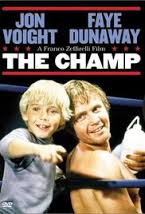
‘The death scene in the film, ‘The Champ’ with Ricky Schroder and Jon Voight was found by a psychology professor from the University of California-Berkeley, to represent an emblem of pure sadness. The clip has since been used in experiments that range from testing the tearful responses of depressed people, elderly people and people with eating disorders to tracing the spending habits of sad people.’ (!!)

Um, um,um, um, um, um …

polar-bea

‘Polar Bears are Irish. Modern polar bears share a distinct DNA sequence, passed down the female line, with their now extinct brown ancestors. The same DNA fingerprint is absent from other species of brown bear alive today. It is thought the link arose from interbreeding between prehistoric polar bears and female brown bears when their paths crossed as the Irish climate cooled.’ (!!)

Um, um, um, um, um, um ..

Embed from Getty Images


‘Mary Prince lived in The White House during Jimmy Carter’s presidency as a housekeeper. In addition to his other duties President Carter was her parole officer as she was a convicted murderer. She had previously become Amy Carter’s nanny following assignment to the then Georgia Governor’s mansion.’ (!!)

Um, um, um, um, um, um ..

Embed from Getty Images


‘When former World Heavyweight Champion Sonny Liston’s dead body was discovered all that was found with him was an ounce of heroin, a shot of vodka, a gun and a crucifix (the Mafia like to keep things simple).’ (!!)

Um, um, um, um, um, um ..

juzcar

‘Located 113 km away from the city of Malaga and 25 km from Ronda, in the autonomous province of Andalusia, Juzcar has become a hotspot for worldwide travelers, and one of the most recognizable villages in Spain. Once a traditional white village, the picturesque hamlet changed its look in the summer of 2011, becoming the first and only official Smurfs village in the world.’ (!!)

Um, um, um, um, um, um ..

hudson-super-6

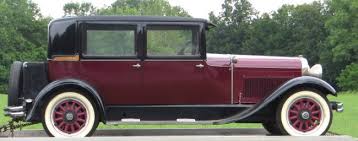
‘In 1930 Charlie Heard a taxi driver from Geelong, Australia hesitated only briefly before accepting a fare to take Ada Beal and her two lady companions to Darwin and back – a distance of some 7,000 miles. Charlie drove a 1928 Hudson, Miss Beal had a wooden leg and always wore a fur coat. The fare was in the order of 9,000 Australian Pounds. All parties returned safely to Geelong with stories to tell. Charlie bought a service station and stayed close to home therafter,’ (!!)

Um, um, um, um, um, um ..

mark-sykes-001

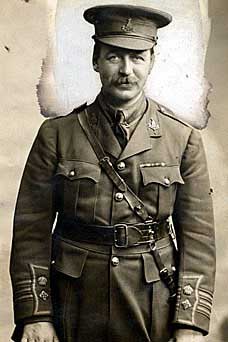
‘At a solemn service before sunset in a rural Yorkshire churchyard a battered lead-lined coffin was reburied hours after being opened for the first time in 89 years. As prayers were recited, samples of the remains of Sir Mark Sykes, the aristocratic diplomat and adventurer whose grave had been exhumed, were being frozen in liquid nitrogen and transported to a laboratory with the aim of saving millions of lives.

During his life, Sir Tatton Benvenuto Mark Sykes made his mark on the world map. As the British government’s lead negotiator in a secret 1916 deal with France to carve up the Ottoman Empire, he laid the groundwork for the boundaries of much of the present-day Middle East and, according to some critics, its current conflicts.

But it was the manner of the death of this Conservative MP, British Army general, and father of six children, that may yet prove the source of his most significant legacy by providing key answers in how medical science can cope with 21st century lethal flu pandemics.

Early in 1919, Sir Mark became one of the estimated 50 million victims of the so-called Spanish flu and died in Paris.

His remains were sealed in a lead-lined coffin and transported to the Sykes family seat in Yorkshire. He was buried in the graveyard of St Mary’s Church, adjoining the house.

Were it not for the fact that Sir Mark’s body was hermetically sealed by a thick layer of lead, the story of his life would have passed quietly into history.

But the accident of chemistry – the decay of soft tissue encased in lead is dramatically slowed – has presented scientists investigating ways to deal with the inevitable mutation of the H5N1 “bird flu” into a lethal human virus with a unique opportunity to study the behaviour of its predecessor.

There are only five useful samples of the H1N1 virus around the world and none from a well-preserved body in a lead-lined coffin. Sir Mark’s descendants are delighted that his influence may reach a different sphere of human endeavour. His grandson, Christopher Sykes, said: “We were all agreed that it was a very good thing and should go ahead. It is rather fascinating that maybe even in his state as a corpse, he might be helping the world in some way.” (!!)

Um, um, um, um, um, um ..

brian-bevan

‘A lifeboatman who saved the lives of at least 300 people and was awarded the service’s equivalent of the Victoria Cross retired on Friday after 27 years spent braving the North Sea.

Coxswain Brian Bevan, 55, would be rejected if he applied to join the Royal National Lifeboat Institution today. The ability to swim 100 metres fully clothed is now a prerequisite – and he gave up learning to swim after he was thrown in at the deep end and nearly drowned in a prank on a school swimming trip in the 1950s.

He observed: “You certainly don’t need to swim to man the lifeboat. Your lifejacket keeps you afloat.”

Pinpoint timing and a cool head helped Mr Bevan to earn the RNLI Gold Medal during a mission in a force 10 storm on Valentine’s Day 22 years ago.

He remains the only lifeboatman to receive the bronze, silver and gold medals of the Royal National Lifeboat Institution at a single ceremony.

He has no plans to learn to swim.'(!!)

Um, um, um, um, um, um ..


fra-angelio

‘When Jean Preston in the 1960s came across two small panels depicting medieval saints in a box of unwanted items up for a quick sale, she thought they they had an enigmatic quality and were, ‘quite nice’.

Miss Preston, from Oxfordshire, was working as a manuscript curator in California. Her father bought them for a couple of hundred pounds to indulge her interest in curious works.

For decades they hung, partly obscured, behind the door of her spare room. It was only after Miss Preston’s death, at the age of 77 that the panels were found to be key works (worth over £1m) by the Renaissance master painter, Fra Angelico, solving the 200 year mystery of their disappearance.’ (!!)

odell


‘For the first time in almost 60 years, Dianne Odell’s family home was silent yesterday. Only a string of well-wishers interrupted the eerie calm that pervaded the house where, for as long as anyone can remember, a noisy electric motor had powered the massive ‘iron lung’ pumping air in and out of her body.

Miss Odell had been in the iron lung for more than 50 years after contracting Polio in her youth. She was believed to be the world’s longest-surviving victim of polio to have spent almost her entire life inside an iron lung, a now virtually obsolete medical device that keeps patients alive by forcing air in and out of their paralysed bodies.

She was cared for by her close family together with a community of friends and admirers, with whom she made eye contact through an angled mirror. Despite the difficulties of Ms Odell’s condition, she managed to get a high-school diploma, take college courses, and even write a children’s book about a “wishing star”‘ called Blinky – all from the confines of the living room of her home.

Miss Odell proved the truth of the observation of the great moral philosopher Victor Frankl; that everything can be taken from you but one thing : the last of human freedoms – to choose your attitude in any set of circumstances, to choose your own way.

Recalling her life Miss Odell said:

I remember walking to a ball game with daddy and I remember being on a train. It seems like I can remember playing out in the mud one day.

But I’ve had a very good life, filled with love and family and faith. You can make life good or you can make it bad. I’ve chosen the good.’ (!!)

Um, um,um, um, um, um,

Um, um, um, um, um, um,

Um, um, um, um, um, um

Um, um, um, um, um, um ..

Sometimes the world is too much to take in. Too much.

In those times I find respite in the gracious words and melodies of Curtis Mayfield and the artless art of Major Lance.

I cue up, ‘Um, um, um, um, um, um’ and dance until my heart is full and my mind is free.

Give it a try.

Rosanne Cash, Eric Bibb, John Phillips and Scott McKenzie sing Hedy West : 500 Miles

‘We leave something of ourselves behind when we leave a place, we stay there, even though we go away. And there are things in us that we can find again only by going back there’  (Pascal Mercier)

‘The desire to go home that is a desire to be whole, to know where you are, to be a point of intersection of all the lines drawn though all the stars, to be the constellation- maker and the center of the world, that center called love.’ (Rebecca Solnit)

‘You can’t go home again.’ (Thomas Wolfe)

‘Lord, I’m one, Lord, I’m two, Lord, I’m three, Lord, I’m four,

Lord, I’m five hundred miles away from home.’ (Hedy West)

Much meaning can be expressed in so few letters of the alphabet

Just four will do.

Good. Evil. Luck. Fate. Time. Fear. Hope. Hate. Womb. Tomb. Life. Love.

And one four letter word might contain them all.

Home. Home.

The home you were born in; the home you grew up in, the home that was your shelter and refuge.

The home you left with tears in your eyes.

The home that lives forever in your heart and your mind’s eye.

The home that was your prison.

The home you left without a backward look.

The home you’ll never go back to now you’ve made a home of your own.

Home, home, home.

Should you write a true song evoking the longing for home when the tides of time have taken you far away you’ll find singers to sing that song for evermore.

Hedy West wrote such a song, ‘500 Miles’


Crystal clear. Mountain dew.

Banjo, voice, Presence, centuries of the ballad tradition.

Fiddle tunes and songs called Rueben’s Train, The Railroader’s Lament and 900 Miles all swirl in the imagination of a young woman growing up in a home suffused with tunes and stories and songs.

Great Uncle Gus plays the fiddle, Gradma Lillie plays the Banjo and has a bottomless well of ballads and laments that seem to float on the breezes all around.

Dad, Don West, is a poet (‘Clods of Southern Earth’), a labor organiser, a civil rights activist, an oral historian and inspiration.

west_don_photo

Hedy has a voice. She plays the Banjo in her own style.

She has the austere gravitas of a classical bard.

When she sings the room stills. When she sings she has something to say.

She has a calling.

A calling to tell the stories of the disregarded rural poor.

A calling to tell their stories in songs that express, and more honour, the depth of their struggles and the fullness of their humanity.

In a career of more than five decades taking her from folk contests in her native Georgia to Greenwich Village, Carnegie Hall, London and venues all over the globe it’s a calling she fulfills with steadfast hope, faith and love.

In the 1950s folk world a song as true and singable as 500 Miles scorches across the continent like a raging forest fire.

It instantly becomes a folk standard with each group or artist adapting the lyric and instrumentation to suit their own style and the image of home they carry with them.

‘Lord, I’m one, Lord, I’m two, Lord, I’m three, Lord, I’m four,

Lord, I’m five hundred miles away from home.’

As far as I can tell the first notable recording of the song is by The Journeymen in 1961.

Now, you’d have to be a scholar of the American Folk Revival to sagely nod once their name is mentioned. Yet, almost all of us came to know the members of the group through their later careers.

journeymen

John Phillips became the leader of prolific hit makers The Mamas & the Papas, Scott McKenzie had a whole generation singing, ‘San Francisco (Be Sure To Wear Flowers In Your Hair) while Dick Weissman achieved eminence as a banjo picking musicologist and folklorist.


Listening to this time suspending version in soft sift black and white dreams I drift through the home of my own childhood.

Streetlights glow the palest yellow as they struggle to penetrate the blanket like London Fog of the 1950s.

Spectral trolley buses are boarded by attentively following their clanging sound until they suddenly loom up before you.

Snow surrounds market stalls piled high with cheap goods sold as wondrous bargains you must not be without – ‘Buy now Mrs! When they’re gone they’re gone!’

Cocooned in a two room first floor flat a young boy, certain in his bones that he is the constellation-maker and centre of the world, learns to read, ‘Treasure Island’ and dreaming of wooden ships, wooden legs, parrots, pirates and buried plunder begins to dream stories of his own.

‘Lord, I’m one, Lord, I’m two, Lord, I’m three, Lord, I’m four,

Lord, I’m five hundred miles away from home.’

As we have seen from the previous post here on The Jukebox when it comes to recognising an American standard Johnny Cash is your go to man.

Johnny took his curatorial role so seriously that he drew up, ‘The List’ – a compendium of great songs he entrusted to his daughter Rosanne.

Following her father’s death Rosanne returned over and over again to The List and the result was a luminously beautiful record featuring haunting tracks like Dylan’s , ‘Girl from the North Country’, ‘Long Black Veil’, Motherless Children’ and, ‘Miss the Mississippi and You’.

The one I come back to the most though is her devoutly heartfelt take on 500 Miles.


Johnny sure would have been proud.

‘Lord, I’m one, Lord, I’m two, Lord, I’m three, Lord, I’m four,

Lord, I’m five hundred miles away from home.’

Great songs call out across the miles, across genres and cultures and across time.

The veteran Acapella group The Persuasions uncover the longing, the loss, the mourning and the journey to the farther shore that awaits us all.

Their Gospel and Spiritual version of 500 Miles makes a congregation of us all.

‘Lord, I’m one, Lord, I’m two, Lord, I’m three, Lord, I’m four,

Lord, I’m five hundred miles away from home.’

http://www.youtube.com/watch?v=c5zE9qH5Hvg

500 Miles is a song that speaks from and to the bonds of familial love.

I’ll conclude with a blessed version by a father and son, Leon and Eric Bibb, which has the quality of a foot sore pilgrimage concluding in longed for peace and reconciliation.

‘Lord, I’m one, Lord, I’m two, Lord, I’m three, Lord, I’m four,

Lord, I’m five hundred miles away from home.’


We are all pilgrims.

May we all find peace reconciliation and the home we seek.

Notes:

I love every record made by Hedy West.

Seek out her CDs on the Vanguard, Topic and Bear Family labels for a lifetime of inspirational listening.

The only CD I can find by The Journeymen is, ‘New Directions In Folk Music’ on Collectors Choice from 2010 which is a nice collection of thistledown folk.

Eric and Leon Bibb’s, ‘A Family Affair’ hard to find is a gem well worth the search.


Johnny Cash, Debbie Harry & Gene Autry chase Ghost Riders In The Sky!

The ‘Way out West’ Series No 1

Music hath charms. Music hath charms.

And, among those charms is its uncanny ability to forge bonds of fellow feeling and friendship between people born in wildly different times, places and cultures.

Take me and Carl.

Carl came from the spice Island of Grenada in the Caribbean.

When we met he was seventy years old and I was a callow twenty two.

I had just emerged, blinking, from the ivory tower of Cambridge University awaiting my inevitable discovery as a great novelist.

Carl had spent decades in the fierce factories of Detroit and the searing cane fields of Florida.

We met in Hospital.

I was working there as a porter dramatically rushing the resuscitation trolley to people on the point of death and more prosaically ferrying patients to the X-Ray department and to the operating theatre for surgery.

Carl, having suffered a heart attack, came into Accident & Emergency by ambulance at 3am when I was on night shift.

I watched with a mixture of horror and fascination the team of doctors and nurses, with whom moments before I had been sharing idle banter,  urgently bring all their professional skills to the struggle to to save Carl’s life.

Happily they succeeded and before I left that morning I wheeled Carl to the ward where he would recover.

Normally that would have been the last time I saw him but as I was about to leave Carl said, ‘Will you come and see later?’.

A request I could hardly refuse.

So, that night I made the first of many visits to Carl’s bedside in the three weeks he spent in the hospital.

Walking into the ward I wondered what two such disparate individuals might find to talk about.

Almost without thinking I asked him, having learned of the time he had spent in America, what kind of music he had listened to there.

Given his age, and reading on his chart  that he was a Baptist by religion, I anticipated that he might answer Big Band Jazz or Gospel Music.

I was a little taken aback therefore when he answered by singing in a mellow baritone:

‘An old cowpoke went riding out one dark and windy day,

Upon a ridge he rested as he  went along his way,

When all at once a mighty herd of red-eyed cows he saw

Riding through the ragged skies and up a clouded draw …’

Now, my education, at University, might have been airily academic but luckily on those few occasions when I was not bent over some medieval text I could be found, a huge tub of popcorn by my side, obsessively watching every ‘A’, ‘B’ or series Western that ever came to town.

So, without missing a beat, I joined in as we sang:

‘Their brands were still on fire and their hooves were made of steel,

 Their horns were black and shiny and their hot breath he could feel,

 A bolt of fear went through him as they thundered through the sky,

For he saw the riders coming hard and he heard their mournful cry ..’

And then, to the incredulity of the rest of the ward, we lifted our voices up and sang together lustily:

‘Yippie I aye, Yippie I ooh,

 Yippie I aye, Yippie I ooh,

 Ghost Riders In The Sky’

Then we laughed and laughed until we nearly cried.

And, we sang that song, among many other Western favourites, every time we met until Carl died some two years later.

‘Ghost Riders In The Sky’ was Carl’s favourite song and the version he preferred, ‘Because he don’t mess about with the song’ was the one by Gene Autry from 1949.

This one’s for you Carl:


According to the Western Writers of America, ‘Ghost Riders In The Sky’ is the greatest of all Western songs and I whole heartedly agree with that august body.

The song was written in 1948 by Stan Jones and first recorded by him and his marvelously named, ‘Death Valley Rangers’ that same year.


stan-jones-2

Stan, then a Park Ranger in Death Valley, is reputed to have written the song on his 34th birthday as he recalled a legend told to him when he was 12 by an old cowboy.

Now, all stories told by Stan Jones need to be taken with a fistful of salt as he was a noted fabulist who often valued the effect of a tale above its veracity (as frequently do I!).

The tale of the spectral herd in the skies and the curse of, ‘Stampede Mesa’ probably traces its origins to mythical cautionary stories told around the cowboy campfire in nineteenth century Texas.

Whatever its cultural lineage Stan crafted a certifiable classic which is shot through with haunting images which never leave the mind once heard.

Burning in the mental firelight of my imagination as the song proceeds I feel the hot breath of those red-eyed cows and shudder with fear as their black and shiny horns and steely hooves thunder by.

In my dreams I’m there with the gaunt faced cowboys their shirts soaked with sweat as they endlessly pursue the cursed herd they never, ever, will catch.

Surely that’s my name I hear them calling in the wind at the dead of night!

‘Yippie I aye, Yippie I ooh,

 Yippie I aye, Yippie I ooh,

 Ghost Riders In The Sky’

Stan wrote many more fine Western ballads notably those featuring in the films of the greatest of all Western Film Directors – John Ford.

But, neither he, nor anyone else, ever wrote a better one than, ‘Ghost Riders In The Sky’.

The brilliance and mother lode Americana quality of the song has, for seven decades now, attracted hundreds and hundreds of artists to take a shot of rye, strap on their spurs and saddle up with the Ghost Riders to see if that herd can finally be corralled.

And, if anyone, by force of will and character could carry out that miracle it would surely be none other than Johnny Cash – no mean mythic figure himself.


Johnny sings the song with the oracular power an old testament prophet issuing a grave warning to his tribe to prevent them from sleepwalking to doom.

You want fire-snorting horses brought to life?

You want those ghostly riders coming hard right at you?

You want to feel those mournful cries in the pit of your stomach and the marrow of your bones?

Call for The Man in Black!

‘Yippie I aye, Yippie I ooh,

 Yippie I aye, Yippie I ooh,

 Ghost Riders In The Sky’

Stan Jones’ evocative melody has always attracted guitarists and instrumental groups who like to tell an atmospheric story using six resonant strings instead of the vocal chords.

Today I’ve chosen to feature a top 30 Billboard Chart hit from 1961 (and top 10 in the UK) by The Ramrods  – who had clearly listened closely to Duane Eddy.


The Ramrods were out of Connecticut and had brother and sister Claire and Rich Litke on drums and sax respectively.

Vinny Lee took the lead guitar role with Gene Moore in support.

Embed from Getty Images

They were essentially one hit wonders though I greatly enjoyed listening to their follow up, ‘Loch Lomond Rock’ which, probably uniquely, mashes up twangtastic guitar with a bagpipe solo!

And, now as they say, for something completely, completely different.

I have to say that when I started researching this post I never expected to feature a trance version by Debbie Harry!


‘Yippie I aye, Yippie I ooh, Yippie I aye, Yippie I ooh’ Indeed!

 Debbie’s version comes from Alex Cox’s 1998 film, ‘Three Businessmen’ and in my view is the best thing about it.

The production is by Dan Wool who had worked frequently with Stan Jones’ son who is a music editor – so legal clearances to use the song were easily arranged.

There’s definitely something sexily hypnotic about Debbie’s vocal adding an unexpected dimension to an established standard.

I’m going to conclude with another version out of left field or should I say the firmament.

And, versions of Ghost Riders don’t get more left field than the hipster version by Scatman Crothers!

‘Yippie I aye, Yippie I ooh,

 Yippie I aye, Yippie I ooh,

 Ghost Riders In The Sky’


Everyone has heard Scatman’s distinctive tones through his voice over work for TV and film. That’s Scatman as Hong Kong Phooey and as the hep Jazz playing feline in, ‘The Aristocats’.

Some may remember his appearances on TV in the show, ‘Chico and the Man’ or on film as Dick Halloran in Kubrick’s, ‘The Shining’ (one of four films he shared billing with Jack Nicholson).

Scatman was always a hep cat as evidenced by his drumming with Slim Gaillard. He brings all his vouty hipster presence to this version of Ghost Riders which has me cheering him on while doubled up with laughter.

There will be many more fine versions of Ghost Riders because we all love a good story.

Especially one that’s so incredible it just has to be true.

‘Yippie I aye, Yippie I ooh,

 Yippie I aye, Yippie I ooh,

 Ghost Riders In The Sky’


Notes:

There’s a fine biography of Stan Jones by Michal K Ward published by Rio Neuvo.

The major hit version was by Vaughn Monroe

Basso profundo versions by Lorne Green, Marty Robins, Burl Ives, Frankie Laine

Western versions by Sons of the Pioneers, Riders in the Sky, Chris Ledoux, Jimmy Wakeley, Mary McCaslin

Instrumental versions by The Ventures, The Shadows, The Spotniks, Glen Campbell/Roy Clark, Dick Dale

‘Other’ versions by Spike Jones, Blues Brothers, Brothers Four, Judy Collins, Christopher Lee