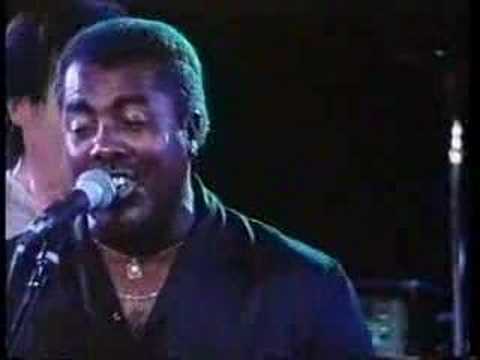
Tom Waits – Christmas Card From a Hooker in Minneapolis

Last month I went, for the fourth time, to see Conor Macpherson’s modern masterpiece Play ‘The Weir’.

It’s a comic tragedy or a tragic comedy depending on your point of view.

The whole action of the Play takes place on a single evening in an Irish rural bar.

As the drinks flow the four characters tell, in sequential monologue form, riveting stories imbued with puzzled pain, aching regret and unending longing.

Strings break in Heaven.

As each story unfolds more is revealed by the tale than the teller had ever expected.

By the end of the play though they are raw from the experience there is a shared sense of catharsis and, almost miraculously, a feeling that the surrounding darkness is pierced by rays of light and fragile hope.

The search for that fragile hope is one of the main reasons we tell stories – both to others and to ourselves.

As I drove home a song began to play in my head.

A song that is a comic tragedy or a tragic comedy depending on your point of view.

A song of puzzled pain that tells more about the teller than ever anticipated.

A song filled with aching regret and unending longing.

A song that breaks strings in Heaven.

A song that has achieved a sense of catharsis by its conclusion.

A song that, almost miraculously, ends on a note of fragile hope.

A song that takes place at Christmas Time when even the most cynical like to believe in Hope – however faintly it glimmers.

A song by a supreme storyteller.

Tom Waits.

‘Christmas Card From a Hooker in Minneapolis’.

Now, aint that just Grand!

Tom Waits, in this freewheeling pre Swordfish Trombones period, wore a baggy coat with pockets stuffed with the works of John Fante, Lawrence Ferlinghetti, Charles Bukowski and Alan Ginsberg.

Playing in his head were the recordings of Lenny Bruce, Lord Buckley, Howling Wolf, Bob Dylan and Hank Williams.

He had pretty much taken up residence on the Lost Highway.

Because, of course, it’s the best way to see the Moon and Stars clearly and to find out what kind of storyteller you might become.

Tom Waits became the kind of storyteller who could make you gasp, make you laugh out loud and then cry hot tears as his crazy lyrical stories unfolded.

A Tom Waits song makes you relish the details.

I love the way while the piano rolls meanderingly along the lyric seems to spontaneously emerge out of thin air.

The use of ‘And’ and, ‘Hey’ to kick off each exhalation of thought and invention gives the song a tremendous immediacy.

Hey Charley I’m pregnant
and living on 9-th street
right above a dirty bookstore
off Euclid avenue

It’s important that the song is addressed to a specific person.

It’s thinking of that person, that one person, who might, just might, make it all right again, that makes a person put pen to paper.

And you should always kick off with the news that’ll make the reader sit bolt upright and want to read on.

Read on.

And I stopped taking dope
and I quit drinking whiskey
and my old man plays the trombone
and works out at the track

You want to convince Charley and yourself that things have changed.

They really have changed.

You’ve changed.

Those vices you shared are memories now.

And, you found a guy.

A guy who plays the trombone and brings the dollar bills home.

And he says that he loves me
even though its not his baby
and he says that he’ll raise him up
like he would his own son

And, hey .. a guy who won’t let you down.

Not like all the other Guys.

A guy who will raise up your unborn son – even though he’s not his own son.

And, he gave me a ring
that was worn by his mother
and he takes me out dancin
every saturday nite.

Now, Charley knows somewhere in his heart that there’s no woman who ever lived who doesn’t want their Darling to give them a ring that was worn by his Mother.

And, Hey, whatever anyone tells you there ain’t no feeling better than goin’ out dancin’ on a Saturday Night – just the two of you.

Just the two of you.

And, I still have that record
of Little Anthony & The Imperials
but someone stole my record player
how do you like that?

When you’re lost and you think you’re going out of your head and your heart’s about to jump right out of your chest you can’t help but remember those old songs.

There are some songs you’ll never get out of your head.

Little Anthony with the soaring voice.

Tears on my pillow, pain in my heart, caused by you, you

If we could start anew, I wouldn’t hesitate
I’d gladly take you back, and tempt the hand of fate
Tears on my pillow, pain in my heart, caused by you

Wo oh oh oh oh oh oh oh oh

Wo oh oh oh oh oh oh oh oh

Wo oh oh oh oh oh oh oh oh

hey Charley … I went back to Omaha to
live with my folks

Charley knows, like you do, that you can never really go back to the home you grew up in.

If you ever had a reason to leave you’re never going to be happy back in Omaha.

And, hey, you had so many reasons to leave.

Reasons to leave.

and I wish I had all the money
that we used to spend on dope
I’d buy me a used car lot
and I wouldn’t sell any of em

I’d just drive a different car
every day dependin on how
I feel.

You and Charley, his hair all slicked back with grease used to drive with the top down at ninety miles an hour on the two lane blacktop.

And, hey, wouldn’t it be great if you had all that wasted cash and could roll down the highway every day in a different car.

Just the two of you.

You can almost feel the warm air caressing you both.

Dreams are like that.

Dreams are like that.

Sometimes dreams are all that can keep you going.

All that can keep you going.

hey Charley
for chrissakes
do you want to know
the truth of it?

I don’t have a husband
he don’t play the trombone
and I need money to pay this lawyer

But. But. It takes a lot of energy to dream.

And, hey, sometimes you just don’t have the strength anymore.

Just don’t have the strength.

So, you breathe deep and let it out.

Let it out.

All of it.

The blood and the guts and the tears.

And, hey, you find yourself saying the thing you promised yourself you’d never say.

The thing you promised yourself you’d never say.

and Charley, hey
I’ll be eligible for parole
come valentines day.
 

Christmas Alphabet : S for Springsteen – Santa Claus is coming to Town

Sometimes you should just make the introduction and get the hell out of the way as fast as you can.

Ladies and Gentlemen, Boys and Girls I give you Bruce Springsteen with The E Street Band (featuring Clarence Clemons as Pere Noel!) with:

Santa Claus is Coming to Town!

Bruce knows how to throw a party!

Whether you’ve been naughty or nice I hope you make the List.

In memory of a Big, Big Man – Clarence Clemons.

Christmas Alphabet : I for I’ll Be Home For Christmas : Leon Redbone

In December 1965 Frank Borman and Jim Lovell were far, far from Home.

They were astronauts – the crew of Gemini 7 orbiting The Earth on a 14 day mission.

Naturally as they looked down on their home Planet their thoughts turned to the upcoming Christmas celebrations.

So when they were asked by Mission Control if there was any music they wanted to hear their reply was unhesitating – ‘I’ll be home for Christmas’.

It’s the wish, the fondest hope, of every soldier who has soldiered in every war since Christmas was first celebrated.

Nothing makes the heart yearn for Home like the approach of Christmas.

Whether it’s your childhood Home or the Home you’ve made for yourself as an adult, Home attracts with a primordial power.

And, if you can’t make it Home in person because of a War or the tides of life then you can, you can, be Home – if only in your dreams.

I don’t know which version of Kim Gannon, Walter Kent and Buck Ram’s Song the Gemini 7 Crew listened to (probably the masterful Bing Crosby original) but the one I always turn to is by the enigmatic Leon Redbone.

Rarely for me I’m going to give you no disquisition on Leon except to say that you will be doing yourself a great favour if you invest in his records forthwith!

I’ll be home for Christmas
You can plan on me

Please have snow and mistletoe
And presents on the tree

Christmas Eve will find me
Where the lovelight gleams

I’ll be home for Christmas
If only in my dreams

I hope you make it home for Christmas wherever you may be today.

And if you just can’t make it Home I hope that the Home you find in your dreams is the one you have always been searching for.

Christmas Alphabet : R for Roy Orbison (Pretty Paper)

London 1963.

Roy Orbison was far from his Texas Home and assailed by a raging fever.

He was in Britain following a successful tour supported by a new Beat Group, The Beatles, who really seemed to be tearing up the place.

They were nice guys.

Every night they stood on the side of the stage to watch Roy – open mouthed as he effortlessly hit operatic notes and held the crowd, frantic when they’d performed, spellbound without moving a muscle.

Though the thermometer showed 102 and rising Roy had a job to do.

His producer and mentor Fred Foster had found a Christmas song from a fellow Texan, Willie Nelson, called, ‘Pretty Paper’ that might just give Roy another big fat hit.

No one could write a better heart tugging song than Willie and damn sure No One, absolutely No One, could sing such a song to rival The Big O!

So, in Pye Studios, the cream of London’s session men under the supervision of Bill Justis and Ivor Raymonde got everybody miked up and the Orchestra set because Roy was fading away before their eyes.

We’re only going to get one shot at this!

The term ‘Unique’ is thrown about far too carelessly when discussing the merits of great singers.

In the case of Roy Orbison no other description will do.

It’s the whispering sound of your subconscious.

It’s the whispering all around you of the West Texas Wind.

It’s the whisper of your thoughts and dreams and memories.

The ones you smile when you recall and the ones that make you wince.

It’s the sound of a bruised and battered heart that scarce knows how it’s beating on.

It’s a plea to The Moon and The Stars when all the earthly powers have turned away.

Turned away.

It’s the unique sound of Roy Orbison.

There’s quite a story behind Willie’s song.

On his regular visits to Fort Worth he had noticed a man selling pencils and paper outside landmark Department Store, Leonard’s.

Now this was a man you wouldn’t easily forget once seen.

For he was severely crippled and moved about by hauling himself along the sidewalk protected by heavy gloves and knee pads made out of old tires.

In all weathers he was there selling his wares.

‘Pretty Paper! Pretty Paper!’ he would call out to attract customers – hoping for a few more coins to drop into his cup.

Walking his farm in search of inspiration Willie remembered this cry and soon putting his own pencil to work a classic Christmas Song was born.

Characteristically Willie uses words sparingly to paint the picture.

The promise, the pleasure and the pathos of the Christmas Season are captured.

The love and the longing and the loss.

My how time does fly.

My how time does fly.

Pretty paper, pretty ribbons of blue
Wrap your presents to your darling from you
Pretty pencils to write I love you
Pretty paper, pretty ribbons of blue

Crowded street, busy feet, hustle by him
Downtown shoppers, Christmas is nigh
There he sits all alone on the sidewalk
Hoping that you won’t pass him by

Should you stop? Better not, much too busy
You’re in a hurry, my how time does fly
In the distance the ringing of laughter
And in the midst of the laughter he cries

Pretty paper, pretty ribbons of blue
Wrap your presents to your darling from you
Pretty pencils to write I love you
Pretty paper, pretty ribbons of blue

Now, I love the original version.

The backing singers and the Orchestra and the deliberate pace all evoke the era perfectly for me (I would have been 8 years old when the record was released).

But. But.

When I play, ‘Pretty Paper’ I always turn to the live version below.

The sheer majesty and magnetism of Roy Orbison’s voice cuts straight to the core.

Roy didn’t know the name of the man the song was written about.

But Frankie Brierton could have had no more tender salute than that so indelibly sung by Roy here.

Maybe we could all take a look around as we hurry on busy feet through the crowded streets.

Maybe we as we accumulate the pretty paper and the ribbons of blue we could stop for a moment and remember Frankie in all his dignity.

Maybe we could find a cup to drop more than a few coins into and spare a word of good cheer to one finding the days hard and the nights long.

Then we could say with a full heart Merry Christmas to all we meet.

Christmas Alphabet : H for The Holly & The Ivy – Kate Rusby

There is a power beyond all analysis in the Christmas Carol – especially those which emerged from the folkloric tradition of England’s rural heartlands.

I could give you a learned analysis of, ‘The Holly and the Ivy’ noting it is numbered 514 in the Roud Folk Song Index and waxing lyrical on its symbolism and use of Christian iconography.

Somehow, as soon as Kate Rusty starts to sing all that appears superfluous.

For Kate is for my money the finest English Folk Singer since Sandy Denny and you would have to be made of stone not to be moved by the tender beauty of her voice.

Hearing her singing such a song I feel as if I had wandered from the snow into a Yorkshire Romanesque church.

Resting in a time worn pew, hunched against the draughts all around I am startled by the emerging sound of a rustic band straight out of a Thomas Hardy novel.

As the sound swells and soars to the rafters my eyes sting with tears as Kate in a voice at once wholly of the people and wholly unique brings all the moods and colours of the carol to blood beating life.

In Kate’s vocal you can feel in your heart and soul the rising of the sun and the quick running of the deer.

Oh such sweet singing in the choir!

The revelation of the mythical, mystical, significance of the landscape of the natural world is one of the glories of Folk Song.

Intertwined in Nature and our lives are the blossom, the Berry and the prickle of the thorn.

Even as we dance to the merry Organ we know (we know) that no life escapes bitter gall and no life needs not redemption.

Sinners need a Saviour.

Of all the trees that are in the wood the Holly bears the crown.

The Holly bears the crown.

Christmas Alphabet : C for Chuck Berry ( Run Rudolph Run) & The Chieftains with Rickie Lee Jones

It’s that time of year again.

And, as loyal readers will know The Immortal Jukebox has a tradition of marking Christmas Tide with special Posts.

Songs of celebration and reflection from many genres and from artists famous and obscure.

This year for all our delight it’s a ‘Christmas Alphabet’ to follow up on the ‘Christmas Cornucopia’ and ‘Christmas Cracker’ series from 2016 and 2015 (if you haven’t read those yet start as soon as you’ve finished this!)

From today you can look forward to a Post every other day.

So, let’s start with C for the great Chuck Berry who died this year.

Now, as we all Chuck was a multi MVP, All Star and indeed a by acclamation inductee Hall of Fame Songwriter.

But that’s not all!

Chuck, when he put his diamond sharp mind to it was also a gifted and sensitive interpreter of other writers’ songs.

In the first flourish of his epochal years recording for Chess Records Chuck laid down two superb Christmas singles showcasing his skills as a guitarist and singer.

Let’s get our blood pumping and senses tingling with Chuck’s definitive take on Johnny Marks’ ‘Run Rudolph Run’

I like to clear a mighty big dancing space before I put this one on and I’d advise you to do the same if you don’t want your Christmas decorations to come crashing down around you!

Yup! Yup! Yup!

Chuck cracks the whip and boy don’t those reindeer speed like a Saber Jet through the firmament!

Johnny Marks was a Christmas Song specialist and I think we can allow that he had really got the hang of it when you consider that in addition to Run Run Rudolph he also wrote, ‘Rudolph The Red Nosed Reindeer’, ‘Rockin’ Around The Christmas Tree’ and, ‘A Holly Jolly Christmas’.

What Chuck and the storied Chess Studio team brought to Run Run Rudolph was an irresistible brio that grips from the get go and doesn’t let up till the son of a gun hits the run off groove.

Just so you know you’re in good company going wild to Run Run Rudolph it was this song that Keith Richard chose to record for his first solo single in 1978 (and a lovely, extra loud, extra louche, job he made of it too).

Keith, surely, was the Boy Child who wanted a Rock ‘n’ Roll Record Guitar!

Chuck, being the fond of a greenback, canny operator that he was, took the arrangement they came up with here wholesale for his own, ‘Little Queenie’ when there would be no question about whose bank account the songwriting royalties would roll into!

Chuck has a powerful case for being the inventor of Rock ‘n’ Roll songwriting and Guitar style.

Yet, neither of these gifts came out of nowhere.

Chuck loved, understood and could integrate into his own sound The Blues, Swinging Jazz, Country Music and the Latin rhythms coming from South of the Rio Grande and from Cuba and the Islands.

So, when in 1947 he heard Charles Brown singing, ‘Merry Christmas Baby’ his ears must have pricked up as he thought, ‘Now that’s one I could do to show off my after midnight singing and guitar style’.

And so it proved.

You can settle back in your armchair for this one and maybe unstopper the Brandy Bottle.

http://www.youtube.com/watch?v=9oEVLW2lM1Y

Well, don’t that go down smoothly.

Chuck’s perfectly weighted vocal and hush don’t wake the baby guitar is perfectly complemented by Johnnie Johnson’s lyrical and lush piano.

One to listen to thrice before you move on!

Now a wonderful Transatlantic partnership between two maverick talents.

First, Ireland’s most successful cultural crusaders along with the manufacturers of Guinness – The Chieftains.

Joined here by the bohemian brilliance of Rickie Lee Jones.

The space they afford each other allows each to shine.

Rickie embodies the weary world and the thrill of hope even as The Chieftains evoke the bright shining stars and the glorious new Morn.

Together they make something really special and moving out of, ‘O Holy Night’

Ry Cooder & The Drifters (with stellar supporting cast) : Mexican Divorce

In Dave Alvin’s wonderful song, ‘Border Radio’ (sure to feature here next year) there are some lines which have always intrigued me:

‘This song comes from 1962 dedicated to a man who’s gone
50,000 watts out of Mexico
This is the Border Radio
This is the Border Radio’

What was that song from 1962?

What was the old song they used to know?

A song able to summon the life that was.

The life that was lost.

The life that haunts the life lived now.

It whispers of broken promises up and down the Rio Grande.

One day married. Next day free.

Except you’re never really free.

How could you be?

An old adobe house where you leave the past behind.

Except (and everyone knows this in their heart of hearts) you can never truly leave the past behind.

The past shadows your every step.

Another set of footprints in the sand.

The song running through your head night after night from 1962?

Of course, The Drifters with ‘Mexican Divorce’

They say it takes a village to raise a child – to cherish, to nurture well being and growth.

Well, it took a creative village – a constellation of craft and talent to produce the hypnotic aching majesty of, ‘Mexican Divorce’.

Let’s begin with the songwriting team.

The Composer was Burt Bacharach – and for Mr Bacharach I think we can all agree that only the term Composer will do.

Embed from Getty Images

What Bacharach brought to the popular song was immense slegance and sophistication in the conception and construction of melodies, instrumental colour and arrangements.

A Bacharach song has a jewelled Faberge radiance that seduces and dazzles the listener.

A spell is cast, especially when sung by a singer of taste and discretion, that lingers on and on in the imagination.

Bacharach’s genius was to cast and recast that spell adapted to the particular talents of the artist he was working with.

Of course, this wizardry would attain its apogee in the breathtaking series of sides he cut with Dionne Warwick.

For, ‘Mexican Divorce’ Burt’s conjured a melody that takes you gently by the hand as it unfolds its tale of longing, loss and painful regret.

The lyricist partner for Burt here was Bob Hilliard a music industry veteran who had already had notable successes on Broadway, in Hollywood, and on the Pop Charts.

We all know Bob Hilliard songs – think; ‘In the Wee Small Hours of the Morning’, ‘Our Day Will Come’ and, ‘Tower of Strength’ just for starters.

With, ‘Mexican Divorce’ there’s a lovely flow and economy of words which tells a heartbreaking tale that all of us can recognise the truth of.

We know that finding love can take so long. So long.

Alas, we also know that though walking away from love must be wrong and a Sin we do it over and over again.

Millions of footprints in the sand headed for the Broken Promise Land.

There’s no house so dark as one where the light has been turned off by a lover who doesn’t want to live there anymore.

And, sometimes, all you can do, though you know it’s fruitless, is to beg, beg in between tears:

‘..My love I beg – please, oh, please, don’t go!’

Carrying off the lead vocal duties with deep died melancholia was the tragic figure of Rudy Lewis (that’s Rudy on the right below)

Embed from Getty Images

Rudy had the gift of bringing life and drama to a song so that it stays etched in the memory.

Supporting him with characteristic subtlety and sureness of tone were his colleagues in the 1962, post Ben E King, version of The Drifters.

Giving the song an extra layer of poignant theatricality were a quartet of extravagantly talented session singers.

Leading these singers was Cissy Houston who brought tempered Gospel fervour and warmth to every record she ever sang on. She’s pictured below with The Sweet Inspirations.

Embed from Getty Images

And, Boy Howdy, did Cissy sing on some great records!

With Elvis Presley, with Aretha Franklin, with Otis Redding – with Van Morrison among many, many, others.

Around Cissy circled her nieces Dee Dee and Dionne Warwick whose crystalline tones gave the song a shimmering aura.

Embed from Getty Images

Dee Dee was a superb back up singer as fine lead singer as singles like, ‘We’re Doing Fine’, ‘I Want to Be with You’ and, ‘I’m Gonna Make You Love Me’ attest.

But it was the younger sister, Dionne, who caught the ear of Burt Bacharach. He recognised that her voice had an airy pellucid quality which would make her perfect for a new batch of songs incubating in his imagination.

Embed from Getty Images

During the session for, ‘Mexican Divorce’ Burt asked Dionne if she would like to sing some demos for him.

And, the rest, as they say, is History!

Providing the arrangement ( no doubt head to head with Burt) and conducting the strings was Claus Ogerman.

Claus was a deeply schooled Jazzman who had found a niche for himself at Verve records working with major artists like Bill Evans, Antonio Carlos Jobim and Wes Montgomery.

On the Pop front he arranged, Leslie Gore’s ‘Its My Party’, ‘Cry To Me’ for Solomon Burke and ‘Don’t Play That Song’ for ex Drifter Ben E King.

Manning the Desk were the legendary duo of Jerry Leiber and Mike Stoller who always wanted to make sure a great song became a great Record.

Bacharach, Ogerman and Leiber & Stoller all loved the Cuban and Latin musical accents rife in New York City Dancehalls and on the airwaves.

Together they gave, ‘Mexican Divorce’ a flavour of the exotic.

Mexico is different and the song reflected that.

Scroll forward a decade or so and much nearer Mexico Ry Cooder brought his own unerring instinct for finding the heart of a song to, ‘Mexican Divorce’.

Ry and his superb Band take the song at a languorous tempo like a lonely sleepwalker on a hot night finding his way back to the house where he was once happy.

Plas Johnson plays the all hope is fading heart rending Sax.

Embed from Getty Images

Jim Keltner, always the first call on the West Coast, plays the gorgeous sashaying drum part.
Embed from Getty Images

Bobby King adds a sad sweetness with his harmony vocals.

And Ry Cooder?

Embed from Getty Images

Ry plays the guitar and the mandolin with a riveting tenderness reminiscent of the great Mississippi John Hurt.

And sings like a man who is at the end of his rope.

The end of his rope.

For now, of course, there’s no welcoming light in any window.

Empty darkness all around.

Empty hangers twisting in the wardrobe.

Dust settling on the doors.

The road to Mexico unwinds.

Down below El Paso.

Across the borderline.

Where identities and statuses change.

One day married.

Next day free.

Broken hearts.

Broken hearts.

Emmylou Harris, Hank Williams : Drifting Too Far From The Shore

Out on the perilous deep
Where dangers silently creep

I’m gonna die today.

29 last month.

And, I’m gonna die today.

Consider this my last letter.

About 12 hours from now I’m gonna take that slow walk.

To The Chair.

To The Chair.

I been drifting too far from the shore for a long time now.

Drifting too far.

Counting down the hours sets your mind thinking all right.

Mine goes back to the beginning.

A cabin in the Piney Woods.

Listening to the radio at night with the moon and stars shining through the windows and ol’ Bill Monroe (with Mama’s harmony) singing me to sleep.

Ain’t no one sing like Bill.

Today, the Tempest rose high,
And clouds o’ershadow the sky

There’s many a guy in here who’ll look you straight in the eye and tell you they is innocent.

Not one of them telling the truth.

Well, not me.

Not me.

I’m here because I killed a man.

Shot him twice through the heart.

Caught him carrying on with my wife.

Glad I done it.

Ain’t no reprieve from The Governor coming.

Just counting down the hours.

Counting down the hours.

Eight hours now.

Eight hours.

Drifting too far from the shore.

Drifting too far.

Can’t get that song out of my head.

Come to Jesus today,
Let Him show you the way

Padre came.

Told me all about repentance and forgiveness.

Told me all about tender mercies waiting for me.

Mama would have said the same.

Jesus name was never very far from her lips.

Just tidying up she would be singing, ‘Kneel At The Cross’ or, ‘Just A Closer Walk’.

She was a true believer.

True believer.

Never did take with me.

No, when you go.

You go.

No Sun. No Moon.

No Heaven. No Hell.

Black earth and the worms.

Four hours now.

Four hours.

Still, I sure would like to hear Mama sing Drifting Too Far one more time.

No one forgets their Mama’s voice.

No One.

One more time Mama – as I drift further and further away.

Further and further away.

Sure death is hovering nigh,
You’re drifting too far from shore

Well, I had my steak and eggs.

Everybody’s lined up.

Lined up to take me away.

Minutes not hours now.

Minutes not hours.

Drifting too far from the shore.

Drifting too far.

I’m gonna stand up straight and walk with my head up.

Ain’t gonna cry or scream.

Keep my eyes open wide when they shave my legs and head.

Can’t get that song out of my head.

This time.

This last time it’s Hank Williams I hear.

He never made it to thirty too.

If there’s one man who looked over the River of Death then it has to be Hank.

He walked with Death all his life.

Walk with me now Hank.

Walk with me.

Hold my hand Hank.

Hold my hand.

Hold …

Notes:

If you want to assess the influence and reach of Drifting Too Far From The Shore consider this statement from Bob Dylan The Keeper of American Song:

Maybe when I was about ten, I started playing the guitar. I found a guitar… in the house that my father bought, actually.

I found something else in there, it was kind of mystical overtones. There was a great big mahogany radio, that had a 78 turntable–when you opened up the top.

And I opened it up one day and there was a record on there–country record–a song called “Drifting Too Far From The Shore.”

The sound of the record made me feel like I was somebody else …
that I was maybe not even born to the right parents or something.”

Bill Monroe – the Father of Bluegrass and one of the greatest figures in 20th Century music first recorded Drifting Too Far with his brother Charlie in the 1930s.

I like to think this was the mystical version that opened up Bob’s head!

The RCA/Bluebird recordings of The Monroe Brothers are eternal treasures.

Boone Creek – featured the wonderful high tenor voice of Ricky Scaggs and the Dobro King, Jerry Douglas.

Their late 70s recordings, ‘Boone Creek’ on Rounder and, ‘One Way Track’ on Sugarhill glow with passion.

Emmylou Harris – Her luminous version of Drifting Too Far is from her, ‘Angel Band’ collection of Country Gospel songs.

Hank Williams – His version was unreleased during his lifetime. One thing I can say – you can never have too many Hank Williams records.

The Beatles & The Isley Brothers : Twist and Shout!

The War is over.

The Good War.

The Korean War.

That’s enough for any generation to cope with.

Time to settle down.

Go to College or back to the job that’s been waiting for you.

Get Married.

Have a bunch of kids.

Paint the fence.

Mow the lawn.

Wash and polish the car.

Watch Television.

Breathe easy and when the dreams come open the window and stare at the Moon.

It’s good to be alive when so many lie dead in foreign ground.

What more could you want?

Well it seems Junior wants something more.

Something more.

Now, he can’t really put a name to it.

Except it ain’t hearing stories about how grateful he should be.

Grateful he doesn’t have to fight in a war.

Grateful he lives in a land of the free.

Grateful for these fine, fine, times.

He wants a new story to tell.

He doesn’t want, won’t have, can’t have, the story that’s planned out for him.

The one he’s supposed to be so grateful for.

The one where he gets born. Learns to dance (properly).

Strives to be a success. Bows his head to get blessed.

Makes his Mother and Father proud.

Keeps his head down and his nose clean.

Gets a good girl and a good job.

No. No. No. No!

He wants a story. A technicolor story, where he’s at the centre.

He wants Excitement.

He wants Danger.

Then. Then.

One day he switches on the radio and Boom!

This is it!

Whether you call it Rock ‘n’ Roll or Rhythm & Blues …

THIS IS IT!

The world will never be the same again.

Elvis. Chuck Berry. Jerry Lee Lewis. Little Richard.

Your head’s just about ready to explode.

Explode.

You stand out in the yard under the moon.

Under the Moon.

And you shout as loud as you can.

And you dance. You dance. You dance.

You Twist and Shout.

Twist and Shout!

Well, shake it up, baby, now (Shake it up, baby)
Twist and shout (Twist and shout)
C’mon C’mon, C’mon, C’mon, baby, now (Come on baby)
Come on and work it on out (Work it on out)

Boom! Boom! Boom!

Well, like The Brothers Isley say – Work it on out! Work it on out!

Now, if that don’t get you going I’m gonna have to send out an SOS for a defibrillator to get your heart started again!

The song was written by Bert Berns and Phil Medley and was originally recorded in early 1961 by The Top Notes for Atlantic Records.

Production was by the 21 year old Phil Spector.

And, he made a right royal mess of it!

So much so that Bert Berns, a very savvy dude indeed, was near apoplectic when he heard what Spector had done to his song; which he knew was a sure fire hit.

With the bit between his teeth Bert got the Isley Brothers into the studio in 1962 and crafted a classic record that has Gospel fervour, Rhythm and Blues drive and Rock ‘n’ Roll shazam.

That’s how you do it Phil!

Of course, Bert brilliant songwriter, arranger and producer that he was, didn’t do this all by himslelf.

First he needed singers with explosive energy who could take his song and wring every last drop of excitement from it.

Singers who could put on a dramatic performance which would demand that the listener put the needle back on the groove the instant it faded out.

Enter Ronald, O’Kelly and Rudolph Isley who were originally from Cincinnati.

With voices blending Gospel, R&B and Doo-Wop and a dynamite stage act The Isleys were bound to attract the attention of someone like Bert Berns who wrote songs crying out for impassioned vocals (think ‘Piece of My Heart’, ‘Cry to Me’ and ‘Under the Boardwalk).

The Isleys already had a million selling single to their name with their own cataclysmic, ‘Shout’ which had set Richter Scale dials aquiver all all over the record buying world.

To set the Earth shaking with Twist and Shout Bert called up King Curtis on Sax, Cornell Dupree and Eric Gale on Guitar, Chuck Rainey on Bass, Gary Chester on Drums and Paul Griffin on Piano.

Those guys knew what they were doing!

The public loved, ‘Twist and Shout’ and it became a substantial hit on both the R&B and Pop Charts.

The Isleys would go on to have a storied career featuring strings of hits and superb albums for the next four decades.

And, Bert, before his untimely death at the age of 38 in 1967, would prove himself one of the very greatest songwriter/producers of the 1960s.

The Jukebox will have much more to say about The Isleys and Bert Berns later!

Across the wide Atlantic Ocean in Liverpool a bunch of leery, leather clad Rock ‘n’ Rollers with ambition and swagger listened to ‘Twist and Shout’ and thought – we could really tear up the place if we can get this one right.

So it was for The Beatles.

‘Twist and Shout’ became a fixture of their live show and walls, drenched in sweat, in Liverpool and Hamburg shook as John, Paul, George and Ringo proved what a fantastic Rock ‘n’ Roll Band they were.

Embed from Getty Images

But, driving themselves and a complicit crowd into a Dionysian frenzy at a concert is one thing.

To reproduce that order of feeling in a recording studio is quite another.

Cut to the 11th of February 1963, one of the most significant dates in the history of popular music, popular culture and indeed history.

For that was the date The Beatles recorded their debut LP, ‘Please, Please Me’.

In one day – One Day! Over some 13 hours they recorded 10 songs and launched a career the reverberations of which are still shaking the world to this day.

Twist and Shout was the very last song they cut on that historic Abbey Road session.

And, they knew that.

John’s voice was almost shot and Paul, George and Ringo – despite the rivers of adrenaline that must have coursed through their veins that day – must also have been close to exhaustion.

In such circumstances there is only one thing to do.

Attack! Attack! Attack!

And, that, gloriously is what they did.

Every last ounce of energy went into this performance which still stands as a Rock ‘n’ Roll moment to match anything laid down by their legendary predecessors and inspirations – Elvis, Chuck Berry, Little Richard.

All those thousands of hours of performing in dingy dives were pressed into the service of making ‘Twist and Shout’ a record which came at you with the force of a tidal wave.

John Lennon’s vocal has a crazed commitment that is shocking in its elemental power and his fellow Beatles match him every step of the way.

Every step of the way.

http://www.youtube.com/watch?v=UPWfpESTp6w

As they packed away their instruments they must have looked around and thought – is this all true?

Did we really do that?

Where are we going now?

I like to think John, voice ravaged, turned to his friends and said:

“Well, well, where are we going now fellas?’

And Paul, George and Ringo would have replied:

‘To the top, Johnny to the very toppermost of the poppermost!’

And, I think we can all agree that’s exactly where they went and that they took us all along for the ride.

Rod Stewart, Jerry Lee Lewis : Song Stylists – What Made Milwaukee Famous

Hey Buddy!

Hey Hank!

The Usual?

Pint of Guinness?

No, today, I’m in need of a Bim, Bam, Boom!

A Bim, Bam, Boom?

Yeah, you know:

One Scotch – Bim!

One Bourbon – Bam!

One Tequila – Boom!

Ha! Coming up.

That ought to do it all right.

Sometimes you just need that Bim, Bam, Boom – or think you do.

You like to be in a place where everyone knows your name but nothing really important about you.

You like a place where the Jukebox is stuffed with drinking, fighting and cry, cry, crying songs.

The ones you sing along to under your breath without even realising that’s what you’re doing.

The ones that bring those stinging tears to your eyes.

The ones that remind you of all the things you had.

The ones that remind you of all the things you lost.

No, the things you threw away.

Threw away.

Threw away in a joint just like this.

Threw away because you thought you needed a head full of Red, a bellyful of Beer or the wild song of Whiskey in your blood before you could face another Night or find the courage to face another Day.

In the end the nights and the days bled into each other and love and happiness drifted away with the alcoholic tide.

Too late you finally see.

Too late.

Time now to call on The Killer.

He knows a thing or two about throwing things away.

Hey Hank – right now I cant read too good – what number is, ‘What Made Milwaukee Famous’?

‘A1’ ‘A1’

Aint that just right.

Funny, every time this song comes on the place goes quiet and the murmur of the Loser Choir drowns out the Air Con.

Take it away Jerry Lee.

Sing this one for me.

Jerry Lee Lewis! Jerry Lee Lewis!

Now, it would take the combined genius of William Faulkner, Flannery O’Connor and Harry Crews to invent a character half as extraordinary as Jerry Lee.

For my part let’s just say that with Ray Charles I consider him the greatest song stylist of the modern era.

I’m not one for joining Fan Clubs.

But, at 17, I did join the Jerry Lee Lewis Fan Club and much as I looked forward to my subscription copies of The New Yorker, Southern Review and The London Review of Books coming through the letter box none of them quickened my pulse like seeing the bulky envelope with, ‘Fireball Mail’ stamped brightly in red hitting my mat!

What Made Milwaukee is from 1968 when Jerry Lee was rebranding himself as a Country Singer( having had more than a few run ins with the press, the radio, local sheriffs and the whole damn, petty, you can’t do that here!, official world which just couldn’t cope with a bona fide Wild man).

A Wild Man who also happened to be by an act of will and character a conduit for the great streams of American Music.

Jerry Lee, is of course, a Father of Rock ‘n’ Roll as well as a Country Singer to top all except George Jones.

Goodness gracious Jerry Lee can sing the Hell out of any song that’s ever been written and make it 100% Jerry Lee.

100% Jerry Lee.

And, Glen Sutton, when he wrote, ‘What Made Milwaukee Famous’ sure gifted Jerry Lee one fireball of a song.

Now, as is so often the way, the song was not the product of careful deliberation and prolonged polishing.

No.

Glen was reminded by a music publisher that he was supposed to have songs for The Killer who was due to be in town tomorrow.

What had he got?

With a professional’s presence of mind (Glen also wrote ‘Almost Persuaded’ and, ‘Your Good Girl’s Gonna Go Bad’ among many other classics) he looked down at the beer mat next to the phone and said, ‘Its a drinking song – should be perfect for The Killer!’

Nw, it was simply a matter of working through the night to turn the slogan on that Schlitz beer mat, ‘The Beer That Made Milwaukee Famous’ into a song that would appeal to Jerry Lee and the record buying public.

I think we can agree he succeeded!

Jerry Lee recorded the song the next day and gave it a regretful stately majesty powered by his rolling piano, glistening fiddle, and a vocal that proceeds with the awesome certainty of a Paddle Steamer navigating The Mississippi.

Follow that!

Very few could (you’ll find numerous versions of the song if you search) but there is only one other version which can stand comparison with The Killer’s.

One by another great song stylist who, when he was on his game, treated songs with a profound respect and care.

A singer who had an instantly recognisable voice – a voice which could express deep emotions with elegance and elan.

Let’s call Rod Stewart to the microphone!

On the evidence of this magnificent performance it seems to me that Rod missed a trick in his career by not recording an album of Country Songs.

Had he teamed up with a producer like Cowboy Jack Clement and launched into, ‘There Stands The Glass’, ‘Cold, Cold, Heart’ and, ‘Heartaches By The Number’ I think we would have had a record for the ages.

Still, lets look at the glass as half full given his bravura take on ‘Milwaukee’.

Of course, Rod, knew a fair bit about drinking as a member of The Faces who were Olympic Champions of partying.

At his best Rod’s let’s live it large! relish for life combined with an acute emotional intelligence when reading a lyric made him a truly great singer.

One entirely ready to share a microphone with The Killer.

I’ll leave with Jerry Lee, live at the piano, performing with his trademark insouciant charm.

‘Well it’s late and she’s waiting
And I know I should go Home.’