Alan Gilzean: Elegance In Action

http://Embed from Getty Images

Elegance as a quality in life, sport and the arts is hard to define but easily recognised. It’s surely something to do with speed of thought, economy of movement, grace under pressure.

The elegant glide to triumphs without overt strain so that we catch our breath and sigh, ‘that’s how to do it!’. And, having seen the elegant work their magic with such panache we queue up to see them do it again so we can exclaim I was there and saw them do it.

Fred Astaire in every dance routine of his career. Lester Young launching into a saxophone soliloquy, Barry Richards caressing the cricket ball to the boundary, Barry John casually wrong footing an entire All Black defence.

P G Woodhouse crafting a perfect inimitable paragraph. Maria Bueno conjuring a Wimbledon winner.

The elegant performer wins your heart and your allegiance to their cause. This is not a matter of statistics, of heaped titles or medals but of indelible memories, stories of famous feats to be retold to your own and the following generations.

My own exemplar of elegance is the one and only Alan Gilzean a footballer whose fabled history at Dundee, Spurs and for Scotland feels more wondrous as each season passes.

At Dundee he scored an incredible 169 goals in just 190 games between 1959 and 1964. He was the glory of the best side they ever had under the tutelage of the great Bill Shankly’s brother, Bob.

With the Dark Blues he won the the league title in 1961/62 and the following year he was the spearhead of their thrilling run to the semi-final of the European Cup where they lost to the eventual winners – the lordly AC Milan.

At the end of 1964 the ever shrewd Bill Nicholson bought him for Spurs where he was to remain until the endof the 73/74 season. The Spurs fans quickly came to adore Gily recognising a player who met their demand for style as well as success.

In no time he was lionised as the King of White Hart Lane – a title he will hold in perpetuity!

The statistics relate that he scored 133 goals for Spurs in 429 games and that he was a member of the sides that won an FA Cup, two League Cups and a EUFA cup.

But, with Alan Gilzean it’s not the numbers that you remember it’s the breathtaking elegance of his play – the way he could amaze you game after game with the subtlety of his footballing imagination.

He insouciantly brought off feats of skill and technique that other fine players could only dream of – leaving opponents admiringly bemused and teammates exhilerated.

Alan Gilzean was to use a fine Scots term a supremely canny player. He seemed to have an advanced football radar system that allowed him to know exactly where he was in relation to his markers and his team mates. He could compute the trajectory of any pass that came towards him on the ground or in the air and instantly assess whether the ball should be held up or delivered on.

He had exquisite touch on the deck regularly wrong footing defenders before setting up goal chances for himself or one of his strike partners. His sense of football space and keen eye for opportunity made him one one of the great collaborators.

He forged a legendary striking partnership (the G men!) with the peerless Jimmy Greaves who profited greatly from Gilzean’s vision. No one has ever been better at coolly converting chances into goals than Jimmy Greaves and Gilzean provided him with a wealth of those chances.

Indeed, Jimmy has called Gilzean the best player he ever worked with – some accolade. Where Jimmy was all poise and deadly sureness Gilzean’s other principal strike partner, Martin Chivers, was all power and swagger. Gilzean was a superb foil to both.

One of Alan’s great attributes was his ability to change the direction of play to open up seemingly closed paths to goal. He was the master of the shimmy, the feint and the dummy – leaving many a defender bewildered and bamboozled in his wake.

He turned the back-heel into an art form and won the plaudits for artistic impression from the White Hart Lane faithful.

However, the defining skill of his genius was his heading of which he was the supreme master.

To watch Alan Gilzean working his way through his heading repertoire was an intensely pleasurable privilege. The power header, the precisely placed in the corner of the net header, the chance on a plate for Jimmy header, the eternal glory of the Gilzean glancing header and the masterpieces that were the Gilzean back headers will forever define the art and science of heading a football.

He seemed to intuitively understand a geometry too complex for Euclid when it came to directing headers.

Given his eminence and elegance as a player I propose some additions to the language to reflect his unique contribution to footballing and sporting culture.

Gilzean: Noun – A sporting term for a perfectly executed back header or back heel gemerally resulting in a goal being scored.

Gilzean: Verb – To display enormous technical skill with nonchalance.

Alan Gilzean was brave, hugely talented and gave unstintingly of those talents.

He is a footballing immortal whose legend will burn bright wherever elegance and beauty of style are celebrated.

God bless you Alan Gilzean – long may you amble!

Further reading: Happily there is an excellent book on our hero, ‘In Search Of Alan Gilzean: The Lost Legacy of a Dundee and Spurs Legend’ by James Morgan.
Paul Brady: An Irish Bard

Paul Brady was 67 this month. Here’s a tribute.

Bard: A tribal poet – singer skilled gifted in composing and reciting verses of satire and eulogy on heroes and their deeds.

‘Craftsmanship names an enduring, basic human impulse, the desire to do a job well for its own sake’. (Richard Sennett)

‘Some guys got it down …. Paul Brady …. Secret heroes’. (Bob Dylan)

Paul Brady harbours and husbands extraordinary talents. He is a great singer of traditional ballads in the Irish and American traditions able to breathe life into ‘set texts’ through his exquisite instrumental and vocal control and his natural discretion.

These craft skills allow him to reveal the often buried wit, vigour, romance, tragedy and flat out strange power of those remarkable works composed by the great ‘Anon’.

He is also an accomplished guitarist with the quiet unflashy discipline of the skilled accompanist who can anchor a tune setting a virtuoso fiddler like Andy McGan free to fly.

He also has driving rock ‘n’ roll chops learned through ingesting whole the riffs and rhythms of the Shadows and Chuck Berry as a youth.

As far as traditional ballad performance goes Paul Brady’s version of Arthur McBride is rightly regarded as an enduring triumph.

It was wholly appropriate that he performed it at the recent Dublin memorial evening for the late keeper of the Irish word hoard, Seamus Heaney.

Heaney would have understood how the seeming ease of Paul Brady’s performance of Arthur McBride was based on a deep understanding of the ballad form and hard hours spent honing his instrumental and vocal craft.

It takes a great artist to make the artful seem artless.

The song is an Irish tall tale featuring protagonists Arthur and the unnamed narrator encountering a military recruiting party led by a bumptious sergeant as they take the early morning air one Christmas day.

The Sergeants blandishments and promises of glory, riches and female favours are satirically shown to be counterfeit coin by Arthur who though he chooses not to join the army would clearly have been a first class barrack room lawyer had he chosen to enlist.

Arthur and his friend turn the tables on the sergeant and the unfortunate little drummer boy leaving them bloody backed on the beach and the boys then merrily continue their seasonal stroll.

The drummer boys instrument, his ‘rowdeydowdow’ having been made a playful football bobs uselessly in the tide. The song represents a victory for the native over the coloniser, of hedge school wit and satire over the prepared script. Brains beats bullshit.

Paul Brady’s performance of the ballad as shown here is peerless. Nothing is pushed too hard, the song virtually seems to sing itself with Brady as the pilot who knows every ripple of the tide and currents as he steers the song home.

Now he allows a little drift, now he touches the tiller, now he adjusts the tempo and volume to bring out the full salty tang of the song. His guitar playing throughout is astonishingly deft and alert to every nuance of feeling.

Arthur McBride is a big song filled with lovely sly dramatic touches which Paul Brady inhabits with unshowy assurance.

Listening to the song you naturally follow the arc of the narrative and feel yourself drawn in to the world it presents. In traditional song Paul Brady wears the bards cloak teasing out the shape and character of the song sure in its proven potency to cast a spell over its audience.

As a contemporary songwriter he has at least two hatfuls of wonderful songs and he is the author of two certifiable classics; the euphoric ‘Crazy Dreams’ and the heart rending ‘The Island’.

He has also found himself in demand as a supplier of quality material for artists of the calibre of Tina Turner (Steel Claw, Paradise Is Here) and Bonnie Raitt (Luck Of The Draw, Not The Only One).

Paul Brady’s songs are imbued with deep feeling set within satisfyingly well carpentered structures. They are the product of inspiration shaped by a craft won through a thorough musical education.

Paul Brady’s songs are built to last and last they will.

This is not a matter of tricks or sleight of hand but of a deep understanding in his mind, in his heart, in his hands and fingers and in his voice that real songs truly speak to and of the lives we lead both above and below the public surface.

To produce these songs he draws upon traditional practice and the craft techniques of which he is a master. He is then free to follow his inspiration wherever it leads and to choose the right tools for the task at hand.

Like his Irish near contemporary Van Morrison he can mesmerically summon the spirits to open up the terrestrial and mystical landscapes of Ireland. Like Van he is a canny songsmith finding the particular combinations of lyric, melody, rhythm and vocal attack needed to make a song take off on record and in performance.

A perfect example of this is, ‘Crazy Dreams’ one of the great ‘leaving my hometown’ songs where he lights out for the territory to find out if his those dreams of independence, of self realisation in a new world, can be made to come true.

The song has a thrillingly heady melody and a rhapsodic rhythm always flowing forward like waters heading for the falls.

Paul Brady’s vocals achieve tremendous excitement for the listener because of the way he maintains his setting at intense simmer rather than boil.

You can feel the gathering impulse to follow the dream in every second of the performance. Ringing, dazzling guitars and shimmering keyboards surf atop drums which drive the dream forward.

He’s leaving behind the Joycean snow falling on the Liffey, the fog of familiarity that shrouds his true identity as he packs his suitcase filled with his own dreams not those of his city, his friends and his family.

Now is the time for one last look back – closing the door on the hesitations of the past before turning definitively to the future.

Now is the time to drink champagne with your darling companion until you both fall down. Tomorrow the dream comes alive.

This is a journey we all have to take for someone elses’s dreams get you nowhere.

The Island is a miraculous piano centred meditation on the pain and futility of civil wars yoked arfully to a deeply tender love song. In this song Paul Brady incandescently evokes a triumph of love over hate.

As an Irishman he knows the power of death fixation (the young boys dying in the ditches) yet he hymns the nurturing power of another love which finds its expression in lovemaking by the healing waters of the ocean.

His vision for his neighbours rejects a future built on slogans, tombstones and twisted wreckage. Rather, it looks to a future illuminated by the simple dreams we all have for ourselves and our families.

Our children deserve to inherit a country not mired in the hurts and traumas of the past. In so doing Paul Brady willingly takes on tne role of the holy fool opposing the zealots who are willing to sacrifice anyone and everything to achieve their utopian goals.

The simple message of the song is choose love – be prepared to be a fool for love.

Paul Brady’s sublime vocal in this song is filled with bruised tenderness. Who would not want to go to the Island when the invitation is sung with such alluring enticement?

Throughout the song the prayerful piano piano (by the late Kenny Craddock) invokes the redemptive balm of the love of one person for another.

If that’s a foolish faith so be it.

Paul Brady’s performance of this wonderful song makes that faith affectingly real and welcoming.

Paul Brady is a great musician whose work has firmly placed him in the front rank of the the bardic company of Ireland.

An Irish Bard is something to be.

Recommended listening:

Paul Brady has never made a bad record. Here are a few of my favourites with key tracks in brackets.

Paul Brady/Andy Irvine (Mary And The Soldier)

Welcome Here Kind Stranger (The Lakes Of Pontchatrain, Paddy’s Green Shamrock Shore)

Hard Station (Crazy Dreams, Busted Loose, Nothing But The Same Old Story)

True For You (Helpless Heart)

Trick Or Treat (Nobody Knows, Trick Or Treat)

Back To The Centre (The Island, The Homes Of Donegal)

The Missing Liberty Tapes a 1978 live recording stands as a high peak of Irish acoustic based music making.

Footnote August 2014:

Thanks to the man himself for reading this post and setting up links from his twitter and Facebook accounts. This post has become the most popular to date in the history of the blog!

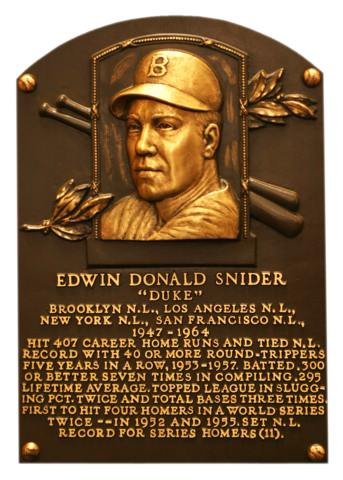
Fanfare for Duke Snider – Brooklyn Dodgers Legend, Baseball Immortal

http://

Embed from Getty Images


One thing leads to another. The other morning I was listening to the glory that was the early 1940s Duke Ellington Orchestra playing, ‘Harlem Air Shaft’ – a four minute masterpiece evoking a world and a culture with thrillingly eloquent charm.

As the music faded the numbskulls (remember them?) in my brain, unbidden, went searching among my memory cells for other Dukes. Slim files came back marked : Duke of Wellington and Duke of Windsor. Middle size files had the titles Duke Fakir, David Duke, Duke Robillard and John ‘Duke’ Wayne.

However the two really bulky files bore the legends, ‘Duke Of Earl’ (a guaranteed jukebox selection for the future) and Duke Snider – the latter one of my very favourite baseball players from my favourite sports team of all time – the late, much lamented, Brooklyn Dodgers.

Here’s a fanfare for the Duke:

There have been few better times and places to have been a baseball fan than New York in the 1950s. The New York Yankees, the New York Giants and the Brooklyn Dodgers and their fanatical supporters played out an intense rivalry which was illuminated with iconic moments of drama in a series of historic pennant races and world-series finals.

The names and feats of players such as Yogi Berra, Don Mueller and Jackie Robinson are indelibly imprinted on the memory of baseball aficionados. However, it was the star centre-fielders for these teams – Mickey Mantle, Willie Mays and Duke Snider, who has died at the age of 84, who came to personify the arguments about which team should have superior bragging rights in the big apple.

Mantle was all explosive power and glamour while Mays was superhumanly enthusiastic and athletic. Duke Snider, the pride of Brooklyn , was a complete player with stellar achievements in all aspects of batting along with brilliant fielding skills combining speed and poise with a whiplash throwing arm.

In the four seasons, 1954-57 that Snider, Mantle and Mays went head to head as centre-fielders it was the Duke who hit the most homers and drove in the most runs. Indeed, throughout the entire 1950s it was Snider who slugged the most home runs (320) and RBIs (1031) as well as placing second in runs (970).

These numbers gave powerful ammunition to Brooklyn ’s blue collar fan base ‘them bums’ in the ceaseless argument as to whose centre-fielder was the best.

The Duke, named so by his father at the age of 5, was born far from Brooklyn in Los Angeles in 1926 (where ironically, chasing revenue, the Dodgers would relocate in 1958). From his early youth he excelled as an all round sportsman and it was no surprise when he was signed out of high school in 1943 by the Dodgers.

Following a brief period in the minors and military service in the navy he made his first appearance in blue in Ebbetts Field the legendary, now demolished, home of the Dodgers in 1947.

Ebbets Field with its short right field fence was ideally suited to a left handed power hitter like Snider and he would go on to become a regular home run hitter there. It was 1949 when he firmly established himself in the team and he was a fixture thereafter until he left in 1962.

During that time he became a key member of a great inter-racial team, a band of brothers, which included heroes such as Pee Wee Reese, Jackie Robinson, Roy Campanella and Gil Hodges. The glories, trials and tribulations of this remarkable team were immortalised in Roger Kahn’s classic memoir/history ‘The Boys of Summer’.

This team despite regularly winning the National League Pennant seemed fated to fall at the last hurdle, usually at the hands and bats of the hated Yankees, in their quest to be World Series champions.

The mantra of the long suffering Brooklyn fans became ‘Maybe next year’. In 1955 the dream at last became reality when the Dodgers triumphed against the Yankees with the Duke’s magnificent contribution being four home runs and seven runs batted in.

He became the only player to have twice hit four home runs in the fall classic having previously accomplished the feat in 1952 (though still on the losing team!)

Prior to the relocation of the Dodgers to Los Angeles , which the citizens of Brooklyn have never forgiven, it was fittingly the Duke who hit the last home run in the iconic stadium.

A combination of injuries and the design of the LA stadium meant that he was never the player he had been in Brooklyn on the West Coast though he was a member of the 1959 World Series Championship team. After leaving the dodgers in 1962 he played briefly for the New York Mets and the San Francisco Giants before retiring in 1964.

In his career as a whole he hit 407 home runs and was eight times selected as an all star. After retirement as a player he worked as a scout and later as an announcer for the Montreal Expos.

His global achievements were duly recognised in 1980 when he was elected into the Valhalla of Baseball – the Hall of Fame.

Image result for duke snider images

The ‘Duke of Flatbush’ will always be remembered for his heroic feats wearing No 4 for the boys of summer whose legend only grows brighter as the years roll on.

Edwin Donald (Duke Snider) born 19 September Los Angeles Ca

Died 27 February 2011 Escondido Ca.

Jesse Winchester 1944 – 2014 : The Parting Glass

Jesse Winchester died at the age of 69 in April 2014.

Embed from Getty Images

*

I first heard him in the mid 1970s on Charlie Gillet’s rightly legendary radio show, ‘Honky Tonk’ which became my open university course on 20th century popular music.

Jesse Winchester was a highly accomplished songwriter and an affecting singer who could hush a room with the intensity of his performances.

He was recognised by fellow songwriters of the calibre of Elvis Costello, John Prine and Ron Sexsmith as a master of their calling.

Bob Dylan, surely the dean of Songwriting, said that you could not talk about the best songwriters in the world without including Jesse and he paid him the compliment (granted to few of his contemporaries) of playing one of his songs on his wonderful radio show, ‘Theme Time Radio Hour’.

Jesse was born in Memphis and always carried with him a southern courtliness and a very strong sense of place.

When he wrote about a state or a town, say Mississippi or Bowling Green, he brought it to life with such arrestingly vivid imagery that you really felt you had spent time there with him as your home town guide.

There was an elegiac, black and white photograph quality to many of his best songs. I often went to the prints of Walker Evans or Dorothea Lange, who shot so many evocative documentary images of the pre-civil rights era south, to find a visual companion for his work.

It seems to me that his songs emerge into the air like photographic prints blooming into rich detailed life from the developing fluid of his imagination.

Jesse Winchester’s songs were mature crafted works: the product of a highly intelligent and sensitive man with an acute sense of the power of the memories we accumulate as we move through a life.

Memories of our communities, our families, our friends and lovers, our contempories and the times we were together in.

Inevitably, recollections of victories and defeats, of love we held onto and love we threw away.

He had the will and the artistry to closely examine those memories and to clothe them in story songs illuminated by powerful sensory images.

Listening to the best of his songs is a rich immersive experience which can feel like a dream that stays with you long after you have woken up and which you know will reurn to haunt you.

My favourite Jesse Winchester song is, ‘Mississippi You’re On My Mind’ a wonderful almost archaeologically rich presentation of the sights, sounds and ambience of life in the rural heartland of the real and mythological state of Mississippi.

Like all the great Jesse Winchester songs this song does not shout at you, rather it beckons you to lean forward and listen to a master storyteller. A master who is so relaxed he seems to be singing the song while rocking back and forth on his front porch with a glass of bourbon at hand.

The instrumentation is simple – plucked guitar, atmospheric shimmer piano, stirring strings and a swelling vocal chorus supporting Jesse’s sweet, molasses filled vocal.

The song paints a swooning picture of an unhurried life lived in a cotton country backwater.

You are made aware both by the lyric and the melody of the humidity of the south, of the sun that blazes from the sky wrapping everyone in an angry oven heat.

This is a land that has seen times of plenty – when the price of cotton was high. It is also a land that has felt the disdainful stamp of an invading army, neglect following painful defeat and economic depression.

Jesse Winchester paints in the details which make a scene come alive – the rusted barbed wire fence, the lazy creek, the tar paper shack.

This is a land where one crop was king so you see the field specked with dirty cotton lint and in the background the characteristic sound of a John Deere tractor.

Meanwhile the air is suffused with the cloying smell of the honeysuckle vine, the barks of hungry dogs and the rustle of grasshoppers. Only the snakes coiled up in the thick weeds and the old men are asleep.

‘Mississippi You’re On My Mind’ is a loving recreation of a physical and emotional home place, a lullaby and a love letter to the past.

The song is touched with greatness.

The land described in the song is at one level Mississippi – on another level it is of course the land of childhood; that Eden we all ache to recover but never can except through the alchemy of art.

It is the land of lost content which Houseman once memorialised as the blue remembered hills. In the song Jesse Winchester has brought this land to poignant shining life.

Jesse Winchester had a good heart and pursued his vocation as a songwriter and singer with all the resources at his considerable command. He leaves an enduring legacy. May he rest in peace.

Recommended listening:

‘Jesse Winchester’ his superb debut album containing stand out songs such as the wistful, ‘Yankee Lady’, the ruminative, ‘Biloxi’ and the transcendent, ‘Brand New Tennessee Waltz’

His second album, ‘Third Down 110 To Go’ (often available as a twofer with the above) has two classics in the gospel drenched, ‘Isn’t That So’ and the quiet wisdom of ‘Dangerous Fun’ which contains the immortal couplet:

‘It takes patience to walk and spirit to run
But nothing to pity yourself
But it’s dangerous fun’

The twofer of, ‘Learn To Love It’ and, ‘Let The Rough Side Drag’ in addition to the masterpiece of, ‘Mississippi You’re On My Mind” has the maturely romantic, ‘Every Word You Say’, the lazy swooning ‘Defying Gravity’, the philosophical, ‘How Far To The Horizon’ and a brilliant take on the Amazing Rhythm Aces country pop classic ‘Third Rate Romance’.

All the rest of his output has sprinklings of glorious songcraft and winning vocals.

Look out in particular for the songs, ‘Bowling Green’, ‘A Showman’s Life’ and the emotionally overwhelming, ‘Sham-A-Ling-Dong-Ding’ which only a songwriter with a full heart and a steady head could bring off (see the YouTube clip below of his appearance on Elvis Costello’s TV show ‘Spectacles’ which demonstrates the effect he could have on his peers).

A trawl through his catalogue will find you arguing that I have missed out many of your favourites.

Arthur Alexander : The Poet of Melancholy – In The Middle Of It All

The Immortal Jukebox A3 : 

Arthur Alexander – In The Middle Of It All 

‘The mass of men lead lives of quiet desperation’.

(Henry David Thoreau)

‘Now I ache, with heartbreak and pain and the hurt that I just can’t explain’

(Arthur Alexander)

Imagine you are the manager of a blue collar bar in a tough small town.  You work long hours making sure everybody has a good time and that nobody’s good time winds up leaving someone else on their way to hospital.

You know who not to serve, who to share a joke with, who to warn off and who to throw out for their own good.

You keep a weighted pool cue just out of sight from the floor within your reach – just in case.

You stock the jukebox and make sure that there’s old and new favourites: something that counts as a home town anthem; several that are fast and loud for the boys from the base; plenty to dance and sing along to for the girls with the faraway looks in their eyes; and, some for everyone to openly or quietly cry over.

The night, though long, passes quickly for you and you don’t realise how tired you are until the door’s been shut on the last, loud, lonely drunk.

You look around and sigh thinking of the work needed before the whole cycle starts again after you wake up in a few hours.

Time to pour yourself a more than generous measure of premium whiskey and play one last song.

Only one will do.  Arthur Alexander, the patron saint of stoical fortitude.

I can’t go on, I can’t go on – I’ll go on.

‘In The Middle Of It All’ tells the story of a broken man surveying, with an eerie calm that almost amounts to existential detachment, the shattered ruins of his life : ‘It looks like my life is about to fall’.

Like all the great Arthur Alexander songs – ‘You Better Move On’,  ‘Anna’ and ‘Dream Girl’ – it’s the song of a grown up man; a man who has experienced joy and pain, the ecstasy and despair brought on by love and it’s loss.

Though Arthur’s songs are suffused with intense feeling they are in no sense hysterical – the besetting sin of so much pop music.

The record opens with a beautiful elegaic guitar figure that seems to glisten and shimmer in the background throughout the song.

It then flows on at a stately, magisterial ballad mid tempo with the swooning melody and instrumental backing acting as a cushioned support for Arthur Alexander’s deeply affecting and entrancing southern country soul voice.

Arthur’s vocal charm owes nothing to stylistic tricks rather it is founded on the ageless attraction of hearing the sound of a man’s open, if broken heart.

A sound that we can all recognise when it is authentic and true.  Arthur Alexander’s proud and wounded vocals once heard will echo on in your own heart.

While listening to the song it seems as if you have pulled up your bar stool next to a pleasant looking though downcast guy who with no fanfare or needy plea for sympathy tells you, if you want to hear, why it is that night after night you can find him resident at this bar and why, night after night, no matter how much he drinks he does not get drunk.

During the course of, ‘In The Middle of It All’ the drummer seems to beat out a steady purgatorial pilgrim’s tempo while Arthur’s exquisite vocal lays out the extent of his lonely and desolate emotional landscape.

His love for his girl which was, ‘Really, really real’ remains true even though the house and home their love had built together is now a reproachful ruin he occupies alone.

The place where they had been so happy, as far as he can recall, now has the rain steadily and dreadfully falling all around it.

What he once thought were the certainties of love and loyalty have vanished like some cruel mirage as his world, ‘Just came down one day’.

The song seems to summon up this heart and soul assaulting rain as the strings swell and the chorus of backing singers join Arthur in his examination of regret and loss.

You can feel the southern heat and humidity of Alabama where the song was recorded in every breath of Arthur’s vocal and in every beat of the music.

The wonderful piano playing provides arpeggios of insistent pain and a sense that, in this vale of tears, no shield of love or faith can ever be proof against the truth that a love which seemed so sure can, in an instant, crumble into mere dust.

Arthur Alexander’s singing throughout this song is filled with an aching tenderness as he caresses each word into bruised breath and life.

It is as if by singing with such scrupulous care he can somehow make whole his shattered heart or at least prevent it’s final destruction.

His singing remains controlled and conversational even as it grows in the depth of pain it examines.

Perhaps this is because the song, for this singer, even in such a situation is not a resentful scream but rather a tragic lullaby that tries despite all his trials to shore up a ruined life.

There is no escape from the realisation that all of us must sooner or later confront the inevitability of death, loss and failure.  For as the roman poet Virgil and Arthur Alexander knew living a clear eyed life involves coming to terms with the terrible truth that there are tears in things, ‘Sunt lacrimae rerum’.

If you want someone to hold your hand when this truth becomes real in your own life it’s hard to think of a better soul companion than Arthur Alexander.

‘In The Middle of It All’ is one of those rare songs that seems to live on in the silence after it has finished and after the record arm has returned to its cradle.

Sometimes for me that silence feels like the silence between two sobs.

Forty years ago David Bowie in ‘Young Americans’ uttered an anguished plea: ‘Ain’t there one damn song that can make me break down and cry’.

Well David, wherever you are tonight, here it is.

It has always worked for me.

Notes, credits and further listening:

It seems that Arthur Alexander recorded ‘In The Middle Of It All’ four times in his life.  The version discussed above is the second 1962 version.

Arthur Alexander recorded some 120 songs during his recording career for a variety of labels.  His initial career featuring many of the songs he will always be remembered for  began at Dot Records and includes some of the premier recording at Rick Hall’s FAME  studio in Muscle Shoals.

From 1965 he recorded for Sound Stage 7, a Monument subsidiary and in 1971 he recorded a lone album for Warner Brothers.  In 1975, out of the blue, he recorded the marvellously fluid and typically affecting single, ‘Everyday I Have To Cry’ which incredibly made the US top 50.

Finally and most poignantly of all he recorded the lovely low key, Lonely Just Like Me’ album issued by Elektra in 1993 some three months prior to his death.

This was later reissued by Hacktone Records with the addition of live performances and also with some hotel room demos which have some of the 3am in the morning, death on the horizon mood, shared with the New York Demos recorded by Buddy Holly prior to his untimely demise.

The ever alert Ace Records have issued two essential compilations covering the Dot and Monument Years.  The other albums have also been reissued.

A welcome tribute collection, ‘Adios Amigo’  came out under the Razor and Tie imprint and features Nick Lowe’s tender cover of, ‘In The Middle Of It All’ (indeed Lowe’s career in this millennium might be seen as the largely successful attempt to pare his songwriting and recording style to their essentials in emulation of Arthur Alexander).

A relatively small investment will furnish you with the heartbreakingly magnificent catalogue of one of the greatest singers and songwriters in any genre and you will surely find that the songs and performances will become treasured fixtures in your life.

They were certainly a fixture in the life of John Lennon who had clearly listened closely to Arthur Alexander as evidenced in The Beatles cover of, ‘Anna’.  The way that the famously acerbic Lennon could bring a wounded tenderness and discretion to ballad performances also betrays Artur’s influence.

John Lennon kept a jukebox filled with his favourite records to fortify him against the madness of the world that had grown up around him: prominent on his own immortal selection were records by Arthur Alexander.

Arthur Alexander was born in Sheffield Alabama in May 1940 and died in June 1993 in Nashville.  He was only 53 years old.

Despite recording several classic songs and having some of these covered by The Beatles (Anna) and The Rolling Stones (You Better Move On) he never really made much money from his songs.

Sadly, he was also prey to alcohol and mental health problems.  Disillusioned and depressed he was for many years largely estranged from the music business and spent long spells working as a janitor and school bus driver.

There is a heartfelt biography by Richard Younger, ‘Get A Shot Of Rhythm And Blues: The Arthur Alexander Story’ published by the University of Alabama.

Arthur Alexander might be said to be the epitome of the, ‘Country Soul’ style of music.

The movement as a whole is warmly evoked and intelligently discussed in Barney Hoskyn’s book, ‘Say It One Time For The Broken Hearted: Country Soul In The American South’ (Fontana/Bloomsbury).

Musicians growing up in a deeply segregated society were nevertheless heir to musical traditions that, principally through the medium of radio, effortlessly crossed the racial divide.  Mucians and singers recognised great songs whether they were played on country or ‘Race’ music stations.

The constellation of wonderful musicians and songwriters who worked at Stax, FAME and Muscle Shoals studios were artistic freedom riders shattering barriers within the sanctuary of the recording studio even if they had to step carefully once they emerged into the heavy heat of the Southern mainstreet.

Booker T and The MG’s, Dan Penn, Chips Moman, Spooner Oldham and their brothers and sisters in rhythm made records that were recognisably southern and spoke eloquently of the lives shared by black and white alike.

There is a website ‘The annotated Arthur Alexander’ which is a very valuable resource for anyone seriously interested in delving further into Arthur’s recording career.

Muhammad Ali: Miami 1964 – I Shook Up The World!

On the 25th of February 1964 Muhammad Ali, then known as Cassius Clay, ‘Shook up world’ when he defeated the apparently invincible man/myth that was Charles ‘Sonny’ Liston to become World Heavyweight Champion.

On that sultry Miami night the callow, impossibly brash and outrageously self-boosting 22 year old from Louisville Kentucky turned all rational predictions on their head.

Embed from Getty Images

The boxing fraternity was certain Sonny would win.

It was just a matter of how quickly he would knock out Clay, the prancing pretender, and how badly he would hurt him.

The grizzled veterans of the gambling world, above and below the legal line, knew there was no percentage in backing the long odds outsider.

The good old boys of the south wanted the lippy, too smart for his own good, too handsome to trust black youngster to be put firmly in his place.

The only person who truly believed that there would be an epochal upset was Muhammad himself.

His greatest asset was not his wonderfully lithe athleticism or his lightning jab and reflexes.

His greatest asset was and would continue to be a stratospheric self-confidence, a sure belief in his own talent and the destiny he was born to enact.

Looking into his opponents eyes Sonny usually saw a losers downcast dullness and often naked fear.

Looking into Muhammad’s eyes he must have been shocked to see the glitter of absolute zeal and belief.

Sonny couldn’t accept that this young punk could really believe that he might win – but maybe he really was mad not just acting like a lunatic – and nobody likes to fight a madman.

Over six historic rounds Sonny was to learn, painfully, that Muhammad was smarter, stronger and faster than he could ever have imagined and that behind the youthful charm there was a ruthless and brutal boxer who had come to win not to put up a good show.

By the start of the seventh Sonny was beaten physically and exhausted mentally and emotionally.

Sitting on the stool and not coming out for more humiliation was the only choice in the circumstances.

The victory was a cue for wild celebrations in our suburban Harrow on the Hill home. I was eight years old and full of grown up pride to be listening with my dad to the early hours commentary.

Dad, a long time boxing aficionado, was already a fully paid up Ali fan and, as sons will, I followed and shared my father’s enthusiasm.

In 1964, given my tender years, we were fortified in our vigil by industrial strength tea.

As the years progressed through epic victories and defeats we listened,rapt, to Ali’s fights sipping bottles of Guinness.

I can never think of Ali without lifting a metaphorical bottle of the black stuff to my dad.

Over the fifty years following the Liston victory Muhammad would demonstrate that he was the preeminent sportsman of the twentieth century and an icon of courage and steadfastness in triumph and disaster.

Even in the face of cruel illness he would live with grace and grandeur.

He was always been a credit to his race; by which I mean the human race.

It seems to me that the world is still shaking from the impact Muhammad made on the globe.

The Parting Glass: George Jones RIP – All Dressed Up To Go Away

…. A time to rise and a time to fall

Come fill to me the parting glass

Goodnight and joy be with you all.

Hard to admit but the only page in the newspaper that I always read is the Obituaries.

I frequently discover histories of fascinating people I surely should have known about who led lives of extraordinary achievement and colour.

Of course, the older I get the more I realise that there are no such things as ‘ordinary lives’ for every life contains miracles and marvels if we but took the time to hear all those unrehearsed and untold stories.

Perhaps God alone performs that service for us.

I also frequently find myself strongly disagreeing with the perspective of professional obituarists when they memorialise the lives of men and women whose lives I actually knew something about or who had an emotional impact on my own life through their work or character.

The Parting Glass will be a strictly amateur enterprise with few dates, lists of honours or details of former spouses. 

Instead The Parting Glass will be the reaction of someone who reacts to a particular death with a sense of loss and a desire to celebrate with wonder how lives near and distant in place and time can resonate and echo with my own.

No 1 George Jones

He was born in Texas in 1931. 

From his father he inherited a taste for the bottle and from his mother the hope of salvation. 

The world and his own nature offered up the simultaneous allure and spectre of sin, guilt and damnation.

From some higher power he was blessed with a singing voice that could express with enormous authority and impact the whole damn bone and blood gamut of emotions we’re all forever chained and in thrall to throughout our lives.G Jones

A voice that was never unrestrained even when plumbing unfathomable depths of pain and loss. 

George’s voice had to be controlled even under the most crushing spiritual and emotional pressure because it was his, and our, final defence against defeat, depression and madness. 

Sing one for me George! 

George could sing gospel with a repentant sinner’s fervour and in his youth with the tempo cranked up to hot rod levels he could almost sound like a rockabilly singer. 

But, he lived and died as the greatest country honkytonk balladeer who ever lived. 

If you want your heart pummelled and wrenched (and sooner or later we all do) no-one can perform emotional/emergency cardiac surgery like good ol’ George.

I won’t list all the hits – there are several fine compilations, easily available, where you can soak yourself in his genius for mining and assuaging in song the travails, tragedies and travesties of life, love and death. 

What more do you want?

Take a few minutes now to listen to ‘He Stopped Loving Her Today’. 

When George recorded this he was a wreck of a man almost destroyed through drink and dissolution. 

The writers, Bobby Braddock and Curly Putnam, gifted him a morbid son of a bitch of a song that needed a singer who could emotionally outstare the tragic story of a life stalled for decades because of lost chances and lost love. 

A life only released from the stasis of loneliness and pain by the release of death. 

George was more than equal to the challenge.  He was well acquainted with loss and he knew what it was to be half crazy.

Knowing this as a man helped the artist to sing the song with startling tenderness – with the tone of a man who has been so blasted by the storms that have assailed him that he has surrendered all his rage to accept gratefully the consolations of bare humanity.

Hear the dignity he gives to the wonderful line ‘All dressed up to go away’ describing the funeral bound body of the song’s protagonist. 

Hear how he allows the swelling instrumentation of the chorus to lift him as he reveals with power but without undue drama why, finally, the man at the centre of the song has stopped loving her today. 

Not many really deserve to have angels sing them to their rest.  For the rest of us we could do no better than settle for the immortal tones of the sinner’s friend – George Jones.

George Jones died on April 2013 in his 82nd year.

God bless you George!