Rod Stewart, Bryan Ferry, Dobie Gray : The In Crowd, Drift Away

We all like to think we are in the know.

We know important things.

Things that those not in the know don’t even know they don’t know.

A few code words and we know from their reaction, or lack of it, if others are in the know or not.

We soon know if they know.

We know whether or not they merit entry into the In Crowd.

If it’s square, brother we ain’t there!

In music, especially, there are communities of In Crowds.

I know some of these communities very well.

The Bluegrass buffs who can list, alphabetically, chronologically or by instrument every member of every incarnation of Bill Monroe’s Blue Grass Boys.

The Jazzbos who can do the same for Art Blakey’s Jazz Messengers.

The walkin’ talkin’, don’t interrupt me, Beatles completists who tell you solemnly that if you weren’t at their Port Sunlight show on 18 August 1962 (Ringo’s debut of course) then you really don’t know much about The Beatles.

The matrix number alchemists.

The, yes but have you got the Swedish pressing with the alternate take of track 3 on the EP, show offs.

The, of course, I’ve got The Complete Basement Tapes including the song where Bob …

OK, OK, OK.

I know those communities because in many respects I’m a paid up, card carrying, got the T Shirt and the embossed programme, member of those communities.

And, of course, if you’re reading The Immortal Jukebox then you are most definitely in with The In Crowd.

Dobie Gray is an In Crowd artist par excellence.

Covered by everyone from Ray Charles to Bruce Springsteen and revered by fans of Country, Soul, R & B and Pop Music (not to mention the fanatical devotees of Northern Soul) he recorded a series of classic songs in the 60s and 70s that will always launch the argument as to whether the original is really still the greatest.

Written by Barry Page and arranged by the brilliant Gene Page, ‘In Crowd’ was top 20 in the USA and top 30 in Britain in 1965.

I’m sure it was Gene who so artfully blended the brass flourishes and The just so backing vocals.

The tempo is just right for dancers – uptempo but not frantic with crescendos allowing for those so inclined to demonstrate their athleticism by spinning and pirouetting all the way to the fade out.

Dobie’s vocal has an Olympian, above it all, quality ideally suited to the song’s theme.

The thing about great Dance songs like this is that when you’re living inside one you dance with heightened senses and you really do make every minute and second count.

Dobie, born in 1940, came from a Texas sharecropping family with a Father who was a Baptist Minister. So, as for so many, the first songs he sang were Gospel standards.

But, of course, the radio beamed in R&B, Country and Pop and Dobie liked them all and found his warm vocal tones could easily cope with the demands of the different genres.

In the dawn of the 60s in Los Angles, in pursuit of a career in acting or singing, he hooked up with Sonny Bono (always an In Crowd Hombre) who got him his first recording contract.

By 1963 he had his first minor hit ‘Look at Me’.

The name Dobie came from the popular TV show, ‘The Many Lives of Dobie Gillis’ (there is much debate about Dobie’s original name but I’m going with Lawrence Darrow Brown).

Dobie wasn’t able to find a hit follow up despite some excellent recordings. Showing his versatility he switched to acting and was a cast member in, ‘Look Homeward, Angel’, ‘A Raisin in the Sun’ and had a two year run in the definitive 60s Musical, ‘Hair’.

Meanwhile, over in Britain, the son of a Northumbrian Coal Miner who looked after the Pit Ponies, Bryan Ferry, became an art student and connoisseur of black dance music.

I think it’s fair to say that Bryan most definitely set out to be in with The In Crowd and that few have had such a complete sucess in achieving their goal.

Flushed with the artistic, critical and commercial success of Roxy Music in his early solo records he revisited the records that had electrified his youth.

It’s not hard to see the attraction, ‘In Crowd’ had for Bryan.

His version had a crepuscular 1970s urgency signalled by the growling aggressive guitar with Bryan’s vocal walking the razors edge between witty reflection and self satisfaction.

Bryan, by now, knew all about those other guys striving to imitate him!

The final version I’m showcasing today comes courtesy of The Ramsey Lewis Trio and Nettie Gray. Nettie Grey? Well, as In Crowders know Nettie was the Washington DC waitress who played, ‘In Crowd’ for Ramsey on her coffee shop Jukebox suggesting that it might make a rousing set closer.

Sensibly, Ramsey took her advice and the live version cut at Bohemian Caverns became his biggest ever hit (top 5 Billboard).

I’m not going to say anything about this version beyond the fact that it always has me throwing a whole series of shapes that are most definitely not recommended by any osteopath or chiropractor but which afford me an enormous sense of well being

When his time in, ‘Hair’ concluded Dobie met the songwriting Brothers Paul and Mentor Williams.

It was Mentor who wrote and produced Dobie’s greatest record, ‘Drift Away’. I’m loath to call any record perfect but I’m making an exception here to prove the rule.

The incandescent warmth of Dobie’s vocal and the shimmering production really does sweep you away into an ambrosial reverie.

A song that is played on Pop, Soul and Country Stations every day and will do so as long as humans need to get that beat and drift away (which is to say until the day we turn into Replicants).

Drift Away was recorded in Nashville at Quadrafonic Studios in early 1973.

No praise can be too high for the team of musicans who lift Drift Away into the stratosphere.

David Briggs on Keyboards, Mike Leach on Bass, Kenny Malone on Drums and Reggie Young on Guitar were very much a Nashville A Team with extraordinary musical alertness and empathy.

I must mention the lovely, pellucid guitar figures played by Reggie Young for the intro and doubled up throughout the song. Now that’s a hook!

And, what about the wonderfully right and resonant sound Kenny Malone produces on a field marching drum!

Engineer Gene Eichelberger managed to balance all the elements so perfectly that you imagine all present exhaling a sigh of complete satisfaction when the track was played back in the studio.

Perfect, perfect, perfect!

The song, of course, sold more than a million copies as it became a top 5 hit and eternal radio staple.

Now, you can say all kinds of laudatory and derogatory things about Rod Stewart’s career but one thing everyone should agree on is that Rod is one hell of a judge of a good song.

So, it was almost inevitable that Rod would pick up on Drift Away and give it the full tartan scarves waving on the terraces treatment. And that’s
meant as a compliment – its rare that someone can be simultaneously part of the crowd and step out from it to lead it as Rod did so brilliantly in the 1970s).

After Drift Away Dobie continued to record quality material without troubling the charts. He earned favour in the music business through a productive songwriting partnership with Troy Seals.

George Jones, Ray Charles and Don Williams among others queued up to record their material .

Dobie died just before Christmas in 2011.

His songs will always last because rhythm and rhyme and harmony never go out of fashion.

Because, confused though we often are we will always seek solace in melodies that move us.

No one understands all the things they do.

But, one thing we do know.

One thing we do know.

Music can carry us through.

Carry us through.

Notes :

Dobie’s ‘Greatest Hits’ should be in every collection. I would draw your attention in particular to the dance classic, ‘Out on the Floor’ and his gorgeous version of, ‘Loving Arms’.

I have a special fondness for his album, ‘Soul Days’ produced by Norbert Putnam for its wonderfully relaxed and glowing treatment of soul standards like, ‘People Get Ready’.

There are a staggering number of versions of ‘Drift Away’.

My favourites are by The Neville Brothers and Tom Rush.

For Arthur Alexander : A Ballad in Blue for a Blue Balladeer

Some voices clutch at the heart.

Some voices echo on and on in your soul.

Some voices speak to you in the dawn’s early light.

Some voices play softly in your mind through the long and speechless night.

Some voices call your own.

Arthur Alexander had such a voice.

It’s now twenty-four years since Arthur died largely unmourned except by soul and R&B afficianados.

Yet, his songs, especially sung by him in his inimitable affecting way, will never die.

So for the ultimate blue balladeer – a ballad in blue.

A Ballad in Blue.

‘The mass of men lead lives of quiet desperation’.

(Henry David Thoreau)

‘Now I ache, with heartbreak and pain and the hurt that I just can’t explain’

(Arthur Alexander)

Imagine you are the manager of a blue collar bar in a tough small town. You work long hours making sure everybody has a good time and that nobody’s good time winds up leaving someone else on their way to hospital.

You know who not to serve, who to share a joke with, who to warn off and who to throw out for their own good. You keep a weighted pool cue just out of sight from the floor within your reach – just in case.

You stock the jukebox and make sure that there’s old and new favourites: something that counts as a home town anthem; several that are fast and loud for the boys from the base; plenty to dance and sing along to for the girls with the faraway looks in their eyes; and, some for everyone to openly or quietly cry over.

The night, though long, passes quickly for you and you don’t realise how tired you are until the door’s been shut on the last, loud, lonely drunk.

You look around and sigh thinking of the work needed before the whole cycle starts again after you wake up in a few hours. Time to pour yourself a more than generous measure of premium whiskey and play one last song.

Only one will do. Arthur Alexander, the patron saint of stoical fortitude. I can’t go on, I can’t go on – I’ll go on.

‘In The Middle Of It All’ tells the story of a broken man surveying, with an eerie calm that almost amounts to existential detachment, the shattered ruins of his life : ‘ It looks like my life is about to fall’.

Like all the great Arthur Alexander songs – ‘You Better Move On’, ‘Anna’ and ‘Dream Girl’ – it’s the song of a grown up man; a man who has experienced joy and pain, the ecstasy and despair brought on by love and it’s loss. Though Arthur’s songs are suffused with intense feeling they are in no sense hysterical – the besetting sin of so much pop music.

The record opens with a beautiful elegaic guitar figure that seems to glisten and shimmer in the background throughout the song. It then flows on at a stately, magisterial ballad mid tempo with the swooning melody and instrumental backing acting as a cushioned support for Arthur Alexander’s deeply affecting and entrancing southern country soul voice.

Arthur’s vocal charm owes nothing to stylistic tricks rather it is founded on the ageless attraction of hearing the sound of a man’s open, if broken heart. A sound that we can all recognise when it is authentic and true. Arthur Alexander’s proud and wounded vocals once heard will echo on in your own heart.

While listening to the song it seems as if you have pulled up your bar stool next to a pleasant looking though downcast guy who with no fanfare or needy plea for sympathy tells you, if you want to hear, why it is that night after night you can find him resident at this bar and why, night after night, no matter how much he drinks he does not get drunk.

During the course of, ‘In The Middle of It All’ the drummer seems to beat out a steady purgatorial pilgrim’s tempo while Arthur’s exquisite vocal lays out the extent of his lonely and desolate emotional landscape.

His love for his girl which was, ‘Really, really real’ remains true even though the house and home their love had built together is now a reproachful ruin he occupies alone.

The place where they had been so happy, as far as he can recall, now has the rain steadily and dreadfully falling all around it. What he once thought were the certainties of love and loyalty have vanished like some cruel mirage as his world, ‘Just came down one day’.

The song seems to summon up this heart and soul assaulting rain as the strings swell and the chorus of backing singers join Arthur in his examination of regret and loss. You can feel the southern heat and humidity of Alabama where the song was recorded in every breath of Arthur’s vocal and in every beat of the music.

The wonderful piano playing provides arpeggios of insistent pain and a sense that, in this vale of tears, no shield of love or faith can ever be proof against the truth that a love which seemed so sure can, in an instant, crumble into mere dust.

Arthur Alexander’s singing throughout this song is filled with an aching tenderness as he caresses each word into bruised breath and life. It is as if by singing with such scrupulous care he can somehow make whole his shattered heart or at least prevent it’s final destruction. His singing remains controlled and conversational even as it grows in the depth of pain it examines.

Perhaps this is because the song, for this singer, even in such a situation is not a resentful scream but rather a tragic lullaby that tries despite all his trials to shore up a ruined life.

There is no escape from the realisation that all of us must sooner or later confront the inevitability of death, loss and failure. For as the roman poet Virgil and Arthur Alexander knew living a clear eyed life involves coming to terms with the terrible truth that there are tears in things, ‘Sunt lacrimae rerum’.

If you want someone to hold your hand when this truth becomes real in your own life it’s hard to think of a better soul companion than Arthur Alexander.

‘In The Middle of It All’ is one of those rare songs that seems to live on in the silence after it has finished and after the record arm has returned to its cradle. Sometimes for me that silence feels like the silence between two sobs.

Forty years ago David Bowie in ‘Young Americans’ uttered an anguished plea: ‘Ain’t there one damn song that can make me break down and cry’. Well David, wherever you are tonight, here it is. It has always worked for me.


Notes, credits and further listening:

It seems that Arthur Alexander recorded ‘In The Middle Of It All’ four times in his life. The version discussed above is the second 1962 version.

Arthur Alexander recorded some 120 songs during his recording career for a variety of labels. His initial career featuring many of the songs he will always be remembered for began at Dot Records and includes some of the premier recording at Rick Hall’s FAME studio in Muscle Shoals.

From 1965 he recorded for Sound Stage 7, a Monument subsidiary and in 1971 he recorded a lone album for Warner Brothers. In 1975, out of the blue, he recorded the marvellously fluid and typically affecting single, ‘Everyday I Have To Cry’ which incredibly made the US top 50.

Finally and most poignantly of all he recorded the lovely low key, Lonely Just Like Me’ album issued by Elektra in 1993 some three months prior to his death. This was later reissued by Hacktone Records with the addition of live performances and also with some hotel room demos which have some of the 3am in the morning, death on the horizon mood, shared with the New York Demos recorded by Buddy Holly prior to his untimely demise.

The ever alert Ace Records have issued two essential compilations covering the Dot and Monument Years. The other albums have also been reissued.

A welcome tribute collection, ‘Adios Amigo’ came out under the Razor and Tie imprint and features Nick Lowe’s tender cover of, ‘In The Middle Of It All’ (indeed Lowe’s career in this millennium might be seen as the largely successful attempt to pare his songwriting and recording style to their essentials in emulation of Arthur Alexander).

A relatively small investment will furnish you with the heartbreakingly magnificent catalogue of one of the greatest singers and songwriters in any genre and you will surely find that the songs and performances will become treasured fixtures in your life.

They were certainly a fixture in the life of John Lennon who had clearly listened closely to Arthur Alexander as evidenced in The Beatles cover of, ‘Anna’. The way that the famously acerbic Lennon could bring a wounded tenderness and discretion to ballad performances also betrays Artur’s influence.

John Lennon kept a jukebox filled with his favourite records to fortify him against the madness of the world that had grown up around him: prominent on his own immortal selection were records by Arthur Alexander.

Arthur Alexander was born in Sheffield Alabama in May 1940 and died in June 1993 in Nashville. He was only 53 years old. Despite recording several classic songs and having some of these covered by The Beatles (Anna) and The Rolling Stones (You Better Move On) he never really made much money from his songs.

Sadly, he was also prey to alcohol and mental health problems. Disillusioned and depressed he was for many years largely estranged from the music business and spent long spells working as a janitor and school bus driver.

There is a heartfelt biography by Richard Younger, ‘Get A Shot Of Rhythm And Blues: The Arthur Alexander Story’ published by the University of Alabama.

Arthur Alexander might be said to be the epitome of the, ‘Country Soul’ style of music. The movement as a whole is warmly evoked and intelligently discussed in Barney Hoskyn’s book, ‘Say It One Time For The Broken Hearted: Country Soul In The American South’ (Fontana/Bloomsbury).

Musicians growing up in a deeply segregated society were nevertheless heir to musical traditions that, principally through the medium of radio, effortlessly crossed the racial divide. Mucians and singers recognised great songs whether they were played on country or ‘Race’ music stations.

The constellation of wonderful musicians and songwriters who worked at Stax, FAME and Muscle Shoals studios were artistic freedom riders shattering barriers within the sanctuary of the recording studio even if they had to step carefully once they emerged into the heavy heat of the Southern mainstreet.

Booker T and The MG’s, Dan Penn, Chips Moman, Spooner Oldham and their brothers and sisters in rhythm made records that were recognisably southern and spoke eloquently of the lives shared by black and white alike.

There is a website ‘The annotated Arthur Alexander’ which is a very valuable resource for anyone seriously interested in delving further into Arthur’s recording career.

Jackie Wilson’s Dying Dreams …

‘Jackie Wilson was the greatest singer I’ve ever heard. The epitome of natural greatness .. he set the standard I’d be looking for in singers forever’ (Berry Gordy, Founder of Motown).

‘I guess that makes me the white Jackie Wilson’ (Elvis Presley when hearing some called Jackie Wilson the black Elvis).

‘Jackie Wilson was the most dynamic singer and performer I think I’ve ever seen’ (Smokey Robinson).

Embed from Getty Images

Just in case you thought these luminaries were exaggerating take a listen to Jackie’s debut solo single from 1957, ‘Reet Petite’ and you’ll hear that there’s no hyperbole involved.

Jackie Wilson was born to sing.

Jackie could sing with the elegant power that Ted Williams brought to Baseball.

Jackie could sing with the ‘don’t you know I’m better than you in every way’ confidence that Muhammad Ali brought to Boxing.

Jackie could sing with the ‘wow, that’s brilliant’ style of a Scott Fitzgerald Sentence.

Jackie Wilson could sing and take the breath away from the band behind him, the audience in front of him and every singer who imagined, before they heard him, that they were a pretty good singer.

Sing it Jackie! Sing it!

January 20th 1984 Memorial Hospital Mount Holly New Jersey

You know it’s more than 8 years now since I sang, ‘Lonely Teardrops’ that last time at a Dick Clark gig in New Jersey.

One minute I’m knee sliding while hitting all the high notes and the next it seemed like a madman with a hammer is bashing me in the chest.

Last time I was able to sing. Last time I was really able to walk and talk.

Last time I was Jackie Wilson – Mr Excitement!

I been in Hospitals ever since that night. Ever since.

Sometimes the lights are bright and sometimes it’s all shades and shadows. Machines bleeping nearly all the time. Nurses coming and going about their business. I got to know a few of them really well – though they wouldn’t know that.

Coma. Conscious but incapacitated is what they say.

Actually, in some ways I hear more now than I ever did.

When someone comes to the bedside I can feel them before they speak and it ain’t just the living who come to see me. Course, I don’t know who gone and died since I been banged up in here.

So, I don’t know, for sure, who is alive, who is dead and which are ghosts or dreams in my head.

But, they been comin’ to see me more and more these last few weeks. Almost as if they comin’ to say Goodbye.

Well, some I’m glad they came. And, some I wished they’d stayed in Hell.

A few shed those lonely teardrops when they whispered my name and theirs in my ear.

Maybe, like me they sing that one in their mind as the teardrops fall.

Mama came. She about cried a river. Told me, no matter what I done on life, ain’t no sin The Lord can’t forgive. If you ask him. Well, I know I got plenty to ask forgiveness for – especially the way I treated my wives and the mothers of my kids I never married. Here’s hopin’ Mama’s right.

Mama was the one took me to hear the Billups Chapel Choir and that’s when I knew I was born to be a singer. Sometimes, when it’s 3 in the morning and this place is quiet as a Monday Morning Chapel I think I hear that choir again singing, ‘What a Friend we have in Jesus’.

Papa came. Now, I know he’s dead. Death ain’t changed him though. He came with a bottle in a brown bag and he done nothing but cuss me out all the time he sat here. Maybe I’m more like him than I ought to be but I ain’t dead yet. Not yet.

And maybe, just maybe, The Boatman still not absolutely sure I’m bound for hell. Leastwise that’s what I’m hopin’.

Berry and Gwen Gordy came with Billy Davis.

Embed from Getty Images

Now when I first met Berry, in the 50s, he wasn’t an Emperor of the music business. No way. He was an ex boxer like me and a song hustler trying to make his way in this mean ol’ world.

Give him his due though. Him, Gwen and Billy came up with a string of hit songs when I went solo after leavin’ Billy Ward and The Dominoes. They knew that when it came to selling a song that there wasn’t anyone to touch me.

Berry said I was even better than Clyde McPhatter – and anyone who’s knows anything about singing knows that Clyde was as good as anyone’s ever been.

Always did like Gwen.

Billy was a gentleman and you don’t get many of them in the business I can tell you!

As they sat here they started singing, ‘That is Why (I Love You So).

Sounded real good even for a bunch of oldies.

But, nothing like what I could do with the song. Nothing like.

Elvis comes now and again when he can escape Colonel Tom. He just likes to sit and croon a little. Tells me how many of my moves found their way into his act. Actually, he came yesterday and sang, ‘All My Trials’. There’s no doubt he can sing. Really sing.

One thing Elvis said was that he loved it when I sang a big slow ballad holding the audience in the palm of my hand.

Yeh! I could sing them at any tempo. I remember, ‘Doggin’ Around’ always cast a spell. A true spell.

http://www.youtube.com/watch?v=I9Jit5ncKSw

My cousin Levi came by and talked like we did when we was kids. He’s a hell of a singer. Imagine the lead singer of The Four Tops and Jackie Wilson in the same group! Shame our version of The Falcons never got to record.

Tell you one guy who wouldn’t dare turn up. Nat Tarponol. He must owe me a million dollars! To think that I near carried his label Brunswick on my back while he was piling my greenbacks head high into his account.

I get a kick when Carl Davis drops by. When everyone thought I was finished it was Carl who kept the faith. He hooked me up with those Detroit Funk Brothers and Lord didn’t we cook!

Your Love Keeps Lifting Me Higher and I Get The Sweetest Feeling put me right back where I belonged – right on top.

One time Carl came in and told this Irsih guy, Van Morrison, had made a tribute record, ‘Jackie Wilson Said’ and that he could out sing near any R&B, Blues and Soul singer who ever lived. I would have laughed but then he played me the record.

Who would believe it! The guy has the Rhythm in his soul. No doubt about it. Then I got to thinking.

Sure, an Irish guy with a dynamite voice (though they tell me he don’t move too much!) but what about a Black Jewish guy from Detroit who can bring a tear to every eye from Dublin to Detroit with his version of, ‘Danny Boy’!

Beat that Mr Morrison!

Anyway, I’m real tired now. Never been so tired. I can still feel that bullet near my spine and it feels like that one kidney of mine is about to call it a day.

I don’t know for sure but I think I hear those pipes calling louder and louder and somewhere over the river a choir calling me.

Guess they could use a star Tenor.

Goodnight.

Notes:

Jackie Wilson died on 21 January 1984. He was 49 years old. He never recovered from the heart attack he had on 29 September 1975 while performing, ‘Lonely Teardrops’.

In his career Jackie scored more than 50 hit singles. He had 6 R&B Number Ones and 6 Top Ten Pop Chart hits.

‘Reet Petite’ ‘Lonely Teardrops’ and ‘That’s Why (I Love You So)’ were all products of the Gordy/Davis/Gordy songwriting partnership.

‘Doggin’ Around’ was written by Lena Agree.

‘Reet Petite’ shows someone in complete control of glorious gifts. You want to shout with joy with Jackie as he pulls off miracle after miracle with a broad wink to the audience – ‘Ain’t I something!’ You sure were Jackie, you sure were.

In, ‘Lonely Teardrops’ Jackie melds Doo-Wop sweetness with Gospel dynamism effortlessly shifting up and down through his astonishing vocal range.

With Jackie there is always the sense of a flesh and blood man confronting the trials and triumphs of love – no matter how thrillingly theatrical his performance.

In, ‘That’s Why’ he slaloms through vocal twists and turns like the great French skier Jean Claude Killy. When he sings, ‘Don’t stop the music – let’s go! I always find myself shouting Go Jackie Go! Go Jackie Go!

On, ‘Doggin’ he proves that he was a master at any tempo. He conjures up the picture of the troubled lover illuminated in the sodium glare of the street corner lamp with a sea of darkness and heartbreak all around. Yet, there’s more than a touch of bravado and menace in his warning that he may just have to bring his errant lover down.

As for ‘Danny Boy’ just listen and marvel.

The Young Rascals : Groovin’ – Blissful Blue Eyed Summer Soul!

‘The Rascals are Coming! The Rascals are Coming!’ (Scoreboard announcement at The Beatles Shea Stadium concert)

‘My God, you guys really are white!’ (Otis Redding on encountering The Rascals in a neighbouring studio)

‘Some people may not realize it, but The Rascals were the first Rock Band in the world … okay over in England, some guys were making some noise. But in the real world, in the centre of the universe – New Jersey – The Rascals were the first band!’ (Steve Van Zandt speech for The Rascals Rock ‘n’ Roll Hall of Fame induction)

Embed from Getty Images

There’s always one.

One Summer of your youth that stays shimmering in your mind for evermore.

For me it was the long, once in a century, extraordinarily hot, Summer of 1976.

A Summer when I was not yet 21.

A Summer when my head and my entire being was aflame, aflame.

A Summer when the waters of The Cam glistened silver in the Summer sun.

A Summer when the Colleges of Cambridge never looked lovelier as I piloted (very inexpertly) down the River.

And, as always, a soundtrack in my head.

Summer Songs. Summer Songs.

And, there’s always one song that summons your shimmering Summer like no other.

For me, in the Summer of 1976, it was ‘Groovin’ a song of gossamer grace recorded by The Young Rascals in 1967.

Now, I don’t know about you but when I hear, ‘Groovin” the jazzments in my mind approach something like ecstasy!

Eddie Brigati, co-writer with Felix Cavaliere, of this miraculous song recalls that at the time they were living in a hotel right off Central Park in New York City.

Down the crowded avenue they would go on a Sunday afternoon doing anything they wanted to do!

When you’re in the prime of youth and the world is opening up for you to explore and conquer it’s indeed hard to imagine anything better than groovin’ on a sunny afternoon with the one closest to your heart.

You can just feel that life is getting better and better – endlesssly.

Let the future and responsibilities wait; for now smile, take a deep breath of fresh air and you’ll hear yourself saying, ‘Ah-ha-ha, Ah-ha-ha’ and you’ll remember those moments, those immortal moments, for the rest of your life wherever life takes you thereafter.

Groovin’ was an unstoppable Nunber One record that sat atop Billboard for four straight weeks.

Who wouldn’t be charmed by its relaxed groove? There’s a lazy Cuban feel to the recording emphasised by the presence of congas but not drums. The great Chuck Rainey on bass gives the song liquid momentum as does Michael Weinstein on harmonica.

The glory of the song though, as with all Rascals recordings, lies in the seductive beauty of their vocals.

Felix on lead with wonderful harmonic support from David Brigati (the Fifth Rascal).

Gene Cornish is there on guitar filling out the sound which is topped off with the birdsong!

Put that all together and you have, as Eddie Brigati said, ‘that simple little summer song that everybody knows’.

Amazingly, Jerry Wexler at Atlantic Records thought the song would not appeal as it was so different to the more boisterous R&B and Soul sounds Rascals fans had come to expect from them.

A clear case of underestimating the public taste!

Luckily, a figure seemingly ever present around the music scene in 60s New York, Disc Jockey Murray the K, bearded Jerry Wexler and argued with convincing force that Groovin’ was a sure fire Number One smash!

Now this wasn’t the first Number One The Rascals would achieve and it wouldn’t be their last.

Their debut at the summit of the charts in February 1966 was with one of the great rave-up records of all time, ‘Good Lovin’.

If you pair it with, ‘Gimme Some Lovin’ by the Spencer Davis Group featuring the teenage Steve Winwood you have one hell of a party going on!

You got the fever? Here’s the cure!

One, two, three!

Versions of the song had previously been recorded by Lemme B Good (Limmie Snell) and The Olympics (benefitting from the production smarts of Jerry Ragavoy).

However, neither of those worthy platters could match the joyous, adrenaline fuelled, ‘I may just die on the spot’ stairway to heaven rush of The Rascals version.

Tom Dowd, legendary producer and engineer at Atlantic, captured the attack of The Rascals live sound perfectly – you feel you’re in the middle of that party with them and you never want the song to end even though you can’t possibly keep dancing at this rate for more than another sixty seconds!

On drums Dino Danelli demonstrates what a wonderfully drivin’ sticksman he was while the transcendent Hammond Organ break by Felix is playing on a loop in my head since the first day I heard it.

Gene Cornish provides wonderfully scuzzy guitar licks that don’t let up throughout.

As for the let’s start in overdrive and then really put the hammer down vocals you can hear why Otis might have been surprised at their complexions!

The Rascals, 1940s Baby Boomers all, had grown up in the New York/New Jersey area and all had born again experiences when they heard the likes of Ray Charles, Little Richard and Fats Domino on the airwaves.

Also important in the development of their sound was the ethereal DooWop singing of The Harptones and The Moonglows.

Especially epiphanic for Felix would be discovering Jazzman Jimmy Smith and the awesome power of The Hammond Organ (the same lightning bolt would strike Steve Winwood, Georgie Fame and Ian McLagan over in England).

After serving apprenticeships in local bar bands they came together as members of Joey Dee and the Starliters (David Brigati bringing them in). Touring Europe playing, ‘Peppermint Twist’ for all they were worth they found themselves on a bill with The, then unknown in America, Beatles.

The dime dropped that they should be front men not side men!

Soon they were tearing up venues like Manhattan’s The Phone Booth and coming to the attention of Promoter Extraordinaire Sid Bernstein who got them signed to Atlantic (their first white act!).

The Rascals catalogue in their glory days, 1965 to 1968, gleams with musical treasure.

There was something about The Rascals that chimed with the times. This is reflected in their third and final Number One record from 1968, ‘People Got To Be Free’ which was a fervent and frank civil rights anthem.

Undeniably preachy and of its time. Yet, yet – wrapped in glorious vocals and a swirling magic carpet of guitars, percussion and horns. I’m always in favour of anthems you can really shake a tail feather to!

And, you know, looking around this mean old world, who can disagree that the train of freedom, for so many, is long, long overdue.

As with so many 60s Groups ‘Personal Differences’ and the relentless grind of searching for the next hit took their toll on The Rascals and it would not be until well into the 21st Century that all the original members got together (for a theatrical celebration of their career devised by über fan Steve Van Zandt).

Most of all I love The Rascals for the youthful Joie de Vivre of their sound.

There’s something enormously affecting in the blend of their voices and the reaching for the stars arrangements of their songs.

I’m going to leave you with a personal favourite that has a yearning and tremulous charm that never palls.

And, that’s surely something to celebrate in world that’s constantly changing.

Notes:

There’s an invaluable compilation of The Rascals work on Rhino Records. Tracks I return to over and over include, ‘I’ve Been Lonely Too Long’ ‘A Beautiful Morning’ ‘A Girl Like You’ and ‘Mustang Sally’.

Fans of the French Ye-Ye sound should check out Nicoletta’s version of ‘How Can I Be Sure’ which went out under the title, ‘Je Ne Pense Qu’a T’aimer’.

Rufus Thomas : Celebrating the Centenary of a Sun & Stax Records pioneer!

A lot can happen in a 100 years.

Within 60 years of a few minutes of wavering powered flight a man can land on the Moon!

The War to end all Wars can be followed by the Jazz Age, The Great Depression and an even more deadly second World War.

Mankind can find cures for scourging diseases while developing ever more ingenious ways to destroy more and more lives with ever more deadly Bombs.

Radio, Records, and Television bring vibrant local cultures to global prominence.

From the 1920s onwards an immense treasury of music is captured on 78s or 45s or LPs.

Ragtime. Jazz. The Blues. Boogie-Woogie. Gospel. Country (and Western). Jump Blues. Rhythm and Blues. Hillbilly Boogie. Rockabilly. Rock ‘n’ Roll.

The Immortal Jukebox exists to celebrate this treasury and to salute the man and women who have made significant contributions to it.

So, today on the 100th anniversary of  his birth I am doffing my cap to the one and only Rufus Thomas by reblogging my post on him and his daughter Carla from three years ago.

Celebrate with me.

All families contains the history of multitudes through the cultures they are heir to and which they live within. At the same time each family can be an agent for cultural change and development through their actions and works. We stand on the shoulders of giants but we can see a destination ahead they could never reach.

This is particularly the case in families whose work lies within the popular arts. If you grow up with music and talk about music is all around.

If you watch shows from the side of the stage and know the drudgery as well as the glamour of, ‘show business’ you will either run a mile and seek, sensibly, to become a lawyer or farmer or you will think there is no other life worth living than that of writing, singing and performing songs and bathing in the approval of an audience.

Embed from Getty Images

The careers of Rufus and Carla Thomas, father and daughter, take us on a fascinating journey through twentieth century American popular culture.

We will encounter: travelling minstrel shows, the development of Afro-American radio and the birth and growth of two of the nations fountainhead records companies (Sun and Stax) which produced many of the greatest rock n roll, soul and rhythm and blues records ever made.

We will also meet music icons of the stature of Sam Phillips, Elvis Presley, B B King and Otis Redding and realise why the city of Memphis can justifiably lay claim to have been the capital city of American music.

Rufus Thomas was a magnetic figure with personality and character to burn. He had that most attractive and winning of human qualities – vitality.

There were no downcast faces when Rufus was around! He was a one man party who lit up every room he ever entered with his ebullience and appetite for creating and sharing enjoyment.

He was born in rural Mississippi in1917 moving to Memphis as a toddler. It was in that bustling metropolis that he grew up and learned to become an entertainer who combined the talents of a dancer/hoofer, comedian, singer, talent show host and radio disc jockey.

I think that’s what you call an all rounder!

Leaving Booker T Washington High School in 1936 with the depression suffocating the nation he took his talents on the road throughout the South with the legendary F S Walcott Rabbit Foot Minstrels (commemorated in a lovely rowdy song by The Band).

‘The Foots’ were a glorious travelling tent show troupe which operated between 1900 and the late 1950s bringing comedy sketches and salty song and dance routines to any town, large or small, where the tent could be pitched and an audience drummed up.

Arriving in town the brass band would parade with comedians like Rufus announcing the wonders of the show to come. The stage, boards on a folding frame, would be set up with gasoline lamps acting as footlights.

While the liquored up audience waited for Bessie Smith, Ma Rainey or Louis Jordan to come on Rufus would whip up the crowd with comic dancing and jive jokes tailored to the local audience and introduce the dancing girls who invariably managed to increase the show’s temperature by several degrees centigrade.

After the War Rufus was back in Memphis working for a textile company and married with three children; Carla, Marvell and Vaneese. He hooked up again with his high school mentor, Nat D Williams, who was a key figure in Memphis Afro-American culture as teacher, journalist, talent spotter and pioneering radio host.

Nat D recognised that Rufus’ energy, affability and show business smarts gave him all the necessary qualities to be a successful talent show host. So, Rufus began to regularly host the shows at the Palace Theatre on Beale Street once announcing the youthful Riley (B. B.) King as the winner in the late 40s. Rufus was still hoping to make it as a singer though singles on labels like Star, Chess and Meteor shifted few units.

The next stage in Rufus career was again given impetus in 1951 through the good offices of Nat D who brought him on to be a disc jockey for WDIA – a Memphis radio station which, uniquely at the time, used black DJs to broadcast to the considerable black audience in Memphis and anywhere else 50,000 watts of power could reach!

Radio was king in the first post war decade reaching into almost every home in the country and providing the soundtrack to millions of lives through immensely popular shows that gathered whole families round the set.

Rufus, with his easy charm was a radio natural and his, ‘Hoot and Holler’ show became essential listening not just for his own community but also for young white hipsters like Elvis Presley or Steve Cropper who just knew that they could play those rhythm and blues too if they were only given the chance.

As it happened in Memphis there was a man, one of the true heroes of American music, Sam Phillips who was able to make those dreams come true. Rufus, in the early 1950s was often at Sun studios at 706 Union Avenue working with Phillips as he recorded brilliant blues sides by artists like Howling Wolf.

It was Rufus who provided Sun with its first breakout single in 1953 with, ‘Bear Cat’ an answer record to Mama Thornton’s,’Hound Dog’ which reached No 3 in the R&B chart (this launched a series of legal actions but that’s another story).

Rufus let rip with the full force of his personality matching Big Mama all the way while adding a sly spin of his own to the story of mismatched lovers. The featured stinging guitar is by Joe Hill Louis.

Turn this one up as loud as you can!

Rufus, like all the other black artists at Sun then faded into the background as Sam Phillips realised that the pot of gold at the end of the rainbow could only be found by recording white artists, preferably young handsome guys, who could combine blues, rhythm and blues and country influences to create a new sound on the face of the earth – rock ‘n’ roll.

Enter Elvis Presley! Elvis was aware of Rufus through listening to WDIA and he always retained a fondness for ‘Tiger Man’ which Rufus had recorded at Sun.

Rufus continued to combine full time work at the textile plant with his entertainment career throughout the 1950s. Meanwhile, Carla who had been born in 1942 was soon displaying the family relish for singing and performing.

At the tender age of 10 she joined the WDIA sponsored Teen Town Singers and was combining her school duties with twice weekly rehearsals and a radio show every Saturday. Rufus could hear that his daughter had an attractive voice and unusual poise for such a young artist.

So, in 1959 Rufus decided to approach a new Memphis recording outfit, Satellite Records, headed up by siblings Jim Stewart and Estelle Axton and persuaded them that they needed to move beyond the country and pop markets R&B to thrive in their home town and the rest of the nation.

Rufus and Carla recorded the duet, ‘Cause I Love You’ at Satellite’s studio and operational headquarters which was located in a former cinema/theatre on McLemore Avenue. And, voila! Satellite had its first hit (helped by the distribution deal agreed with sharp eared Jerry Wexler at Atlantic Records).

Soon after Jim and Estelle would use the first two letters of their surnames and create Stax Records.

The next time Carla’s name appeared on a record it was on the Atlantic label with a song she had written as a 16 year old, ‘Gee Whizz (Look At His Eyes). Gee Whizz is a heart and soul on the sleeve love ballad that could only have been written by a teenager in the delirious throes of adolescent love/infatuation.

Do you remember that oh so sweet feeling as you gazed at your love object? While no one could or should maintain that obsessive attachment to the dream of love its a poor soul that does not cherish a small remembrance of those heady days.

And, nothing can swoosh you back to those days with more efficiency than Carla’s utterly beguiling vocal here. Lean back, close your eyes and swoon!

The song became an immediate radio favourite and once Atlantic was behind it and Carla appeared on the nations premier pop TV show, ‘American Bandstand’ there was no stopping, ‘Gee’ from ascending to the top 10 of the national charts and a permanent place in the memories of a generation.

Carla then issued a string of singles on Atlantic and then Stax demonstrating that the attractively naive young girl was growing into a smart and sassy young woman who could convincingly embody a full range of adult emotions with engaging vocal style.

Listen to her here in 1963 with a song especially beloved by her European fans, ‘I’ll Never Stop Loving You’. You’d have to have a stony heart and leaden feet not to be up and practicing your finest twists and twirls to this one!

In that same year of 1963 Rufus showed that there was still life in the old trouper as he released a series of driving singles calling us with unflagging energy and wit to get up off our butts and out onto the dance floor.

The most potent and memorable of these, ‘ Walking The Dog’ has become something of a Soul/R&B standard (even receiving the accolade of a cover by The Rolling Stones). The video clip shows Rufus in full flow.

The mid 60s saw Carla and Stax records really hit their stride utilising teams of brilliant in house writers and the incomparable Booker T and The MGs as the house band. A perfect example of the power of such collaborations is a Carla classic from 1966: B -A – B – Y.

This pearl was authored by the great partnership of Isaac Hayes (a Teen Town alumni like Carla) and David Porter. There’s gospel testifying here as well as soul enticement in Carla’s seductive vocal backed by a steam heat rhythm section topped off with a straight into your skull chorus – a big hit guaranteed!

The canny bosses at Stax observing the success of Motown duet partnerships like Marvin Gaye and Tammi Terrell had the inspired idea of teaming Carla with the top man at Stax and in fact the top man in soul of his era – Otis Redding.

Dubbed the King and Queen of Soul they recorded some excellent sides together including the big international hit, ‘Tramp’. However, the track I’ve chosen to spotlight the duo is a wonderful reverie, ‘When Something Is Wrong With My Baby ..’.

Carla wisely never tries to match the inferno intensity of Otis, rather her caressing coolness offsets him perfectly making for a seriously sexy record. I like to listen to this one with a large Gin and Tonic at hand.

Rufus and Carla were stars of the triumphant Stax/Volt tour of Europe in 1967 which has become legendary for the intensity of the artists performances and the fervour of the audience responses.

Back in Memphis Rufus continued to produce some excellent sides including, ‘Memphis Train’ and, ‘Sophisticated Sissy’ before striking gold again with a novelty dance song, ”The Funky Chicken’ which proved he had learned a lesson or two about pleasing an audience back in the Rabbit Foot days!

When it comes to selling a song Rufus has few competitors. I have never managed to play this song only once so be prepared.

The end of the 60s closed out the glory days for both Rufus and Carla though both would record some valuable material later. But, given the history above it is clear that singly and together they were a significant element of the magnificence of Memphis music in that golden era.

In an age of fluff and flummery it’s good to be reminded that some things and some people lived lives and made music that will always endure because it was grounded in everyday experience turned through talent and heightened expression into true art.

Now, Baby that is real!

,

Curtis Mayfield & Major Lance express the inexpressible : Um, um, um, um, um, um!

‘Now that I’m a man I think I understand sometimes everyone must sing this song

Um, um,um, um, um, um,

Um, um, um, um, um, um,

Um, um, um, um, um, um,

Um, um, um, um, um, um’

The songwriting genius of Curtis Mayfield and the seductive tones of Major Lance combine to create a Chicago Soul masterpiece and an anthem for us all in these, ‘interesting times’.


It may not surprise long term readers of The Jukebox to learn that I am a compulsive journal keeper.

I read a lot of newspapers and subscribe to a wide selection of specialist magazines which I scrupulously annotate before I make journal entries trying to pin down my version of posterity.

To make it easier to look up one of my particular interests later I prefix every entry with a code letter.

So, if an entry concerns Ireland an ‘I’ precedes the text. My memorials of notable deaths have, ‘Obit’ in front.

And so on.

There is one prefix which seems to be cropping up more and more these days demanded by articles I have read which have had my eyebrows shooting up to the skies in my bewildered head. That prefix is (!!).

(!!) does not necessarily indicate approval or disapproval.

It’s rather a chastening reminder that the world, the people in it, and the daily cavalcade of events are more mysterious, various and downright strange than my addled mind can adequately comprehend.

Sometimes all you can say, whistling a happy tune or humming a death tempo dirge, is:

Um, um, um, um, um, um,

Um, um, um, um, um, um,

Um, um, um, um, um, um

Um, um, um, um, um, um ..

Let’s kick off with this entry which burst back into my mind recently.

The source is H L Mencken:

Embed from Getty Images


‘All we got to say on this proposition is this: first, you and me is as good as anybody else, and maybe a damn sight better; second, nobody ain’t got no right to take away none of our rights; third, every man has a right to live, to come and go as he pleases, and to have a good time however he likes, so long as he don’t interfere with nobody else’ (!!)

Um, um,um, um, um, um,


little-auk-calling

‘Normally we see 100 Little Auks a year in St Cuthbert’s beloved Farne Islands. Today on the 89th anniversary of the end of World War 1 we saw 29,000’ (!!)

The Hamza River flows for some 3,700 miles at a depth of 13,000 feet below The Amazon River. (!!)

Um, um,um, um, um, um …

the-champ

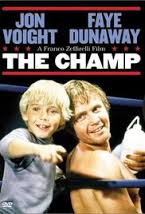
‘The death scene in the film, ‘The Champ’ with Ricky Schroder and Jon Voight was found by a psychology professor from the University of California-Berkeley, to represent an emblem of pure sadness. The clip has since been used in experiments that range from testing the tearful responses of depressed people, elderly people and people with eating disorders to tracing the spending habits of sad people.’ (!!)

Um, um,um, um, um, um …

polar-bea

‘Polar Bears are Irish. Modern polar bears share a distinct DNA sequence, passed down the female line, with their now extinct brown ancestors. The same DNA fingerprint is absent from other species of brown bear alive today. It is thought the link arose from interbreeding between prehistoric polar bears and female brown bears when their paths crossed as the Irish climate cooled.’ (!!)

Um, um, um, um, um, um ..

Embed from Getty Images


‘Mary Prince lived in The White House during Jimmy Carter’s presidency as a housekeeper. In addition to his other duties President Carter was her parole officer as she was a convicted murderer. She had previously become Amy Carter’s nanny following assignment to the then Georgia Governor’s mansion.’ (!!)

Um, um, um, um, um, um ..

Embed from Getty Images


‘When former World Heavyweight Champion Sonny Liston’s dead body was discovered all that was found with him was an ounce of heroin, a shot of vodka, a gun and a crucifix (the Mafia like to keep things simple).’ (!!)

Um, um, um, um, um, um ..

juzcar

‘Located 113 km away from the city of Malaga and 25 km from Ronda, in the autonomous province of Andalusia, Juzcar has become a hotspot for worldwide travelers, and one of the most recognizable villages in Spain. Once a traditional white village, the picturesque hamlet changed its look in the summer of 2011, becoming the first and only official Smurfs village in the world.’ (!!)

Um, um, um, um, um, um ..

hudson-super-6

‘In 1930 Charlie Heard a taxi driver from Geelong, Australia hesitated only briefly before accepting a fare to take Ada Beal and her two lady companions to Darwin and back – a distance of some 7,000 miles. Charlie drove a 1928 Hudson, Miss Beal had a wooden leg and always wore a fur coat. The fare was in the order of 9,000 Australian Pounds. All parties returned safely to Geelong with stories to tell. Charlie bought a service station and stayed close to home therafter,’ (!!)

Um, um, um, um, um, um ..

mark-sykes-001

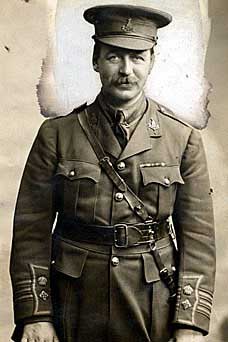
‘At a solemn service before sunset in a rural Yorkshire churchyard a battered lead-lined coffin was reburied hours after being opened for the first time in 89 years. As prayers were recited, samples of the remains of Sir Mark Sykes, the aristocratic diplomat and adventurer whose grave had been exhumed, were being frozen in liquid nitrogen and transported to a laboratory with the aim of saving millions of lives.

During his life, Sir Tatton Benvenuto Mark Sykes made his mark on the world map. As the British government’s lead negotiator in a secret 1916 deal with France to carve up the Ottoman Empire, he laid the groundwork for the boundaries of much of the present-day Middle East and, according to some critics, its current conflicts.

But it was the manner of the death of this Conservative MP, British Army general, and father of six children, that may yet prove the source of his most significant legacy by providing key answers in how medical science can cope with 21st century lethal flu pandemics.

Early in 1919, Sir Mark became one of the estimated 50 million victims of the so-called Spanish flu and died in Paris.

His remains were sealed in a lead-lined coffin and transported to the Sykes family seat in Yorkshire. He was buried in the graveyard of St Mary’s Church, adjoining the house.

Were it not for the fact that Sir Mark’s body was hermetically sealed by a thick layer of lead, the story of his life would have passed quietly into history.

But the accident of chemistry – the decay of soft tissue encased in lead is dramatically slowed – has presented scientists investigating ways to deal with the inevitable mutation of the H5N1 “bird flu” into a lethal human virus with a unique opportunity to study the behaviour of its predecessor.

There are only five useful samples of the H1N1 virus around the world and none from a well-preserved body in a lead-lined coffin. Sir Mark’s descendants are delighted that his influence may reach a different sphere of human endeavour. His grandson, Christopher Sykes, said: “We were all agreed that it was a very good thing and should go ahead. It is rather fascinating that maybe even in his state as a corpse, he might be helping the world in some way.” (!!)

Um, um, um, um, um, um ..

brian-bevan

‘A lifeboatman who saved the lives of at least 300 people and was awarded the service’s equivalent of the Victoria Cross retired on Friday after 27 years spent braving the North Sea.

Coxswain Brian Bevan, 55, would be rejected if he applied to join the Royal National Lifeboat Institution today. The ability to swim 100 metres fully clothed is now a prerequisite – and he gave up learning to swim after he was thrown in at the deep end and nearly drowned in a prank on a school swimming trip in the 1950s.

He observed: “You certainly don’t need to swim to man the lifeboat. Your lifejacket keeps you afloat.”

Pinpoint timing and a cool head helped Mr Bevan to earn the RNLI Gold Medal during a mission in a force 10 storm on Valentine’s Day 22 years ago.

He remains the only lifeboatman to receive the bronze, silver and gold medals of the Royal National Lifeboat Institution at a single ceremony.

He has no plans to learn to swim.'(!!)

Um, um, um, um, um, um ..


fra-angelio

‘When Jean Preston in the 1960s came across two small panels depicting medieval saints in a box of unwanted items up for a quick sale, she thought they they had an enigmatic quality and were, ‘quite nice’.

Miss Preston, from Oxfordshire, was working as a manuscript curator in California. Her father bought them for a couple of hundred pounds to indulge her interest in curious works.

For decades they hung, partly obscured, behind the door of her spare room. It was only after Miss Preston’s death, at the age of 77 that the panels were found to be key works (worth over £1m) by the Renaissance master painter, Fra Angelico, solving the 200 year mystery of their disappearance.’ (!!)

odell


‘For the first time in almost 60 years, Dianne Odell’s family home was silent yesterday. Only a string of well-wishers interrupted the eerie calm that pervaded the house where, for as long as anyone can remember, a noisy electric motor had powered the massive ‘iron lung’ pumping air in and out of her body.

Miss Odell had been in the iron lung for more than 50 years after contracting Polio in her youth. She was believed to be the world’s longest-surviving victim of polio to have spent almost her entire life inside an iron lung, a now virtually obsolete medical device that keeps patients alive by forcing air in and out of their paralysed bodies.

She was cared for by her close family together with a community of friends and admirers, with whom she made eye contact through an angled mirror. Despite the difficulties of Ms Odell’s condition, she managed to get a high-school diploma, take college courses, and even write a children’s book about a “wishing star”‘ called Blinky – all from the confines of the living room of her home.

Miss Odell proved the truth of the observation of the great moral philosopher Victor Frankl; that everything can be taken from you but one thing : the last of human freedoms – to choose your attitude in any set of circumstances, to choose your own way.

Recalling her life Miss Odell said:

I remember walking to a ball game with daddy and I remember being on a train. It seems like I can remember playing out in the mud one day.

But I’ve had a very good life, filled with love and family and faith. You can make life good or you can make it bad. I’ve chosen the good.’ (!!)

Um, um,um, um, um, um,

Um, um, um, um, um, um,

Um, um, um, um, um, um

Um, um, um, um, um, um ..

Sometimes the world is too much to take in. Too much.

In those times I find respite in the gracious words and melodies of Curtis Mayfield and the artless art of Major Lance.

I cue up, ‘Um, um, um, um, um, um’ and dance until my heart is full and my mind is free.

Give it a try.

Christmas Cornucopia 2016 : Ninth Day

Ninth Day

A Painting by Peter Paul Rubens (1577 to 1640)

A Poem by Norman Nicholson (1914 to 1987)

Music by  Chopin played by Claudio Arrau (1903 to 1991), Joe Tex and June Christy.


Our painting today is, ‘The Adoration of the Magi’ by Peter Paul Rubens.

More accurately, it is the the modello (a sketch shown to a patron for approval of the composition) for the altarpiece painted by Rubens for the convent of the Dames Blanches, Louvain now in King’s College Chapel, Cambridge.

rubens-adoration

There is a wonderful humanity in this work.

Though the event depicted was of universal importance it was witnessed, experienced, by, ‘ordinary’ men and women (and let us not forget animals as the peering camels here humorously demonstrate) on a day when the sun rose and set like any other.

Miracles take place (far more often than, ‘common sense’ will allow) against  the background of every day events.

Rubens manages to make each of the individual characters in the scene vividly present.

I feel as if I could  walk directly into this company and be made welcome.


Devotees of Chopin and his piano works, especially The Nocturnes, can spend long hours debating which great pianist has searched their depths most successfully.

I have never wavered in my conviction that the magical recordings made by Claudio Arrau must wear the crown.

His version of The Nocturnes has the quality of meditative prayer.


After the above and yesterday’s stop to gaze reverentially heavenward it’s time to turn to more earthly considerations.

The Greeks, as you might have expected, had different words to describe the varied forms of love we express and experience.

Yesterday we were concerned with Agape – the love of God for man and man for God. Today we will find songs that express Eros – sensuous, sexual love and the appreciation of beauty and Philia – the love expressed in affectionate regard and friendship.

Now we turn to a tremendous southern soul sermon from a master and mentor for the genre, Joe Tex. ‘I’ll Make Everyday Christmas (For My Woman)’ glows bright with Joe’s gently enveloping passion.

Joe’s forte was telling stories in song using humour and homespun wisdom so that you felt he was gifting you the hard won lessons of a richly lived life.


Joe had a country preacher’s sense of the hunger in the audience for parables that would make sense of the roadblocks and confusions assailing them in their lives and provide a route map for the way ahead.

Embed from Getty Images

They knew that Joe didn’t pretend that he had never been a rounder and a rogue as well as a true romantic and love disciple.

We often, rightly, pay more attention to the testimony of someone who admits to failure and frailty than those in their whited sepulchres who are quick to admonish our every fault.

Joe sings the song with a steadily growing intensity almost as if the promise he was making was as much to his own better self as to the woman it was made to.

When the record finishes its hard not to say, ‘Amen! Brother, Amen!’ and vow to make sure you too take care to make everyday Christmas for your own woman or man.

Next, the delightfully cool Miss June Christy with, ‘Christmas Heart’. June was a veteran big band vocalist who followed Anita O’Day as the singer with Stan Kenton.

As a solo artist she made a magnificent album, ‘Something Cool’ which should be on the shelves of anyone with an appreciation of the art of jazz singing.


I have always found something deeply engaging in the understated, wistful tone June Christy brings to a song.

It seems she has stripped out all unnecessary flourishes so that we hear the essence of the song as she steers us gently to understanding through her embrace of the melody and lyric.

The lack of hectoring or self regard in, ‘Christmas Heart’ makes its dreamlike plea for Christmas to be a day when all the wounded find rest and balm all the more affecting.

You never really need to ask who is your neighbour – just look around you.

Today’s poem is, ‘Carol For The Last Christmas Eve’ by a favourite poet of mine, Norman Nicholson from Millom in England’s rural Cumbria.

Never fashionable Nicholson’s work will endure.

‘The first night, the first night,
The night that Christ was born,
His mother looked in his eyes and saw
Her maker in her son.

The twelfth night, the twelfth night,
After Christ was born, the Wise Men found the child and knew
Their search had just begun.

But the last night, the last night,
Since ever Christ was born,
What his mother knew will be known again,
And what was found by the Three Wise Men,
And the sun will rise and so will we,

Umpteen hundred and eternity’


Irma Thomas : Deep Soul – Through trial and tribulation Wishing someone would care

Embed from Getty Images

Mama said:-

‘Child, when you’re born a woman you gonna have to get used to the taste of the salt in your tears.’

‘Now I ain’t telling you every man’s a devil but believe me everyone of them has some of the devil in him and you better be ready for that’

‘Of course, some sweet men got a touch of the angel about them – if you find one of those girl you better hang on tight!’

‘But, beware! Some of them are full of love and smiles one day (specially when you young) but the next they can curl their lip and leave you all alone (specially when you older)’

‘Why your own Daddy didn’t stay around long enough to see you crawl before he was chasing some other dream somewhere down the road. And, he never looked back’.

‘Lookin’ the way you do girl you never gonna be short of suitors. Likely, you gonna meet some good and some bad. Get your share of sunshine.

And, Lord knows, you gonna get your share of rain. Sometimes, it’s really gonna come down, really gonna come down.’

http://www.youtube.com/watch?v=7-Ofyo24UZc

‘Sometimes all you can do is wait it out til the sun comes rolling round heaven again.’

‘And, I guarantee it wont be too long before you be prayin’ for someone new to make it right again.’

‘Because, darlin’ girl, aint no woman alive, no matter how bad the last man treated her don’t wish, really wish, that out there in the night, somewhere along the road – there’s someone who will really care.’

‘Don’t ever give up on that’

‘Now girl, sometimes a man you want gonna need some persuading – you think you can do that?’

‘Mama – I know I can, I know I can!’

‘And, I gotta tell you mama any man who leaves me behind gonna rue the day.

He wont be very far down the road before he realises he never gonna find one like me gain.

Oh, then, he’ll be thinkin’ of running all the way back to beg me on his knees to take him back.

He gonna find I need a lot of persuading. A lot.

He gonna find time is on my side. My side.’

Need I say more?

Notes:

The above dialogue is of course, fiction.

Yet, it can’t hope to come close to the drama of Irma Thomas’ own life.

Born 1941 in rural Ponchatoula, La she was raised in New Orleans and by the age of 19 was twice married and the mother of four children.

Working as a 16 year old cocktail waitress she shared a stage with Tommy Ridgley at the Pimlico Club.

Tommy and anyone with half an ear could tell that this girl could really sing! Joe Ruffino at Ron Records was persuaded too leading to the release in May 1960 of the deliriously fiesty, ‘(You can have my husband, But please) Don’t mess with my man’.

She soon moved to the larger Minit label where she was fortunate to work with the great Alan Toussaint. Her records also benefited from the superb arranging and production skills of H B Barnum.

Together this team produced a series of heart shredding classics which will always burn deep before the dark altar of deep soul.

The four sides featured above showcase a singer who emerges, bruised, from the shadows to share the secrets of a heart that has known joy and pain.

Yet, that battered heart beats on, beats on, beats on – encouraging ours to do the same whatever trials beset us.

Her vocal performance in her own, ‘Wish Someone would Care’ must set some kind of benchmark in soul balladry.

Indeed, before she has sung a word her opening tear choked moans crack the heart wide open.

Then, we can only surrender to the swooning majesty of her superbly paced vocal which is immeasurably assisted by the downriver flow of the organ and the dread and doom insistence of the drums.

Here, by an act of creative faith, Irma Thomas has encapsulated a lifetime of feeling in less than 150 seconds.

This record can never die. There will always be trial and tribulation in this vale of tears.

And, as the night ends and the dawn is about to break all you can say as you ready yourself to face another day is:

Mmmmm, Mmmmmm, Mmmmmm, Mmmmm.

The best compilation of Irma’s magnificent early 60s recordings is, ‘Time is on my side’ on the Kent label.

From her later work I recommend investigation of the excellent series she made for Rounder Records – especially, ‘The New Rules’

Bill Withers : American Hero – born on the 4th of July!

The great Bill Withers was born on July 4th in 1938.

He is a great master of American Song who has added significantly to that treasure trove.

As a tribute I am pleased to reblog a post from the very early days of The Jukebox which many of you will have missed.


‘A good man out of the treasure of his heart bringeth forth good things’ (Matthew)

‘Lean on me when you’re not strong and I’ll help you to carry on’ (BIll Withers)

Bill Withers stuttered painfully as a boy and young man which meant he didn’t say much.  What he did do was listen carefully and thoughtfully to the people around him in his family and his community. 

Bill was  born and brought up in poor blue collar West Virginia mining communities where every day was a struggle with the constant background threat of injury and disaster.

In such communities loyalty, mutual reliance  and co-operation were not painted storybook virtues but living realities.   People worked with and for each other so that everyones burden would be a little lighter and thus more bearable. 

Bill was and is a proud working man who knows the labourer is worthy of his hire and worth listening to.

After leaving home at 17 Bill spent 9 years in the US Navy where once again you learned that if you wanted your back covered you had to perform the same service for your comrade – buddy or not.  Your life literally was often in your brother’s hands.

He also listened with intent and attention to the songs he heard in church and on the radio. His imagination became infused with the enduring resorative grace of gospel, the energising pulse of rhythm and blues and the sweet balm of soul music. 

Bill was storing wisdom and treasure in his heart and when the stuttering stopped his voice came through loud and clear. 

Bill Withers would draw from a deep well of resources to write and perform songs that would always be fresh and relevant because they addressed fundamental questions about how our lives were and should be lived.

Which is to say that in many senses Bill Wither’s vocation combined that of a songwriter and singer with that of a preacher ministering to his community through the uplifting medium of music. 

The prolific country songwriter Harlan Howard defined the essence of a great song as three chords and the truth and that’s exactly what Bill Withers offers us in his wonderfully vivid songbook.

Lean on Me is a simple song that tells an eternal truth.   We all have pain, we all have sorrow: we all need someone to lean on.  It opens with plain repeated piano stabs calling the listener to attention – listen up I got something to say! 

The melody and rhythm echo the tradition of a gospel service: state your theme, tell your story through examples we can all recognise from our daily lives then call on the audience to respond. 

Invite your listeners to testify that the seemingly unbearable can be borne if you call out to your brother or if your sister calls out to you – ‘I’ll help you carry on’.

Show that we can all be the leaning post for our brother or sister in need .. ‘I’m just right up the road, I’ll share your load if you just call me.’ 

For, as long as the moon lasts we are  all bound to stumble and fall in this life – it’s just a question of who falls when and how far and whether a helping hand and load bearing shoulder will be at hand to help you up and lead you on. 

The foolishly proud always think they can stand up alone while the wise now that with help we can all make it through today’s troubles to tomorrow.

Lean on me acknowledges, indeed celebrates our weakness and vulnerability but also our strength.  We are supplicants but we are also enablers, uplifters and  restorers. 

Yes, life will batter us and nobody walks in the sunshine all through their life but if we are honest, admit to our difficulties and failings and call for help we can be amazed that others are ready to come to our aid. Family, fraternity and faith in each other will get us through.

Of course, where a song is concerned having good intentions and a good moral to impart does not mean that the song will live. And, if a song does not live, get up and walk by itself on its own merits, then you won’t capture your audience, won’t get them to listen once – let alone sing along and punch that number on the jukebox. 

Lean on Me passes this test easily: it’s a wonderful up and walking living song!

First and foremost Bill Wither’s warm, supple and alluring voice commands your attention and wins your allegiance – you want to listen to what this man has to say.  This is the voice of a strong, mature man with hard miles over rough ground on the clock. 

Yet, it’s the voice of an optimistic man ready to roll up his sleeves and face unafraid whatever challenges the next day will bring.  So, when Bill Withers sings you listen and when he calls out for you to respond you find that before you’ve realised it you’re singing :

‘We all need someone to lean on’

The song proceeds at a stately pace like a great powerful train allowing lolly gagging passengers plenty of time to get on board – confident they are in safe hands and will arrive at the right destination at the appointed time – the driver clearly knows what he’s doing.

As,’Lean on Me’ develops in come the most primal musical accompaniment of all – handclaps.  These are organically perfect in context: a song addressing our common humanity using the, ‘instrument’ even the most musically illiterate can at least assay when enthused. 

On record Bill uses the handclap as a propulsive encourager of the spirit of the song, ‘Come on! This way’.  In concert it is unimaginable that the bands handclaps aren’t swelled by all of those in the audience.  By now everybody is on board the train and seeing themselves as one body – whatever seat they happen to be in.

As the song moves forward the strings come in to emphasise the swelling strength that acknowledged common vulnerability can unlock – ‘Call on me brother’ and we will get through, we will get through – together. 

This is a song, without doubt as time has proven, an anthem, that proclaims our individuality and our community membership should not be warring forces but aspects of a natural, nurturing whole.  That’s what Bill and, ‘Lean on Me’ are – nurture for our humanity.

The greatest ever political leader once put it this way a century or so before Bill, ‘We are not enemies but friends. We must not be enemies.’. That is how we will find the better angels of our nature.

Abraham Lincoln said that. Or to put it another way:

‘You just call on me, brother, when you need a hand

We all need someone to lean on.’

Bill Withers said that.  I doubt that popular music has ever had a truer or more passionate guide to our better angels than Bill Withers.


Notes, Comments and further listening:

Lean on Me was written and produced by Bill Withers and recorded in 1972.

The musicians featured were James Gadson on drums, Ray Jackson on keyboards, Benorce Blackman on guitar and Melvin Dunlap on bass.

Lean on Me was a Number One record on both the R&B chart and the Hot 100 Billboard US charts.

Bill Wither’s catalogue is filled with powerful melodic songs and taut performances.  His first two albums, ‘Just as I Am’ and ‘Still Bill’ are essential components of any record collection. Songs like the warm, witty and wise ‘Grandma’s Hands’ and the gloriously evocative and consoling, ‘Aint No Sunshine’ are undeniable classics.

‘Bill Withers at Carnegie Hall’ is among the very greatest live records with superlative singing and musicianship responding to an audience that is thrilled to celebrate in his company.

Sony have recently reissued the complete Bill Withers catalogue which is widely available at a ridiculously cheap price given the eternity shale it contains.

William Bell: You Don’t Miss Your Water – The Passion and Stoicism of a Quiet Man!

There is little in life as impressive and convincing as the voice of a quiet man telling the truth.

Embed from Getty Images

William Bell a sage songwriter and stoic soul balladeer told us heartfelt, hard won truths about the eternal trials of love in an incandescent series of records issued from Memphis in the 1960s on the mighty Stax label which still resonate.

These records, especially those contained on his magnificent, ‘Soul of a Bell’ album have become boon companions during the trials and triumphs of my own life.

Wherever I go William Bell goes with me.

During my second year at college I grew weary of the role of ninja intellectual and withdrew to the quiet of my room overlooking a Cambridge meadow. There, largely heedless of my official studies, I obsessively read St Augustine, Dante, Raymond Chandler, Seamus Heaney and Russell Hoban.

My engagement with these profound truth tellers was accompanied and reinforced by a soundtrack largely composed of Schubert, Aretha Franklin, Laura Nyro, Van Morrison, Bob Dylan and William Bell.

And, it might surprise you to learn that if all the hours of listening were collated it was William that I turned to most often for wisdom and solace.

Wisdom and solace told in the voice of a quiet man telling the truth. In William Bell’s songs and singing there’s no hectoring, no over emoting, no grandstanding. Instead it’s as if someone looks you dead in the eye before saying .. this is how its been for me brother – maybe you know the feeling.

You don’t miss your water till your well runs dry. Tell it to me William! Tell it to me!

In contrast to the urgent, urban, industrial beat from Motown the beat from Stax was measured, agrarian, heavy with Southern heat and shimmer. This is music which seems to beckon you in to share a grown up tale of life as it is lived by folks just like you.

The introductory gospel piano says, ‘listen up!’ I’ve got something important to tell you. The stately tempo laid down by mournful horns, dead man walking drums and enveloping organ frames William Bell’s reflective, rueful vocal.

It’s the sound of a man finally understanding and coming to terms with the consequences of the arrogance of his mistaken choices. The bravura of the playboy falls away revealing the shamed penitent who must walk on alone without the one who really did love him. There’s no going back now. Walk on knowing that some lessons have to be learned the hard way – you don’t miss your water till your well runs dry. Till your well runs dry.

There is no trace of self pity in William Bell’s vocal. Rather, this is a man who is singing this song gently to himself or the silent moon above. ‘Listening to ‘You Don’t Miss Your Water’ you know it’s true and that it carries a folk wisdom that will always be true. Attend to your well.

A year later William Bell, with, ‘(I wouldn’t have it) Any Other Way’ once again elegantly captured one of the perpetual dilemmas of love – how do you cope with being rejected and discarded by the one who held your heart? I have to admit I’ve sung this more than a few times to the moon myself back in the day.

Haven’t we all, bruised and reeling from a break up adopted the pose of the couldn’t care less lover airily declaiming, desperate for the message to be reported back, now that I think of it (not that its been much on my mind) I really wouldn’t have it any other way. Any other way.

It’s obvious here that William and the team at Stax were aware of the exquisite charm of the records of the late 50s/early 60s Drifters as well as the tender, heartfelt outpourings of Arthur Alexander. The result is a glorious record that has soul staying power and pop gloss.

Next another of William’s songs that never fails to stir the heart, ‘Private Number’

Private Number is one of the great soul duet records of the 1960s ranking with Marvin and Tammy and Otis and Carla. The song tells the story of the lover who has been,’away’ seeking to rekindle the flames of love with the one whose memory has perhaps been all he has had to hold onto in their time apart. Where is, ‘away’?

William Bell was a Vietnam veteran so it may well be that, ‘away’ was his way of alluding to shattering experiences of war. Many, many soldiers struggling through the days and sleepless at night must have wondered who now had their baby’s precious private number. And, arriving home intact but forever scarred who wouldn’t be chastened to learn that the private number had been changed?

The sense of dread this sets up makes the relief of hearing, ‘Welcome Home, nothing’s wrong’ overwhelmingly powerful. To collapse, safe, into the arms of the one you love after an ordeal is one of the most emotionally nurturing and reassuring experiences of our lives. Life will go on and all will be well no matter how terrible the events of the past.

As the 1960s ended there was a deep sense of foreboding in the air. An uneasy sense that the days of sunlit hope were now overshadowed and that something terrible was coming – a bad moon on the rise.

William Bell, in his characteristically personal and understated way caught this feeling in his most mature inquiry into the challenge of keeping love alive as the grinding years grind on.

His song, ‘I Forgot To Be Your Lover’ is the soliloquy of a man, a wounded soldier on the battlefield of love, summoning up all his depleted energies in one last attempt to save his marriage.

We open with looming strings evoking glowering rain heavy clouds about to unleash a deluge.

Then tolling, Curtis Mayfield like, guitar appears before William’s at first meditative and later rueful and anguished vocal proceeds as he examines his conscience and identifies with painful honesty how he has failed to combine the roles of companion, lover and husband.

In moments of revelatory clarity he understands that love not endlessly renewed must wither and will die. Somehow, taking her for granted, he has lost his way and fallen into romantic lethargy. Simply he forgot to be a lover.

Now he knows the depth of his transgressions he can only beg for forgiveness and the chance to show that the love he forgot to offer still lives in his heart.

The sixties songs of William Bell amount to a kind of pilgrims progress taking us into the joy of winning love, the pain of losing of love and the desperate struggle to hold onto love in the face of our inevitable human weaknesses.

Through our stumbling missteps and mistakes most of have all foolishly taken for granted that the the well of love will somehow be endlessly replenished. We forget too easily that love needs nurture. That we must be a lover as well as the one who is loved.

The course of love necessarily involves doubt and struggle as well as growth and contentment. William Bell, with his insistent quiet voice telling the truth, is just the companion you need beside you on your journey

Notes:

I regard, ‘The Soul of a Bell’ as an essential record. Order it today.

In addition to the songs considered above look out for:

Share What You Got … ‘
‘Everybody Loves A Winner’, ‘
Everyday WIll Be Like A Holiday’
and his original of the now blues standard, written with Booker T, ‘Born Under A Bad Sign’.

After leaving Stax William had a major US hit with, ‘Tryin’ to Love Two’

All his albums reveal a singer who digs deep into a ballad to bring forth beauty.

William Bell is a very fine songwriter and his songs have been memorably covered by Otis Redding, Joe Tex, The Byrds, Albert King and Cream among many others.

If you search YouTube you can find William performing with masterful ease before President Obama and bringing in the new year on Jools Holland’s UK TV show.