A time of promise and an echo of the sweet beginning of being in Eden.
La primavera e qui. La primavera e qui.
Time for La bella figura.
Time for me to carefully roll the Roadster out of its winter quarters.
Time to turn up the collar on the leather jacket, set the Donegal tweed cap at a jaunty angle and put some va va voom into the blue highways of the Surrey Hills.
Of course, there’s a Jukebox playlist for the occasion.
The Beach Boys, ‘I Get Around’, Thin Lizzy, ‘The Boys Are Back In Town’, Junior Parker, ‘Feelin Good’ set the wheels a rollin’ very nicely.
But, there’s ten versions of one song I always play as I swoop up and down the Hills to announce, top down and volume way, way up, that Spring has sprung!
Spring brings out the Italian in me – something about the brightness of the sun and the promise of golden days ahead.
Maybe, this year, I’ll see once more that old moon above the Mediterranean Sea.
And be woken by the sun over the mountains.
Il tempo per un festival.
La primavera e qui.
Buona Sera Signorina!
First, a version by the artist who will always remain first and foremost in my affections.
You can be sure that Van has spent many an hour listening to the original by Louis Prima (see earlier Jukebox tribute to Louis).
Perhaps he first played it on Sax when he was a member of the Monarchs Showband at the very dawn of his professional life in music.
Here in 1971 he careens through the song like a Cresta Run bobsleigher going for the record.
You can hear his obvious love and affection for Swing and Jump Blues in every note.
‘Buena Sera’ was written by Carl Sigman and Peter deRose – songwriters from the golden age of Tin Pan Alley whose hits would take a page or more to list (think, ‘All In The Game’ and ‘Deep Purple’ for starters).
In composing the song they must have imagined an audience including significant numbers of WW2 GIs who had indeed found love under the moon and stars of Naples.
Some who brought brides home must have smiled at the memory of those Mediterranean nights and some who decided to return to the sweetheart waiting at home must have smiled more ruefully as they remembered the girl they left beside the beautiful Bay of Naples.
Some signorinas you can never forget!
In 1961 as Van Morrison was setting out on his career in the clubs of Northern Ireland and Hamburg Ray Gelato was born in London.
Ray, the son of an American Serviceman, grew up, like Van, imbibing the music of Louis Jordan and Louis Prima in the home.
He was especially fond of the Sax playing of Sam Butera and determined to follow his ‘Everybody up on the Dance Floor now!’ grandstanding Tenor style.
He has succeeded completely in that ambition.
Il tempo per un festival!
There’s a lovely sultry sway to Ray’s version and there’s no good resisting you just gonna have to cut a rug to this one!
Ray is famed for the sheer brio and energy he brings to every live performance – something I can vouch for having seen him many times myself (Paul McCartney booked him as his wedding band and I would have too if finances had allowed).
I am going to sign off Signori, Signorinas and Signoras with a version by a great favourite of The Jukebox – Mr Acker Bilk.
Acker’s version must surely paint a smile on every face, lift every heart and buoy every spirit!
I have been known to play this one on repeat all the way from Surrey to Cornwall when the Sun has taken up its proper place in the heavens.
La primavera e qui. La primavera e qui.
Notes:
I heartily recommend Ray Gelato’s ‘Wonderful’ CD which has him romping through a dozen classics of Italian Song.
If you ever see he’s playing somewhere near you don’t hesitate – go!
Of course, as you will know by now, you can never have too many Van Morrison records while Acker Bilk’s 50s and eary 60s recordings are bottled joy which ought to be medically prescribed to raise the global index of well being.
Within 60 years of a few minutes of wavering powered flight a man can land on the Moon!
The War to end all Wars can be followed by the Jazz Age, The Great Depression and an even more deadly second World War.
Mankind can find cures for scourging diseases while developing ever more ingenious ways to destroy more and more lives with ever more deadly Bombs.
Radio, Records, and Television bring vibrant local cultures to global prominence.
From the 1920s onwards an immense treasury of music is captured on 78s or 45s or LPs.
Ragtime. Jazz. The Blues. Boogie-Woogie. Gospel. Country (and Western). Jump Blues. Rhythm and Blues. Hillbilly Boogie. Rockabilly. Rock ‘n’ Roll.
The Immortal Jukebox exists to celebrate this treasury and to salute the man and women who have made significant contributions to it.
So, today on the 100th anniversary of his birth I am doffing my cap to the one and only Rufus Thomas by reblogging my post on him and his daughter Carla from three years ago.
Celebrate with me.
All families contains the history of multitudes through the cultures they are heir to and which they live within. At the same time each family can be an agent for cultural change and development through their actions and works. We stand on the shoulders of giants but we can see a destination ahead they could never reach.
This is particularly the case in families whose work lies within the popular arts. If you grow up with music and talk about music is all around.
If you watch shows from the side of the stage and know the drudgery as well as the glamour of, ‘show business’ you will either run a mile and seek, sensibly, to become a lawyer or farmer or you will think there is no other life worth living than that of writing, singing and performing songs and bathing in the approval of an audience.
The careers of Rufus and Carla Thomas, father and daughter, take us on a fascinating journey through twentieth century American popular culture.
We will encounter: travelling minstrel shows, the development of Afro-American radio and the birth and growth of two of the nations fountainhead records companies (Sun and Stax) which produced many of the greatest rock n roll, soul and rhythm and blues records ever made.
We will also meet music icons of the stature of Sam Phillips, Elvis Presley, B B King and Otis Redding and realise why the city of Memphis can justifiably lay claim to have been the capital city of American music.
Rufus Thomas was a magnetic figure with personality and character to burn. He had that most attractive and winning of human qualities – vitality.
There were no downcast faces when Rufus was around! He was a one man party who lit up every room he ever entered with his ebullience and appetite for creating and sharing enjoyment.
He was born in rural Mississippi in1917 moving to Memphis as a toddler. It was in that bustling metropolis that he grew up and learned to become an entertainer who combined the talents of a dancer/hoofer, comedian, singer, talent show host and radio disc jockey.
I think that’s what you call an all rounder!
Leaving Booker T Washington High School in 1936 with the depression suffocating the nation he took his talents on the road throughout the South with the legendary F S Walcott Rabbit Foot Minstrels (commemorated in a lovely rowdy song by The Band).
‘The Foots’ were a glorious travelling tent show troupe which operated between 1900 and the late 1950s bringing comedy sketches and salty song and dance routines to any town, large or small, where the tent could be pitched and an audience drummed up.
Arriving in town the brass band would parade with comedians like Rufus announcing the wonders of the show to come. The stage, boards on a folding frame, would be set up with gasoline lamps acting as footlights.
While the liquored up audience waited for Bessie Smith, Ma Rainey or Louis Jordan to come on Rufus would whip up the crowd with comic dancing and jive jokes tailored to the local audience and introduce the dancing girls who invariably managed to increase the show’s temperature by several degrees centigrade.
After the War Rufus was back in Memphis working for a textile company and married with three children; Carla, Marvell and Vaneese. He hooked up again with his high school mentor, Nat D Williams, who was a key figure in Memphis Afro-American culture as teacher, journalist, talent spotter and pioneering radio host.
Nat D recognised that Rufus’ energy, affability and show business smarts gave him all the necessary qualities to be a successful talent show host. So, Rufus began to regularly host the shows at the Palace Theatre on Beale Street once announcing the youthful Riley (B. B.) King as the winner in the late 40s. Rufus was still hoping to make it as a singer though singles on labels like Star, Chess and Meteor shifted few units.
The next stage in Rufus career was again given impetus in 1951 through the good offices of Nat D who brought him on to be a disc jockey for WDIA – a Memphis radio station which, uniquely at the time, used black DJs to broadcast to the considerable black audience in Memphis and anywhere else 50,000 watts of power could reach!
Radio was king in the first post war decade reaching into almost every home in the country and providing the soundtrack to millions of lives through immensely popular shows that gathered whole families round the set.
Rufus, with his easy charm was a radio natural and his, ‘Hoot and Holler’ show became essential listening not just for his own community but also for young white hipsters like Elvis Presley or Steve Cropper who just knew that they could play those rhythm and blues too if they were only given the chance.
As it happened in Memphis there was a man, one of the true heroes of American music, Sam Phillips who was able to make those dreams come true. Rufus, in the early 1950s was often at Sun studios at 706 Union Avenue working with Phillips as he recorded brilliant blues sides by artists like Howling Wolf.
It was Rufus who provided Sun with its first breakout single in 1953 with, ‘Bear Cat’ an answer record to Mama Thornton’s,’Hound Dog’ which reached No 3 in the R&B chart (this launched a series of legal actions but that’s another story).
Rufus let rip with the full force of his personality matching Big Mama all the way while adding a sly spin of his own to the story of mismatched lovers. The featured stinging guitar is by Joe Hill Louis.
Turn this one up as loud as you can!
Rufus, like all the other black artists at Sun then faded into the background as Sam Phillips realised that the pot of gold at the end of the rainbow could only be found by recording white artists, preferably young handsome guys, who could combine blues, rhythm and blues and country influences to create a new sound on the face of the earth – rock ‘n’ roll.
Enter Elvis Presley! Elvis was aware of Rufus through listening to WDIA and he always retained a fondness for ‘Tiger Man’ which Rufus had recorded at Sun.
Rufus continued to combine full time work at the textile plant with his entertainment career throughout the 1950s. Meanwhile, Carla who had been born in 1942 was soon displaying the family relish for singing and performing.
At the tender age of 10 she joined the WDIA sponsored Teen Town Singers and was combining her school duties with twice weekly rehearsals and a radio show every Saturday. Rufus could hear that his daughter had an attractive voice and unusual poise for such a young artist.
So, in 1959 Rufus decided to approach a new Memphis recording outfit, Satellite Records, headed up by siblings Jim Stewart and Estelle Axton and persuaded them that they needed to move beyond the country and pop markets R&B to thrive in their home town and the rest of the nation.
Rufus and Carla recorded the duet, ‘Cause I Love You’ at Satellite’s studio and operational headquarters which was located in a former cinema/theatre on McLemore Avenue. And, voila! Satellite had its first hit (helped by the distribution deal agreed with sharp eared Jerry Wexler at Atlantic Records).
Soon after Jim and Estelle would use the first two letters of their surnames and create Stax Records.
The next time Carla’s name appeared on a record it was on the Atlantic label with a song she had written as a 16 year old, ‘Gee Whizz (Look At His Eyes). Gee Whizz is a heart and soul on the sleeve love ballad that could only have been written by a teenager in the delirious throes of adolescent love/infatuation.
Do you remember that oh so sweet feeling as you gazed at your love object? While no one could or should maintain that obsessive attachment to the dream of love its a poor soul that does not cherish a small remembrance of those heady days.
And, nothing can swoosh you back to those days with more efficiency than Carla’s utterly beguiling vocal here. Lean back, close your eyes and swoon!
The song became an immediate radio favourite and once Atlantic was behind it and Carla appeared on the nations premier pop TV show, ‘American Bandstand’ there was no stopping, ‘Gee’ from ascending to the top 10 of the national charts and a permanent place in the memories of a generation.
Carla then issued a string of singles on Atlantic and then Stax demonstrating that the attractively naive young girl was growing into a smart and sassy young woman who could convincingly embody a full range of adult emotions with engaging vocal style.
Listen to her here in 1963 with a song especially beloved by her European fans, ‘I’ll Never Stop Loving You’. You’d have to have a stony heart and leaden feet not to be up and practicing your finest twists and twirls to this one!
In that same year of 1963 Rufus showed that there was still life in the old trouper as he released a series of driving singles calling us with unflagging energy and wit to get up off our butts and out onto the dance floor.
The most potent and memorable of these, ‘ Walking The Dog’ has become something of a Soul/R&B standard (even receiving the accolade of a cover by The Rolling Stones). The video clip shows Rufus in full flow.
The mid 60s saw Carla and Stax records really hit their stride utilising teams of brilliant in house writers and the incomparable Booker T and The MGs as the house band. A perfect example of the power of such collaborations is a Carla classic from 1966: B -A – B – Y.
This pearl was authored by the great partnership of Isaac Hayes (a Teen Town alumni like Carla) and David Porter. There’s gospel testifying here as well as soul enticement in Carla’s seductive vocal backed by a steam heat rhythm section topped off with a straight into your skull chorus – a big hit guaranteed!
The canny bosses at Stax observing the success of Motown duet partnerships like Marvin Gaye and Tammi Terrell had the inspired idea of teaming Carla with the top man at Stax and in fact the top man in soul of his era – Otis Redding.
Dubbed the King and Queen of Soul they recorded some excellent sides together including the big international hit, ‘Tramp’. However, the track I’ve chosen to spotlight the duo is a wonderful reverie, ‘When Something Is Wrong With My Baby ..’.
Carla wisely never tries to match the inferno intensity of Otis, rather her caressing coolness offsets him perfectly making for a seriously sexy record. I like to listen to this one with a large Gin and Tonic at hand.
Rufus and Carla were stars of the triumphant Stax/Volt tour of Europe in 1967 which has become legendary for the intensity of the artists performances and the fervour of the audience responses.
Back in Memphis Rufus continued to produce some excellent sides including, ‘Memphis Train’ and, ‘Sophisticated Sissy’ before striking gold again with a novelty dance song, ”The Funky Chicken’ which proved he had learned a lesson or two about pleasing an audience back in the Rabbit Foot days!
When it comes to selling a song Rufus has few competitors. I have never managed to play this song only once so be prepared.
The end of the 60s closed out the glory days for both Rufus and Carla though both would record some valuable material later. But, given the history above it is clear that singly and together they were a significant element of the magnificence of Memphis music in that golden era.
In an age of fluff and flummery it’s good to be reminded that some things and some people lived lives and made music that will always endure because it was grounded in everyday experience turned through talent and heightened expression into true art.
Liverpool in the 1950s was a city filled with youthful dreamers.
Of course, the quartet of dreamers who would go on to launch millions of dreams across the entire globe were John Lennon, Paul McCartney, George Harrison and Ringo Starr – The Beatles.
But, dreaming alongside them and in their wake were thousands of other young men from the port city.
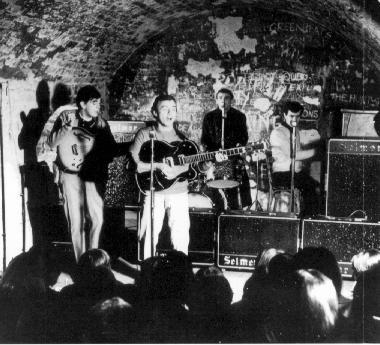
Prominent among these dreamers were two brothers from Dingle in Liverpool; Freddie (born 23 October 1940) and Gerry (born 24 September 1942).
Their father, also Fred, played the Ukulele and encouraged his sons to take up music.
Fred chose the drums (initially playing percussion on a chocolate box tin!).
Gerry took up the guitar and encouraged by family reactions to his spirited rendition of, ‘Ragtime Cowboy Joe’ elected himself lead singer.
Skiffle sessions at local halls led to performances at larger venues. Les Chadwick joined on bass and later another Les, Les Maguire, joined on keyboards to complete the classic line up of Gerry and the Pacemakers.
From 1960 onwards they built up a devoted following in their home town with many shows at The Cavern – often alternating with The Beatles.
They had the great good fortune to be added at the last minute to a Liverpool show by the great Gene Vincent.
Like The Beatles they honed their playing chops and their stamina by playing extended sets at Hamburg’s Top Ten Club. They became a tight Beat Group able to hold a crowd as they lashed into R&B and Rock ‘n’ Roll classics.
Gerry was a natural front man with boundless energy and bonhomie.
He was the epitome of what is known in Britain as a, ‘Cheeky Chappie’ – the kind of man who always sees the glass half-full not half-empty and who anticipates the rainbow following the rain.
This proved to be a very astute move for all parties.
For, incredibly, the first three Gerry and the Pacemakers singles all went to Number One in the UK Charts!
They began in March and May 1963 with two (to my mind cheesy) Mitch Miller songs ‘How Do You Do It’ and ‘I Like It’.
Then in October 1963 they issued a record which has become a part of the very fabric of life in Liverpool, ‘You’ll Never Walk Alone’.
The group had been performing the 1945 Rodgers and Hammerstein Show Tune for several years and it had always proved a Show Stopper.
George Martin, drawing on his classical training, provided a melting string arrangement to frame Gerry’s fervent vocal.
Listening to Gerry sing here it becomes apparent that while his appearance and manner exuded sunny optimism his greatest gift as a singer was to embody shadow and melancholy.
Indeed, taking the three records featured on The Jukebox today into account I have no hesitation in crowning Gerry as the Monarch of Mersey Melancholy!
Gerry has the musical and emotional intelligence to trust in the craft of the melody and lyric and present them powerfully but not hysterically.
So he is walking on – not running.
There is a mature determination to outface the dark in this performance. Though he may have to button his coat and turn up his collar against a biting wind he has faith that every dark night gives way to the dawn.
Gerry’s vocal makes you believe in the sweet silver song of the lark and the promise of the golden sky.
‘You’ll Never Walk Alone’ almost immediately on issue became the anthem of Liverpool Football Club. The players run out to the song and to hear it sung by the massed ranks of The Kop is one of the greatest sports experiences.
It has taken on added depth and poignancy for Liverpool fans following the appalling tragedy at Hillsborough Stadium in April 1989 when 96 Liverpool fans lost their lives.
Every rendition of the song is in a sense a memorial to the 96.
Gerry and the Pacemakers had become big stars in the UK and in April 1964 they issued the record which, aided by appearances on Ed Sullivan and the overwhelming impact of The Beatles, would become their breakthrough in the American market, ‘Don’t Let the Sun Catch You Crying’ which made the top 5 in Billboard.
This is my favourite of all their records and a gold plated 60s classic.
Again George Martin was a key figure with a lovely arrangement expertly balancing strings, woodwinds and vocals to hugely winning effect.
Gerry’s regal melancholy is in full flow here on a song credited to all four members of the group.
Listening I imagine a shattered heart which has spent a long night without the balm of sleep. Yet, sometimes those white sleepless nights lead to moments of sudden, undeniable, clarity.
It’s Over. Over.
Looking out a window, almost too tired for tears, you can only wait for the Moon to cede to the Sun in the heavens and believe in the latter’s restorative warmth.
‘But don’t forget that love’s a game,
And it can always come again,
Oh don’t let the sun catch you cryin’,
Don’t let the sun catch you cryin’, oh no,
Oh, oh, oh …. ‘
The last record I’m featuring here today is from late 1964/early 1965. It’s another record deeply redolent of life in the group’s native Liverpool, ‘Ferry Cross the Mersey’.
There’s something about the tidal sway of a Ferry trip that encourages reverie and contemplation.
This is beautifully captured in this Gerry Marsden song.
The record begins with the quiet assurance of a Ferry slipping away from the shore. Gerry’s plangent tones take us on a journey reminding us all of the consolations of the familiar:
‘We don’t care what your name is boy – we’ll never turn you away’.
We all need such a place for life does go on day after day and beating hearts can’t help but be torn in so many ways.
Gerry and the Pacemakers broke up a group in late 1966 but the above trio of records will surely always earn them a secure place in the affections of those who need a reminder to not be afraid of the dark and to hold their head up high.
Dedicated to the memory of Freddie Marsden (died December 9 2006)
Wishing Gerry Marsden a speedy recovery from his recent ill health.
Make sure you check out the three other Posts in the ‘Some Other Guys’ series featuring The Merseybeats, The Swinging Blue Jeans & Billy Fury.
‘Being a Kerryman, in my opinion, is the greatest gift that God can bestow on any man. When you belong to Kerry you know you have a head start on the other fellow.
In belonging to Kerry you belong to the elements, to the spheres spinning in the Heavens. You belong to History and Language and Romance and Ancient Song. It is almost unbearable being a Kerryman and it is an awesome responsibility.’ (John B Keane)
‘And sleeping time or waking time ’tis there I long to be
To walk again that kindly street, the place I grew a man
With the boys of Barr na Sraide who hunted for the wran’ (Sigerson Clifford)
There are 32 Counties on the Island of Ireland.
Each fiercely proud of their own distinctive landscape and culture.
There are 4 ancient provinces : Ulster, Connacht, Leinster and Munster each with a storied history.
But, there is only one Kingdom.
Only one Kingdom.
The Kingdom of Kerry.
Kerry is a Kingdom of Mountains and Lakes and the Sea.
Kerry is a Kingdom of Horsemen and the greatest Gaelic Footballers who have ever laced a boot.
Kerry is a Kingdom of Brosnans, McElligotts, O’Sullivans, Kellihers, Foleys and Fitzgeralds.
Kerry is a Kingdom of breathtaking beauty which nurtures dreaming souls.
Dreaming souls like the poet Sigerson Clifford who wrote one of the most heart-piercing ballads in the canon of Irish song, ‘The Boys of Barr na Sraide’.
A song which reminds us of those halycon days, now cherished in the memory, when our lives had no print or plan.
Days, long passed now, spent with the Anam Cara of youth.
Now, like chaff in the wind, The Boys of Barr na Sride, have scattered to the streets of London or Boston or Sydney with the Home Place of Cahirciveen visited in their sleeping time or in waking time reverie.
And, as they dream, they will harmonise with the wonderful Kerry tones of Muireann Nic Amhlaoibh as along with her companions in Danu she takes us, once again to the top of the street where the boys gather to set the world to rights before they set off to hunt for the Wran on St Stephen’s Day.
For the Home Place of Kerry now may lie miles and miles and years and years away from where you stand today but its landscapes, the richness of its language, the romance of its history and the lilt of its song will always, always, lie deep in the heart as long as there are spheres spinning in the heavens.
Our Painting today is by Paul Henry (1876 to 1958). His engagement with the Irish landscape, its seas and its coast have left an indelible mark on the Irish imagination.
This post dedicated to all the living O’Sullivans, Foleys, Fitzgeralds, Kellihers, Brosnans and McElligotts and to all of those sleeping in Kerry’s green fields.
In memory of Joan O’Sullivan Hickey, proud native of Killorglin in Kerry, who I will meet again when the wheel of life runs down and peace comes over me.
Photos in descending order:
Carrantuohill Mountain at 3,046 Feet the highest in Ireland.
One of my proudest accomplishments is to have climbed it early one morning after a night of intensive training with my cousin Michael in Falvey’s Bar in Killorglin.
Killarney lakes at sunrise as seen from ‘Ladies View’
Slea Head, Dingle.
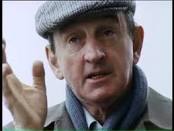
Brendan Kennelly (born 1936). Poet and Professor Emeritus at Trinity College. His collection, ‘The Man Made of Rain’ is never far from my reach.
John B Keane (1928 to 2002) Playwright, Publican, Storyteller of genius.
Monastic Settlement Skellig Michael – The home of a monastery for a dozen monks from the 6th to the 12th Century. A World Heritage Site and a liminal place between worlds.
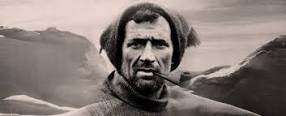
Tom Crean (1877 to 1938) Polar Explorer with Scott and Shackleton and a Homeric Hero.
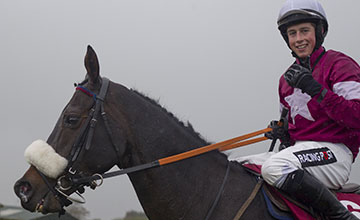
Bryan Cooper (born 1992) A Jockey I have sometimes entrusted my shirt to. His 3 winners at Cheltenham in 2013 allowed me to lay in a grand store of fine shirts for many a year.
Mick O’Connell (born 1937) in Valentia. A natural aristocrat in his bearing. Legendary Gaelic Footballer for Kerry. Selected for the GAA’s All Ireland Team of The Century. My uncle Joe (RIP) said he was the greatest player who ever lived and I never argued with my Uncle Joe.
Sigerson Clifford (1913 to 1985) Poet and Playwright. Reared in Cahirciveen. His, ‘Ballads of a Bogman’ has added many treasures to the Kerry Word Hoard.
Muireann Nic Amhlaoibh (born 1978) is a superlative singer in her native Irish and in English. All her recordings with Danu and solo come unreservedly recommended.
Never more real and vivid than when recollected in the imagination.
We are our memories.
And, our memories, particularly those which carry the most emotional charge, are constantly being selected, edited and recast.
The stream of memory is never stilled.
The genesis of a song, a poem, a story or a painting begins in an insistent whisper from the memory.
A whisper which cannot be ignored.
Such a whisper was heard in the 1930s by Jack McAuliffe from Lixnaw in County Kerry as he sat sat in a cottage near Dooneen Point.
In response he wrote a poem that became the ballad, ‘The Cliffs of Dooneen’.
The key duty of an creative artist is to closely attend to those whispers and make them real in words on the page, notes in the air or brush marks on the canvas.
And, the truth of the song or the poem or the painting is the truth of the imagination and cannot be reduced to the mundane metric of exact measurement.
You may not be able to see Kilrush and Kilkee form the Cliffs of Dooneen with the naked eye but I defy anyone alive not to see them, clear as the light of dawn, in the mind’s eye when conjured up with lyrical tenderness by Christy Moore and Planxty (featuring the heart piercing piping of Liam O’Flynn)
So too the trembling hare and the lofty pheasants making homes for their young.
And, whoever you are, wherever you are, however far you have traveled from your own native home far away from the mountains and away over the foam you will have within you memories of all the kind people you have left behind.
In the quiet watches of your dreams you will bathe in the streams and the meadows of your youth.
And, when you hear, ‘The Cliffs of Dooneen’ you will find yourself singing along with a full heart and tears in your eyes.
‘You may travel far far from your own native home
Far away o’er the mountains far away o’er the foam
But of all the fine places that I’ve ever seen,
There’s none to compare with The Cliffs of Dooneen
Take a view o’er the water fine sights you’ll see there
You’ll see the high rocky slopes on the West coast of Clare
The towns of Kilrush and Kilkee can be seen
From the high rocky slopes at The Cliffs of Dooneen
Its a nice place to be on a fine Summer’s day
Watching all the wild flowers that ne’er do decay
The hare and lofty pheasant are plain to be seen
Making homes for their young round The Cliffs of Dooneen
Fare thee well to Dooneen fare thee well for a while
And to all the fine people I’m leaving behind
To the streams and the meadows where late I have been
And the high rocky slopes of The Cliffs of Dooneen’
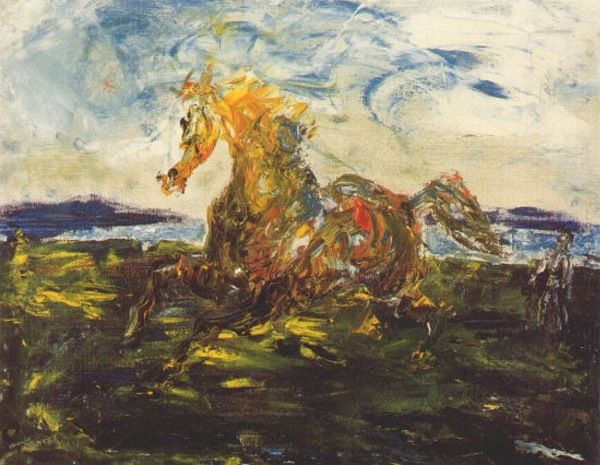
The featured Painter today is Jack B Yeats (1871 to 1957)
We return to the theme of The Horse in Irish culture.
I have seen many thousands of horses in my life yet I have never seen a horse so thrillingly, mystically, alive as the horse in Jack B Yeats painting above.
Easter. Midsummer Day. First leaf fall. First fall of snow.
Way markers of the passing year.
As the shadows lengthen, as they do for us all, you appreciate all the more the opportunity to celebrate with those dear to you now and remember those vanished like the melting snow so dear in the memory.
Each new feast chiming with all those that have gone before in the quickening parade of our lives.
If you are Irish, or of Irish stock, St Patrick’s Day is a true red letter day.
On my twitter account (@thomhickey55 – sign up now if you’re not signed up already!) I describe myself, among other things, as, ‘Almost Irish’.
That’s because though I was not born in Ireland both my parents and all my forebears were.
So, I unhesitatingly believe that whatever literary or rhetorical gifts I possess are drawn from a deep Celtic well.
My mother told me a million stories and taught me how to tell them too.
My Dad taught me how to listen to the important things that are always said in silences.
So, as I did last year (checkout those posts later) in the run up to St Patrick’s Day on the 17th I’m going to feature some favourite Irish songs, singers and musicians.
As a bonus this time each post will also feature the work of a distinctive Irish Painter/Artist.
The theme for the songs this year is Place. Landscape.
Ireland is a country where there is a deep and abiding attachment to place.
Especially the Home Place.
The Irish, wherever they may travel (and they have traveled all around the globe) never forget the Home Place.
I can think of no instrument more haunting than the Uilleann Pipes.
Together they produce a performance which stills the heart and which will linger long in the spirit.
No live is so charmed that it will be without some thankless ploughing.
‘And you never will be able for to plough The Rocks Of Bawn’.
Nothing brings the Home Place so vividly to mind as a song you heard in your youth.
‘And you never will be able for to plough The Rocks Of Bawn’.
Nothing will set tears a flowing more readily than a song you heard in your youth.
‘And you never will be able for to plough The Rocks Of Bawn’.
Nothing will remind you more of the longing child within you still than a song you heard in your youth.
‘And you never will be able for to plough The Rocks Of Bawn’.
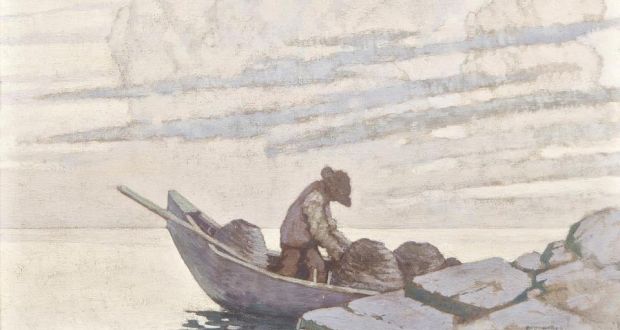
The Artist featured today is the late Basil Blackshaw (1932 to 2016)
Born in Glengormley Antrim and reared in Boardmills County Down.
His paintings both his portraits and his evocations of country life and sports throb with life and colour.
Ireland loves The Horse.
There are few pleasures more sovereign for an Irishman than to cheer home to victory an Irish Horse, schooled by an Irish Trainer and ridden by an Irish Jockey to victory in The Gold Cup or The Grand National.
There are few silences so companionable as those spent watching would be champions exercising on the gallops in the breaking light of a winter morning.
Basil Blackshaw brings such a scene tenderly to life in his, ‘Morning Exercise’
If you tussle with Tojo you’re apt to drop a few pounds.
Still alive.
Which is more than you can say for Kelly, Kowalski and Sanchez.
They wont ever see Memphis or Macomb or Marshall again.
One thing I can tell you I ain’t never going back to Omaha.
I’m going to sit right here and drink until they throw me out of here and come back tomorrow and do the same again.
The best thing about this bar is that they leave you alone.
No one wanting to hear your life story if it’s about anything other than booze or broads or sports.
You can tell without asking who’s seen action. It’s in the eyes.
The most athletic thing I do these days is dance. When I get the chance.
Since I got back I been doing some catching up on the music scene.
The Jukebox here is stuffed with those records made out here on the West Coast.
Capitol Records.
Now, some days I ain’t exactly bursting with energy.
But, I find a handful of Nickels and The Jukebox a pretty good cure for all my ills.
And, there’s this singer, Ella Mae Morse.
Now she’s everything plus.
She can sure shake a tail-feather.
And she can sing just about anything.
Swing, Ballads, Blues, Country tunes and that Boogie-woogie.
Sometimes she seems to squeeze ’em all together so she’s singing like no one you’ve ever heard before.
If you were listening on the radio you’d be hard pressed to know whether she was white or black.
She gets my nickel every time.
Ain’t no fighter like Joe Louis. Ain’t no Ballplayer like Ted Williams.
Ain’t no singer like Ella Mae Morse.
I gotta tell you if she snapped the whip I would make the trip and no mistake.
I gotta feeling I’m goin’ to be listening to Ella Mae for the rest of my days.
Here, time I was hitting the mattress. Have a handful of Nickels on me.
This one here from ’42, ‘Cow- Cow Boogie’, was just about the first record out on Capitol and the first record for Ella Mae. They couldn’t press enough!
See ya down the road a piece. Down the road apiece.’
End credits play …..
Ah.
Ah, comma ti, ii, yi, aay, comma ti, yipply, yi, aay
Get along, get hip, little doggies indeed!
A Number One million seller! Capitol Records well and truly launched.
Ella Mae was only 17 and this was the first take.
Johnny Mercer (who knew a thing or two about songs and recording) quashed her protests that she could do better by flatly stating – you can’t, nobody could.
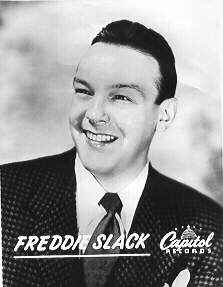
That’s the great Freddie Slack on piano.
The song came courtesy of Boogie-woogie guru Don Raye and Gene De Paul.
Jazz giant Benny Carter had a hand in it too.
From the get go you can hear that Ella Mae has just got IT. Man, has she got IT.
She was born in 1924 in Mansfield Texas. Her father, an Englishman was an accomplished drummer who may have gifted her a way with rhythm – but he didn’t stick around long.
Ella Mae and her mother, a fine pianist, moved to Paris Texas in the early 30s.
Growing up she listened and sang every kind of music and from the age of 9 she was up on stage performing.
In 1939 she joined Jimmy Dorsey’s Band but as he found out though Ella Mae looked every inch a woman and though she sang with astonishing maturity she was in fact only 14 years old.
Freddie Slack, then in the Dorsey Band, remembered her when he was signed to Capitol in 1942.
And, the rest, is as they say, History.
It was hard for Capitol to know how to frame Ella Mae’s career as she straddled so many styles and genres.
Making superb sides was the easy part (checkout, ‘Buzz Me’, ‘Get On Board, Little Chillun’ and ‘Patty Cake Man’) finding a marketable hit was more problematic.
In 1946 she was reunited with Freddie Slack and together they made a record which must have set Richter dials quivering, ‘The House of Blue Lights’.
That’s Don Raye duetting with Ella Mae on the jive talk introduction.
From then on it’s Freddie’s fleet fingers, a solid gone rhythm section and sultry Ella Mae wailin, scattin and generally setting the world on fire!
I don’t know about you but as soon as this starts up I’m lacing up my boots and getting ready to broom on down to my local knocked out shack on the edge of town.
Hep musicians recognised a classic when they heard one and covers of, ‘Blue Lights’ must number in the hundreds (my favourites being those of Jerry lee Lewis, Asleep At The Wheel and Chuck Berry).
Some sages say you can clearly see Rock ‘n’ Roll emerging in the grooves of, ‘Blue Lights’ and they won’t find me starting a fist fight about that.
As the 40s closed out Ella Mae continued to record arresting sides for Capitol (‘Pine Top Schwartz’ and, ‘Pig Foot Pete’ demand your attention) before retreating from the music business while she married and raised three children in short order.
She was back in 1951 with another prime slice of proto Rock ‘n’ Roll – a cover of Jack Guthrie’s 1947 hit, ‘Oakie Boogie’.
The Orchestral backing was under the baton of Nelson Riddle and Speedy West played typically brilliant pedal steel.
Whatever the tempo with Ella Mae you know you’re in for a deluxe trip.
The musicians behind her must have thought; right guys let’s really tear it up this gal can take care of herself.
Boy howdy were they right!
In 1952 she had another million seller with, ‘Blacksmith Blues’ utilising the combined skills of Billy May and Nelson Riddle.
In 1953 she recorded a knock out, hopped up, track called, ’40 Cups of Coffee’ which has always been a winner for me.
Truth to tell when Ella Mae steps up to the microphone I can’t imagine needing any kind of stimulant. She made over proof records that’ll have your head and heart spinning every time you hear them.
In 1954, a dozen years into her recording career Ella Made made one of the first and, let’s not beat about the bush, one of the greatest Rock ‘n’ Roll era albums of all time, ‘Barrelhouse, Boogie and the Blues’.
This is an astounding work demonstrating that Ella Mae had all the sass and style of the very best rhythm and blues singers.
It was way ahead of its time and for a white woman unprecedented and I would hazard still unequaled.
Foced to choose just one gem from this treasury I’ve selected the epochal, ‘Rock Me All Night Long’.
Who could resist such an invitation? Not me Bub!
And, that was more or less that.
Ella Mae had more children and her 15 year recording career with Capitol came to a close in 1957.
But, without doubt the music she made there will always live wherever a Jukebox is plugged in.
When Ella Mae calls the plays you’d be mad not to dig her ways!
She gets my Nickel every time.
Notes:
Bear Family and Rev-Ola have fine single CD compilations of Ella Mae’s Capitol years.
Being the besotted fan I am I couldn’t live without the magnificent 5CD 134 track set produced by Bear Family in 1997. Go on treat yourself!
It is also well worth checking IMDb for her appearances on film as an actress and as featured singer.
‘… Kelly Joe Phelps plays, sings, and writes the blues. HOLD UP before you lock that in – forget about songs in a twelve bar three chord progression with a two line repeat and answer rhyme structure – though he can certainly do that when he wants to.
I’m talking about a feeling, a smoky, lonesome, painful – yet somehow comforting groove that lets you know that you are not alone – even when you’re blue. Play on brother.’ (Steve Earle)
‘I’ve heard Kelly Joe mention that he’s been inspired by people like Roscoe Holcomb, Robert Pete Williams, Dock Boggs, Mississippi Fred McDowell, and others. He seems to have absorbed all this (and all kinds of other stuff as well) and come back with something all his own.
Sounds like he’s coming from the inside out. The bottom up. He’s not just playing ‘AT’ the music or trying to recreate or imitate something that’s happened in the past. He seems to have tapped into the artery somehow. There’s a lot going on in between and behind the notes. Mystery. He’s been an inspiration to me.’ (Bill Frisell)
Modern music is saturated by the sound of you know what’s coming next, auto tuned, multi-tracked guitars.
Drowning in this aural tide you can forget that, in the right hands, the guitar can be a questing instrument; an instrument which can sound the depths of human emotions in this life of dust and shadows.
When Kelly Joe Phelps plays the guitar whether slide or finger picking what you hear is the sound of a musician who has indeed tapped into the artery.
I first encountered him more than two decades ago now at the tiny 12 Bar Club in London’s equivalent of Tin Pan Alley, Denmark Street.
Standing a couple of feet away from him I was able to read, as he tuned up, the scrawled set list at his feet. It included:
‘Goodnight Irene’, ‘The House Carpenter’, ‘Hard Time Killing Floor Blues’, ‘When The Roll Is Called Up Yonder’.
Fueled by my early evening libations I leaned towards him and said, ‘Wow, you’re going to have to be very good indeed to hold us with those songs without someone muttering every two seconds, ‘… Not as good as so and so’s version.’
Sensibly, he answered only with a wry smile before stilling the room in in the next hour with an astonishing display of instrumental virtuosity harnessed to a deep emotional understanding of both the Blues and the Gospel traditions.
Songs that were veritable foundation texts (in some hands museum pieces) came shockingly alive as Kelly Joe fearlessly explored the territory they opened up – voyaging wherever his heart and fertile musical imagination took him.
Listen now to his version of the canonical classic Leadbelly’s, ‘Goodnight Irene’ and marvel at the deliberate beauty and power of deep sea sway he brings to it.
Ever since I heard this take on Irene this is the one that plays in my dreams.
Born in the dwindling days of the 1950s Kelly Joe began his musical career as a bass player in modal and free Jazz combos where the ability to improvise and react to your fellow musicians was paramount.
At the same time, as an alert listener, he was immersing himself in the core deep works of artists like Blind Willie Johnson, Mississippi John Hurt, Fred McDowell and Dock Boggs.
Artists who made singing in the blood music which still casts a profound spell. Taking the slide guitar as his vehicle to explore this universe he began to cast spells of his own.
Kelly Joe’s music is all about reaching, reaching, for the other shore.
Listening to Kelly Joe play James Milton Black’s 19th Century hymn, ‘When The Roll Is Called Up Yonder’ there can be no doubt that we are brought in soul’s sight of that other shore.
Now, if you are a musician of Kelly Joe’s class and intuitive understanding of what makes the songs of the , ‘Old Weird America’ so profound and eternally relevant you will struggle to find such rich material in contemporary songbooks.
Happily, the Keeper of American Song, Bob Dylan, has laid down a storehouse of mystery filled dancing spells which musicians of spirit will always want and need to explore.
Bob once said that he saw himself a song and dance man. Kelly Joe takes him at his word here whirling, ‘Mr Tambourine Man’ round a mystic Maypole.
As his career has progressed Kelly Joe has featured more original material. His own fine songs show how deep he has drunk at the well of the blues and gospel masters.
Kelly Joe’s music is filled with ancient lore and wholly alive in the here and now.
Surrender to his spell.
Notes:
There is a handy 2 CD Kelly Joe compilation, ‘Roll Away the Blues’ on the Nascente label which I highly recommend.
My own favourites in his excellent catalogue are:
‘Lead Me On’
‘Roll Away the Stone’
‘Shiny Eyed Mr Zen’
‘Beggar’s Oil’
‘Brother Sinner and the Whale’
Kelly Joe is a transfixing live performer. Seek out You tube for some wonderful clips.
Guitar buffs should seek out his finger picking tutorials.
Fats Domino, Rock ‘n’ Roll Forefather is now in his 90th year.
Thinking of all the immense pleasure his music has given me and millions of others I could not let such an august anniversary pass without a full salute from The Immortal Jukebox.
So, I am reblogging my previous tribute.
I also want to pay homage to the magnificent saxophonist Herb Hardesty who died just before Christmas last year.
That’s Herb you can hear soloing on, ‘Ain’t That A Shame’ and, ‘I’m Walking’ and that’s him too playing one of the most perfect parts in all Rock ‘n’ Roll on, ‘Blue Monday’.
As a birthday treat I am adding what may be my all time favourite Fats track – ‘Be My Guest’.
A record which beautifully illustrated the sheer joy woven into every bar of a Fats Domino record.
A record which demonstrated the glorious camaraderie of the Fats Domino Band.
A record which, especially in the wildly addictive horn breaks, virtually provides the corner stone sound for Ska to develop in Jamaica in the 1960s.
Had I been born in Louisiana in the 1920s I know what I would have done with my life if I had survived World War Two intact and by fair means or foul accumulated a decently thick bankroll.
I would have bought a roadhouse on the outskirts of New Orleans.
Let’s call it, ‘The Blue Parrott’. And, all the dollars I spent and all the hands I hired would have had but one aim – to make the Parrott the jumpinist, jivinist, most joyful Joint for hundreds of miles around.
On the door and looking out for trouble before it becomes TROUBLE is an ex Marine called Tiny who stands six foot six and weighs in at 250 pounds. Tiny stormed the beach at Guadalcanal and came home with a limp and a chest full of medals.
Tiny never gets mad but he does get mean. No matter how drunk the drunks get and no matter how tough they think they are when they’re drunk no one, no one, thinks they can take Tiny down. Tiny maintains good order.
Behind the bar is Pops. Pops has looked sixty years old since I was six. He always will. Pops has heard and nodded sympathetically at every hard luck story ever told as he pours another shot of alcoholic redemption. Everyone know Pops understands. Everybody loves Pops. Pops has never touched a drop.
Out of sight in the Kitchen is Ferdy our chef. Ferdy don’t talk much. In fact he rarely says a word. Nobody cares about that because Ferdy can cook. Really cook.
So people who don’t come for the booze or the company or the music come anyway because they can’t resist Ferdy’s food. He will have you licking your lips just inhaling the aromas from his Gumbo, Jambalaya, crawfish étouffée and shrimp creole.
In the corner there’s a Wurlitzer Jukebox primed to pump out Hank Williams, Joe Turner, Louis Jordan and Harry Choates until the wee small hours.
I must, of course, have live music. A Roadhouse needs a House Band. So, I want a Band that’s has rural roots and city smarts.
I want a Band that folks will want to dance to, to listen to, to cry into their drinks to, to fall in love to, to remember the good and bad times in their lives to, to stare out the door and dream of another life to.
A Band people come to see the first night they get home from the Service or the Slammer so they can believe they really are home.
I want a Band that can whip up a storm one minute and lull a baby to sleep the next. I want a Band that you can stand to listen to three nights a week for year after year.
I want the Band to have a front man who makes people feel good just looking at him.
I want a guitar player who never shows off but is so good he makes other guitar players despair and consider taking up the banjo. I want a Bass player who everybody feels but nobody notices.
I want a piano player who has the left hand of a deity and the right hand of a angel on a spree. I want the piano player to sing with such relaxation that it seems like he is making up every song on the spot.
I want the Band to have a secret weapon in a songwriter and arranger who knows all the music of the past and has worked out a way to make the music of the future from it.
I want Fats Domino, Earl Palmer, Herb Hardesty, Red Tyler, Lee Allen, Ernest McLean, Frank Fields and Dave Bartholomew.
I want, and will have, the best damn Band that ever came out of New Orleans – The Fats Domino Band!
Well, well, well …. Wah, Wah, Wah, Wah, Wah, Wah.
Baby that is Rhythm and Blues and Baby though you didn’t realise it at the time – Baby that is Rock ‘n’ Roll.
By my reckoning Fats Domino’s, ‘The Fat Man’ recorded in December 1949 in New Orleans and co-written with Dave Bartholomew and blues history is the first great record of the 1950s.
Some things are immediately apparent. Fats Domino sings with overflowing charm while his piano combines surging boogie-woogie with irresistible triplet flourishes. Right about here the great Earl Palmer invents Rock ‘n’ Roll drumming with his driving backbeat which lifts the Band and our spirits until his final fill decisively says, ‘That’s All Folks’ and you rush to cue it up again.
For the musically sophisticated there’s an excellent analysis of the crucial role of Fats Domino’s Band in the development of Rock ‘n’ Roll in Ned Sublette’s book, ‘The Year Before The Flood: A Story of New Orleans’.
For the rest of us all we need to understand is that Earl Palmer’s bass and snare drum attack owed a lot to the style of New Orleans Parade Bands and that the way the whole Band locked into its rhythmic parts drew on Cuban, ‘Latin’ traditions to create something new under the sun in the Crescent City.
Listening here it’s abundantly clear that this is a Band that really does know its way around and that we should sign up now for a glorious cruise into the future. Of course, New Orleans picked up on Fats first with some 10,000 citizens putting their money down to buy, ‘The Fat Man’ in the first fortnight after its issue. A million or so sales followed as the entire United States fell under Fats’ spell.
We scroll forward half a decade now to a record which still sounds dew fresh 60 years after it was recorded in 1955. ‘Ain’t That A Shame’ was an instant classic and the passage of time has only added to its charms.
Fats grew up speaking Creole French and that must be a factor in his immensely winning vocal style. The Lower Ninth Ward where Fat’s family settled after moving Vacherie still retained a country feel despite its proximity to the city. So there always remained something of the relaxed rural about Fats nature.
Maybe that explains why I can’t think of anyone in the entire history of Rock ‘n’ Roll who exudes such bonhomie as Fats. As soon as he starts to sing the clouds part and the sun lights up clear blue skies. It’s an amazing gift he shares with his great New Orleans forebear Louis Armstrong. His piano adds further shimmer and dazzle.
Herb Hardesty has a lovely sax part here which always has me sets me gleefully swaying along with him and the Band. It seems the recording was compressed and speeded up to ensure favour with the mainstream (white) audience. Well, that sure worked!
‘Ain’t That A Shame’ is regularly used in movies to evoke the1950s most notably in George Lucas’ best film, ‘American Graffiti’.
Not too long after it was issued at 251 Menlove Avenue Liverpool the first song full time teenage rebel and would be rocker John Lennon learned to play was none other than, ‘Ain’t That A Shame’. John would formally tip his hat to Fats in his essential covers record, ‘Rock ‘n’ Roll’.
Following the major success of ‘Shame’ both through Fats version and Pat Boone’s cover the doors to the pop world swing widely open and Fats, always guided by Dave Bartholomew, took full advantage with a series of huge hits that had global impact.
Blue Monday tells a tale we all know all too well. Oh, I’ve had many, many, of those Sunday mornings when my head was bad yet I still grinned at the apparition in the mirror and concluded as the Seltzer fizzed that it was all worth it for the time that I had.
Naturally while reflecting that the awful ordeal of Monday would have to be faced I consoled myself that Fats knew and understand my feelings and somewhere in the grooves of his song lay the promise of the next, sure to be even better, weekend to come. This is one of the great vamping grooves that engages you from the get go to the thumping valedictory chord.
Blueberry Hill had been recorded many times before Fats took permanent ownership of the song in 1956. Fats and the Band invoke a bitter sweet recollection of the trajectory of love; part rural reverie, part lazy post love making langour. Their collective vocal and instrumental sound glides you through the song like an expertly piloted pirogue.
One last song. From the pen of superb singer and songwriter Bobby Charles the hypnotic marvel that is, ‘Walking to New Orleans’. String arrangement courtesy of Milton Bush. The relaxation maintained throughout with the sure groove could only be Fats Domino. This is one of those songs that the entire family sings along to when we are on long car journeys!
Fats Domino was and remains the King of New Orleans. The unique rhythmic signature of the city resounds joyfully through every bar of every Fats Domino recording.
They ought to put a statue up in the Lower Ninth and name a Square and a Bridge or two after him. He deserves nothing less.
Some personal memories to conclude.
In the late 1970s I went to see Fats Domino in concert at London’s Hammersmith Odeon. I only decided to go at the last minute and despite my silver tongue couldn’t persuade any of my hipper than hip friends to accompany me.
I was marooned up in Row YY at the very back of the Upper Circle. Friendless and far from the Bar. None of that mattered once Fats opened up with, ‘I’m Ready’. For the next hour or so as Fats played standard after standard with wit, playful power and affectionate authority I transcended to a state of near nirvanic bliss.
It was a rain soaked night but I waited for an hour after the show outside the Stage Door just to call out, ‘Thanks and God Bless You Fats!’ as he got into his bus.
That night remains one of my benchmark nights for musical excellence and personal happiness. Thanks and God Bless you Fats.
Now that there is more than a distinguished tinge of grey in my beard I lean more and more on the sovereign, reliable pleasures of life.
A good night’s sleep next to the woman I love; a mug of fresh brewed coffee in the morning, a walk on the common, the poetry of Herbert, Heaney and Hopkins. A glass of Malt Whiskey as the sun sets. The films of John Ford and Buster Keaton and the good humoured, life affirming, music of Antoine Fats Domino.
And, echoing Fats I’m ready, willing and able to follow this regime until someone puts out the big light.
‘Greater love hath no man than this, that a man lay down his life for his friends.’ (Gospel of Saint John)
‘The greatest act of courage that I have ever seen, and am ever likely to see, was the penultimate courage and dedication shown by the Penlee [crew] when it manoeuvred back alongside the casualty in over 60 ft breakers and rescued four people shortly after the Penlee had been bashed on top of the casualty’s hatch covers. They were truly the bravest eight men I’ve ever seen, who were also totally dedicated to upholding the highest standards of the RNLI.’ (Lt Cdr Russell Smith US Navy Pilot)
‘Now, never had a lifeboat fought in vain She could have made a dash for port but she tried again All sixteen perished in that mighty wave It tossed them overboard into a watery grave.’ (Seth Lakeman)
This past week I have been taking time off in the far, far West of England.
Actually, just about as far west as the land extends before it cedes to the dominion of the mighty Atlantic Ocean.
Cornwall. Kernow.
Kernow a’gas dynergh. Welcome to Cornwall.
A land. A proud Kingdom.
A Kingdom with a language and proud history of its own.
A Kingdom of capes and jagged rocky shores.
A Kingdom of Celtic crosses and Celtic saints.
A land of of standing stones, barrows, carns, quoits, fougos, healing wells and martial forts.
A wild Kingdom where even the all conquering Roman Army feared to tread.
A Kingdom where for centuries men dug deep into the earth and under the sea to mine Tin.
A Kingdom where for centuries men put to sea in all weathers to bring Fish back to Harbour.
A Kingdom where for centuries smugglers under cover of darkness outwitted the Excise Men.
A Kingdom surrounded by and held in the spell of the Ocean.
A spell that can enchant. But, also a spell that can lead to doom.
So, in Cornwall the Ocean is celebrated, feared and respected.
For every time mankind leaves the land to voyage upon the ocean safety is being exchanged for peril.
For the Ocean has ancient power beyond power.
For the Ocean is restless and relentless.
And wholly indifferent to the fate of puny man and all the arts of seamanship.
So, before venturing out on the pitiless Ocean and while voyaging on that Ocean it is wise to be forewarned as to what lies in store by listening to, ‘The Shipping Forecast’.
The Shipping Forecast is a BBC radio programme which every day at 00.48, 05.20, 12.01 and 17.54 hrs broadcasts weather reports and forecasts for the 31 sea areas around the coast of the British Isles.
For many, like me, listening to the Shipping Forecast at 00.48 has become a form of meditation.
First with the lullaby of Ronald Binge’s, ‘Sailing By’ musical theme then with the comforting, familiar litany of:
Viking, North Utsire, South Utsire, Forties,
Cromarty, Forth, Tyne, Dogger,
Fisher, German Bight, Humber,
Thames, Dover, Wight, Portland, Plymouth,
Biscay, Trafalgar, Finisterre,
Sole, Lundy, Fastnet, Irish Sea, Shannon,
Rockall, Malin, Hebrides, Bailey,
Fair Isle, Faeroes, Southeast Iceland.
The clip below lasts for 13 minutes so you may want to dip in for just a few minutes to get the idea (though I’m sure many of you will find yourself in thrall to to its poetic rhythm and listen to the end).
For some though, playthings of the wanton Wind and Ocean, the message of the Shipping Forecast foretells peril and doom.
Life in terror and horror giving way to watery death.
So it was on 19 December 1981 with 60 foot waves whipped up by hurricane force winds of up to 100 miles per hour that the RNLI Penlee Lifeboat, from Mousehole, launched to attempt a rescue of the crew and passengers of the stricken MV Union Star as it was blown helplessly across Mount’s Bay towards the rocks of Boscawen Cove.
Rescue by helicopter in such treacherous conditions had proved impossible.
So the call went out to the Penlee Lifeboat Station where it was answered by an 8 man volunteer crew of the Solomon Browne.
Answered by experienced seamen who knew in their stout hearts that to launch on such a night was to stare death squarely in the face.
Answered by Lifeboat Men who conscious of the extreme conditions still chose, not for gain or glory, to risk their own lives for those unknown to them who were in peril on the sea.
There were 8 crew and passengers on the MV Union Star and 8 crew aboard the Solomon Browne that fateful night. And, before the sun rose again over Mount’s Bay 16 lives had been lost – swallowed whole in the insatiable maw of the Atlantic Ocean.
Such a tale of tragedy and heroism cries out to be commemorated and honoured in a folk ballad.
Seth Lakeman writing and performing with a steady head, a full heart and all the energy at his command has given us a superb ballad which has the rare combination of narrative drive and emotional empathy. It can be found on his excellent record, ‘Poor Man’s Heaven’.
The crew of the Solomon Browne, under the command of coxswain Trevelyan Richards, despite the ferocity of the conditions repeatedly went alongside the MV Union Star.
It appears from the last radio contact that they had succeeded in getting 4 people off but that all were lost in the attempt to rescue the other 4 aboard the coaster.
May they all rest in peace.
There are dark days and black nights when all of us may be tempted to despair at the tawdry and selfish nature of much of modern life.
Yet, the life, death and courage of the crew of the Solomon Browne should serve to remind us that the best of us are capable of awesome courage and that there are still those prepared to risk their own lives for others.
Within a day of the loss of the Solomon Browne enough people from Mousehole had volunteered to form a new Lifeboat crew.
Despair is an indulgence.
If we have courage. If we have faith. If we have love we can voyage through the darkest night and the stormiest seas.
‘That lifeboat thundered through an angry sea was called Solomon Brown and her company’.
May their tale be told for ever more.
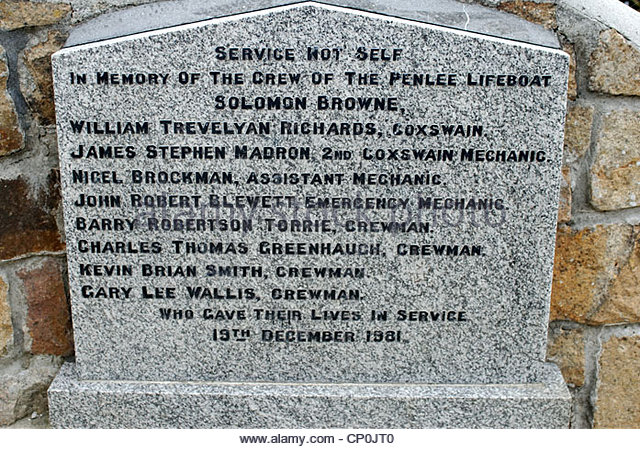
Dedicated to the memory of the crew of the Solomon Browne:
Trevelyan Richards (Coxswain, Trawler skipper)
Stephen Madron (Second Coxswain, Ships Pilot)
Nigel Brockman (Assistant Mechanic, Fisherman, fish Auctioneer)
John Blewett (Emergency Mechanic, Telephone Engineer)
Kevin Smith (Crewman, Merchant Seaman)
Barrie Torrie (Crewman, Fisherman)
Charlie Greenhaugh (Crewman, Landlord of the Ship Inn)
Gary Wallis (Crewman, Fisherman)
and to those who lost their lives on the MV Union Star :
Henry Morton (Captain)
James Whittaker (Mate)
George Sedgwick (Engineer)
Anghostino Verressimo (Crewman)
Manuel Lopes (Crewman)
Dawn Morton
Sharon Morton
Deanne Morton
Every day and night the crews of RNLI Lifeboats stand ready in all weathers to come to the rescue of those in peril on the Sea.
Please support them with a donation if you can.
With thanks to Gerry and Sue for so generously providing a wonderful home away from home in Cornwall.










 The Immortal Jukebox