A water drop hollows a stone – not by force but by falling often.
Or, if you want to really master a craft you need to put in the hours.
Consider The Beatles in Hamburg forgoing sleep and comfort to play set after set until they were a band that had deep trust in each other and their abilitiy to hold and move an audience.
Consider, today, Creedence Clearwater Revival.
In 1969/1970/1971 there was no doubt who the top singles Band in the World were; how’s this for a sequence of classics:
Proud Mary/Born on the Bayou,
Bad Moon Rising/Lodi,
Green River/Commotion,
Down on the Corner/Fortunate Son,
It Came Out of the Sky/Cottonfields,
Travelin’ Band/Who’ll Stop the Rain?,
Run Through the Jungle/Up Around the Bend,
Lookin’ Out My Back Door/Long As I Can See the Light,
Have You Ever Seen the Rain/Hey Tonight.
Yowza! Yowza! Yowza!
Boy Howdy!
That’s a streak of inspiration and connection with your audience on a par with Chuck Berry or Lennon & McCartney at their peak.
Their omnipresence on the radio and on the charts was the result of years and years of unheralded toil.
Their emergence on the national and world stage only came after a full decade of slogging up and down the Pacific Coast, round the punishing circuit of military bases, small town clubs and dingy dance halls following their formation by Tom Fogerty in 1959 as The Blue Velvets.
Thousand of miles and thousands of hours binding Tom Fogerty, Stu Cook, Doug Clifford and John Fogerty together into a potent Rock ‘n’ Roll force.
Stu Cook and Doug Clifford forging a Zen rhythm section with Tom Fogerty.
Sometime, Somewhere along those endless highways, John Fogerty, the 14 year old kid who joined his big brother’s band transmogrified into a world class singer, songwriter and guitarist with a sound and vision of his own that resonated deeply with the society he lived in and zeroed into the heart of the Zeitgeist.
This was a young man who had been electrified by the visceral power of the 50s Rock ‘n’ Roll Masters and who wouldn’t settle for any music that couldn’t match that power – live up to that challenge.
He worked out a recipe for making sure fire great Rock ‘n’ Roll records and then with the fullest measure of inspiration and perspiration set about matching his idols.
First : You just gotta have a great title.
Think, ‘Heartbreak Hotel’, ‘Sweet Little Sixteen’, ‘Blue Suede Shoes’, ‘Great Balls of Fire!’.
So, he carried a notebook and every time a title popped up in his head that sounded like the title of a classic song, he carefully wrote it down and set his mind to writing the rest of the song.
Titles in John’s Notebook – ‘Proud Mary’, ‘Born on the Bayou’, ‘Up Around the Bend’, ‘Green River’ and, yes, oh Yes – ‘Bad Moon Rising’.
Second : The Song has to connect with the real lives of your audience.
Think, ‘Schooldays’, ‘I Saw Her Standing There’, ‘Dead End Street’.
It should seem so true that once you heard it the first time you could sing it to yourself or a friend (you’d want to share it with a friend) even if the record wasn’t playing in the background.
So, John Fogerty songs are true and resonate whether you’re looking up at the stars in California, Calcutta, Carlisle or Khe Sanh.
Everyone has times when they wonder, for themselves and those around them, Who will stop the Rain?
Everyone has times when they hope, sometimes against hope, that they will be able to hold on and come through as long as they can see at least a glimmer of the light.
Everyone knows one of those Fortunate Sons who is protected by wealth and influence from the grim realities the rest of us have to endure.
Everyone, for humans are a Lunar People hungry for auguries, has at some time looked up into the night sky and said to themselves and to those around them, with dread :
I see a bad moon a-rising … I see trouble on the way … Don’t go ’round tonight It’s bound to take your life … There’s a bad moon on the rise
Third : You just Gotta have a great Guitar lick.
Think, ‘Johnny B Goode’, ‘Hello Mary Lou’, ‘You Really Got Me’, ‘Gloria’.
So, John Fogerty spent hours and hours with his, ‘Black Beauty’ Les Paul custom searching for that Lick, That Lick, the one that would come roaring out of the radio or Jukebox speakers and turn every head, set every toe tapping, get every heart leaping.
And, time after time, time after time, John Fogerty found that magic Lick – the one you can’t argue about, can’t deny.
The Lick that thrills the first time and still thrills the thousandth time.
Nunc, if you get a great title that resonates with the real lives of your audience and you craft a great Guitar Lick and have a Band who will support you through every bar as you sing that Song with irresistible power you are going to make a great Rock ‘n’ Roll Record.
And,if you are John Fogerty with Creedence Clearwater Revival you will make a Record in, ‘Bad Moon Rising’ that enters the very DNA of Rock ‘n’ Roll.
That lucky old Sun, He got nothing to do but roll around Heaven all day.
All Day.
Now, you have lots to do.
You have goals and tasks and targets.
You have reflections and reviews to consider.
You have outcomes and KPIs to attain.
You have stratagems.
Things to do. Places to be.
Youre on the case. You’re in charge.
All day. Every Day.
Until, eventually, that lucky old Sun has rolled all around Heaven to set in The West.
Now, The Moon has dominion.
Now, you need your sleep before you can face another busy, busy Day.
And, with Sleep, unbidden, unstoppable, come The Dreams.
Everybody has them Dreams.
Dreamers find their way by Moonlight.
The Captain of the Watch and his Guards are no longer at attention – in fact they are carousing in the Town – AWOL.
And, if they should glance up from their cups all they will say is:
He is a dreamer; let us leave him : Pass.
Unfettered you slip the bonds of time and are free to wander the echoing halls of memory.
Free to peer into the open doors and to ascend/descend the Escher stairs to secret rooms.
Who knows who you will meet?
Perchance all that we see or seem is but a dream within a dream.
Perchance dreams are all you will truly ever own.
Poor as you are you have your dreams.
You have your dreams.
And, you have to dream if you are to live.
Though you are nothing you have in you all the dreams of the world.
Life without dreams is a broken winged bird.
Some dreams will not survive the fluttering of your opening eyelids.
Some dreams will stay with you for ever after and permanently alter the colour of your mind.
Some dreams, though you are yet to know it, will be the last, the very last, dream of your soul.
Some dreams are nought but the gleanings of an empty heart.
An empty heart.
Why can’t I forget my past and live my life anew …
Instead, instead, instead.
Instead I’m having Sweet Dreams about you.
Sweet Dreams about you.
Don Gibson, the Nashville Laureate of Heartbreak, wrote, ‘Sweet Dreams’ in 1955 and singers have been launching it into the ether ever since.
Don put it out first but it was Faron Young who had the first Hit.
Don had another go in 1960 and emerged with a nice morose version that got even more people listening.
But, in 1963 Patsy Cline, who sang supremely in the Key of Heartbreak took the song to another dimension of feeling.
Patsy Cline had a voice that seemed to possess ancient knowing about the human heart.
Every Patsy Cline vocal is an intense drama that commands you to listen with deep attention.
Her bruised and anguished tones tell you; this is how it is and you know it too don’t you?
You might not want to admit it but Patsy makes it plain.
No good pretending.
Troublous dreams this night doth make me sad.
I should hate you the whole night through.
The whole night through.
Instead I’m having Sweet Dreams about you.
Once you’ve fallen asleep none can know what dreams may come.
Should you be grieved in the spirit visions in your head may trouble you all your live long days.
Jacob and Daniel and Joseph.
And in 1966 from Jonesville Louisiana Tommy McLain.
Tommy’s version of Sweet Dreams will play forever in your dreams from the moment you first hear it.
Surely this version was recorded direct from the soundboard of your dreaming soul.
Why cant I forget my past and live my life anew?
Why, Why, Why!
Tommy’s time banishing, heart stopping, ethereal vocal seems to surround your senses with the vibraphone adding further levels of sensual derangement.
Floyd Soileau recorded Tommy in his Ville Platte Studio but was not convinced this version would sell.
He changed his mind when it was reported to him by the owner of a local bordello that the song was No 1 on their Jukebox – a favourite of the working women and customers alike!
Later on as the song got picked up by national distributors and major radio stations three Million record buyers came to agree with the folks back in Ville Platte.
Emmylou Harris (a firm Jukebox favourite) has always found the sweet heart of any song she chooses to sing.
There’s an ache in her voice that it is even more emotionally affecting now that her hair has turned to silver and her knowledge of the trials of the world has deepened.
Here, live with The Nash Ramblers she sings like the angel always out of sight in your dreams.
The one you hope will return to those dreams again.
The one you could listen to the whole night through.
The whole night through.
Some dreams don’t need words.
Some yearnings cry out beyond syllables.
Roy Buchanan made his Guitar sound your deepest dreams.
Now some will tell you this is because he played a 53 Fender Telecaster and some will wax lyrical about overtones and pinched harmonics.
Maybe. Maybe.
Yet, there is something in Roy’s playing that’s undreamt of in philosophy or guitar manuals.
When he plays like this the valleys are exalted and the hills and mountains made low.
When he plays like this the hills and mountains are made low.
When he plays like this the rough places are made plain.
When he plays like this the crooked places are made straight.
At the same time (we hold so many contradictory ideas at the same time) we all know it’s a Wonderful World.
We all know that on one bright day it is, indisputably, the best of all Possible Worlds.
Fiat Lux!
When you become aware of the light surrounding you no darkness can prevail.
Presence is more powerful than absence.
When you see the light of love in another’s eyes and can return that light the world is aflame anew.
Love divides the light from the darkness.
Eye-Kissing Light.
Heart- Sweetening Light.
Heathers and Jasmines surging on crests of Light.
You cherish colours on solitary hills that science cannot overtake.
And, you dance by the light of The Moon.
You dance by the light of The moon.
An exchange of light from the eyes lights the whole sky and never says – ‘you owe me’.
Then you gazed at me and the answer was plain to see because I saw the Light in your eyes.
In your eyes.
Aaah!
Todd Rundgren, now 70, was in the 1970s as his 1973 album justly proclaimed : A Wizard, a True Star.
Brimful of talent and absurdly proficient as a musician, singer and producer he issued gleaming pearl after pearl.
Sometimes it came so easily to him he thought can this really be any good?
As so often trust the tale not the teller!
I Saw The Light dances like dappled sunlight on the imagination.
Todd does all the singing and plays all the instruments.
The Guitar solo is so perfect you think even Becker and Fagen from Steely Dan would have said, ‘That’s it! – A keeper!’.
Burt Bacharach, Todd’s melodic guru, would surely have thought – this one’s good enough for Dionne (though Todd may have imagined Laura Nyro imbuing the song with her own special magic).
Though written in 15 minutes, ‘I Saw The Light’ has demonstrably had staying power both as a staple of Pop Radio and as a romantic standard calling out to be covered.
I Saw The Light called out to Barb Jungr – an artist who knows that songs are not dry texts but living, breathing things.
She’s alert, waiting for those special songs to come knock, knock, knocking.
And, when they do she’s ready.
Barb is a scholar of Song and Singing – she has written eloquently on these topics and has a Masters in Ethnomusicology.
A singer of enormous technical and emotional resource she lives with the song seeking out where the Song wants and needs to go to sound just right – irrespective of how anyone might have done it before.
This is an artist who finds truth and joy, passion and pain in Songs which she then delivers with theatrical elan.
There’s a wonderfully mature sensual sway to her version.
Surrender.
Hal Ketchum takes the Song Way out West for a Saturday Night Hoedown.
He brings some hardwood floor springiness to the party that I find entirely charming.
Mari Wilson , a favourite of mine since the early 1980s, follows in the distinguished tradition of Dusty Springfield as a British Singer who has the versatility to make songs come alive whether they are pop confections, simmering soul ballads or swinging Jazz.
She can sell a song with winning sincerity or arch a perfectly plucked ironic eyebrow to find the humour in a lyric.
This version has tremendous poise and no little emotion.
Love the Light.
Love the Light.
Fiat Lux.
This Post for The one who floods my eyes with Light every day – Happy Birthday!
Notes :
Barb Jungr has made 3 superb Albums featuring the Songs of the greatest songwriter of our times, Bob Dylan. I like to think I’m very well versed in The Master’s canon yet listening to Barb’s, ‘Every Grain of Sand’, ‘Man in the Long Black Coat’ and ‘Hard Rain’ have afforded me fascinating slant wise insights into classics.
’Just Like a Woman’ is a deeply considered and felt tribute to the work of the incomparable Nina Simone.
Mari Wilson : I particularly recommend, ‘Just What I Always Wanted’, ‘Dolled Up’ and ‘Pop Dekuxe’.
Hal Ketchum : ‘Past the Point of Rescue’ is a near perfect collection.
Hats off to Emily Dickinson, Edward Lear, Hafez and Ravindranath Tagore for Poetic inspirations.
Over 40 years a Song can, starting out as an unremarked track on a little regarded album from a little known Band, become a veritable anthem recorded hundreds of times and exalted in concert by the great and the good from The Boss to Bill Murray to Mavis Staples.
My own relationship with today’s featured Song began many decades ago in my teenage gig going years.
Loyal readers of The Jukebox will know that I have made a series of House moves in the last few years before settling happily here in our South Downs hideaway.
One of the ‘finds’ of the moving process was a notebook with the title, ‘Gig Diary 1970 – 1975’ emblazoned in red ink on the cover.
Leafing through this historically important artefact I see that in that period I saw Nick Lowe with his then Band, Brinsley Schwarz, on stage at The Marquee, The Roundhouse, The Lyceum, The Hope & Anchor, The Torrington and The Edmonton Sundown among many other venues.
I was, of course, also buying their Albums as soon as they came out and looking at the sleeve of, ‘The New Favourites of … Brinsley Schwarz’ from 1974 I see 2 large red asterisks next to track 1, ‘ (What’s So Funny ‘Bout) Peace, Love & Understanding’.
I should tell you that the double asterisk was a very rare accolade indeed!
From the very first time I heard it I knew that this was a breakthrough Song for Nick Lowe – a Song that would get up and walk away by itself into History.
A Song I have sung along with scores of times during Nick Lowe concerts and many hundreds of times at home through all the stages of my life.
Sometimes when the world did indeed seem a wicked place and this Song quickened my search for the light to counter the darkness all around.
‘ ….. There’s one thing I want to know:
What’s so funny ’bout peace love & understanding?
Ohhhh …. What’s so funny ’bout peace love & understanding’
Nick Lowe has said that this Song represented his first truly original idea as a songwriter and that having had that idea he realised that his task was then not to mess up the song by trying to be too clever – let the song flow naturally.
Brinsley himself on masterful rhythm guitar, Ian Gomm on chiming hats off to Roger McGuinn Guitar (and heavenly vocal harmony arrangement).
Bob Andrews on hats off to Garth Hudson keyboards with Billy Rankin on martial drums,
Together with Nick on Bass they hit a dead bullseye.
I remember walking back to the tube station in the rain after the first time I heard this song all the while serenading bemused passers by with:
‘ … Is all hope lost? Is there only pain and hatred, and misery? And each time I feel like this inside, There’s one thing I want to know:
What’s so funny ’bout peace love & understanding? Ohhhh What’s so funny ’bout peace love & understanding?’
That’ll do as a definition of an Anthem for me!
Once a true Song arrives it begins to find its audience.
In Liverpool in the early 70s when Brinsley Schwarz played their gigs an intense young man with a burning desire to get his songs heard was always at hand – Elvis Costello (then Declan McManus).
In Nick Lowe he found an established songwriter who was willing to take the time to listen and provide encouragement to an unknown novice.
So, in 1978 as Elvis’ career began to gain momentum, he turned to an old favourite written by his Producer, Nick Lowe.
The result was a call to arms, flamethrower version, that launched Nick’s great song into the American market and the consciousness of American songwriters and singers.
Elvis, characteristically, located the anger within the song accompanying the philosophical musing of the Brinsley’s original.
No one can ignore this take on the Song!
In a sense sending a song out to the world is like throwing a message in a bottle into the ocean – the tides and currents take over and you never know where it will end up.
Remarkably, in 1992, Nick’s Song ended up as part of the soundtrack of the film, ‘The Bodyguard’ featuring Whitney Houston and Kevin Costner.
Everyone will remember Whitney’s Diva take on Dolly Parton’s, ‘I Will Always love You’ many fewer will have noted the presence of, ‘What’s So Funny ..’ sung by Curtis Stigers.
For Nick the bonanza was that the soundtrack LP sold an astonishing 44 Million copies transforming his bank balance at a stroke!
He must have reflected as the royalty cheques steamed in that his decision a decade earlier (prompted by manager Jake Rivera) to buy sole rights to his publishing was a very wise move indeed.
Among the song writing community picking up on the mysterious power of the song was Lucinda Williams.
For walk on, walk on, though you’re bruised and battered, just makes me want to cry, heart on the sleeve directness you just can’t beat Lucinda!
Now, if you want to be uplifted, to take heart as you ponder the trials and struggles ahead there can be no better source of inspiration than Mavis Staples.
Mavis’ voice with its inherent power makes you want to fight the good fight whatever the odds and however bleak the outlook.
With virtuoso guitarist Robben Ford she makes real the Song’s call for harmony – sweet harmony.
Hope will never slip away while Mavis is around!
Did someone say Anthem?
It is a truth universally acknowledged in the music world that if there’s an anthem to be sung, a rallying cry to be roared out, that Bruce Springsteen is going to be on hand to do just that.
It’s particularly pleasing to me to see him trading vocal lines and guitar licks with the great John Fogarty here.
Hard to be down hearted when this version gets cranked up!
Nick Lowe never concludes a concert without playing, ‘What’s So Funny …’ so its been a difficult task to choose the clip to showcase how he plays his masterpiece in his maturity.
But, I kept coming back to the Lion in Winter version where he is accompanied by fellow Brits Paul Carrack and Andy Fairweather Low.
There is wisdom and grace here aplenty.
Straight to the heart.
Straight to the heart.
What’s so funny ’bout peace love & understanding? Ohhhh What’s so funny ’bout peace love & understanding? Ohhhh What’s so funny ’bout peace love & understanding?
Few thing in life are certain.
Yet, one thing I can tell you – the next time Nick Lowe comes to town I’m gonna be in the front row and ready to sing with all the spirit I can muster:
As I walk through This wicked world Searchin’ for light in the darkness of insanity. I ask myself
Is all hope lost? Is there only pain and hatred, and misery? And each time I feel like this inside, There’s one thing I want to know:
What’s so funny ’bout peace love & understanding? Ohhhh What’s so funny ’bout peace love & understanding? And as I walked on Through troubled times
My spirit gets so downhearted sometimes So where are the strong And who are the trusted? And where is the harmony?
Sweet harmony. ‘Cause each time I feel it slippin’ away, just makes me want to cry. What’s so funny ’bout peace love & understanding? Ohhhh What’s so funny ’bout peace love & understanding?
So where are the strong? And who are the trusted? And where is the harmony? Sweet harmony.
‘Cause each time I feel it slippin’ away, just makes me want to cry. What’s so funny ’bout peace love & understanding? Ohhhh What’s so funny ’bout peace love & understanding? Ohhhh What’s so funny ’bout peace love & understanding?
And then I’m gonna shake Nick’s hand and say Thank You.
I am delighted today to feature Mark Bedford, the Bass Player for Madness, in the ‘Jukebox Jive With … ‘ series.
It was a pleasure to converse with such a patient, thoughtful and generous interviewee. I would award Mark the high Jukebox accolade of RGB (Right Good Bloke) which in my estimation far outranks the OBE and such beribboned gongs handed out by the Queen!
It is no exaggeration to say that Madness, now with a 40 year history as a Band with some time outs for rest, recuperation and diversions, have become fixtures in the imaginations and memories of the entire British Nation.
It’s not simply a matter of the 15 top ten hits in the UK and the ubiquity of their albums in homes all over the world.
It’s the way their presence through the folk like memorability of their songs, the quirkily brilliant videos and carnivalesque live appearances has made them seem like part of more than one generations extended family.
In a real sense many of us have grown up with Madness with them sound tracking the joys and terrors of ageing.
Their role as, ‘National Treasures’ has been officially certified by their performances at such red letter day occasions as the Queen’s Diamond Jubilee Concert at Buckingham Palace, the closing ceremony of the London Olympics and the farewell celebrations to mark the last day of programming from the original BBC Television Centre.
What has impressed me most about them is their creative energy – their ability to continually grow as musicians, songwriters and performers.
They have emphatically not fallen into the trap, which has captured many veteran bands, of becoming witting or unwitting cartoon versions of their former selves.
Madness today are still properly restless and minded to surprise themselves and their audience with new material and the vigour with which they present their gem filled catalogue.
And what a catalogue!
Starting out as devotees of Ska and Rock Steady from Jamaica they expanded their tonal palette to include Music Hall exuberance, downbeat drama documentaries, lyrical and lovelorn romantic ballads, risqué end of the pier jollity, sharp situation comedies (a la Clement and le Frenais), surreal pantomime and state of the nation proclamations.
Oh, and you can sing along and dance to all of them!
On the very rare occasions when I can be persuaded to attempt karaoke (usually fuelled by too much Tequila) I always chose a Madness song – invariably, ‘Our House’ because I can be certain that as soon as I launch into:
‘Father wears his Sunday best, Mother’s tired she needs a rest ..’
my own reedy warbling will instantly become a full throated choir singing;
‘The kids are playing up downstairs, Sister’s sighing in her sleep,
Brother’s got a date to keep, he can’t hang round …
then the roof’s durability is tested as the whole ensemble (including the moody ones who never sing) roars out:
‘Our house in the middle of our street
Our house in the middle of …’
Our House has instant memorability yet repays repeated listening to savour the superb song craft and the layers of feeling embedded in the lyric, melody and performance.
We can all recognise this family – the nuances of the relationships and the truth that comfortable familiarity and subdued foreboding can coexist.
Naturally Mark has insights into Madness in all their dimensions denied to the outside observer. So, it as a genuine privilege to prompt his thoughts in our interview.
IJ – Was there a musician who inspired you to want to be a musician yourself?
MB-
Well, indirectly, it was Ian Hunter of Mott the Hoople.
I had seen them on Top of the Pops. I liked their songs and I liked the way he sang – ’And you look like a star but you’re still on the dole’, from, ‘All the way from Memphis’ was really intriguing.
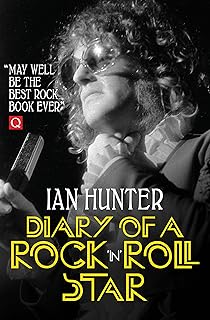
I found out he had a book out so I went to Compendium Books in Camden Town and bought ‘Diary of A Rock ’n’ Roll Star’.
I read it and thought this is what I want to do. Unfortunately I was only 14, so I practised the bass and had to wait for a couple of years.
As far as playing Bass goes I, like everyone, adored Motown’s James Jamerson.
David Hayes, long time Bass Player with Van Morrison was an important influence.
On the UK scene when I was starting out I took note of the playing of Bruce Thomas with Elvis Costello and Norman Watt Roy with Ian Dury.
The drummer Kieran O’Connor and pianist Diz Watson also taught me a lot.
Reflecting on my career as a musician I’ve come to realise how important it is to be generous to other musicians and how such generosity benefits all concerned.
IJ – What was the first record you just couldn’t stop playing?
MB –
Technically, ‘Dark Side of the Moon’.
Given my age I straddled Punk, so there were key records pre and post.
At school I listened to Steely Dan, Neil Young (‘After the Goldrush’ is still one of my favourite records) and Little Feat.
Once Punk erupted I was a massive Clash fan and listened to a lot more reggae.
I also couldn’t stop playing Elvis Costello’s first album.
IJ – Was there a radio station/radio show/live venue that was important in introducing you to the music you love?
MB –
My first radio memory: Eating breakfast, before going to school and listening to Tony Blackburn play Motown records on Radio One.
Of course, if you were a music fan listening to John Peel was compulsory.
Things were a bit more lax in the 70s. When we were in our teens, me and a group of friends used to sneak into pubs and listen to music.
At the time it seemed that every pub in North London had a back room with a band playing in it. I soaked up a lot of musical education in the Hope & Anchor, Dingwalls and The Carnarvon Castle.
We widened our repertoire and then started going to the Sunday concerts at The Roundhouse. These were amazing.
IJ – What was the first record you heard by one of your contemporaries that made you think – ‘Wow .. they’ve really got it!’
MB –
‘Ghost Town’, The Specials. A giant step forward. We felt this really raised the bar for our generation of bands. It was addictively listenable while putting over a strong political message.
IJ – Looking back over your career which 3 albums are you most pleased with?
MB – The first one, ‘One Step Beyond’ because it showed us we could do it.
Going in to the studio to make our debut we were nerveless. We really had the songs down from playing them live so we didn’t go in for any timewasting, ‘noodling’!
Producers Alan Winstanley and Clive Langer made important contributions. Alan was very adept technically and Clive had a musically interesting and empathetic mind. They were an excellent combination.
The second album, ‘Absolutely’ because it was written under such time-pressure but produced some brilliant songs (it is my favourite Madness record).
And, of course, ‘the last one’. (which as of 2018 was ‘Can’t Touch us Now’)
IJ – Similarly which 3 songs are you most pleased with?
MB –
These Singles, because they helped us take a step forward: ‘My Girl’, ‘Grey Day’ and ‘One Better Day’.
My Girl showed the reflective side of Madness.
This is a domestic love song about the kind of real stop/go hesitant love so many of us have experienced.
Mike Barson’s melody owes something to Elvis Costello’s, ‘Watching The Detectives’ though the mood is more discomfited male puzzlement rather than noir threat.
‘I found it hard to say … she thought I’d had enough of her …
‘Been on the telephone for an hour … we hardly said a word …
’Why can’t she see she’s lovely to me ….
’Why can’t I explain … why do I feel this pain?
Been there Brother! Been there!
Grey Day though recorded in 1981 was conceived in 1978.
It shows Madness were atuned to a sense of dread that seemed to hang heavily in tne air at that time for a host of economic and political reasons.
It might properly be called a dystopian diorama or Orwellian vision of a society where it’s casualties are treated as though they were invisible.
But, though the central character is made black and bloody he endures.
He endures . He endures.
One Better day was born with Mark running down a chord sequence on guitar. Given the era it was then recorded onto a cassette in Suggs house.
Something about the melody suggested the wistful atmosphere of the song.
Now it’s a rare person who doesn’t feel as if they’ve seen better days.
Yet as the song makes clear even in the most desperate circumstances one better day may be right before us.
If you take the time to look around.
The feeling of arriving when you’ve nothing left to lose.
One better day.
IJ – What was your greatest ever live show?
MB –
Madstock, Finsbury Park, 1992. A home coming, a farewell and a rebirth, all at the same time. There wasn’t a dry eye on stage. (The concert reunited the original band for the first time since 1984).
IJ – Nominate one artist who you think is criminally under rated?
MB –
Robert Wyatt. From Soft Machine, Matching Mole to his solo stuff – so much of it so beautiful. What a voice.
Mark plays the Bass on this classic recording. It’s probably Elvis Costello’s most poignant lyric perfectly married to Clive Langer’s plangent melody.
There were clearly powerful emotions present in the studio that day – beautifully offered up in Robert Wyatt’s vocal and Mark Bass playing.
One of those records that hangs in the air long after it has finished playing.
Mark told me that he would love to have Madness and Robert collaborate.
I fervently second that proposal.
IJ – Nominate one record (by yourself or anyone else) to take up an honoured place as A 100 on The Immortal Jukebox.
MB – ‘It’s Too Late To Stop Now’, Van Morrison. Specifically, ‘St Dominic’s Preview’
It’s the record I learnt to play the bass to and still practise to. I know every single note of it. And I have such a close emotional attachment to it.
It’s the manual on how to play together as a band. The interplay between the musicians is fantastic.
And, as a lovely circular story – A couple of months ago I was sent a message, through Mez Clough Van’s current drummer, by David Hayes, the bass player who is on the record.
Speechless.
Regular readers of The Jukebox will know my reverence for Van. I have written that ‘Too Late to Stop Now’ is the greatest double live album of all time.
I’m delighted Mark seems to agree with me!
Mark is right on the money in referring to the miraculous interplay between the members of The Caledonia Soul Orchestra as they support and inspire their mercurial leader.
St Dominic’s Preview seems to me to a prophetic prayer yoking dreams of youth and the enigmas of maturity.
No sense in trying to force a linear narrative on it.
Surrender, surrender and be uplifted.
Thanks again to Mark for participating in Jukebox Jive.
It seems to me that Mark and all the members of Madness have been fortunate in finding each other and in the chemistry of their combination.
And, fortunately for us they have shared their gifts generously with each other and with us.
Long may they run.
Notes :
The Classic line up of Madness:
Chris Foreman – Guitar
Mike Barson – Keyboards
Lee Thompson – Saxophone
Daniel Woodgate – Drums
Graham ‘Suggs’ McPherson – Lead Vocals
Mark Bedford – Bass
In addition to the albums referred to above I am particularly fond of:
’The Rise & Fall’, ‘The Dangermen Sessions Vol. 1’ and, ‘The Liberty of Norton Folgate’.
Lately, it seems that whenever I open a Newspaper or Magazine there’s a sober article warning that there is a, ‘Sleep Crisis’ which is increasingly manifested in physical and mental ill health.
People, working all hours and glued to glowing digital devices into the wee hours just aren’t getting enough shuteye!
I read such Jeremiads with much personal puzzlement.
I have never had any problem in sleeping 8 hours or more every night.
Some people have asked me how do I manage this?
Well, my infallible technique is to lie down on a reasonably flat surface and close my eyes!
Sleep follows within a minute – so long as there isn’t prolonged gunfire or searchlights trained directly at me I’m off in a trice.
Drinking alcohol or coffee doesn’t make any difference either.
When it’s time to sleep – I sleep.
Learning of how unusual this appears to be I am grateful for my good fortune.
I tip my hat to The Sandman.
Of course, on The Jukebox, I’ll do far more than that.
I’ll serenade him in jubilant song.
Let’s start with the charming, chiming, circle of fifths, Chordettes from 1954.
He also fell in love with and married Janet Ertel.
Archie was a canny cove who had been a professional musician/arranger/Bandleader since tne early 1930s.
To capitalise on his musical and business smarts he founded Cadence Records in 1952. His biggest sellers on the label were Rock ‘n Roll Immortals The Everly Brothers.
Archie became Phil Everley’s father in law when Phil married Janet Ertel’s daughter from her first marriage.
The Cadence cash registers were also kept busy counting up the hits from Johnny Tillotson and Lenny Welch.
Mr Sandman benefit from an airy menthol cool production featuring percussion by Archie Rhythmically slapping his knees!
It’s one of those records that instantly calls to mind the I Like Ike American 1950s.
I suspect the, ‘You Never Can Tell ‘ couple from a recent Jukebox post sashayed to this one in their two room appartment.
The great guitar stylist Chet Atkins cut a distinctive, characteristically fluid, instrumental version in November 1954 which gave him his first solo hit on the Country Music Charts.
Here’s Chet fleet fingers playing the song live.
Now, loyal Jukeboxers will have guessed by now that I have more than a penchant for the divine Emmylou Harris.
In addition to her beauty and glorious musicality she is a Jukebox Star because she has exquisite taste across myriad genres.
Emmylou knows a good song when she hears one and she has the knack of making familiar tunes fresh through the purity of her vocals and the carefully chosen musicians she plays with.
Here she is magic beaming all our hearts away.
Roses and Clover. Roses and Clover.
Well there can’t be any doubt about who I’m choosing for Prom Queen!
Emmylou had a multi tracked vocal version solo hit with Mr Sandman but she first recorded it with her sisters in music Linda Ronstadt and Dolly Parton for their wonderful ‘Trio’ project.
Unfortunately the Corporate Dudes at Warner Chappel aren’t keen on any of their versions of Mr Sandman escaping their clutches so I’ll leave you to search out that ambrosial version for yourselves.
I’ll leave you with a perfectly peach instrumental version from yet another Wizard from New Orleans – Snooks Eaglin.
May you all get a good night’s nurturing sleep filled with inspiring dreams.
‘We were on tour, staying in the Station Hotel Leeds, when Steve suddenly ran down the corridor screaming – I’ve got it! I’ve just written our next hit!’ (Kenney Jones)
‘I think, ‘All or Nothing’ takes a lot of beating. If there’s a song that typifies that era, then that might be it.’ (Steve Marriott)
When it comes to Love and Romance we’ve all got History.
Everyone has History.
Bad Dreams, Baggage.
Betrayals, Battle Scars.
Heartache. Heartbreak.
We all know how it feels to be heart sore.
Yet, we all know how it feels to have Hope.
To believe in blessings.
To believe that we are not trapped by our pasts.
To believe in second, third and fourth chances.
History is made and remade every brand new day.
Now, given all that History you can be properly cautious and careful.
You can be measured and deliberate.
You can rehearse every scenario.
But, but, Brothers and Sisters, Spring doesn’t last forever.
You can look as long as you like but in the end you will have to leap.
Bystanders watch all the blessings pass them by.
Leap. Leap.
Even though soft landings are never guaranteed.
In the end it’s All or Nothing.
And, we know that nothing comes of nothing.
Ninety-Nine and a half just won’t do.
All or Nothing.
All or Nothing.
Nice, very, very Nice!
Admit it – resistance is useless.
In the long ago Vintage Vinyl days when I used to DJ I always insisted, whatever the audience, that we play, ‘All or Nothing’ at stun volume.
And, from the instant Kenney Jones’ drums crash in I would leap the Decks and go absolutely crazy!
Which is to say that The Small Faces’ All or Nothing is one of the definitive British Pop Singles.
Marriott’s vocal was characteristically direct, dramatic and dynamic – there’s no way you can get out of the way of Steve Marriott when he’s coming at you!
Kenney Jones’ drumming drives us all headspinningly dizzy.
Ronnie Lane’s warm bass and urgent backing vocals bonds everything together.
Ian McLagen’s surging runs on the Hammond explode in the head and heart.
Together they conjure a sound that shouts, exults, in the joy of being alive.
It was an unstoppable Number One in September 1966 displacing The Beatles from their customary sojourn at the summit of the charts.
The Small Faces : Steve Marriott on Vocals and Guitar, Ronnie Lane on Bass, Kenney Jones on Drums and Ian McLagan on Wurlitzer Piano and Hammond Organ were rogues and rounders, living it large London larrikins and highly Artful Dodgers! (Steve Marriott had actually acted as that character in the stage show Oliver!)
Young men living in the epicentre of Swinging 60s London they were having the time of their lives radiating big hearted joy in music making.
Listening to them, watching them, it was impossible, then or now, to do anything other than fall in love with them.
Steve, Ronnie and Kenney were East End Boys with Ian, the ringer, hailing from West London.
One fateful day in 1964 Ronnie Lane decided that he would be better off playing the Bass rather than the expensive Gretsch his Dad had shelled out for.
His friend, Kenney Jones, said why not go to the J60 Music Shop in Manor Park High Street where he had found his Drum Kit.
The ultra cheeky Sales Assistant, who immediately assured Ronnie that he would get him the best Bass in the store, was none other than Steve Marriott!
Just like in a Movie, Steve sold Ronnie a Harmony Bass and took over the Gretsch for himself!
To test out the sound Kenney sat behind Drum Kit and set off the first Small Faces groove then and there!
So was born a true Band of Brothers.
Wherever they played they built a following.
Their own immense enjoyment in playing, their energy, their delight in Mod fashion, their similarity in looks combined to forge a winning charisma.
Their residency at London’s Cavern Club won them a manager, Don Arden, who secured them a Record Contract with Decca and a salary of £20a week each.
They also got an expense account to keep their Mod Look always at the cutting edge.
What they did not get, ever, were royalties for the string of hits they created.
It is estimated that they collectively lost out on more than £10Million!
That’s Show Biz in the Swinging Sixties for you.
At the time, especially when they we’re living together from Christmas 1965 to Christmas 1966 at 22 Westmorland Terrace in Pimlico, they were too busy partying, recording and touring to audit their accounts.
They were blazingly living in the moment.
In their sound you can hear the kaleidoscopic optimism of the Sixties.
You can hear the development from pure high energy pop to thoughtful explorations of their expanding minds.
You can almost inhale the pot smoke and pop the pills as the 45s revolve.
You can follow the development of dandified male fashion.
You can be swept along by their enthusiasm and largeness of spirit.
Now the high Summer of the Small Faces’ Sixties so wonderfully represented by, ‘All or Nothing’ could not last forever.
But, before Steve Marriott stormed off stage on New Years day 1968 The Small Faces had laid down an indelible legacy.
Records that will always thrill and charm.
Records that make you smile broadly and get up and dance whatever mood you were in before they came on.
The riches accumulated by The Small Faces were never reflected in their bank accounts.
Rather, they were embedded in their memories of golden youth and in the love and affection of their loyal following.
They left us songs in which our hearts lived.
I’ll leave you with a live appearance on BBC Radio.
In memory of:
Steve Marriott 1947 – 1991 (entirely appropriately All or Nothing was played at Steve’s funeral service)
Ronnie Lane 1946 – 1997
Ian McLagan 1945 – 2014
And for Kenney Jones wishing him good health and long life.
Recommended Recordings:
I wrote this Post listening to the 5CD ‘Decca Years 1965 – 1967’ Box Set which never sits on my shelves for very long as it is guaranteed to brighten any day.
The Albums, ‘Ogden’s Nut Gone Flake’ and ‘Autumn Stone’ are classic records which will transport to those sunny 60s uplands.
‘One day Frank started playing a little organ riff and we all really liked it a lot. I kinda came up with the chord riff … then Question Mark said he had words for it … I thought he was just singing off the top of his head.’ (Bobby Balderrama)
The 1960s, as any Baby Boomer will tell you, was the decade when Rock and Pop music peaked.
A tidal wave of creative energy was unleashed which is never likely to be matched.
Pick any week from the Billboard Hot 100 chart from the 1960s and you’ll be near overwhelmed by the number of truly great records you’ll find (and the memories they’ll generate).
Competition was fierce.
So, to ascend to the coveted Number One spot was a real achievement.
Take the top 5 for the last week in October 1966.
Pure Pop for Now people from The Monkees with, ‘Last Train to Clarkesville’.
A deep Soul cry (from the Ghetto, from the battlefields of Vietnam, from a tragic Lover’s heart) roared out by The Four Tops with, ‘Reach Out, I’ll Be There’.
An aching morality tale from Johnny Rivers with, ‘Poor Side of Town’ (previously featured here on The Jukebox).
An unfathomably deep, nay eternal, Pop Classic from 16 year old Michael Brown and The Left Banke with, ‘Walk Away Renee’ (also featured on The Jukebox).
Phew!
What record could possibly have kept those masterworks from the very summit of the charts?
Well, a record cut by a bunch of unknown Mexican-American teenagers from Michigan, with a lead singer known only by the ? symbol (where do you think Prince got the idea!) that will thrill the soul as long as there is electricity or some other means to power a Jukebox!
Too many teardrops for one heart to be crying!
Too many teardrops for one heart to carry on!
You’re gonna cry 96 tears!
You’re gonna cry 96 tears!
Watch Out Now!
Watch Out Now!
Cuidado Ahora!
Cuidado Ahora!
So, you take an insanely catchy organ riff, played on a Vox Continental or a Farfisa Combo Compact depending on which authority you believe, an increasingly crazed vocal extolling the sheer delight of anticipated romantic revenge (and who hasn’t felt that in their life?) a tempo that locks your attention in and you’ve got yourself a monster Hit!
This is Punk before Punk.
This is a wonderfully grimy garage classic just reeking of the greasepit.
This is a voodoo Mexican Folk Ballad.
This is pure unadulterated Rock ‘n’ Roll.
96 Tears lasts less than 3 minutes playing time.
Yet, I guarantee that everyone who hears it is chanting out:
with infinite gusto long before the 3 minutes has elapsed.
The definitive organ riff came from Frank Rodriguez who was all of 13 when 96 Tears was recorded in the Spring of 1966.
The guitarist was founding Mysterian Bobby Balderrama.
Eddie Serrano sat on the Drum Stool.
Bass was played by Fernando Aguilar.
The signature vocal was by the one and only hyper imaginative Question Mark ?
GIven his determination to be known by this name alone I’ve resolved to use only this name throughout.
The Mysterians all came from families that had followed the lure of employment and the Dollar Bill from Mexico taking in fruit picking before securing jobs in the Michigan Auto Plants.
They started out playing instrumentals in the dramatic style of Duane Eddy and Link Wray. When the British Invasion hit and as they watched Shindig and American Bandstand they realised they had to have a dynamic lead singer and that a powerful organ sound hit home every time.
Once Frank came up with the immortal riff they approached Lilly Gonzalez, a luminary of the local Mexican community, who found them a small recording studio and pressed up 500 copies of 96 Tears on her own Pa-Go-Go label.
The song was then take up by a relay of Radio Stations until demand became so great that Cameo Parkway took over and drove the single all the way to Number One!
My favourite moment in the song is the line where Question Mark ? momentarily pauses for breath before slamming home the killer line:
’And when the sun comes up I’ll be on top – You’ll be right down there looking up’.
Take that!
Now, it is a truth universally to be acknowledged that all Jukeboxes are in want of a Record which will get everyone onto their feet to dance furiously while rattling the walls and windows shouting out the chorus.
I think we can all agree that 96 Tears absolutely fulfils this need.
Which is why 96 Tears must take its place on The Immortal Jukebox as (what else) A 96.
Now, once such a Record is issued all over this wicked world gangs of young musicians hear it and think, ‘That will suit us very nicely indeed’.
The lead singer gets ready to hyperventilate and the organist thinks – they think they know how the organ goes on this one but they haven’t heard my version yet!
If they’re not in possession of an organ, Vox or Farfisa, the guitarist thinks – I’m gonna tear this one up so completely that no one will even remember there was an organ on the original.
Watch Out Now!
Watch Out Now!
Cuidad Ahora!
Cuidad Ahora!
A true message always gets through.
So, in 1976, frequenting London’s The Nashville and 100 Club venues I encountered a testosterone topped up the max outfit called Eddie and the Hot Rods who went full pelt at songs like, ‘Gloria’ and, ‘Get Out of Denver’ before thrashing the life out of 96 Tears.
Here’s their, ‘Live at The Marquee’ version from 1976 – I think I may have lost a few pounds while this one played and needed to sink a fair few pints to restore balance.
Such is Youth (and Thank God for it!)
The message certainly got through to Brooklyn.
That’s where Garland Jeffreys grew up listening to every style of music with a keen ear and the determination to meld these styles together in his own songwriting and performances.
Garland Jeffreys is one of those secret heroes of music whose prominent influence and regard among musicians is in stark contrast to his stature among the general record buying public.
Be assured The Jukebox will feature a considered tribute to him later.
For now let’s enjoy his distinctive take on 96 Tears.
The Band really got their groove happening here!
A true message always gets through.
And there was no more true hearted custodian of American Music than Doug Sahm – who is always warmly welcomed at The Jukebox.
Whenever Doug got together with Freddie Fender, Augie Myers and Flaco Jimenez the music flowed and everybody got to have a glorious party.
Let’s take 96 Tears down South to Texas with Doug and his faithful compadres.
They sure shake the flavour all over every one of those 96 Tears!
Too many teardrops for one heart to be crying.
Too many teardrops for one heart to carry on.
Oh, oh, oh, believe me, when the sun comes up …
You’re Gonna cry 96 Tears.
Youre gonna cry 96 Tears.
96 Tears.
96 Tears.
I’m gonna count every one.
Every single one.
96 Tears.
96 Tears.
Notes :
? and The Mysterains predictably fell foul of Music Biz moguls which resulted in long drawn out litigation, inadequate financial reward and a very messy discography.
However, there is a now a substantial collection of their Cameo Parkway material which amply demonstrates they were far more than one hit wonders.
The Kinks debut LP was rush released in October 1964 to capitalise on the enormous success of their third single, ‘You Really Got Me’ which shot to Number 1 in the UK Charts in mid September before hitting the Top 10 in the U.S.A.
You Really Got Me is the standout track from the LP.
Of course it bears saying that it was also one of the greatest and most influential recordings of the 1960s.
It exploded into the consciousness of listeners and fellow musicians all over the globe searing synapses with its astounding energy.
Dave Davies’ guitar solo, a product of fire and fury and a slashed little green amp, remains one of the most seismic ever recorded.
The Kinks couldn’t match the intensity of that performance on the other 13 tracks that made up, ‘The Kinks’.
Lightning is not caught in a botte to order.
11 of the other cuts on the LP are covers of Rock ‘n’ Roll and R&B classics from the likes of Chuck Berry, Bo Diddley and Slim Harpo.
The Kinks approach to these songs is not that of knowing reverential devotees like The Rolling Stones.
Rather, The Kinks come at these songs slant wise and when their feral energy locks in the results can be tremendously exciting.
But, as Ray Davies knew in his bones, the core of his and The Kinks creative energy was an amalgam of his (correct) sense that he was not like everybody else and thus an ideal observer of the world around him coupled with deep fraternal harmony only exceeded by fierce fraternal dischord.
The Kinks and Ray Davies in particular didn’t dream of being American.
Though they loved American Music and were inspired by it they sensed their own songs, if they were to have authenticity and authority, would have to be reflective of their own lives – reflecting Muswell Hill rather than Blueberry Hill.
The song on that debut record that demonstrated that Ray Davies and The Kinks could convey nuanced emotions and beguile an audience, as well as exhaust them, was the only other Ray Davies original present, ‘Stop Your Sobbing’.
Pure Pop for Now People!
Well … Pure Pop in the fragile melody and tremulous arrangement.
Pure Pop in the way Rasa Davies’ ghostly backing vocals shadow Ray’s lead.
Pure Pop in the way Dave Davies’ chiming guitar rhymes with our hearts as the song progresses.
Pure Pop in the way Pete Quaife and Mick Avory unobtrusively hold everything together.
But, but .. not so Pure in the emotional nuances of Ray Davies’ lyric and vocal.
Is he appalled by all the sobbing?
Or is he fascinated?
Does the sobbing turn him off or turn him on?
Is he a mixed up, frustrated, Lover or a disinterested observer carefully recording how the emotions play out?
Remember this is Ray Davies – a man of passion who is also a man of reflection and contemplation.
A Lover who can’t stop being a Loner.
A writer who has that chip of ice in the heart that tells him, whatever the situation, to observe and record.
Observe, record and remember.
There’s a Song in this. There’s a Song in this.
Ray Davies never was and never will be just like everybody else.
And, savvy songwriters with a sense of the history of Pop songwriting know that Ray Davies is a master of the craft.
A savvy songwriter like Chrissie Hynde who wanted the world to know she was special. That there was nobody else here and now like her.
She just had to have our attention and she was going to use all her resources to make sure she got it.
Most of all she was going to draw upon the deep well of her imagination.
An imagination that could relish the role reversal of a sassy woman singing, ‘Stop Your Sobbing’ and singing the hell out of it.
Singing with the seductive charm of oh, oh, won’t you be my baby, Ronnie Spector.
Singing with the, you sure gotta lot of gall, dismissiveness of Bob Dylan.
Singing with the, Oh No, no, no, no, no, dramatic soliloquy intensity, of The Shagri Las’ Mary Weiss.
Singing so our attention is immediately captured and never released.
Singing that inspired highly imaginative guitar playing from James Honeyman-Scott.
Nick Lowe produced The Pretenders version of Stop Your Sobbing in late 1979 but amazingly he thought they ‘were going nowhere’ and stepped away.
Nick, Nick, Nick – you got that one one Wrong!
The Pretenders proved to be unstoppable Hit Makers.
They had Style and they had Swagger and big time success with a Songwriter and Singer like Chrisie Hynde was guaranteed.
Now, if we are trawling the annals of modern songwriting for the, ‘Not like everybody else’ category there’s one thing we gotta do – call up the unique sensibility of Jonathan Richman!
A tidal wave of Noise assaulting your senses – all day, every day.
If only you could find a lagoon of peace to shelter in.
A moment in time when you can see things clear.
Clear.
Think straight.
Straight.
Listen for the message hidden in your heart.
The message in your heart.
Round about three in the morning there’s a moment when the whole world seems to shiver and then fall silent and still.
A moment when the beating of your heart is not lost in the background anymore.
A moment when that beat, beat, beat, is fully present and fills your whole being.
A being Singing for the joy of being alive.
Singing for the miracle of being in Love
Alive and in Love in the still of the night.
In The Still Of The Night
.
Didn’t that enchant?
In The Still Of The Night you hold someone tight and promise to never to let them go.
And, it’s a blithe promise of youth you mean to keep.
You want them to hold you again with all their might before the light dissolves the magic of The Still Of The Night.
And, should you part, for all the reasons Lovers part, that moment in The Still Of The Night will always remain in your heart.
Always remain.
You’ll carry it with you in the secret chambers of your heart as the seasons turn and the years and decades accumulate.
And, sometimes, out of the blue, you’ll find that moment white and bright before you and you will be young and present again in The Still Of The Night.
And, depending on the paths you’ve trod in the intervening years – the promises you’ve made and the promises you’ve broken you’ll find your eyes wet with tears of gratitude or tears of regret.
In The Still Of The Night.
The starlit lead vocal is by Fred Parris who also wrote the song.
Fred’s wordless croon as the song’s last twenty seconds play out has an ethereal beauty that always blows the heart open.
Harmony vocals by Ed Martin, Jim Freeman and Nat Mosley.
So, you will see that The Five Satins had only four members when recording their immortal Doo-Wop standard!
Vinny Mazzetta plays the seductive saxophone. Doug Murray holds down the bass (or was it a Cello?) Bobby Mapp was behind the drum kit while Curlee Glover played the piano.
Marty Kugell produced and issued the record on his own Standard label in 1956.
It was then taken up by Ember Records and became a substantial Pop and R&B hit.
Sales sky rocketed when it was prominently featured on ‘Oldies’ compilations and on several Movie soundtracks.
In The Still Of The Night, in the original version, has three times lodged in the Billboard Pop Charts which may be a unique feat.
Some scholars argue that the term Doo-Wop itself emerged from the chanting surrounding Fred’s yearning lead.
I never tire of Doo-Wop because it’s essentially the sound of secular prayer.
Prayers of hope and longing for life to be transformed by the alchemy of love.
Those prayers have ascended in profusion for every hour of every day and every night since time began.
Doo-Wop will never die.
Funnily enough this secular prayer was recorded in the basement of St Bernadette’s Church in New Haven Connecticut in February 1956.
If you visit I’d advise you to light a candle for your own secret intentions and then take a trip down to the basement and see the plaque there commemorating one of Rock ‘n’ Roll’s most precious moments.
And, if you’re anything like me you’ll glance around and if you’re unobserved, you’ll test out the acoustic once more as you channel Fred Parris and sing with all your heart:
… So before the light hold me again with all your might






 The Immortal Jukebox