Jackie Wilson’s Dying Dreams …

‘Jackie Wilson was the greatest singer I’ve ever heard. The epitome of natural greatness .. he set the standard I’d be looking for in singers forever’ (Berry Gordy, Founder of Motown).

‘I guess that makes me the white Jackie Wilson’ (Elvis Presley when hearing some called Jackie Wilson the black Elvis).

‘Jackie Wilson was the most dynamic singer and performer I think I’ve ever seen’ (Smokey Robinson).

Embed from Getty Images

Just in case you thought these luminaries were exaggerating take a listen to Jackie’s debut solo single from 1957, ‘Reet Petite’ and you’ll hear that there’s no hyperbole involved.

Jackie Wilson was born to sing.

Jackie could sing with the elegant power that Ted Williams brought to Baseball.

Jackie could sing with the ‘don’t you know I’m better than you in every way’ confidence that Muhammad Ali brought to Boxing.

Jackie could sing with the ‘wow, that’s brilliant’ style of a Scott Fitzgerald Sentence.

Jackie Wilson could sing and take the breath away from the band behind him, the audience in front of him and every singer who imagined, before they heard him, that they were a pretty good singer.

Sing it Jackie! Sing it!

January 20th 1984 Memorial Hospital Mount Holly New Jersey

You know it’s more than 8 years now since I sang, ‘Lonely Teardrops’ that last time at a Dick Clark gig in New Jersey.

One minute I’m knee sliding while hitting all the high notes and the next it seemed like a madman with a hammer is bashing me in the chest.

Last time I was able to sing. Last time I was really able to walk and talk.

Last time I was Jackie Wilson – Mr Excitement!

I been in Hospitals ever since that night. Ever since.

Sometimes the lights are bright and sometimes it’s all shades and shadows. Machines bleeping nearly all the time. Nurses coming and going about their business. I got to know a few of them really well – though they wouldn’t know that.

Coma. Conscious but incapacitated is what they say.

Actually, in some ways I hear more now than I ever did.

When someone comes to the bedside I can feel them before they speak and it ain’t just the living who come to see me. Course, I don’t know who gone and died since I been banged up in here.

So, I don’t know, for sure, who is alive, who is dead and which are ghosts or dreams in my head.

But, they been comin’ to see me more and more these last few weeks. Almost as if they comin’ to say Goodbye.

Well, some I’m glad they came. And, some I wished they’d stayed in Hell.

A few shed those lonely teardrops when they whispered my name and theirs in my ear.

Maybe, like me they sing that one in their mind as the teardrops fall.

Mama came. She about cried a river. Told me, no matter what I done on life, ain’t no sin The Lord can’t forgive. If you ask him. Well, I know I got plenty to ask forgiveness for – especially the way I treated my wives and the mothers of my kids I never married. Here’s hopin’ Mama’s right.

Mama was the one took me to hear the Billups Chapel Choir and that’s when I knew I was born to be a singer. Sometimes, when it’s 3 in the morning and this place is quiet as a Monday Morning Chapel I think I hear that choir again singing, ‘What a Friend we have in Jesus’.

Papa came. Now, I know he’s dead. Death ain’t changed him though. He came with a bottle in a brown bag and he done nothing but cuss me out all the time he sat here. Maybe I’m more like him than I ought to be but I ain’t dead yet. Not yet.

And maybe, just maybe, The Boatman still not absolutely sure I’m bound for hell. Leastwise that’s what I’m hopin’.

Berry and Gwen Gordy came with Billy Davis.

Embed from Getty Images

Now when I first met Berry, in the 50s, he wasn’t an Emperor of the music business. No way. He was an ex boxer like me and a song hustler trying to make his way in this mean ol’ world.

Give him his due though. Him, Gwen and Billy came up with a string of hit songs when I went solo after leavin’ Billy Ward and The Dominoes. They knew that when it came to selling a song that there wasn’t anyone to touch me.

Berry said I was even better than Clyde McPhatter – and anyone who’s knows anything about singing knows that Clyde was as good as anyone’s ever been.

Always did like Gwen.

Billy was a gentleman and you don’t get many of them in the business I can tell you!

As they sat here they started singing, ‘That is Why (I Love You So).

Sounded real good even for a bunch of oldies.

But, nothing like what I could do with the song. Nothing like.

Elvis comes now and again when he can escape Colonel Tom. He just likes to sit and croon a little. Tells me how many of my moves found their way into his act. Actually, he came yesterday and sang, ‘All My Trials’. There’s no doubt he can sing. Really sing.

One thing Elvis said was that he loved it when I sang a big slow ballad holding the audience in the palm of my hand.

Yeh! I could sing them at any tempo. I remember, ‘Doggin’ Around’ always cast a spell. A true spell.

My cousin Levi came by and talked like we did when we was kids. He’s a hell of a singer. Imagine the lead singer of The Four Tops and Jackie Wilson in the same group! Shame our version of The Falcons never got to record.

Tell you one guy who wouldn’t dare turn up. Nat Tarponol. He must owe me a million dollars! To think that I near carried his label Brunswick on my back while he was piling my greenbacks head high into his account.

I get a kick when Carl Davis drops by. When everyone thought I was finished it was Carl who kept the faith. He hooked me up with those Detroit Funk Brothers and Lord didn’t we cook!

Your Love Keeps Lifting Me Higher and I Get The Sweetest Feeling put me right back where I belonged – right on top.

One time Carl came in and told this Irsih guy, Van Morrison, had made a tribute record, ‘Jackie Wilson Said’ and that he could out sing near any R&B, Blues and Soul singer who ever lived. I would have laughed but then he played me the record.

Who would believe it! The guy has the Rhythm in his soul. No doubt about it. Then I got to thinking.

Sure, an Irish guy with a dynamite voice (though they tell me he don’t move too much!) but what about a Black Jewish guy from Detroit who can bring a tear to every eye from Dublin to Detroit with his version of, ‘Danny Boy’!

Beat that Mr Morrison!

Anyway, I’m real tired now. Never been so tired. I can still feel that bullet near my spine and it feels like that one kidney of mine is about to call it a day.

I don’t know for sure but I think I hear those pipes calling louder and louder and somewhere over the river a choir calling me.

Guess they could use a star Tenor.

Goodnight.

Notes:

Jackie Wilson died on 21 January 1984. He was 49 years old. He never recovered from the heart attack he had on 29 September 1975 while performing, ‘Lonely Teardrops’.

In his career Jackie scored more than 50 hit singles. He had 6 R&B Number Ones and 6 Top Ten Pop Chart hits.

‘Reet Petite’ ‘Lonely Teardrops’ and ‘That’s Why (I Love You So)’ were all products of the Gordy/Davis/Gordy songwriting partnership.

‘Doggin’ Around’ was written by Lena Agree.

‘Reet Petite’ shows someone in complete control of glorious gifts. You want to shout with joy with Jackie as he pulls off miracle after miracle with a broad wink to the audience – ‘Ain’t I something!’ You sure were Jackie, you sure were.

In, ‘Lonely Teardrops’ Jackie melds Doo-Wop sweetness with Gospel dynamism effortlessly shifting up and down through his astonishing vocal range.

With Jackie there is always the sense of a flesh and blood man confronting the trials and triumphs of love – no matter how thrillingly theatrical his performance.

In, ‘That’s Why’ he slaloms through vocal twists and turns like the great French skier Jean Claude Killy. When he sings, ‘Don’t stop the music – let’s go! I always find myself shouting Go Jackie Go! Go Jackie Go!

On, ‘Doggin’ he proves that he was a master at any tempo. He conjures up the picture of the troubled lover illuminated in the sodium glare of the street corner lamp with a sea of darkness and heartbreak all around. Yet, there’s more than a touch of bravado and menace in his warning that he may just have to bring his errant lover down.

As for ‘Danny Boy’ just listen and marvel.

John Fogerty, Johnny Winter & James Burton hit that Riff! : Susie Q!

From the time fire first flickered in Mankind’s camp and imagination we have always been engaged in Quest.

And, engaged every bit as much, in stories about Quest.

The quest for food and warmth.

The quest for Love.

The quest for Knowledge.

The quest for Meaning.

The quest for Oblivion.

The quest for Freedom.

The quest for the North West Passage. The quest for the South Pole.

The quest to put a man on The Moon. A man on The Moon.

And, ever since the sound of the Electric Guitar thrillingly sliced through the air and ether the quest for The Riff!

The Riff that has other Guitar Players saying, ‘Damn, how come I didn’t get that one first?’

The Riff that snaps the neck back hard when it cuts through the fug of tobacco smoke and fog of alcohol as it roars out of the Jukebox speakers.

Now, as we know, where The Riff comes from is A Mystery.

Famously Keith Richard came up with, ‘Satisfaction’ in his sleep!

No one knows for certain how to hit that seam of guitar gold. Yet, we can all tell, as we shiver in recognition, when a true seam has been opened up.

And, there can be no doubt that in 1956 in the studios of KWRH Radio in Shreveport Louisiana a very rich seam was opened up!

Embed from Getty Images

Dale Hawkins wrote a song, ‘Susie Q’ that featured A Riff, a Righteous Riff, conjured out of the Swampy Southern air by a teenage wonder, James Burton, one of the most imitated and significant guitarists in the entire history of Rock ‘n’ Roll.

Look Out! Look Out!

Riff coming through!

Dale was a Louisiana native and a cousin of Ronnie Hawkins. Bitten early by Louisiana style Blues and the burgeoning sounds of Rockabilly and Rock ‘n’ Roll he found that he could sing this new music with conviction adding some local hot sauce in his vocal style and songwriting to the mix.

History will show (at least in the Authorised Immortal Jukebox Version) that his greatest contribution to Rock ‘n’ Roll was the opportunity he gave to guitarists James Burton and later Roy Buchanan (My Babe) to strut their very considerable stuff.

James Burton (pictured below during his stint with Ricky Nelson) is a pioneer of Rock ‘n’ Roll Guitar style.

All across the globe neophyte axemen have grown boney fingers as they played over and over the definitive solos he cut with Dale, Ricky, Elvis himself and Emmylou Harris in a storied career.

Yet, almost none have equalled the terse economy and authority of James himself.

In Susie Q his guitar begins by flashing like a switchblade in the Louisiana moonlight before calling up peals of menacing thunder.

You’re always primarily attending to his playing even while admiring the foreboding and threat provided by Dale’s vocal and the rhythm section.

All these forces combined make Susie Q a stone cold classic.

Once Susie Q was picked up by Checker Records in Chicago in 1957 it stormed up the charts and became ubiquitous on Jukeboxes.

It became one of those songs that continues to inspire bands and guitarists in particular for generations after generation.

Embed from Getty Images

One of those it inspired, John Fogerty, was the lead guitarist, singer and songwriter for Creedence Clearwater Revival.

Susie Q was their first real hit record. They went on under John’s leadership to be arguably the greatest Singles Bands in the history of American Popular Music.

When John Fogerty plays guitar and sings he does it with raging commitment.

There’s a breathtaking boiling intensity to all his songs and in every note flowing from his Guitar.

He wasn’t born on the bayou and he didn’t live on Green River.

Riverboats didn’t pass his door.

John Fogerty from the moment he heard Stephen Foster songs as a child before being thunderstruck by the primal Rock ‘n’ Roll eruption in the mid 50s intuitively understood that there was a mythic power in this music.

And, in his soul and imagination, he lived within that mythology and knew, in the way a born artist does, that he could lock into that power and add treasures of his own to the mother lode.

Aided by brother Tom, Stu Cook and Doug Clifford he would indeed add volume after volume to the corpus of classic Americana.

No one in his generation had a better grasp of the visceral power of Rock ‘n’ Roll. And, as you listen to his take on Susie Q, it’s clear no one could match him for emulating that visceral power.

Our final date with Susie comes courtesy of Johnny Winter. Johnny with his trusty Gibson Firebird Guitars called up electric storms of sound every time he played.

Growing up in post war Beaumont Texas he immersed himself in The Blues while attending closely to the finger picking miracles of Chet Atkins and Merle Travis.

Johnny loved nothing more than to find a song or a Riff that he could really stretch out on. And, when he found one like Susie Q barns all across America began to combust and light up the night sky!

I confidently predict that there will never be a time when a Guitarist with a mean glint in his eye won’t hit that Susie Q Riff and think .. Now you’ll be true! Now you’ll be Mine! Oh Susie Q!

Notes:

I never got to see James Burton play with Elvis. But, I did see Emmylou Harris’ London debut back in 1975 and I remember the special ovation James received when introduced by Emmylou.

It seemed as if several generations of Guitar afficianados had assembled to watch, admire and applaud the master to the rafters.

Dale Hawkins, who died in 2010 aged 73, is a more considerable figure than his Chart listings suggest.

His early work is captured on the Ace Records collection, ‘Dale Hawkins, Rock ‘n’ Roll Tornado’.

His gifts as a songwriter and singer are particularly well reflected in the Albums, ‘Memphis & Tyler, Texas’ and ‘Back Down to Louisiana’.

The Young Rascals : Groovin’ – Blissful Blue Eyed Summer Soul!

‘The Rascals are Coming! The Rascals are Coming!’ (Scoreboard announcement at The Beatles Shea Stadium concert)

‘My God, you guys really are white!’ (Otis Redding on encountering The Rascals in a neighbouring studio)

‘Some people may not realize it, but The Rascals were the first Rock Band in the world … okay over in England, some guys were making some noise. But in the real world, in the centre of the universe – New Jersey – The Rascals were the first band!’ (Steve Van Zandt speech for The Rascals Rock ‘n’ Roll Hall of Fame induction)

Embed from Getty Images

There’s always one.

One Summer of your youth that stays shimmering in your mind for evermore.

For me it was the long, once in a century, extraordinarily hot, Summer of 1976.

A Summer when I was not yet 21.

A Summer when my head and my entire being was aflame, aflame.

A Summer when the waters of The Cam glistened silver in the Summer sun.

A Summer when the Colleges of Cambridge never looked lovelier as I piloted (very inexpertly) down the River.

And, as always, a soundtrack in my head.

Summer Songs. Summer Songs.

And, there’s always one song that summons your shimmering Summer like no other.

For me, in the Summer of 1976, it was ‘Groovin’ a song of gossamer grace recorded by The Young Rascals in 1967.

Now, I don’t know about you but when I hear, ‘Groovin” the jazzments in my mind approach something like ecstasy!

Eddie Brigati, co-writer with Felix Cavaliere, of this miraculous song recalls that at the time they were living in a hotel right off Central Park in New York City.

Down the crowded avenue they would go on a Sunday afternoon doing anything they wanted to do!

When you’re in the prime of youth and the world is opening up for you to explore and conquer it’s indeed hard to imagine anything better than groovin’ on a sunny afternoon with the one closest to your heart.

You can just feel that life is getting better and better – endlesssly.

Let the future and responsibilities wait; for now smile, take a deep breath of fresh air and you’ll hear yourself saying, ‘Ah-ha-ha, Ah-ha-ha’ and you’ll remember those moments, those immortal moments, for the rest of your life wherever life takes you thereafter.

Groovin’ was an unstoppable Nunber One record that sat atop Billboard for four straight weeks.

Who wouldn’t be charmed by its relaxed groove? There’s a lazy Cuban feel to the recording emphasised by the presence of congas but not drums. The great Chuck Rainey on bass gives the song liquid momentum as does Michael Weinstein on harmonica.

The glory of the song though, as with all Rascals recordings, lies in the seductive beauty of their vocals.

Felix on lead with wonderful harmonic support from David Brigati (the Fifth Rascal).

Gene Cornish is there on guitar filling out the sound which is topped off with the birdsong!

Put that all together and you have, as Eddie Brigati said, ‘that simple little summer song that everybody knows’.

Amazingly, Jerry Wexler at Atlantic Records thought the song would not appeal as it was so different to the more boisterous R&B and Soul sounds Rascals fans had come to expect from them.

A clear case of underestimating the public taste!

Luckily, a figure seemingly ever present around the music scene in 60s New York, Disc Jockey Murray the K, bearded Jerry Wexler and argued with convincing force that Groovin’ was a sure fire Number One smash!

Now this wasn’t the first Number One The Rascals would achieve and it wouldn’t be their last.

Their debut at the summit of the charts in February 1966 was with one of the great rave-up records of all time, ‘Good Lovin’.

If you pair it with, ‘Gimme Some Lovin’ by the Spencer Davis Group featuring the teenage Steve Winwood you have one hell of a party going on!

You got the fever? Here’s the cure!

One, two, three!

Versions of the song had previously been recorded by Lemme B Good (Limmie Snell) and The Olympics (benefitting from the production smarts of Jerry Ragavoy).

However, neither of those worthy platters could match the joyous, adrenaline fuelled, ‘I may just die on the spot’ stairway to heaven rush of The Rascals version.

Tom Dowd, legendary producer and engineer at Atlantic, captured the attack of The Rascals live sound perfectly – you feel you’re in the middle of that party with them and you never want the song to end even though you can’t possibly keep dancing at this rate for more than another sixty seconds!

On drums Dino Danelli demonstrates what a wonderfully drivin’ sticksman he was while the transcendent Hammond Organ break by Felix is playing on a loop in my head since the first day I heard it.

Gene Cornish provides wonderfully scuzzy guitar licks that don’t let up throughout.

As for the let’s start in overdrive and then really put the hammer down vocals you can hear why Otis might have been surprised at their complexions!

The Rascals, 1940s Baby Boomers all, had grown up in the New York/New Jersey area and all had born again experiences when they heard the likes of Ray Charles, Little Richard and Fats Domino on the airwaves.

Also important in the development of their sound was the ethereal DooWop singing of The Harptones and The Moonglows.

Especially epiphanic for Felix would be discovering Jazzman Jimmy Smith and the awesome power of The Hammond Organ (the same lightning bolt would strike Steve Winwood, Georgie Fame and Ian McLagan over in England).

After serving apprenticeships in local bar bands they came together as members of Joey Dee and the Starliters (David Brigati bringing them in). Touring Europe playing, ‘Peppermint Twist’ for all they were worth they found themselves on a bill with The, then unknown in America, Beatles.

The dime dropped that they should be front men not side men!

Soon they were tearing up venues like Manhattan’s The Phone Booth and coming to the attention of Promoter Extraordinaire Sid Bernstein who got them signed to Atlantic (their first white act!).

The Rascals catalogue in their glory days, 1965 to 1968, gleams with musical treasure.

There was something about The Rascals that chimed with the times. This is reflected in their third and final Number One record from 1968, ‘People Got To Be Free’ which was a fervent and frank civil rights anthem.

Undeniably preachy and of its time. Yet, yet – wrapped in glorious vocals and a swirling magic carpet of guitars, percussion and horns. I’m always in favour of anthems you can really shake a tail feather to!

And, you know, looking around this mean old world, who can disagree that the train of freedom, for so many, is long, long overdue.

As with so many 60s Groups ‘Personal Differences’ and the relentless grind of searching for the next hit took their toll on The Rascals and it would not be until well into the 21st Century that all the original members got together (for a theatrical celebration of their career devised by über fan Steve Van Zandt).

Most of all I love The Rascals for the youthful Joie de Vivre of their sound.

There’s something enormously affecting in the blend of their voices and the reaching for the stars arrangements of their songs.

I’m going to leave you with a personal favourite that has a yearning and tremulous charm that never palls.

And, that’s surely something to celebrate in world that’s constantly changing.

Notes:

There’s an invaluable compilation of The Rascals work on Rhino Records. Tracks I return to over and over include, ‘I’ve Been Lonely Too Long’ ‘A Beautiful Morning’ ‘A Girl Like You’ and ‘Mustang Sally’.

Fans of the French Ye-Ye sound should check out Nicoletta’s version of ‘How Can I Be Sure’ which went out under the title, ‘Je Ne Pense Qu’a T’aimer’.

Carole King, James Taylor, Laura Nyro and The Drifters : Up on the Roof


Brooklyn 1962

Rooftop Thoughts: 

Billy Snr

When I get home I’m tired and beat. That’s why I come up here.

Up here, up on the roof where the air is fresh and sweet.

Up here it’s as quiet as Brooklyn gets.

A man can drop his shoulders and take a deep breath and let his mind roam free.

Last week I was forty four years old. Forty Four!

My folks married in ’17. A War wedding.

Dad said to Mom, ‘I won’t wait. The world won’t wait. Let’s get married now!’

I hop they had a sweet time in the short time they had together.

Dad never made it home from France. Never made it home.

Two things in life I’d like to do.

Take Kathleen and Mom with me to lay some flowers and say a prayer at Dad’s grave.

And see Billy Boy and Maureen go to College and make something of themselves.

Oh, and if I could turn back the hands of time I’d love to see The Dodgers play one more time at Ebbets Field.

One more Lucky and I’ll go back down.

Maureen (16)

Up here, up on the roof, the stars put on a show for free.

Which is just as well ’cause Mom and Dad ain’t exactly giving me a free pass to see any of the shows I’d like to see at The Fox or The Paramount.

They’d keep me out too late and I might meet the ‘wrong sort of boy’.

Of course anyone outside an apostle is the wrong sort of boy.

And, Jimmy would definitely be the wrong sort of boy.

Strike One – He ain’t Catholic.

Strike Two – He’s 21 and that according to them is way too old for me.

Strike Three – He’s a College Boy with too much money and not enough sense.

But, oh but, but, but Jimmy dances like a dream, he makes me laugh and he makes me feel like no one ever knew me before he met me.

I won’t be able to see him for two whole days.

So I come up here on the roof and turn the dial on the radio to WINS and when ‘Will you still love me tomorrow’ comes on I know that he will be singing along too just a few blocks away.

And the stars above are our stars and it’s our show.

Billy Boy (14)

Up here, Up on the roof you’re immune from all that rat race noise down in the street.

Two places in the world where I can be myself and let my thoughts roam free.

This rooftop and The Central Library.

You go in through those Bronze doors and you feel you are somebody and they got a million books.

A million books!

You read a book like ‘Catcher in the Rye’, ‘Stranger in a Strange Land’ or ‘The Invisible Man’ and pretty soon you know that there’s a whole lot more to the world than a Brooklyn tenement.

I never had any interest in Baseball even when Dad took me to see The Dodgers play at Ebbets Field.

But, I liked it being just me and him together and I liked the names – Campanella, Snider, Reece, Robinson, Koufax.

Up here, up on the roof looking up at the stars I feel like I’m going to write my own stories one day.

Kathleen (35)

Up here, up on the roof it can seem as if my cares just drift right into space.

Thinking of Bill, Maureen and Billy Boy if only I could just wish and make their worlds trouble free.

I was only 16 when I met Bill. And he was all of 21.

He said I made him laugh and that when I danced with him for the first time he felt more alive than ever before.

And, he ain’t been anything but sweet to me since the day we met.

He misses the Dad he never knew.

Maybe I can persuade him to take that trip to France – what else are savings for?

Kathleen has grown up so fast. She’s almost as mature as she thinks she is.

Bill wants to shield her from the wicked world. I guess that’s Dad’s and Daughters.

Maybe it’s time we invited that boy round. You never know Bill might take to him.

Maureen says he’s a lifelong Dodgers fan.

And, Billy Boy. He’s so quiet. His nose never out of a book.

Other Moms got to worry about their boys and gangs.

All I got to worry about is how much time he spends at The Central Library!

Maybe I should encourage him to write stories of his own.

Somehow up here, up on the roof I feel everything is going to turn out all right.

Up here. Up on the roof.


In 1962 Carole King and Gerry Goffin, one of the greatest partnerships in songwriting history wrote, ‘Up on the Roof’ a song which, to this day, seems to whisper enchantments in the New York night air.

The recording by The Drifters with Rudy Lewis’ magical lead vocal is the very definition of romantic uptown Rhythm and Blues.

Such a song will always be sung.

For Carol’s enticing melody and for Gerry’s heartfelt, heart stirring lyric.

Carol and James Taylor provide contrasting meditations on a theme before the inimitable Laura Nyro lifts our hearts and souls into the empyrean beyond.

Right into space where it’s peaceful as can be.


John Lennon loved ‘Angel Baby’ by Rosie Hamlin (RIP) – here’s why!

‘[Angel Baby] … This is by a 15 year old girl from National City California named Rosie. This is going to be a hit Guys and Gals’ – DJ Alan Freed on K-Day Radio, November 1960.

‘This here is one of my all time favourite songs. Send my love to Rosie – wherever she may be’ (John Lennon)

I was saddened today to learn of the death of Rosie Hamlin at the age of 71.

In tribute I am reblogging my post on her classic song, ‘Angel Baby’.

Sometimes when the stars and tides are in perfect alignment and the Muses are indulgent a moment of inspiration can visit an artist who may never be granted such a blessing again.

So it was with Rosie.

Yet, we cannot live on Bach, Bob Dylan and The Beatles alone!

Rosie’s moment of glory will live forever because it captures an eternal yearning in all of us.

A yearning that stays within you no matter your age.

Nine or Ninety your heart your heart still yearns to skip a beat.

No one wants to be blue and alone.

Some part of us always believes in Angels.

Especially if they sing like Rosie Hamlin …. ooooh … oooh …oooh …

Angel Baby will always have pride of place on my Jukebox.

May she rest in peace.

1960 was a momentous year. In Greensboro, North Carolina four black students are refused service at a segregated lunch counter in Woolworth’s. They begin a sit in protest that is repeated throughout Southern States that summer as Civil Rights protests become a powerful political, social and cultural movement.

High over the vast territory of the Soviet Union a U2 spy plane piloted by Gary Powers is shot down triggering a rapid rise in the temperature of the Cold War.

In November John Fitzgerald Kennedy becomes the 35th President of The United States seeming to symbolise a new era of optimism – Camelot on the Potomac.

Meanwhile in a former aircraft hanger in San Marcos California, on 2 track machine, a 15 year old Mexican-American girl called Rosalie (Rosie) Hamlin lays down a song she had written a year earlier to celebrate her first love.

A song that John Lennon then an unreconstructed leather clad Rock ‘n’ Roller with a scarifying, scabrous, Scouse wit will remember, with love, to the end of his days.

That song, ‘Angel Baby’ features an ethereal vocal by Rosie that will never be forgotten by anyone who hears it. It’s the sound of a true, innocent heart filled, full to bursting, with delirious youthful passion.

It’s the sound of the children of Neverland wheeling in the heavens as they fly straight on to another rosy morning.

And, if in your venerable age and wisdom you shake your head at such simple feeling I’m here to tell you that you are too old brother, too old sister.

Every time I hear, ‘Angel Baby’ I’m teleported back to my 14 year old self when there were as many possibilities of love and longing for love as there were stars in the night sky.

Sing it Rosie, sing it for the 14 year still living somewhere inside us all.

I love the Sputnik guitar intro to Angel Baby. I love the sense that there is no artifice at all here – nothing getting in the way of a distillation of a pure oceanic feeling.

It doesn’t matter a hoot that the bass player, Tony Gomez, had to play an untutored plodding sax solo because the regular saxman Al Barrett had to stay home because his mother wouldn’t let him out until he’d mowed the lawn (!)

What matters is that Rosie with David Ponci, Noah Tafolla and Carl Von Goodat made a record that hummed and crackled with the music of the spheres.

At first Rosie couldn’t get anyone in the music business to be interested in her record. Then she had the bright idea of getting Kresge’s department store in San Diego to play the record in their listening booths (remember listening booths?) and lo and behold the kids of San Diego found that they knew exactly, exactly, what Rosie was singing about.

They began clamouring to buy Angel Baby so that they could call up it’s magic anytime they wanted. In the event, ‘Angel Baby’ was issued by Highland Records in November 1960 and went on to hit the top 5 in the Billboard charts.

In a tale too tawdry for the telling Rosie was denied composer credit and royalties for decades. She went on to record an early 60s LP for Brunswick Records before slipping out of the limelight into family life with only brief, subsequent forays into the nostalgia circuit.

Yet, every time she steps up to a microphone or is heard on the radio crooning, ‘Its just like heaven being here with you, You’re like an angel, too good to be true’ she conjures up a miracle.

In late 1973 John Lennon was in a bad way. It seemed everything was broken. He sought oblivion in drug and alcohol fuelled binges that became the stuff of legend. Groping towards a way out he decided to record an album of songs from his youth, songs that had been favourites of his before the fame and the madness took over.

Songs from the days when John Lennon was above all else a man who loved songs and singers. A man who longed to write, perform and record songs of his own which could be set alongside the original mother lode of Rock ‘n’ Roll classics.

It’s no surprise that the album features songs by Chuck Berry, Gene Vincent, Little Richardand Fats Domino – these were the songs the Hamburg Beatles had played and played untilthey were second nature.

Yet, Lennon the leather throated rocker always had a softer aspect reflected in his love for the stoic, broken hearted ballads of Arthur Alexander.

And, in his, ‘lost weekend’ amid the too many musicians, too many producers and engineers chaos of the, ‘Rock ‘n’ Roll’ sessions he reached back for an artless song that expressed something beyond the ability of words to fully express.

He reached back for the sound of:’Ooh, ooh, I love you, oh ooh I do, No one could love you like I do, Oooh, ooh, Oooh, Oooh, ooh, ooh , ooh, ooh, ooh …………. ‘

He reached back for, ‘Angel Baby’. And he sang it with all his heart.


Thanks to Rosie for the lightning strike that set a match to many a heart.

This post written on December 8 2015 – the 35th Anniversary of the death of John Lennon.

Thanks to John for the meteor shower of genius that lit up the entire world. Roll on John, Roll on John, Roll on John. Ar dheis De go raibh a anam


Van Morrison : ‘Buona Sera Signorina’ – La primavera e qui!

Spring is here.

Is erraigh anseo.

As dawn breaks I set off for my morning run through the woods.

No more the sharp sting of winter winds.

No. Now the daffodils and bluebells are in bloom and through the echoing timber the melodies of the lark and thrush sweeten the air.

Nothing is so beautiful as spring.

Embed from Getty Images

Bud and bloom and blossom.

A time of promise and an echo of the sweet beginning of being in Eden.

La primavera e qui. La primavera e qui.

Time for La bella figura.

Time for me to carefully roll the Roadster out of its winter quarters.

Time to turn up the collar on the leather jacket, set the Donegal tweed cap at a jaunty angle and put some va va voom into the blue highways of the Surrey Hills.

Of course, there’s a Jukebox playlist for the occasion.

The Beach Boys, ‘I Get Around’, Thin Lizzy, ‘The Boys Are Back In Town’, Junior Parker, ‘Feelin Good’ set the wheels a rollin’ very nicely.

But, there’s ten versions of one song I always play as I swoop up and down the Hills to announce, top down and volume way, way up, that Spring has sprung!

Spring brings out the Italian in me – something about the brightness of the sun and the promise of golden days ahead.

Maybe, this year, I’ll see once more that old moon above the Mediterranean Sea.

And be woken by the sun over the mountains.

Il tempo per un festival.

La primavera e qui.

Buona Sera Signorina!

First, a version by the artist who will always remain first and foremost in my affections.

You can be sure that Van has spent many an hour listening to the original by Louis Prima (see earlier Jukebox tribute to Louis).

Perhaps he first played it on Sax when he was a member of the Monarchs Showband at the very dawn of his professional life in music.

Here in 1971 he careens through the song like a Cresta Run bobsleigher going for the record.

You can hear his obvious love and affection for Swing and Jump Blues in every note.

‘Buena Sera’ was written by Carl Sigman and Peter deRose – songwriters from the golden age of Tin Pan Alley whose hits would take a page or more to list (think, ‘All In The Game’ and ‘Deep Purple’ for starters).

In composing the song they must have imagined an audience including significant numbers of WW2 GIs who had indeed found love under the moon and stars of Naples.

Some who brought brides home must have smiled at the memory of those Mediterranean nights and some who decided to return to the sweetheart waiting at home must have smiled more ruefully as they remembered the girl they left beside the beautiful Bay of Naples.

Some signorinas you can never forget!

In 1961 as Van Morrison was setting out on his career in the clubs of Northern Ireland and Hamburg Ray Gelato was born in London.

Embed from Getty Images

Ray, the son of an American Serviceman, grew up, like Van, imbibing the music of Louis Jordan and Louis Prima in the home.

He was especially fond of the Sax playing of Sam Butera and determined to follow his ‘Everybody up on the Dance Floor now!’ grandstanding Tenor style.

He has succeeded completely in that ambition.

Il tempo per un festival!

There’s a lovely sultry sway to Ray’s version and there’s no good resisting you just gonna have to cut a rug to this one!

Ray is famed for the sheer brio and energy he brings to every live performance – something I can vouch for having seen him many times myself (Paul McCartney booked him as his wedding band and I would have too if finances had allowed).

I am going to sign off Signori, Signorinas and Signoras with a version by a great favourite of The Jukebox – Mr Acker Bilk.

Embed from Getty Images

Acker’s version must surely paint a smile on every face, lift every heart and buoy every spirit!

I have been known to play this one on repeat all the way from Surrey to Cornwall when the Sun has taken up its proper place in the heavens.

La primavera e qui. La primavera e qui.


Notes:

I heartily recommend Ray Gelato’s ‘Wonderful’ CD which has him romping through a dozen classics of Italian Song.

If you ever see he’s playing somewhere near you don’t hesitate – go!

Of course, as you will know by now, you can never have too many Van Morrison records while Acker Bilk’s 50s and eary 60s recordings are bottled joy which ought to be medically prescribed to raise the global index of well being.


Rufus Thomas : Celebrating the Centenary of a Sun & Stax Records pioneer!

A lot can happen in a 100 years.

Within 60 years of a few minutes of wavering powered flight a man can land on the Moon!

The War to end all Wars can be followed by the Jazz Age, The Great Depression and an even more deadly second World War.

Mankind can find cures for scourging diseases while developing ever more ingenious ways to destroy more and more lives with ever more deadly Bombs.

Radio, Records, and Television bring vibrant local cultures to global prominence.

From the 1920s onwards an immense treasury of music is captured on 78s or 45s or LPs.

Ragtime. Jazz. The Blues. Boogie-Woogie. Gospel. Country (and Western). Jump Blues. Rhythm and Blues. Hillbilly Boogie. Rockabilly. Rock ‘n’ Roll.

The Immortal Jukebox exists to celebrate this treasury and to salute the man and women who have made significant contributions to it.

So, today on the 100th anniversary of  his birth I am doffing my cap to the one and only Rufus Thomas by reblogging my post on him and his daughter Carla from three years ago.

Celebrate with me.

All families contains the history of multitudes through the cultures they are heir to and which they live within. At the same time each family can be an agent for cultural change and development through their actions and works. We stand on the shoulders of giants but we can see a destination ahead they could never reach.

This is particularly the case in families whose work lies within the popular arts. If you grow up with music and talk about music is all around.

If you watch shows from the side of the stage and know the drudgery as well as the glamour of, ‘show business’ you will either run a mile and seek, sensibly, to become a lawyer or farmer or you will think there is no other life worth living than that of writing, singing and performing songs and bathing in the approval of an audience.

Embed from Getty Images

The careers of Rufus and Carla Thomas, father and daughter, take us on a fascinating journey through twentieth century American popular culture.

We will encounter: travelling minstrel shows, the development of Afro-American radio and the birth and growth of two of the nations fountainhead records companies (Sun and Stax) which produced many of the greatest rock n roll, soul and rhythm and blues records ever made.

We will also meet music icons of the stature of Sam Phillips, Elvis Presley, B B King and Otis Redding and realise why the city of Memphis can justifiably lay claim to have been the capital city of American music.

Rufus Thomas was a magnetic figure with personality and character to burn. He had that most attractive and winning of human qualities – vitality.

There were no downcast faces when Rufus was around! He was a one man party who lit up every room he ever entered with his ebullience and appetite for creating and sharing enjoyment.

He was born in rural Mississippi in1917 moving to Memphis as a toddler. It was in that bustling metropolis that he grew up and learned to become an entertainer who combined the talents of a dancer/hoofer, comedian, singer, talent show host and radio disc jockey.

I think that’s what you call an all rounder!

Leaving Booker T Washington High School in 1936 with the depression suffocating the nation he took his talents on the road throughout the South with the legendary F S Walcott Rabbit Foot Minstrels (commemorated in a lovely rowdy song by The Band).

‘The Foots’ were a glorious travelling tent show troupe which operated between 1900 and the late 1950s bringing comedy sketches and salty song and dance routines to any town, large or small, where the tent could be pitched and an audience drummed up.

Arriving in town the brass band would parade with comedians like Rufus announcing the wonders of the show to come. The stage, boards on a folding frame, would be set up with gasoline lamps acting as footlights.

While the liquored up audience waited for Bessie Smith, Ma Rainey or Louis Jordan to come on Rufus would whip up the crowd with comic dancing and jive jokes tailored to the local audience and introduce the dancing girls who invariably managed to increase the show’s temperature by several degrees centigrade.

After the War Rufus was back in Memphis working for a textile company and married with three children; Carla, Marvell and Vaneese. He hooked up again with his high school mentor, Nat D Williams, who was a key figure in Memphis Afro-American culture as teacher, journalist, talent spotter and pioneering radio host.

Nat D recognised that Rufus’ energy, affability and show business smarts gave him all the necessary qualities to be a successful talent show host. So, Rufus began to regularly host the shows at the Palace Theatre on Beale Street once announcing the youthful Riley (B. B.) King as the winner in the late 40s. Rufus was still hoping to make it as a singer though singles on labels like Star, Chess and Meteor shifted few units.

The next stage in Rufus career was again given impetus in 1951 through the good offices of Nat D who brought him on to be a disc jockey for WDIA – a Memphis radio station which, uniquely at the time, used black DJs to broadcast to the considerable black audience in Memphis and anywhere else 50,000 watts of power could reach!

Radio was king in the first post war decade reaching into almost every home in the country and providing the soundtrack to millions of lives through immensely popular shows that gathered whole families round the set.

Rufus, with his easy charm was a radio natural and his, ‘Hoot and Holler’ show became essential listening not just for his own community but also for young white hipsters like Elvis Presley or Steve Cropper who just knew that they could play those rhythm and blues too if they were only given the chance.

As it happened in Memphis there was a man, one of the true heroes of American music, Sam Phillips who was able to make those dreams come true. Rufus, in the early 1950s was often at Sun studios at 706 Union Avenue working with Phillips as he recorded brilliant blues sides by artists like Howling Wolf.

It was Rufus who provided Sun with its first breakout single in 1953 with, ‘Bear Cat’ an answer record to Mama Thornton’s,’Hound Dog’ which reached No 3 in the R&B chart (this launched a series of legal actions but that’s another story).

Rufus let rip with the full force of his personality matching Big Mama all the way while adding a sly spin of his own to the story of mismatched lovers. The featured stinging guitar is by Joe Hill Louis.

Turn this one up as loud as you can!

Rufus, like all the other black artists at Sun then faded into the background as Sam Phillips realised that the pot of gold at the end of the rainbow could only be found by recording white artists, preferably young handsome guys, who could combine blues, rhythm and blues and country influences to create a new sound on the face of the earth – rock ‘n’ roll.

Enter Elvis Presley! Elvis was aware of Rufus through listening to WDIA and he always retained a fondness for ‘Tiger Man’ which Rufus had recorded at Sun.

Rufus continued to combine full time work at the textile plant with his entertainment career throughout the 1950s. Meanwhile, Carla who had been born in 1942 was soon displaying the family relish for singing and performing.

At the tender age of 10 she joined the WDIA sponsored Teen Town Singers and was combining her school duties with twice weekly rehearsals and a radio show every Saturday. Rufus could hear that his daughter had an attractive voice and unusual poise for such a young artist.

So, in 1959 Rufus decided to approach a new Memphis recording outfit, Satellite Records, headed up by siblings Jim Stewart and Estelle Axton and persuaded them that they needed to move beyond the country and pop markets R&B to thrive in their home town and the rest of the nation.

Rufus and Carla recorded the duet, ‘Cause I Love You’ at Satellite’s studio and operational headquarters which was located in a former cinema/theatre on McLemore Avenue. And, voila! Satellite had its first hit (helped by the distribution deal agreed with sharp eared Jerry Wexler at Atlantic Records).

Soon after Jim and Estelle would use the first two letters of their surnames and create Stax Records.

The next time Carla’s name appeared on a record it was on the Atlantic label with a song she had written as a 16 year old, ‘Gee Whizz (Look At His Eyes). Gee Whizz is a heart and soul on the sleeve love ballad that could only have been written by a teenager in the delirious throes of adolescent love/infatuation.

Do you remember that oh so sweet feeling as you gazed at your love object? While no one could or should maintain that obsessive attachment to the dream of love its a poor soul that does not cherish a small remembrance of those heady days.

And, nothing can swoosh you back to those days with more efficiency than Carla’s utterly beguiling vocal here. Lean back, close your eyes and swoon!

The song became an immediate radio favourite and once Atlantic was behind it and Carla appeared on the nations premier pop TV show, ‘American Bandstand’ there was no stopping, ‘Gee’ from ascending to the top 10 of the national charts and a permanent place in the memories of a generation.

Carla then issued a string of singles on Atlantic and then Stax demonstrating that the attractively naive young girl was growing into a smart and sassy young woman who could convincingly embody a full range of adult emotions with engaging vocal style.

Listen to her here in 1963 with a song especially beloved by her European fans, ‘I’ll Never Stop Loving You’. You’d have to have a stony heart and leaden feet not to be up and practicing your finest twists and twirls to this one!

In that same year of 1963 Rufus showed that there was still life in the old trouper as he released a series of driving singles calling us with unflagging energy and wit to get up off our butts and out onto the dance floor.

The most potent and memorable of these, ‘ Walking The Dog’ has become something of a Soul/R&B standard (even receiving the accolade of a cover by The Rolling Stones). The video clip shows Rufus in full flow.

The mid 60s saw Carla and Stax records really hit their stride utilising teams of brilliant in house writers and the incomparable Booker T and The MGs as the house band. A perfect example of the power of such collaborations is a Carla classic from 1966: B -A – B – Y.

This pearl was authored by the great partnership of Isaac Hayes (a Teen Town alumni like Carla) and David Porter. There’s gospel testifying here as well as soul enticement in Carla’s seductive vocal backed by a steam heat rhythm section topped off with a straight into your skull chorus – a big hit guaranteed!

The canny bosses at Stax observing the success of Motown duet partnerships like Marvin Gaye and Tammi Terrell had the inspired idea of teaming Carla with the top man at Stax and in fact the top man in soul of his era – Otis Redding.

Dubbed the King and Queen of Soul they recorded some excellent sides together including the big international hit, ‘Tramp’. However, the track I’ve chosen to spotlight the duo is a wonderful reverie, ‘When Something Is Wrong With My Baby ..’.

Carla wisely never tries to match the inferno intensity of Otis, rather her caressing coolness offsets him perfectly making for a seriously sexy record. I like to listen to this one with a large Gin and Tonic at hand.

Rufus and Carla were stars of the triumphant Stax/Volt tour of Europe in 1967 which has become legendary for the intensity of the artists performances and the fervour of the audience responses.

Back in Memphis Rufus continued to produce some excellent sides including, ‘Memphis Train’ and, ‘Sophisticated Sissy’ before striking gold again with a novelty dance song, ”The Funky Chicken’ which proved he had learned a lesson or two about pleasing an audience back in the Rabbit Foot days!

When it comes to selling a song Rufus has few competitors. I have never managed to play this song only once so be prepared.

The end of the 60s closed out the glory days for both Rufus and Carla though both would record some valuable material later. But, given the history above it is clear that singly and together they were a significant element of the magnificence of Memphis music in that golden era.

In an age of fluff and flummery it’s good to be reminded that some things and some people lived lives and made music that will always endure because it was grounded in everyday experience turned through talent and heightened expression into true art.

Now, Baby that is real!

,

Gerry & The Pacemakers : Ferry Cross The Mersey – Anthems from Liverpool

British Beat – Some Other Guys 4

‘People they rush everywhere

Each with their own secret care’

(Gerry Marsden – Ferry Cross The Mersey)

Liverpool in the 1950s was a city filled with youthful dreamers.

Of course, the quartet of dreamers who would go on to launch millions of dreams across the entire globe were John Lennon, Paul McCartney, George Harrison and Ringo Starr – The Beatles.

But, dreaming alongside them and in their wake were thousands of other young men from the port city.

Dreamers who had, like The Beatles, been electrified by the records brought home to Liverpool by sailors returning from America (for a more detailed introduction on this topic and the City of Liverpool see the opening paragraphs of : The Swinging Blue Jeans : Merseybeat Kings – The Hippy Hippy Shake, You’re No Good)

Prominent among these dreamers were two brothers from Dingle in Liverpool; Freddie (born 23 October 1940) and Gerry (born 24 September 1942).

Their father, also Fred, played the Ukulele and encouraged his sons to take up music.

Fred chose the drums (initially playing percussion on a chocolate box tin!).

Gerry took up the guitar and encouraged by family reactions to his spirited rendition of, ‘Ragtime Cowboy Joe’ elected himself lead singer.

Skiffle sessions at local halls led to performances at larger venues. Les Chadwick joined on bass and later another Les, Les Maguire, joined on keyboards to complete the classic line up of Gerry and the Pacemakers.

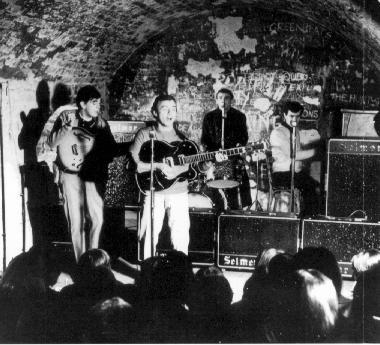
From 1960 onwards they built up a devoted following in their home town with many shows at The Cavern – often alternating with The Beatles.

They had the great good fortune to be added at the last minute to a Liverpool show by the great Gene Vincent.

Like The Beatles they honed their playing chops and their stamina by playing extended sets at Hamburg’s Top Ten Club. They became a tight Beat Group able to hold a crowd as they lashed into R&B and Rock ‘n’ Roll classics.

Gerry was a natural front man with boundless energy and bonhomie.

He was the epitome of what is known in Britain as a, ‘Cheeky Chappie’ – the kind of man who always sees the glass half-full not half-empty and who anticipates the rainbow following the rain.

Embed from Getty Images

These qualities and the unity of the group was spotted by Brian Epstein.

Embed from Getty Images


He signed them to a management deal (his second after The Beatles) and persuaded Producer George Martin to bring them on to EMI’s Columbia label.

Embed from Getty Images

This proved to be a very astute move for all parties.

For, incredibly, the first three Gerry and the Pacemakers singles all went to Number One in the UK Charts!

They began in March and May 1963 with two (to my mind cheesy) Mitch Miller songs ‘How Do You Do It’ and ‘I Like It’.

Then in October 1963 they issued a record which has become a part of the very fabric of life in Liverpool, ‘You’ll Never Walk Alone’.

The group had been performing the 1945 Rodgers and Hammerstein Show Tune for several years and it had always proved a Show Stopper.

George Martin, drawing on his classical training, provided a melting string arrangement to frame Gerry’s fervent vocal.

Listening to Gerry sing here it becomes apparent that while his appearance and manner exuded sunny optimism his greatest gift as a singer was to embody shadow and melancholy.

Indeed, taking the three records featured on The Jukebox today into account I have no hesitation in crowning Gerry as the Monarch of Mersey Melancholy!

Gerry has the musical and emotional intelligence to trust in the craft of the melody and lyric and present them powerfully but not hysterically.

So he is walking on – not running.

There is a mature determination to outface the dark in this performance. Though he may have to button his coat and turn up his collar against a biting wind he has faith that every dark night gives way to the dawn.

Gerry’s vocal makes you believe in the sweet silver song of the lark and the promise of the golden sky.

‘You’ll Never Walk Alone’ almost immediately on issue became the anthem of Liverpool Football Club. The players run out to the song and to hear it sung by the massed ranks of The Kop is one of the greatest sports experiences.

It has taken on added depth and poignancy for Liverpool fans following the appalling tragedy at Hillsborough Stadium in April 1989 when 96 Liverpool fans lost their lives.

Every rendition of the song is in a sense a memorial to the 96.

Gerry and the Pacemakers had become big stars in the UK and in April 1964 they issued the record which, aided by appearances on Ed Sullivan and the overwhelming impact of The Beatles, would become their breakthrough in the American market, ‘Don’t Let the Sun Catch You Crying’ which made the top 5 in Billboard.

This is my favourite of all their records and a gold plated 60s classic.

Again George Martin was a key figure with a lovely arrangement expertly balancing strings, woodwinds and vocals to hugely winning effect.

Gerry’s regal melancholy is in full flow here on a song credited to all four members of the group.

Listening I imagine a shattered heart which has spent a long night without the balm of sleep. Yet, sometimes those white sleepless nights lead to moments of sudden, undeniable, clarity.

It’s Over. Over.

Looking out a window, almost too tired for tears, you can only wait for the Moon to cede to the Sun in the heavens and believe in the latter’s restorative warmth.

‘But don’t forget that love’s a game,

And it can always come again,

Oh don’t let the sun catch you cryin’,

Don’t let the sun catch you cryin’, oh no, 

Oh, oh, oh …. ‘

The last record I’m featuring here today is from late 1964/early 1965. It’s another record deeply redolent of life in the group’s native Liverpool, ‘Ferry Cross the Mersey’.

Embed from Getty Images


There’s something about the tidal sway of a Ferry trip that encourages reverie and contemplation.

This is beautifully captured in this Gerry Marsden song.

The record begins with the quiet assurance of a Ferry slipping away from the shore. Gerry’s plangent tones take us on a journey reminding us all of the consolations of the familiar:

‘We don’t care what your name is boy – we’ll never turn you away’.

We all need such a place for life does go on day after day and beating hearts can’t help but be torn in so many ways.

Gerry and the Pacemakers broke up a group in late 1966 but the above trio of records will surely always earn them a secure place in the affections of those who need a reminder to not be afraid of the dark and to hold their head up high.

Dedicated to the memory of Freddie Marsden (died December 9 2006)

Wishing Gerry Marsden a speedy recovery from his recent ill health.

Make sure you check out the three other Posts in the ‘Some Other Guys’ series featuring The Merseybeats, The Swinging Blue Jeans & Billy Fury.

Chuck Berry RIP : Hail, Hail, Rock ‘n’ Roll!

Chuck Berry has died. May he rest in peace.

Embed from Getty Images


I will write an extensive tribute later.

He was a Founding Father of Rock ‘n’ Roll.

He was a Rock ‘n’ Roll Prophet and The Rock ‘n’ Roll Poet.

He was a writer with the immediate understanding of a top class journalist, the widescreen vision of an historian and the timing of a comedian on the stage.

He is one of the greatest chroniclers of American Life.

Hail, Hail, Hail Chuck Berry!

Here he is with a special favourite of mine, ‘School Days’

‘Up in the mornin’ and out to school
The teacher is teachin’ the Golden Rule
American history and practical math
You study’ em hard and hopin’ to pass
Workin’ your fingers right down to the bone
And the guy behind you won’t leave you alone

Ring ring goes the bell
The cook in the lunchroom’s ready to sell
You’re lucky if you can find a seat
You’re fortunate if you have time to eat
Back in the classroom open you books
Gee but the teacher don’t know
How mean she looks

Soon as three o’clock rolls around
You finally lay your burden down
Close up your books, get out of your seat

Down the halls and into the street
Up to the corner and ’round the bend
Right to the juke joint you go in

Drop the coin right into the slot
You gotta hear something that’s really hot

Drop the coin right into the slot
You gotta hear something that’s really hot

Hail, hail rock’n’roll
Deliver me from the days of old
Long live rock’n’roll
The beat of the drum is loud and bold
Rock rock rock’n’roll
The feelin’ is there body and soul’

The lyric above is the best teaching aide anyone could ever have if they wanted an example of great Rock ‘n’Roll Songwriting.

Consider the rhythmic flow of the words and music.

Consider the sociological acuity of the observations.

‘The guy behind you won’t leave you alone‘. Don’t you just know that guy!

‘Gee but the teacher don’t know How mean she looks’. 

Teachers never do, never do!

‘Down the halls and into the street
Up to the corner and ’round the bend
Right to the juke joint you go in
Drop the coin right into the slot
You gotta hear something that’s really hot’

Now that’s writing! A whole generation and way of life captured perfectly.

‘With the one you love you’re makin’ romance
All day long you been
Wantin’ to dance
Feelin’ the music from head to toe
‘Round and ’round and ’round you go’

All day long you been wantin’ to dance. All day long!

Rock ‘n’ Roll swept The World because it did make you feel the music from head to toe and because what in the world could possible beat the feeling of makin’ romance with the one you love!

Round and round and round you go!

Chuck Berry set The World spinning and some of us are spinning still!

‘Hail, hail rock’n’roll
Deliver me from the days of old
Long live rock’n’roll
The beat of the drum is loud and bold
Rock rock rock’n’roll
The feelin’ is there body and soul’

And that Baby is Rock ‘n’ Roll!

With his thrilling guitar, his poetic words and his sleek charisma Chuck did indeed deliver us from the days of old.

Thank you Chuck for the feeling – body and soul.


Fats Domino : Now in his 90th Year!

Fats Domino, Rock ‘n’ Roll Forefather is now in his 90th year.

Thinking of all the immense pleasure his music has given me and millions of others I could not let such an august anniversary pass without a full salute from The Immortal Jukebox.

So, I am reblogging my previous tribute.

I also want to pay homage to the magnificent saxophonist Herb Hardesty who died just before Christmas last year.

That’s Herb you can hear soloing on, ‘Ain’t That A Shame’ and, ‘I’m Walking’ and that’s him too playing one of the most perfect parts in all Rock ‘n’ Roll on, ‘Blue Monday’.

As a birthday treat I am adding what may be my all time favourite Fats track – ‘Be My Guest’.

A record which beautifully illustrated the sheer joy woven into every bar of a Fats Domino record.

A record which demonstrated the glorious camaraderie of the Fats Domino Band.

A record which, especially in the wildly addictive horn breaks, virtually provides the corner stone sound for Ska to develop in Jamaica in the 1960s.


Had I been born in Louisiana in the 1920s I know what I would have done with my life if I had survived World War Two intact and by fair means or foul accumulated a decently thick bankroll.

I would have bought a roadhouse on the outskirts of New Orleans.

Let’s call it, ‘The Blue Parrott’. And, all the dollars I spent and all the hands I hired would have had but one aim – to make the Parrott the jumpinist, jivinist, most joyful Joint for hundreds of miles around.

Embed from Getty Images

On the door and looking out for trouble before it becomes TROUBLE is an ex Marine called Tiny who stands six foot six and weighs in at 250 pounds. Tiny stormed the beach at Guadalcanal and came home with a limp and a chest full of medals.

Tiny never gets mad but he does get mean. No matter how drunk the drunks get and no matter how tough they think they are when they’re drunk no one, no one, thinks they can take Tiny down. Tiny maintains good order.

Behind the bar is Pops. Pops has looked sixty years old since I was six. He always will. Pops has heard and nodded sympathetically at every hard luck story ever told as he pours another shot of alcoholic redemption. Everyone know Pops understands. Everybody loves Pops. Pops has never touched a drop.

Out of sight in the Kitchen is Ferdy our chef. Ferdy don’t talk much. In fact he rarely says a word. Nobody cares about that because Ferdy can cook. Really cook.

So people who don’t come for the booze or the company or the music come anyway because they can’t resist Ferdy’s food. He will have you licking your lips just inhaling the aromas from his Gumbo, Jambalaya, crawfish étouffée and shrimp creole.

In the corner there’s a Wurlitzer Jukebox primed to pump out Hank Williams, Joe Turner, Louis Jordan and Harry Choates until the wee small hours.

I must, of course, have live music. A Roadhouse needs a House Band. So, I want a Band that’s has rural roots and city smarts.

I want a Band that folks will want to dance to, to listen to, to cry into their drinks to, to fall in love to, to remember the good and bad times in their lives to, to stare out the door and dream of another life to.

A Band people come to see the first night they get home from the Service or the Slammer so they can believe they really are home.

I want a Band that can whip up a storm one minute and lull a baby to sleep the next. I want a Band that you can stand to listen to three nights a week for year after year.

I want the Band to have a front man who makes people feel good just looking at him.

Embed from Getty Images

I want a drummer who lives in and for rhythm.

Earl Palmer

I want saxophone players who can play pretty or down and dirty as the song demands.

Embed from Getty Images Embed from Getty Images

I want a guitar player who never shows off but is so good he makes other guitar players despair and consider taking up the banjo. I want a Bass player who everybody feels but nobody notices.

I want a piano player who has the left hand of a deity and the right hand of a angel on a spree. I want the piano player to sing with such relaxation that it seems like he is making up every song on the spot.

Embed from Getty Images

I want the Band to have a secret weapon in a songwriter and arranger who knows all the music of the past and has worked out a way to make the music of the future from it.

Embed from Getty Images

I want Fats Domino, Earl Palmer, Herb Hardesty, Red Tyler, Lee Allen, Ernest McLean, Frank Fields and Dave Bartholomew.

I want, and will have, the best damn Band that ever came out of New Orleans – The Fats Domino Band!

Well, well, well …. Wah, Wah, Wah, Wah, Wah, Wah.

Baby that is Rhythm and Blues and Baby though you didn’t realise it at the time – Baby that is Rock ‘n’ Roll.

By my reckoning Fats Domino’s, ‘The Fat Man’ recorded in December 1949 in New Orleans and co-written with Dave Bartholomew and blues history is the first great record of the 1950s.

Some things are immediately apparent. Fats Domino sings with overflowing charm while his piano combines surging boogie-woogie with irresistible triplet flourishes. Right about here the great Earl Palmer invents Rock ‘n’ Roll drumming with his driving backbeat which lifts the Band and our spirits until his final fill decisively says, ‘That’s All Folks’ and you rush to cue it up again.

For the musically sophisticated there’s an excellent analysis of the crucial role of Fats Domino’s Band in the development of Rock ‘n’ Roll in Ned Sublette’s book, ‘The Year Before The Flood: A Story of New Orleans’.

For the rest of us all we need to understand is that Earl Palmer’s bass and snare drum attack owed a lot to the style of New Orleans Parade Bands and that the way the whole Band locked into its rhythmic parts drew on Cuban, ‘Latin’ traditions to create something new under the sun in the Crescent City.

Listening here it’s abundantly clear that this is a Band that really does know its way around and that we should sign up now for a glorious cruise into the future. Of course, New Orleans picked up on Fats first with some 10,000 citizens putting their money down to buy, ‘The Fat Man’ in the first fortnight after its issue. A million or so sales followed as the entire United States fell under Fats’ spell.

We scroll forward half a decade now to a record which still sounds dew fresh 60 years after it was recorded in 1955. ‘Ain’t That A Shame’ was an instant classic and the passage of time has only added to its charms.

Fats grew up speaking Creole French and that must be a factor in his immensely winning vocal style. The Lower Ninth Ward where Fat’s family settled after moving Vacherie still retained a country feel despite its proximity to the city. So there always remained something of the relaxed rural about Fats nature.

Maybe that explains why I can’t think of anyone in the entire history of Rock ‘n’ Roll who exudes such bonhomie as Fats. As soon as he starts to sing the clouds part and the sun lights up clear blue skies. It’s an amazing gift he shares with his great New Orleans forebear Louis Armstrong. His piano adds further shimmer and dazzle.

Herb Hardesty has a lovely sax part here which always has me sets me gleefully swaying along with him and the Band. It seems the recording was compressed and speeded up to ensure favour with the mainstream (white) audience. Well, that sure worked!

‘Ain’t That A Shame’ is regularly used in movies to evoke the1950s most notably in George Lucas’ best film, ‘American Graffiti’.

Not too long after it was issued at 251 Menlove Avenue Liverpool the first song full time teenage rebel and would be rocker John Lennon learned to play was none other than, ‘Ain’t That A Shame’. John would formally tip his hat to Fats in his essential covers record, ‘Rock ‘n’ Roll’.

Following the major success of ‘Shame’ both through Fats version and Pat Boone’s cover the doors to the pop world swing widely open and Fats, always guided by Dave Bartholomew, took full advantage with a series of huge hits that had global impact.

Blue Monday tells a tale we all know all too well. Oh, I’ve had many, many, of those Sunday mornings when my head was bad yet I still grinned at the apparition in the mirror and concluded as the Seltzer fizzed that it was all worth it for the time that I had.

Naturally while reflecting that the awful ordeal of Monday would have to be faced I consoled myself that Fats knew and understand my feelings and somewhere in the grooves of his song lay the promise of the next, sure to be even better, weekend to come. This is one of the great vamping grooves that engages you from the get go to the thumping valedictory chord.

Blueberry Hill had been recorded many times before Fats took permanent ownership of the song in 1956. Fats and the Band invoke a bitter sweet recollection of the trajectory of love; part rural reverie, part lazy post love making langour. Their collective vocal and instrumental sound glides you through the song like an expertly piloted pirogue.

One last song. From the pen of superb singer and songwriter Bobby Charles the hypnotic marvel that is, ‘Walking to New Orleans’. String arrangement courtesy of Milton Bush. The relaxation maintained throughout with the sure groove could only be Fats Domino. This is one of those songs that the entire family sings along to when we are on long car journeys!

Fats Domino was and remains the King of New Orleans. The unique rhythmic signature of the city resounds joyfully through every bar of every Fats Domino recording.

They ought to put a statue up in the Lower Ninth and name a Square and a Bridge or two after him. He deserves nothing less.

Some personal memories to conclude.

In the late 1970s I went to see Fats Domino in concert at London’s Hammersmith Odeon. I only decided to go at the last minute and despite my silver tongue couldn’t persuade any of my hipper than hip friends to accompany me.

I was marooned up in Row YY at the very back of the Upper Circle. Friendless and far from the Bar. None of that mattered once Fats opened up with, ‘I’m Ready’. For the next hour or so as Fats played standard after standard with wit, playful power and affectionate authority I transcended to a state of near nirvanic bliss.

It was a rain soaked night but I waited for an hour after the show outside the Stage Door just to call out, ‘Thanks and God Bless You Fats!’ as he got into his bus.

That night remains one of my benchmark nights for musical excellence and personal happiness. Thanks and God Bless you Fats.

Now that there is more than a distinguished tinge of grey in my beard I lean more and more on the sovereign, reliable pleasures of life.

A good night’s sleep next to the woman I love; a mug of fresh brewed coffee in the morning, a walk on the common, the poetry of Herbert, Heaney and Hopkins. A glass of Malt Whiskey as the sun sets. The films of John Ford and Buster Keaton and the good humoured, life affirming, music of Antoine Fats Domino.

And, echoing Fats I’m ready, willing and able to follow this regime until someone puts out the big light.