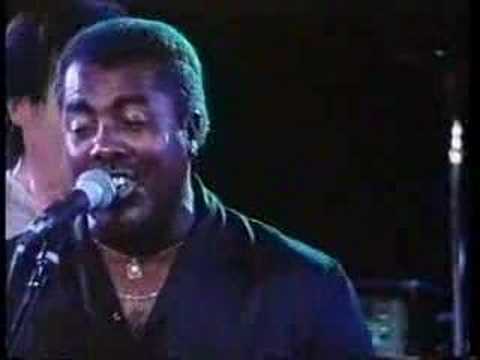
Jimmy Cliff : Many Rivers To Cross

The Immortal Jukebox A 30

‘I never get tired of singing Many Rivers to Cross, and you know why? .. ‘cause I still have many rivers to cross. They’re just different rivers.’ (Jimmy Cliff)

Many rivers to cross.

Many rivers to cross.

Just can’t seem to find our way over.

We are haunted by Waters.

Rivers flow through our imaginations.

As Rivers thirst for the Sea so we thirst for the sound of running water.

There is balm and there is healing in the sound of a flowing River.

The sound and the sight of The River invites movement towards the future.

Which surely lie somewhere downriver.

Downriver.

When you’re lost as you travel along if you can find The River you know you can find your way home or to your new destination.

When only your will keeps you alive stand by The River and resolve to carry on – to cross over and be born again in cool water.

Cross The Rubicon.

Cross The Delaware

Cross The Euphrates.

Cross The Volga.

Cross The Murray.

Cross The Nile, The Niger and The Congo.

Cross The Mackenzie, The Mekong, The Missouri and The Mississippi.

Cross The Lena and The Laune.

Cross The Brahmaputra, The Besós and The Brazos.

Cross The Thames, The Tiber and The Tyne.

Cross The Rhine and The Rhône.

Cross The Rappahannock, The Rio Grande and The Red.

Cross The Acheron, The Lethe and The Styx.

Wade across The Jordan.

Each River has its own song.

And, each of us hears different songs as we listen to The River.

We are all travelling from the Source to The Sea.

Oh, we really don’t know why.

We don’t know why.

But, I guess we have to try.

Have to try.

To cross over.

To Cross Over.


Jimmy Cliff has A Voice.

A Voice.

In the way that Sam Cooke has A Voice.

In the way that Nina Simone has A Voice.

In the way Ray Charles has A Voice.

In the way Van Morrison had A Voice.

It’s A Voice that once heard never leaves you.

A Voice that seems immediately familiar to you yet always capable of making you catch your breathe in surprise at its glory.

A Voice that has the authority of a River in full flow.

A Voice that you find yourself harmonising with in your head as the years and tears flow by.

A Voice that speaks truth about the trials of Life.

A Voice you’ll find yourself turning to when it seems Life has got you licked.

A Voice you’ll cling to when all around, including yourself, call you washed up.

A Voice that will whisper to you in the friendless Night.

A Voice that the lonely know knows loneliness too.

A Voice that will be a guiding Star in the heavens when you’re lost and wandering far from The River.

A Voice that will help you hold on, survive, until you’re ready to stand by The River again.

A Voice that will help you cross the many Rivers you’ll have to cross in Life.

So many Rivers to cross.

Embed from Getty Images

Jimmy Cliff was a teenage star of the Jamaican Ska and Rocksteady scenes.

In addition to his obvious talents as a singer he soon showed himself to be a songwriter who had the rare ability to create songs that had the mysterious power and longevity of fables.

Songs like The Harder They Come and You Can Get It If You Really Want are instantly memorable while having a core of wisdom that comes from folk memory that chimes with our immediate lived experience.

Yet, Many Rivers To Cross has an extra dimension.

It’s a song written by a young man with an old Soul.

It speaks to our many defeats yet holds out Hope that these defeats are not final or eternal.

We are born by a River in our little tents and of course we’ve been running ever since.

Ever since.

Running towards Rivet after River after River.

We all have to cross so many Rivers.

It can be a long, long journey from the Source to the Sea.

So many Rivers to cross.

There is redemption and blessing in crossing over The River.

Keep your eyes on the farther ashore and trust that you’ll cross over.

Cross Over.


Notes :

Jimmy Cliff’s ‘Greatest Hits’ should have an honoured place in every collection.

These days I often find myself reaching for his  glorious collection from 2012 ‘Rebirth’ which has deeply affecting songs of dignity and grace.
Slim Harpo : The King Bee – Swamp Blues Superstar!

A celebration of Slim Harpo featuring :

I’m a King Bee, I Got Love if You Want It, Raining in My Heart, Don’t Start Crying Now, Scratch My Back, Shake Your Hips & I’ve Been a Good Thing for You.

Sometimes ersatz just won’t do.

No. No. No.

Today you need the pure drop.

The real thing.

Taste and texture.

Something with the Kick that ignites your senses and gets your heart pumping fit to bust right through your ribs.

Low down Swamp Blues out of Louisiana.

Today, right this very minute, you want, hell, you need, some vintage Slim Harpo.

That’ll flat out do the job!

Embed from Getty Images

*

Let’s Buzz a while!

Sting it then!

Slim Harpo. Slim Harpo.

Sleepy vocals and insistent, buzzing, stinging, right inside your mind Harmonica.

I sometimes debate which debut single might be said to be the greatest of all time and, of course,  never reach a settled decision.

But, always, always, high in contention is Slim Harpo’s ‘ epochal debut ‘King Bee/I Got Love If You Want It’ from 1957 on Excello Records.

Produced by the Sultan Of The Swamps J. D. ‘Jay’ Miller in his Crowley Lousiana Studio.

Guitar Gable on the stinging Guitar, John ‘Fats’ Perrodin on Bass and Clarence ‘Jockey’ Étienne on the Drums –  collectively the Musical Kings.

Incredibly ‘King Bee’ was the B Side .. but once heard, especially when blasting out of a Juke Joint Juke Box it is, no doubt about it, an Alpha A Side!

King Bee has the perfect combination of musical economy and impact wholly characteristic of Slim Harpo’s entire career.

In record after record he came up with winning vocals and melodies, memorable lyrics, and addictive instrumental instrumental interludes – all in under three minutes!

No wonder his records were Juke Box classics all over the South.

Slim Harpo, enormously aided by the ambience created by J D Miller, managed to cram everything essential to produce a great record into his sound and cut out everything else.

So his records cast a spell and have you coming back again and again in search of the secret of their allure.

For me, in addition to the hypnotic overall sound on King Bee it’s the moment when Slim drawls ‘Well’ before adding with a mixture of masculine menace and charm – ‘Buzz a while … sting it then’.

I’m sure it was a rare barfly who didn’t imagine himself one hell of a buzzing, stinging King Bee when this one came blasting out of the Jukebox.

Mick Jagger and all The Rolling Stones were certainly stung by the sound.

On their debut album the first track on Side 2 is none other than a faithful take on King Bee – though it would be many years before The Stones would be able, on record, to come anywhere near the relaxed authority of Slim Harpo’s sound.

Slim Harpo’s sound and pared down songs because they effortlessly combined so many Blues, Country and Swamp Pop elements proved enormously attractive to a multi racial audience at home and to neophyte Bluesmen in Britain.

Virtually every Group you might hear in The Marquee or on Eel Pie Island had a Slim Harpo Song in their set.

The Kinks before Ray Davies emerged as one of the great original Songwriters mined Slim’s catalogue and came up with a creditable version of, ‘I Got Love If You Want It’.

Of  course, it’s not a patch on the original!

You got the rock ‘til your back ain’t go no bone rhythm.

You got the teasing vocal and the seductive Harmonica.

You got the I can’t believe it’s finished – I’ll have to cue it up again at once economy.

You got a great Slim Harpo Record.

Though King Bee had a big impact on fellow musicians and musica aficionados it didn’t set the cash registers ringing madly.

For that Slim, who was never a 7 days a week full time musician, had to wait until 1961 when he came up with a Song that just won everybody over – ‘Rainin’ In My Heart’.

Deservedly Top 20 R & B and Top 40 Pop In the Billboard Charts.

By now Slim’s Band had Rudy Richard on Guitar, James Johnson on Bass and Jesse Kinchen on Drums – and it’s hard when you hear them play to imagine you could ever find yourself a better Saturday Night Out Band to laugh and love and drink to!

All such Bands need a romantic swooner and they don’t come more romantically swooning than Rainin’ In My Heart.

I’ve seen fabulous live versions of this one by The Fabulous Thunderbirds and Van Morrison (the latter rarely outdone on swoon when he has a yen for it).

Van has an encyclopaedic knowledge of all aspects of The Blues and is no mean Harmonica player so it was no surprise that with Them he cut a dynamite version of Slim Harpo’s, ‘Don’t Start Crying Now’.

Now, Lordy Mama, ain’t that a blast!

From the first instant the Band lock in and you’re barrelling down the tracks until you hit the buffers less than three minutes later.

Nothing to do but get back on the train and set off again!

Slim Harpo’s biggest Hit came in 1965 with the scorching, ‘Scratch My Back’.

Get To It!

Seductive, Slinky, Sexy as all get out, aah Scratch My Back.

Scratch My Back.

Nothing as satisfying as an Itch that gets well and truly scratched!

Remember when I said what a great Saturday Night Band Slim Harpo had?

Well, well, well, here’s the ultimate proof.

If, ‘Shake Your Hips’ doesn’t get you up and out on the Dancefloor there’s just no hope for you.

No Hope at all.

This is pure Voodoo.

Pure Voodoo!

The Rolling Stones were ready to do justice to Slim’s Sound when they recorded this on their magnificent 1972 Double Album, ‘Exile On Main Street’.

Slim Harpo died, tragically young at 46, in 1970, just as he was about to tour Europe for the first time – where he would surely have been received as the Music Hero he was.

Slim Harpo Records define Swamp Blues and I will never tire of listening to The King Bee.

I’m stung every time.

I’ll leave you with a valedictory ballad that cuts like a scalpel to the heart.

Oh Slim, you sure were a Good Thing.

A very Good Thing indeed.

Notes :

I thoroughly recommend ‘Buzzin’ The Blues’ Bear Family’s encyclopaedic set of Slim Harpo’s recorded career which includes a wonderful live show from 1961.

Thanks due to Dave Emlen from kindakinks.com for pointing readers of his excellent site in this direction!

Randy Newman : I Think It’s Going To Rain Today

Some days, some nights, Life can be a struggle.

Seems like Easy is getting Harder every day.

Every day.

High water rising everywhere.

Everywhere.

All the hedges blown down – strewn along the road.

You come naked and crying into the world and that’s how you’ll go out.

You inherit a world of trouble.

Flames rise up to scorch the sky.

Every morning you wonder how you’ll get through the hours until the darkness comes and you can somehow sleep.

Every night you wonder how you’ll get through the hours until you can find the energy to face the light for another day.

Nothing to be done.

Seems like your soul has hardened to steel.

Pale dead Moon.

Not even the murmur of a prayer.

Pink, pink, pink. pink Moon.

Ravens blackening the sky.

High water everywhere.

Scarecrows dressed in the latest styles.

Nothing at the end of the rainbow.

All the women came and went.

Not even the murmur of a prayer.

Two riders.

High water everywhere.

Going down three times.

Coming up twice.

I think it’s going to rain today.

You must say words as long as there are any.

Must go on.

Can’t go on.

Go on.

I  think it’s going to rain today.


Roxy Music : Love Is The Drug

It’s almost Saturday Night.

Almost.

Almost.

Just a few more hours here at Bainbridge’s adding up rows and rows and rows of accounts.

A few more hours staring out the window watching the sky darken.

Waiting for The Moon to light up the Dark.

Waiting for The Stars to dazzle my eyes.

This Saturday Night is going to be My Night.

My Night.

Make sure I get dressed to impress.

Fred Perry. Sta Press. Barracuta G9. Chelsea Boots.

Haute Rouge fragrance.

Time to establish the Mood.

Light up a Disque Bleu and contemplate the posters of Francoise Hardy, Monica Vitti and Steve McQueen.

Leaf through the latest ‘Salut les copains’

Now for some Sounds!

Start out with Miles Davis, ‘Kind Of Blue’.

Now that is Cool, Cool, Cool.

Gonna Dance Tonight.

Dance, Dance, Dance.

Betty Everett, ‘Getting Mighty Crowded’.

Major Lance, ‘The Monkey Time’.

Maxine Brown, ‘Oh No Not My Baby’.

Roy Head, ‘Treat Her Right’.

Jimmy Radcliffe, ‘Long After Tonight Is Over’.

I can feel the Glow.

One last look in the mirror – Perfect!

Fire up the Super Sprint 90.

Saturday Night.

The Town will be throbbing.

Throbbing.

Where are am I headed tonight?

Where will the Faces be?

La Dolce Vita? The Downbeat?

The Oxford? or The Cavendish?

First off, I’m going to ride the Super Sprint right up to the door of Club A ‘Gogo and announce my arrival on the scene!

Here I am! Here I am!

Young, Free and Single.

Time IS on my side.

It ain’t no big thing the toll of the bell.

Look Out Girls!

Oh, Oh, Oh, catch that Buzz.

Catch that Buzz.

Love is the drug I’m thinking of.

Love is the drug and I need to score!

Love is the drug for me.


Now that is a record that would get anyone well and truly hooked!

Roxy Music In Ecelsis!

Embed from Getty Images

From the very first moment with the footstep and car door opening sound effects you just know you’re about to set off on a thrilling trip.

Jon Gustafson comes in with that heart jolting, adrenaline laced, bass line and you will barely draw breathe again until the fade out – swept along by the instrumental brilliance of the ensemble, the crisp, crystal clear production of Chris Thomas and the knowing seductive vocal Bryan Ferry gives to his superbly sketched narrative.

Gustafson was a veteran of the British Beat scene having been a member of The Big Three who were lions of the Cavern in Liverpool with everybody including The Beatles grooving along to their cover of Richard Barrett’s ‘Some Other Guy’.

He went on to play with The Merseybeats and The Pirates as well as numerous studio gigs.

However, his lasting glory will surely be the three albums he played on with Roxy Music and in particular the fantastic propulsive drive his bass line gives to Love Is The Drug (I’m sure Nile Rodgers of Chic felt it in his boots!).

The ‘secret hero’ of all Roxy Music Records is, of course, Paul Thompson, a Drummer whose complete mastery of tempo gave the Band a rock solid foundation that allowed Roxy’s ‘Exotics’ – Bryan Ferry, guitarist Phil Manzanera, Saxman Andy Mackay and Keyboard wizard Eddie Jobson the freedom to be theatrically inventive.

Phil Manzanera’s highly accomplished guitar playing draws on his love of Latin American rhythms and the angularity of English Art Rock. Add to this his technical command of his instrument and his musical intelligence and you have the ideal guitarist for a Band performing musically and emotionally complex songs.

Eddie Jobson was the boy wonder Keyboard player whose musical felicity gave him the smarts to add shade, colour and dramatic sophistication to the kaleidoscopic gallery of moods conjured up by Bryan Ferry’s lyrics.

Andy Mackay was always a key figure in Roxy Music giving them a depth and breadth of sound marking them out from their contemporaries.

In this song you can feel the red lights, the bated breath and the heat of nocturnal anticipation in his playing.

His saxophone and woodwind contributions were always integral to the overall conception of the unique Roxy Music sonic palette.

In fact, Love Is The Drug began as a Mackay instrumental. It was worked up in Air Studios with each additional player’s contributions making the track more and more irresistible with Chris Thomas at the desk insisting on take after take until it was practically perfect.

Only one further element was needed for a sure fire hit!

Namely, a winning lyric and vocal.

Enter, Bryan Ferry.

Bryan was known to try the patience of his colleagues by obsessively working on his lyrics – drafts after draft after draft being reworked until the seam of pure gold was revealed.

Andy Mackay recalls that he sometimes appeared like a Conjuror keeping the audience breathless until, magically, he pulled the veritable rabbit out of his silk Top Hat!

When he settled himself at the microphone to sing, ‘Love Is The Drug’ for the first time his weary Bandmates were amazed and thrilled.

To a man they knew this would be a massive, unstoppable hit which would take their career to another level.

Bryan tells his story with economy and wit.

It’s a story we’ve all surely been part of in our youth so we can recognise the accuracy of the tale and smile at our own recollections of when we were the key dramatis personae.

Boy meets girl where the beat goes on.

Face to face, Toe to toe.

Hearts pounding as heart to heart they hit the floor.

The stumble round, the hoped for locked embrace.

Catch that Buzz.

One says Go … the other says Yes.

Oh, Oh, Oh, Oh ….

Well, dim the lights and you can guess the rest!

Bryan Ferry’s lyric is a model of economy and wit deftly deploying alliteration, assonance and rhyme to beguile our senses.

Love Is The Drug has remained a fixture at Roxy Music and Bryan Ferry shows from 1975 to this day.

Simply put it’s a classic that will never fail.

I’ll leave you with a scorching live version from  2001.

I guarantee this song will still sound great on the bases of The Moon and Mars in 3001.

Can’t you see.

Oh, Oh, Oh, Oh, Love Is The Drug.

Love Is The Drug.


Sandy Denny : Who Knows Where The Time Goes


Darkness.  Darkness.  Darkness.

Silence.  Stillness.  Stasis.

BANG!

Light.  Space.  Time.

Travelling towards Darkness again.

Love the Light.

Love the Light.

Treasure the Time.

Treasure the Time.

Who knows where the Time goes.

It’s not dark yet. But it’s getting there.

Across the evening sky all the birds are leaving.

Who knows where the time goes

Who knows where the time goes.

If I ventured in the slipstream.

The bloom hung along the bough.

Each Spring a miracle.

How many more?

How many more?

Love the Light.

Love the Light.

Treasure the Time.

Treasure the Time.

It’s not dark yet – but it’s getting there.

Who knows where the time goes.

Kids out in the street collecting bottle tops.

Dry your eye. Say Goodbye. Wonder why.

Nothing but a stranger in this World.

At my back I hear …

Sad deserted Shore.

Who knows where the Time goes.

Who knows where the Time goes.


Soft sift in an Hourglass.

Soft sift.

Come the storms of Winter.

The days are hastening on.

Hastening on.

Love the Light.

Love the Light.

Treasure the Time.

Treasure the Time.

Who knows where the Time goes.


In the beginning was the Word.

Through a glass darkly.

Now and at the hour of our death.

Now and at the hour of our death.

Is now and ever shall be.

Is now and ever shall be.

Love the Light.

Love the Light.

Treasure the Time.

Treasure the Time.

It’s not dark yet – but it’s getting there.

Before the Winter fire.

The swift flight of the Sparrow.

The swift flight of the Sparrow.

Ye know not when the Time Is.

Who knows where the Time goes.

Who knows where the Time goes.


Notes :

Who Knows Where The Time Goes was the second song Sandy Denny ever wrote.

It will outlast The Pyramids.

The first version featured here is the classic version to be found on the Fairport Convention     Album, ‘Unhalfbricking’ from 1969.

This is one of those recordings that has a magic which cannot be analysed only surrendered to.

Sandy’s vocal and Richard Thompson’s Guitar outshine the stars.

The second version is a searching solo version for the John Peel radio show.

The third version was recorded during Sandy’s brief tenure with The Strawbs.

It has a tremulous charm that will never leave you once heard.

In writing this Post I found myself crafting a patchwork quilt of poems, prayers and songs that called out to me as I listened to, ‘Who Knows Where The Time Goes’.

So proper acknowledgement should be offered to:

The King James Bible, The Venerable Bede, A E Houseman, Gerard Manley Hopkins, Andrew Marvell, Bob Dylan and Van Morrison.

The first image that appeared was that of ‘The Flight of The Sparrow’ from Bede’s  great work, History of The English People’ – a Book that is one of the glories of Civilisation.

I recently completed a once every 40 years ‘thinning out’ of my bookshelves with some 800 volumes sent to my favourite Charity.

I still kept 3 editions of Bede.

Through the wonders of the Internet I found this reading in Old English which now echoes in my mind.

Across the Centuries there is a telling here about the mysteries of  life and time that still calls out to us today.

Christmas Alphabet : S for Staple Singers – Go Tell It!


And the light shineth in darkness; and the darkness comprehended it not.

Above thy deep and dreamless sleep the silent stars go by.

The hopes and fears of all the years.

If any group can evoke those hopes and fears, the silent stars, the light shining in the darkness and dreamless sleep it is The Staple Singers.

In 1962 in Chicago they recorded my all time favourite Christmas album, ‘The 25th Day of December’

Pop Staples on prophetic guitar and vocals.

Mavis Staples with vocals wholly worldly and wholly, shiveringly, supernatural.

Pervis and Yvonne provide the essential choral support.

Maceo Woods on Organ and Al Duncan on drums bind it all together.


When you have News – such glorious good News you just got to shout it out to the entire world.

Go tell it by the Rivers.

Go tell it on the Plains.

Go tell it in the deepest Forests.

Go tell it in the silent Steppes.

Go tell it to the Seven Oceans.

Go tell it in the squares of the Cities.

Go tell it in the sleepy Towns and Villages.

Go tell it in the high, lonesome Deserts.

Climb as high as you can.

As high as you can.

Go tell it on the Mountain!

Go tell it on the Mountain!

And the Angel said unto them, Fear not: for, behold, I bring you good tidings of great Joy which Shall be to all people …


Silent Night. Holy Night. Dawn of redeeming Grace.

Dawn of redeeming Grace.


A mother looked in her baby’s eyes and saw her maker.


A reign of love begins.

That all may enter in.

That all may enter in.


Todays Post concludes The Christmas Alphabet Series.

If you have missesd a Letter catch up over your Christmas break!

There are still several Posts to come in the next week.

Stay tuned!

Christmas Alphabet : R for Roy Orbison (Pretty Paper)

London 1963.

Roy Orbison was far from his Texas Home and assailed by a raging fever.

He was in Britain following a successful tour supported by a new Beat Group, The Beatles, who really seemed to be tearing up the place.

They were nice guys.

Every night they stood on the side of the stage to watch Roy – open mouthed as he effortlessly hit operatic notes and held the crowd, frantic when they’d performed, spellbound without moving a muscle.

Though the thermometer showed 102 and rising Roy had a job to do.

His producer and mentor Fred Foster had found a Christmas song from a fellow Texan, Willie Nelson, called, ‘Pretty Paper’ that might just give Roy another big fat hit.

No one could write a better heart tugging song than Willie and damn sure No One, absolutely No One, could sing such a song to rival The Big O!

So, in Pye Studios, the cream of London’s session men under the supervision of Bill Justis and Ivor Raymonde got everybody miked up and the Orchestra set because Roy was fading away before their eyes.

We’re only going to get one shot at this!

The term ‘Unique’ is thrown about far too carelessly when discussing the merits of great singers.

In the case of Roy Orbison no other description will do.

It’s the whispering sound of your subconscious.

It’s the whispering all around you of the West Texas Wind.

It’s the whisper of your thoughts and dreams and memories.

The ones you smile when you recall and the ones that make you wince.

It’s the sound of a bruised and battered heart that scarce knows how it’s beating on.

It’s a plea to The Moon and The Stars when all the earthly powers have turned away.

Turned away.

It’s the unique sound of Roy Orbison.

There’s quite a story behind Willie’s song.

On his regular visits to Fort Worth he had noticed a man selling pencils and paper outside landmark Department Store, Leonard’s.

Now this was a man you wouldn’t easily forget once seen.

For he was severely crippled and moved about by hauling himself along the sidewalk protected by heavy gloves and knee pads made out of old tires.

In all weathers he was there selling his wares.

‘Pretty Paper! Pretty Paper!’ he would call out to attract customers – hoping for a few more coins to drop into his cup.

Walking his farm in search of inspiration Willie remembered this cry and soon putting his own pencil to work a classic Christmas Song was born.

Characteristically Willie uses words sparingly to paint the picture.

The promise, the pleasure and the pathos of the Christmas Season are captured.

The love and the longing and the loss.

My how time does fly.

My how time does fly.

Pretty paper, pretty ribbons of blue
Wrap your presents to your darling from you
Pretty pencils to write I love you
Pretty paper, pretty ribbons of blue

Crowded street, busy feet, hustle by him
Downtown shoppers, Christmas is nigh
There he sits all alone on the sidewalk
Hoping that you won’t pass him by

Should you stop? Better not, much too busy
You’re in a hurry, my how time does fly
In the distance the ringing of laughter
And in the midst of the laughter he cries

Pretty paper, pretty ribbons of blue
Wrap your presents to your darling from you
Pretty pencils to write I love you
Pretty paper, pretty ribbons of blue

Now, I love the original version.

The backing singers and the Orchestra and the deliberate pace all evoke the era perfectly for me (I would have been 8 years old when the record was released).

But. But.

When I play, ‘Pretty Paper’ I always turn to the live version below.

The sheer majesty and magnetism of Roy Orbison’s voice cuts straight to the core.

Roy didn’t know the name of the man the song was written about.

But Frankie Brierton could have had no more tender salute than that so indelibly sung by Roy here.

Maybe we could all take a look around as we hurry on busy feet through the crowded streets.

Maybe we as we accumulate the pretty paper and the ribbons of blue we could stop for a moment and remember Frankie in all his dignity.

Maybe we could find a cup to drop more than a few coins into and spare a word of good cheer to one finding the days hard and the nights long.

Then we could say with a full heart Merry Christmas to all we meet.

Ry Cooder & The Drifters (with stellar supporting cast) : Mexican Divorce

In Dave Alvin’s wonderful song, ‘Border Radio’ (sure to feature here next year) there are some lines which have always intrigued me:

‘This song comes from 1962 dedicated to a man who’s gone
50,000 watts out of Mexico
This is the Border Radio
This is the Border Radio’

What was that song from 1962?

What was the old song they used to know?

A song able to summon the life that was.

The life that was lost.

The life that haunts the life lived now.

It whispers of broken promises up and down the Rio Grande.

One day married. Next day free.

Except you’re never really free.

How could you be?

An old adobe house where you leave the past behind.

Except (and everyone knows this in their heart of hearts) you can never truly leave the past behind.

The past shadows your every step.

Another set of footprints in the sand.

The song running through your head night after night from 1962?

Of course, The Drifters with ‘Mexican Divorce’

They say it takes a village to raise a child – to cherish, to nurture well being and growth.

Well, it took a creative village – a constellation of craft and talent to produce the hypnotic aching majesty of, ‘Mexican Divorce’.

Let’s begin with the songwriting team.

The Composer was Burt Bacharach – and for Mr Bacharach I think we can all agree that only the term Composer will do.

Embed from Getty Images

What Bacharach brought to the popular song was immense slegance and sophistication in the conception and construction of melodies, instrumental colour and arrangements.

A Bacharach song has a jewelled Faberge radiance that seduces and dazzles the listener.

A spell is cast, especially when sung by a singer of taste and discretion, that lingers on and on in the imagination.

Bacharach’s genius was to cast and recast that spell adapted to the particular talents of the artist he was working with.

Of course, this wizardry would attain its apogee in the breathtaking series of sides he cut with Dionne Warwick.

For, ‘Mexican Divorce’ Burt’s conjured a melody that takes you gently by the hand as it unfolds its tale of longing, loss and painful regret.

The lyricist partner for Burt here was Bob Hilliard a music industry veteran who had already had notable successes on Broadway, in Hollywood, and on the Pop Charts.

We all know Bob Hilliard songs – think; ‘In the Wee Small Hours of the Morning’, ‘Our Day Will Come’ and, ‘Tower of Strength’ just for starters.

With, ‘Mexican Divorce’ there’s a lovely flow and economy of words which tells a heartbreaking tale that all of us can recognise the truth of.

We know that finding love can take so long. So long.

Alas, we also know that though walking away from love must be wrong and a Sin we do it over and over again.

Millions of footprints in the sand headed for the Broken Promise Land.

There’s no house so dark as one where the light has been turned off by a lover who doesn’t want to live there anymore.

And, sometimes, all you can do, though you know it’s fruitless, is to beg, beg in between tears:

‘..My love I beg – please, oh, please, don’t go!’

Carrying off the lead vocal duties with deep died melancholia was the tragic figure of Rudy Lewis (that’s Rudy on the right below)

Embed from Getty Images

Rudy had the gift of bringing life and drama to a song so that it stays etched in the memory.

Supporting him with characteristic subtlety and sureness of tone were his colleagues in the 1962, post Ben E King, version of The Drifters.

Giving the song an extra layer of poignant theatricality were a quartet of extravagantly talented session singers.

Leading these singers was Cissy Houston who brought tempered Gospel fervour and warmth to every record she ever sang on. She’s pictured below with The Sweet Inspirations.

Embed from Getty Images

And, Boy Howdy, did Cissy sing on some great records!

With Elvis Presley, with Aretha Franklin, with Otis Redding – with Van Morrison among many, many, others.

Around Cissy circled her nieces Dee Dee and Dionne Warwick whose crystalline tones gave the song a shimmering aura.

Embed from Getty Images

Dee Dee was a superb back up singer as fine lead singer as singles like, ‘We’re Doing Fine’, ‘I Want to Be with You’ and, ‘I’m Gonna Make You Love Me’ attest.

But it was the younger sister, Dionne, who caught the ear of Burt Bacharach. He recognised that her voice had an airy pellucid quality which would make her perfect for a new batch of songs incubating in his imagination.

Embed from Getty Images

During the session for, ‘Mexican Divorce’ Burt asked Dionne if she would like to sing some demos for him.

And, the rest, as they say, is History!

Providing the arrangement ( no doubt head to head with Burt) and conducting the strings was Claus Ogerman.

Claus was a deeply schooled Jazzman who had found a niche for himself at Verve records working with major artists like Bill Evans, Antonio Carlos Jobim and Wes Montgomery.

On the Pop front he arranged, Leslie Gore’s ‘Its My Party’, ‘Cry To Me’ for Solomon Burke and ‘Don’t Play That Song’ for ex Drifter Ben E King.

Manning the Desk were the legendary duo of Jerry Leiber and Mike Stoller who always wanted to make sure a great song became a great Record.

Bacharach, Ogerman and Leiber & Stoller all loved the Cuban and Latin musical accents rife in New York City Dancehalls and on the airwaves.

Together they gave, ‘Mexican Divorce’ a flavour of the exotic.

Mexico is different and the song reflected that.

Scroll forward a decade or so and much nearer Mexico Ry Cooder brought his own unerring instinct for finding the heart of a song to, ‘Mexican Divorce’.

Ry and his superb Band take the song at a languorous tempo like a lonely sleepwalker on a hot night finding his way back to the house where he was once happy.

Plas Johnson plays the all hope is fading heart rending Sax.

Embed from Getty Images

Jim Keltner, always the first call on the West Coast, plays the gorgeous sashaying drum part.
Embed from Getty Images

Bobby King adds a sad sweetness with his harmony vocals.

And Ry Cooder?

Embed from Getty Images

Ry plays the guitar and the mandolin with a riveting tenderness reminiscent of the great Mississippi John Hurt.

And sings like a man who is at the end of his rope.

The end of his rope.

For now, of course, there’s no welcoming light in any window.

Empty darkness all around.

Empty hangers twisting in the wardrobe.

Dust settling on the doors.

The road to Mexico unwinds.

Down below El Paso.

Across the borderline.

Where identities and statuses change.

One day married.

Next day free.

Broken hearts.

Broken hearts.

Emmylou Harris, Hank Williams : Drifting Too Far From The Shore

Out on the perilous deep
Where dangers silently creep

I’m gonna die today.

29 last month.

And, I’m gonna die today.

Consider this my last letter.

About 12 hours from now I’m gonna take that slow walk.

To The Chair.

To The Chair.

I been drifting too far from the shore for a long time now.

Drifting too far.

Counting down the hours sets your mind thinking all right.

Mine goes back to the beginning.

A cabin in the Piney Woods.

Listening to the radio at night with the moon and stars shining through the windows and ol’ Bill Monroe (with Mama’s harmony) singing me to sleep.

Ain’t no one sing like Bill.

Today, the Tempest rose high,
And clouds o’ershadow the sky

There’s many a guy in here who’ll look you straight in the eye and tell you they is innocent.

Not one of them telling the truth.

Well, not me.

Not me.

I’m here because I killed a man.

Shot him twice through the heart.

Caught him carrying on with my wife.

Glad I done it.

Ain’t no reprieve from The Governor coming.

Just counting down the hours.

Counting down the hours.

Eight hours now.

Eight hours.

Drifting too far from the shore.

Drifting too far.

Can’t get that song out of my head.

Come to Jesus today,
Let Him show you the way

Padre came.

Told me all about repentance and forgiveness.

Told me all about tender mercies waiting for me.

Mama would have said the same.

Jesus name was never very far from her lips.

Just tidying up she would be singing, ‘Kneel At The Cross’ or, ‘Just A Closer Walk’.

She was a true believer.

True believer.

Never did take with me.

No, when you go.

You go.

No Sun. No Moon.

No Heaven. No Hell.

Black earth and the worms.

Four hours now.

Four hours.

Still, I sure would like to hear Mama sing Drifting Too Far one more time.

No one forgets their Mama’s voice.

No One.

One more time Mama – as I drift further and further away.

Further and further away.

Sure death is hovering nigh,
You’re drifting too far from shore

Well, I had my steak and eggs.

Everybody’s lined up.

Lined up to take me away.

Minutes not hours now.

Minutes not hours.

Drifting too far from the shore.

Drifting too far.

I’m gonna stand up straight and walk with my head up.

Ain’t gonna cry or scream.

Keep my eyes open wide when they shave my legs and head.

Can’t get that song out of my head.

This time.

This last time it’s Hank Williams I hear.

He never made it to thirty too.

If there’s one man who looked over the River of Death then it has to be Hank.

He walked with Death all his life.

Walk with me now Hank.

Walk with me.

Hold my hand Hank.

Hold my hand.

Hold …

Notes:

If you want to assess the influence and reach of Drifting Too Far From The Shore consider this statement from Bob Dylan The Keeper of American Song:

Maybe when I was about ten, I started playing the guitar. I found a guitar… in the house that my father bought, actually.

I found something else in there, it was kind of mystical overtones. There was a great big mahogany radio, that had a 78 turntable–when you opened up the top.

And I opened it up one day and there was a record on there–country record–a song called “Drifting Too Far From The Shore.”

The sound of the record made me feel like I was somebody else …
that I was maybe not even born to the right parents or something.”

Bill Monroe – the Father of Bluegrass and one of the greatest figures in 20th Century music first recorded Drifting Too Far with his brother Charlie in the 1930s.

I like to think this was the mystical version that opened up Bob’s head!

The RCA/Bluebird recordings of The Monroe Brothers are eternal treasures.

Boone Creek – featured the wonderful high tenor voice of Ricky Scaggs and the Dobro King, Jerry Douglas.

Their late 70s recordings, ‘Boone Creek’ on Rounder and, ‘One Way Track’ on Sugarhill glow with passion.

Emmylou Harris – Her luminous version of Drifting Too Far is from her, ‘Angel Band’ collection of Country Gospel songs.

Hank Williams – His version was unreleased during his lifetime. One thing I can say – you can never have too many Hank Williams records.

The Beatles & The Isley Brothers : Twist and Shout!

The War is over.

The Good War.

The Korean War.

That’s enough for any generation to cope with.

Time to settle down.

Go to College or back to the job that’s been waiting for you.

Get Married.

Have a bunch of kids.

Paint the fence.

Mow the lawn.

Wash and polish the car.

Watch Television.

Breathe easy and when the dreams come open the window and stare at the Moon.

It’s good to be alive when so many lie dead in foreign ground.

What more could you want?

Well it seems Junior wants something more.

Something more.

Now, he can’t really put a name to it.

Except it ain’t hearing stories about how grateful he should be.

Grateful he doesn’t have to fight in a war.

Grateful he lives in a land of the free.

Grateful for these fine, fine, times.

He wants a new story to tell.

He doesn’t want, won’t have, can’t have, the story that’s planned out for him.

The one he’s supposed to be so grateful for.

The one where he gets born. Learns to dance (properly).

Strives to be a success. Bows his head to get blessed.

Makes his Mother and Father proud.

Keeps his head down and his nose clean.

Gets a good girl and a good job.

No. No. No. No!

He wants a story. A technicolor story, where he’s at the centre.

He wants Excitement.

He wants Danger.

Then. Then.

One day he switches on the radio and Boom!

This is it!

Whether you call it Rock ‘n’ Roll or Rhythm & Blues …

THIS IS IT!

The world will never be the same again.

Elvis. Chuck Berry. Jerry Lee Lewis. Little Richard.

Your head’s just about ready to explode.

Explode.

You stand out in the yard under the moon.

Under the Moon.

And you shout as loud as you can.

And you dance. You dance. You dance.

You Twist and Shout.

Twist and Shout!

Well, shake it up, baby, now (Shake it up, baby)
Twist and shout (Twist and shout)
C’mon C’mon, C’mon, C’mon, baby, now (Come on baby)
Come on and work it on out (Work it on out)

Boom! Boom! Boom!

Well, like The Brothers Isley say – Work it on out! Work it on out!

Now, if that don’t get you going I’m gonna have to send out an SOS for a defibrillator to get your heart started again!

The song was written by Bert Berns and Phil Medley and was originally recorded in early 1961 by The Top Notes for Atlantic Records.

Production was by the 21 year old Phil Spector.

And, he made a right royal mess of it!

So much so that Bert Berns, a very savvy dude indeed, was near apoplectic when he heard what Spector had done to his song; which he knew was a sure fire hit.

With the bit between his teeth Bert got the Isley Brothers into the studio in 1962 and crafted a classic record that has Gospel fervour, Rhythm and Blues drive and Rock ‘n’ Roll shazam.

That’s how you do it Phil!

Of course, Bert brilliant songwriter, arranger and producer that he was, didn’t do this all by himslelf.

First he needed singers with explosive energy who could take his song and wring every last drop of excitement from it.

Singers who could put on a dramatic performance which would demand that the listener put the needle back on the groove the instant it faded out.

Enter Ronald, O’Kelly and Rudolph Isley who were originally from Cincinnati.

With voices blending Gospel, R&B and Doo-Wop and a dynamite stage act The Isleys were bound to attract the attention of someone like Bert Berns who wrote songs crying out for impassioned vocals (think ‘Piece of My Heart’, ‘Cry to Me’ and ‘Under the Boardwalk).

The Isleys already had a million selling single to their name with their own cataclysmic, ‘Shout’ which had set Richter Scale dials aquiver all all over the record buying world.

To set the Earth shaking with Twist and Shout Bert called up King Curtis on Sax, Cornell Dupree and Eric Gale on Guitar, Chuck Rainey on Bass, Gary Chester on Drums and Paul Griffin on Piano.

Those guys knew what they were doing!

The public loved, ‘Twist and Shout’ and it became a substantial hit on both the R&B and Pop Charts.

The Isleys would go on to have a storied career featuring strings of hits and superb albums for the next four decades.

And, Bert, before his untimely death at the age of 38 in 1967, would prove himself one of the very greatest songwriter/producers of the 1960s.

The Jukebox will have much more to say about The Isleys and Bert Berns later!

Across the wide Atlantic Ocean in Liverpool a bunch of leery, leather clad Rock ‘n’ Rollers with ambition and swagger listened to ‘Twist and Shout’ and thought – we could really tear up the place if we can get this one right.

So it was for The Beatles.

‘Twist and Shout’ became a fixture of their live show and walls, drenched in sweat, in Liverpool and Hamburg shook as John, Paul, George and Ringo proved what a fantastic Rock ‘n’ Roll Band they were.

Embed from Getty Images

But, driving themselves and a complicit crowd into a Dionysian frenzy at a concert is one thing.

To reproduce that order of feeling in a recording studio is quite another.

Cut to the 11th of February 1963, one of the most significant dates in the history of popular music, popular culture and indeed history.

For that was the date The Beatles recorded their debut LP, ‘Please, Please Me’.

In one day – One Day! Over some 13 hours they recorded 10 songs and launched a career the reverberations of which are still shaking the world to this day.

Twist and Shout was the very last song they cut on that historic Abbey Road session.

And, they knew that.

John’s voice was almost shot and Paul, George and Ringo – despite the rivers of adrenaline that must have coursed through their veins that day – must also have been close to exhaustion.

In such circumstances there is only one thing to do.

Attack! Attack! Attack!

And, that, gloriously is what they did.

Every last ounce of energy went into this performance which still stands as a Rock ‘n’ Roll moment to match anything laid down by their legendary predecessors and inspirations – Elvis, Chuck Berry, Little Richard.

All those thousands of hours of performing in dingy dives were pressed into the service of making ‘Twist and Shout’ a record which came at you with the force of a tidal wave.

John Lennon’s vocal has a crazed commitment that is shocking in its elemental power and his fellow Beatles match him every step of the way.

Every step of the way.

As they packed away their instruments they must have looked around and thought – is this all true?

Did we really do that?

Where are we going now?

I like to think John, voice ravaged, turned to his friends and said:

“Well, well, where are we going now fellas?’

And Paul, George and Ringo would have replied:

‘To the top, Johnny to the very toppermost of the poppermost!’

And, I think we can all agree that’s exactly where they went and that they took us all along for the ride.