Carole King, Dusty Springfield, The Byrds, Nils Lofgren & Richard Thompson : Goin’ Back

A babe in arms.

A babe in your mother’s warm embracing arms.

Lifted up in the chill night air surrounded by heady scent of white blooms all the moon long.

Blanketed in sulphurous Fog you walk hand in hand with Dad and though you can’t see road or pavement and don’t know where you are going you do know you are safe and will arrive – because you are hand in hand with Dad.

The Walnut of the radiogram gleams to reflect your face.

And, when the knob is turned a lovely green light blushes the room.

You know you’re not allowed to switch it on.

But .. and  from the speakers emerges something wonderful, miraculous :

Don’t want your love anymore
Don’t want your kisses, that’s for sure
I die each time I hear this sound
Here he comes, that’s Cathy’s clown.

Now, the room is filled and your heart is filled and your soul is filled and you will never forget this moment.

Happy Highways.

Blue remembered hills.

Shining plain forever in the memory.

When you are small you are told and might believe you know nothing worth knowing.

Ah! but to be the prince of apple town.

To be green and carefree, huntsman and herdsman, in the Sun that is young once only.

First knowing.

First morning song.

Young and easy, oblivious of the mercy.

Angel infancy.

Shadows of eternity.

Bright shoots of everlastingness.

Oh, to travel back and tread again on that ancient track to the land of lost content.

The slender tops of fir trees close against the sky.

Now there’s more to do than watch my sailboat glide.

No more games to only pass the time.

Living life instead of counting years.

I’d rather see the world the way it used to be.

So catch me if you can I’m going back.

Going back.

Embed from Getty Images

In 1966 Carole King and Gerry Goffin gave us a magic carpet ride song that looked poignantly back to the childhood land of lost content and tremulously forward to a world where thinking young and growing older is no sin.

A world where the game of life can be played to win.

Catch me if you can.

Streaming, filled with light, through the eye of a needle.

Going back.

Sing it for me Dusty.

Take me back.

Dusty Springfield.

Unquestionably thev finest pop/soul singer ever to come from the British Iles.

A singer of both power and delicacy.

Dusty finds the deep melancholy and the fragile hope in Goin’ Back.

Dusty knew that great songs were rare and precious things.

Time after time Dusty found depths of meaning within songs few had even guessed at.

Time after time singing these songs Dusty found something within them that brought out aspects of herself she had barely guessed at.

Beauty emerging out of Hide and seek with her fears and ours.

Catch me if you can ….

Now let’s fly high, eight miles high, with The Byrds for a panoramic take on Goin’ Back.

I think I’m goin’ back to the things I learned so well in my youth.

Catch me if you can.

Catch me if you can.


Carole King left an indelible mark on the 1960s threading veins of pure gold through the decade with the songs she wrote with Gerry Goffin.

Come the 1970s she was ready to move to the centre of the stage and put her own stamp on the songs she had gifted to other singers and groups.

Listening to her version of Goin’ Back it occurs to me that she has rarely received due praise for the singer element in the Singer/Songwriter appellation so often ascribed to describe her solo records.

There is aching truth and no little heartbreak in the way she tells herself and us that she could recall a time when she wasn’t afraid to reach out to a friend.

Hide and seek.

Hide and seek.

Carole King’s songs reach out in faith and friendship.

Thinking young and growing older is no sin.

Plaing the game of life to win.

Catch me if you can.

Catch me if you can.

Goin’ Back.


Nils Lofgren – Guitar Slinger for the greats.

Neil Young. Bruce Springsteen.

Yet, too often forgotten a very fine artist in his own right.

From his early years with Grin and throughout his solo albums you hear the sound of an extravagantly gifted musician whose greatest gift was the depth of heart he brought to every performance whether on record or on stage.

With Nils Goin’ Back really does become a magic carpet ride.

Catch me if you can.

Catch me if you can.

Goin’ Back.

Happy Highways.

Blue remembered hills.

Shining plain Forever.

Catch me if you can.

Catch me if you can.

I’m Goin’ Back.

Streaming, filled with life through the eye of a needle.

Goin’ Back.

Now, here’s that hidden track you sometimes find when you think the CD/LP has no more gifts to give.

Guitar Gurus Roger McGuinn and Richard Thompson with a 6 string colloquy.

Starry eyed and laughing.

Bright shoots of everlasting ness.

Catch me if you can.

Catch me if you can.

Goin’ Back.

Goin’ Back.

Notes :

Thanks due to Dylan Thomas, Seamus Heaney, Thomas Hood, A E Houseman and Henry Vaughan for their wisdom and inspiration.

Look out for the annual St Patrick’s Parade series of posts starting on Sunday – this year celebrating Mná na hÉireann – The Women of Ireland.

Ian Dury & The Blockheads : Reasons to be Cheerful (Part 3)

For most of last week as I took my early morning walk up the Ridge Top I all but vanished into an all encompassing Fog.

Confident in the way I have trod so often and leaning on my staff I pressed on.

I love the wreathing silence of the Fog and the air’s damp embrace.

High above the hidden sun would surely appear and the Fog would withdraw as silently as it advanced.

Descending, I met one of the local Farmers who said as he looked askance at the Fog and me – ‘Reasons to be Cheerful – Eh?’.

He was not a little taken aback when instead of responding with a pat motto I launched into the opening of Ian Dury’s late 70s leery litany of Reasons to be Cheerful;

‘Some of Buddy Holly, the working folly, Good Golly Miss Molly and boats!’

Embed from Getty Images

‘Working folly is right enough, right enough! says he.

From the early, early mornin’ to the early, early night says I.

Embed from Getty Images

And, as I bad him farewell I vanished back into the Fog my voice ebbing away singing:

‘Hammersmith Palais, the Bolshoi Ballet, Jump back in the alley and nanny goats!’

Let’s cede to Ian Dury now in his persona of part pirate king, part fairground carney, part ‘ain’t he awful’ top of the bill music hall maestro and all around diamond geezer leading his magnificent troupe of musicians The Blockheads in a proper celebration of the oh so many reasons to be Cheerful.

One, Two, Three ….


OY, OY ! OY, OY!

Ian Dury truly was a diamond geezer.

Embed from Getty Images

Diamond like in the brilliance of his mind and talent as a lyricist and performer but also diamond like in the hardness of his resolve and the sharpness with which he could slice apart the ego of anyone foolish enough to imagine they could out banter him.

He could, according to his mood and alcohol intake, be the most brilliant raconteur and most charming man you could ever hope to meet or a manipulative demon searching out weaknesses with laser like focus.

Surviving Polio from childhood and the mental, emotional and physical savagery of subsequent boarding school left an enduring mark on his soul.

He was saved through his innate toughness, his intelligence and sharp wit.

Exposure to the discipline of a Painter’s necessary painstaking observation at Art School and the riotous anarchy of 50s Rock ‘n’ Roll informed an aesthetic credo which also took in the craftsmanship of Cole Porter, the rumbustious energy of Charles Mingus, the end of the pier vulgarity of Max Miller and the surreal style of Max Wall.

All carried off with a uniquely English ribald humour and brio.

The songs were the product of rich talent and the long labours of a true craftsman always searching for the exact word, the proper rhythm.

Some have said that, ‘Reasons ..’ is merely a shopping list song – well as Ian Dury observed, ‘You try writing one then!’.

Cole Porter wrote one in, ‘You’re the Top’ and there’s no doubt in my mind that Ian Dury would fit right into that song’s list of exemplary excellence along with Napoleon Brandy, Mahatma Gandhi, the Mona Lisa and Mickey Mouse!

Of course his undoubted genius as a lyricist needed The Blockheads for the songs to take flight in the studio and on stage.

The most important figure here was Chaz Jankel whose melodic inventiveness and rhythmic assurance made for irresistible songs that permanently branded themselves into the imagination and heart of the listener.

Embed from Getty Images

Norman Watt Roy, Charely Charles and Davey Payne had the magical ability to meld the sound of Memphis Soul, English Music Hall and Free Jazz into a seamless funky whole.

And, with Ian as the louche and lecherous ringmaster centre stage they were an enthralling  live band seemingly inexhaustibly inventive and endlessly committed to maintaining a groove that just wouldn’t quit.

One, Two, Three …

Why don’t you get back into bed
 
Reasons to be cheerful part 3
1 2 3
Some of Buddy Holly, the working folly
Good golly Miss Molly and boats
Hammersmith Palais, the Bolshoi Ballet
Jump back in the alley and nanny goats
 
18-wheeler Scammels, Domenecker camels
All other mammals plus equal votes
Seeing Piccadilly, Fanny Smith and Willy
Being rather silly, and porridge oats
 
A bit of grin and bear it, a bit of come and share it
You’re welcome, we can spare it – yellow socks
Too short to be haughty, too nutty to be naughty
Going on 40 – no electric shocks
 
The juice of the carrot, the smile of the parrot
A little drop of claret – anything that rocks
Elvis and Scotty, days when I ain’t spotty,
Sitting on the potty – curing smallpox
 
Reasons to be cheerful part 3
1 2 3
 
Reasons to be cheerful part 3
Health service glasses
Gigolos and brasses
Round or skinny bottoms
 
Take your mum to Paris
Lighting up the chalice
Wee Willy Harris
Bantu Stephen Biko, listening to Rico
Harpo, Groucho, Chico
 
Cheddar cheese and pickle, the Vincent motorsickle
Slap and tickle
Woody Allen, Dali, Dimitri and Pasquale
Balabalabala and Volare
Something nice to study, phoning up a buddy
Being in my nuddy
 
Saying okey-dokey, Sing Along With Smokey
Coming out of chokey
John Coltrane’s soprano, Adi Celentano
Bonar Colleano
 
Reasons to be cheerful part 3
1 2 3
 
Yes yes
Dear dear
Perhaps next year
Or maybe even never
In which case
 
Reasons to be cheerful part 3
1:2,3
 
Reasons to be cheerful part 3
Reasons to be Cheerful – 1,2,3.


And, as a homage from me to Ian, here’s some further Reasons to be Cheerful (Part 4) :

Shredded Wheat and Did those feet …. Jimmy Greaves and Bicycle Thieves …

All of Buddy Holly – two cones and a Lolly ….

Red Socks and grandfather clocks … The Ragman’s Daughter and a pint of Porter ..

Sons and Lovers and a Four through the covers …

Beckett Sam and Blueberry Jam .. Ginger Rogers and the Brooklyn Dodgers ..

Dave Mackay and The Sheltering Sky .. Winterreise and a bottle of Tizer ..

A Citroen DS and The Orient Express .. Gerard Manley and Holloway Stanley ..

Ulysses S Grant and seeing things aslant … Redwing Boots and Pressure Drop Toots ..

Montgomery Clift and the Berlin Airlift … Martin and Vincent … Redgrave and Pinsent.

Reasons to be Cheerful.

Reasons to be Cheerful.

Notes :

I decided not to provide an annotated listeners guide here for Ian’s references and my own.  See what Mr Google tells you and you’ll learn a lot!

David Bowie, Nina Simone : Wild Is The Wind


The wind bloweth where it listeth.

Where it listeth.

And we, we are nought but chaff in the wind.

Chaff in the wind.

When the wind is northerly ‘tis very cold.

And, when we are in Love reason is buffeted like wind-blown smoke.

Our lives are but feathers helplessly teased and tormented by the winds of Love.

All the winds sigh for sweet things dying, dying.

The wind from all points of the compass; north, east, south or west gathers and remembers our voices, the whispers of our hearts, and broadcasts them in the calls of the birds and the threshing of the leaves and fields.

The wind feeds the fires of Love and in the end is there to extinguish the flames too.

The east wind brought the locusts.

Two riders were approaching.

The wind began to Howl.

Howl.

Love me, love me, love me, love me.

Say you do.

My love is like the wind and wild is the wind.

Wild is the wind.

Wild is the wind.

Wild Is the WInd was written by Dimitri Tiomkin and Ned Washington (previously featured here as composers of High Noon) for a 1957 romantic melodrama of the same name starring Anthony Quinn and Anna Magnani.

Johnny Mathis gave the song a poised and polished performance gliding atop sweeping strings.

Yet, there is no sense in his reading of the desperation implicit in the lines :

’With your kiss my life begins .. you’re spring to me .. All things to  me …

Don’t you know you’re life itself’.

No, the song would have to wait until an artist of genius took possession of the song and through the alchemy of her art transformed a leaf trembling breeze into a heart shattering hurricane.

It’s the same song in tne way that someone returning home after the trauma of war is the same person who departed.

Nina Simone in 1959 at NYC Town Hall in her vocal and piano playing evokes layer after layer of bruised and battered feeling.

The euphoria of the sound of mandolins and the shocking abandonment and abasement of the wild wind of the obsessed Lover are made present in every breath and every note so that the listening audience must have felt emotionally wrung out as the last note subsided into exhausted silence.

Don’t you know you’re life itself!

Better to die than to live without this Love.

The leaf clinging to the tree.

We are like creatures, creatures, in the wind.

Cling to me. Cling to me. Cling to me.

Wild is the Wind.

Wild is the Wind.

Nina Simone would return over and over again to Wild Is the Wind.

In the tour de force version below, issued in 1966, the wind she evokes is a tornado that sweeps us into a tumult of a Love that is nothing less than Life and Death to the Lover.

An eternally entwined trinity.

Life and Love and Death.

Don’t you Know you’re Life Itself!

Creatures, creatures of the Wind.

The sound of Mandolins.

With your kiss my Life Begins.

Don’t you know you’re Life Itself.

Cling to me.

Life and Love and Death.

Wild is the Wind.

Wild Is the Wind.

http://www.youtube.com/watch?v=VMFY5IfeFu0

David Bowie in free fall after the Ziggy Stardust years found in the artistic persona of Nina Simone an anchor and a ladder.

Especially in her performance of Wild is The Wind which must have attracted him as the quintesssntial demonstration of how a true artist could summon and surrender to a tsunami of emotion yet remain in control through craft and discipline so that it is the audience and not the artist who is overwhelmed.

Bowie recorded the song for his bravura 1976 album, ‘Station to Station’.

Being the very smart guy he was he knew not to attempt to sing the song to piano accompaniment for that could only cast him into Nina’s Olympian shadow.

Instead, with extraordinary care, he arranged a version that had oceanic sway as intertwined guitars (Carlos Alomar and Earl Slick) and percussion (Dennis Davis) urged his vocal to reach, reach, reach until we are bereft – leaves clinging to the tree , helpless.

For we are creatures, creatures, sweet things dying.

With your kiss My Life Begins.

Don’t you know you’re Live Itself.

Wild Is The Wind.

Wild is The Wind.


Tne wind bloweth where it Listeth.

Where it listeth.

And we are nought but chaff in the wind.

Chaff in the wind.

When David Bowie performed at Glastonbury in tne year 2000 he had been through many storms, many of his own making, and had survived them to emerge as a magus in complete command of his art.

The sound of Mandolins

Love me, love me, love me, love me.

Life Itself.

Cteatures In The Wind.

Creatures.

Life and Love and Death.

An eternally entwined trinity.

We are all helpless before the Wind.

Leaves clinging to the trees.

Wild Is The Wind.

Wild Is The Wind.

Wild Is the Wind.

Wild Is the Wind.

Thanks due to The King James Bible. Truman Capote, Christina Rossetti and William Shakespeare for inspiration.

Elvis Presley, Tom Jones, (never forgetting Lonnie Donegan!) : It Looks Like I’ll Never Fall in Love Again

In late 1962 the sun was setting on the commercial career of Lonnie Donnegan.

Embed from Getty Images

The man who had run up an astonishing 24 successive top 30 singles (31 in total) including 3 Number Ones in the UK as well as 2 top 10 hits in America, now, it seemed, couldn’t get a hit to save his life.

Perry Como wasn’t calling up to invite him back on his show (where he had appeared alongside Ronald Reagan!).

The man who had strummed the first immortal chords of Rock ‘n’ Roll in Britain with Rock Island Line in 1956 and who had inspired thousands of teenagers to form a Skiffle group found that the caravan of popularity had moved on.

Moved on to the Beat Groups whose members had almost all been electrified, transformed, by listening to Lonnie from the mid 1950s.

Moved on above all to The Beatles.

But the Beat Group Boys never forgot their debt to Lonnie.

Listen to Roger Daltrey of the Who :

‘I wanted to be Elvis  .. I knew that. But the man who really made me feel I could actually go out and do it was Lonnie Donegan’.

Listen to Paul McCartney :

‘He was the first person we had heard of from Britain to get to the coveted No 1 in the charts. We studied his records avidly. We all bought guitars to be in a skiffle group. He was the man.’

Lonnie had adopted his first name in homage to the legendary Jazz/Blues guitarist Lonnie Johnson after the Chris Barber Band shared a Royal Festival Hall Concert with the great man in 1952.

Maybe it was thinking back to Lonnie Johnson’s smooth vocal delivery and elegiac tone on songs from the 1930s and his own melancholic situation that set Lonnie’s creative juices flowing when he came to write, ‘(It Looks Like) I’m Never Going To Fall in Love Again’.

Lonnie Donegan had developed since boyhood a deep love and understanding of the heritage of American roots music – Folk, Blues, Jazz and Country.

Songs from that treasury swirled about in his memory.

One of those songs was a wistful ballad, ‘Wanderin” or ”I’m Never Going To Cease My Wandering’ which recurred from the 1920s on in versions by Vernon Dalhart, Eddie Arnold and Milt Okun among many others.

Using that template and collaborating with Jimmy Currie he took ‘Wanderin” to the  piano and crafted a timeless classic.

Lonnie didn’t have the vocal prowess to sell the song in the bravura manner that it would later receive.

No, his own version is distinguished for me by its hesitant charm.

This is a man, a man wounded by love, singing the song softly, tenderly, to himself in regret after the storm of emotion has largely subsided.

There can be great beauty and sometimes unexpected peace in the stillness after the storm.

The song wasn’t much played on the radio and it wasn’t a hit.

Lonnie carried on playing clubs and cabaret always singing his heart out.

Singing his heart out.

But, like I’ve said here before and will surely say again – a true message always gets through.

Sometimes, it just takes a while.

So, scroll forward four of five years and Lonnie runs into an old friend, Tom Jones, and he thinks – now here was a man who can sell a ballad!

Embed from Getty Images

In Lonnie’s home the two troubadours sat down, no doubt fortified by strong liquor, and talked about songs they had loved growing up.

Lonnie took out, ‘It Looks Like …’ and said.:

‘ Tom, I have this song – you’d sing the pants off it. I recorded it but I can’t really sing it (like you could)’

Tom remembered that, ‘Wanderin” had gone down a storm as a singalong in the pubs of his native Wales.

Listening to Lonnie’s song he knew that the chorus was just made for his own Alpha male full throated style.

And, so it proved.

Tom’s version hit Number 2 in the UK Charts in 1967 and appeared twice on the US Charts – top 50 in ’67 and Number 6 when re released in 1969.

http://www.youtube.com/watch?v=NjpjuRVNPaM

When Tom Jones takes on a ballad you know there will be no half measures.

Tom has vocal power and range aplenty and is capable of bringing shade and nuance to a lyric.

Here, he takes us on a passionate journey through a man’s bewilderment at his current situation.

Though he thought he knew the score and cast aside his pride now, now, he can’t take anymore.

There is time for tears in the wake of lost love.

And, then, it will feel like you’ll never fall in love again.

Yet, Tom’s version has such force, such strength, even in defeat, that you are sure this is a champion who will, though he has to take a count, get up off the canvas and get back in the game again.

The eternal Game of Love.

A true message always gets through.

For there are always those for whom the message seems personal, heaven sent.

So scroll forward to the mid 1970s when Tom Jones appears regularly in Las Vegas.

And, of course, no Tom Jones show is complete without his scintillating take on, ‘It Looks Like ..’.

Frequently in the audience for Tom’s shows is another Vegas Star – in fact the greatest Vegas Star, Elvis Presley.

And, Elvis knows a storming ballad when he hears one.

When Elvis comes to record the song it’s sadly near the end of his storied career.

Now, though he’s still a Lion he’s a Lion in Winter.

So, Elvis brings a depth of melancholy to the song that’s beyond either Tom or Lonnie.

Though his royal robes may have seemed threadbare in those days he was and always would be The King.

And, when a King sings we should all pay full attention for there are many pretenders but only one King.

Only One King.

So, Lonnie’s little regarded song from 1962 had proved a true wonder and before his death in 2002 Lonnie must have reaped some handsome royalty cheques to add to the pride he had in his song writing.

And, that is where I had planned to end this Post.

But, what do I know of the strange forces of synchronicity and serendipity?

For, as I began to write it happened that Lonnie Donegan’s son, Peter, a fine singer and musician in his own right, appeared on the UK talent show, ‘The Voice’ and that also on the show as Judge/Mentor was none other than Tom Jones!

The format of the show involves the Judges listening to the contestants with their chairs turned away from the stage so that they assess purely on the basis of the voice rather than looks and age.

Listening to Peter Tom’s interest was immediately piqued and he was the judge whose chair turned around.

Then, in story book fashion, Tom learned that Peter was the son of his old friend and writer of one of his signature songs – Lonnie Donegan.

And then to make the movie complete Tom and Peter put on a tear inducing impromptu performance of, ‘It Looks Like ..’ that brought the house down.

Somewhere, the shade of Lonnie must have smiled and thought, ‘I told you so …’


Notes ;

It is impossible to overestimate the influence of Lonnie Donegan on Rock ‘n’ Roll In Britian.

Billy Bragg’s book, ‘Roots, Radicals and Rockers’ is a fine primer on Lonnie’s role in the Skiffle movement.

Chas McDevitt’s book, ‘Skiffle – The Definitive Inside Story’ is filed with wonderful anecdotes from those who were there.

There are many fine single CD collections of Lonnie’s hits.

I listen with great pleasure to the 5CD, ‘Lonnie Donegan Collection’ on the Spectrum label which amply demonstrates the breadth of his talents.


Christmas Alphabet I for In The Bleak Midwinter : Shawn Colvin & Bert Jansch

We live, now, in a world where, at the flick of a switch, we can be bathed in brilliant light.

But, for millennia it was not so.

We lived in a world lit only by Fire.

Huddled in the darkness we looked with awe and supplication to the celestial lamps in the sky.

The Stars, The Moon and The Sun.

By observation and calculation we learned to predict the movements of these Heavenly Bodies (oft times believing them to be the actual bodies of the gods who bestowed the light upon us).

We came to know that there was a cosmic dance and that, magically, in December, out of the depths of darkness, the first light of the rising sun signalled rebirth for the land, the crops and for the people.

No matter how dark it gets there is hope, belief, that the light and the warmth it brings will always return.

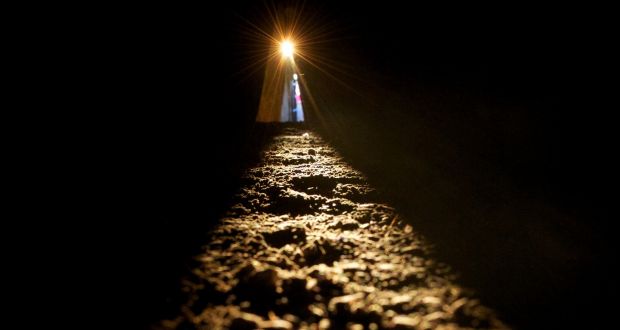
At Newgrange, in Ireland, before Stonehenge or The Pyramids, the Ancients built a stone vault in honour of the return of the light.

In this vault, at exactly 8.58am each December 21st, the light penetrates to the furthest reaches where the souls of the dead abide.

The light comes once more to the dead.

Heaven and Earth are joined once again.

In the bleak midwinter the cosmic promise is fulfilled.

The sun shines along the passage floor into the inner chamber at newgrange during the 2013 Winter Solstice at Newgrange. Photograph: Alan Betson


‘First light like share-shine in a furrow

 Steadily deeper, farther available,

Creeping along the floor of the passage grave

To backstone and capstone, to hold its candle

Inside the cosmic hill. Who dares say ‘love’

At this cold coming? Who would dare not say it?’ (Seamus Heaney)

Though the frosty wind makes moan and earth stands hard as iron and though the snow falls snow on snow on snow there is an end to the bleak midwinter.

The light returns.

Hope returns.

Shawn Colvin with a tender version of Christina Rossetti’s great Christmas Carol.

Shawn lets the Mystery Be.

Now, Bert Jansch, has always been able to let the Mystery Be.

His plays the guitar in quest of the mysteries we all feel as we look up at those celestial lamps.

His genius is to conjure from six strings ancient knowings that cannot be expressed in words.

Surely among the tribe at Newgrange there were musicians and singers waiting, with bated breath, for that redemptive first light at all those years ago.

If they were able to hear Bert play now they would recognise, at once, a Brother.

The Alphabet Series continues on 13/15/17/19 and 21 December.

Don’t miss One!


Christmas Alphabet : H for Emmylou Harris & Francoise Hardy

Christmas is a time when memories cascade – especially for those of us steeped in age.

Christmas, if we surrender to its spell, opens the door for the Child within to breathe again.

Music, in the form of songs we learned in our youth, when we had no sense we were learning them, invites us to be once more, once more, the wide eyed Child of days long past as counted by the turning of the Calendar’s pages.

So, let’s call upon a Jukebox favourite, Emmylou Harris, to stir that Sense of Wonder once again.

Come they told me
Pa rum pum pum pum

Our finest gifts we bring
Pa rum pum pum pum

Shall I play for you
Pa rum pum pum pum
On my drum

Oh, play it please.

Play it please, Emmylou.


Now, when I was a teenager, I became, in the way that a certain sort of teenager does, a deep dyed Francophile.

If you had asked me why I would have said, with proper teenage pomposity, it was naturellement, because of the visionary poetry of Rimbaud, the kaleidoscopic brilliance of the mind of Blaise Pascal and the mystical beauty of the films of Robert Bresson.

I would have said less about the allure of the Disque Bleu Cigarette Packet and the taste of Pastis 51.

But to tell the truth, the heart of my devotion to French Culture was to be found in my prized collection of records by the Yé-yé girls of the 1960s – France Gall, Sylvie Vartan and above all, far above all, the divine Francoise Hardy!

I could definitely hear her calling me across La Manche.

And, when she sang, in her uniquely seductive plangent tones, about the falling snow and the north wind blowing, the cool of the evening sky and the falling star, I had my own Christmas Anthem, whether anyone else recognised it as a Christmas Song or not!

It may be, after the two selections above, that some Jukebox Readers, will think the criteria for an appearance on The Alphabet Series is having a melancholy voice combined with being extremely photogenic.

Long time Readers will know that my taste is somewhat broader than that!

And, to prove it, here’s the wonderful Stanley Holloway, with one of his inimitably great recitations – masterpieces of comic character and timing.

Embed from Getty Images

At the same time as I was assiduously practicing the Yé-Yé Twist I was learning by heart party pieces like, ‘The Lion and Albert’, ‘Sam, Sam, Pick oop thy Musket’, ‘One Each Apiece All Round’ and ‘It’ll All be the Same (A Hundred Years from Now).

Of course, when Christmas rolled around, with a hat cocked on the side of my head and fortified by some fine fortified wine, I would launch, unstoppably into, ‘Sam’s Christmas Pudding’ in homage to the great Stanley.

I might well do it again this year!

Come on! Join In!

It was Christmas Day in the trenches
In Spain in Penninsular War,
And Sam Small were cleaning his musket
A thing as he’d ne’re done before …


Now, weren’t that reet grand, Reet Grand.

The Alphabet Series will continue on 9/11/13/15/17/19 and 21 December.

Underline those dates in your Calendars!

Onward.

Christmas Alphabet 2018 C for : John Cale & Chet Baker

Who knows where the time goes?

A couple of blinks since the start of another year and suddenly, shockingly, it’s Christmas Time again.

That distant train in the distance is now gliding into the station – ready to go!

And, for The immortal Jukebox, where Tradition is prized, another celebration of the Season in song.

So, without further ado, let’s start another Christmas Alphabet with a Welsh Wizard and one of the most intriguing figures in popular culture – Mr John Cale.

John Cale was, of course, a founder member of The Velvet Underground which alone would ensure him an honoured place in History.

But, the fearless avant garde seeker, the manic viola player, was, is, also the singer in the Chapel Choir, the organist lifting the old hymns to the celestial rafters.

The devotee of William Burroughs and John Cage was also steeped in lyrical Welsh Poetry.

John Cale knows the power of mystery expressed in rhythm, rhyme and ritual cadence (perhaps intuited from hearing the stories in the great Welsh treasury of Mythology and Romance, The Mabinogion).

‘A Child’s Christmas In Wales’ is a signature Cale song from his 1973 masterpiece record, ‘Paris 1919’.


Now, a Christmas we can all recognise is in there :

‘With mistletoe and candle green’

‘The cattle graze bold uprightly’

‘The hallelujah crowds’

‘The prayers of all combined’

‘Good neighbours were we all’.

But, this is John Cale!

So, we also have the ten murdered oranges, the references to Sebastopol and Columbus and the long legged bait.

There’s a fevered dream here as well as nostalgic memory.

The child, the adult and the dreaming psyche containing both, uniting to produce glowing beauty.

Continuing the theme of glowing loveliness and dream let’s invite the seductive Horn of Chet Baker to still our hearts and set us all waltzing towards Christmas.

Did ye get healed?

Chet’s Trumpet is joined here by Wolfgang Lackerschmid on Vibes, Nicola Stilo on Guitar and Flugelhorn, Gunter Lenz and Rocky Knauer on Bass, Peri Des Santos on Guitar and Edir Des Santos on Drums.

The Alphabet Series will continue on 7/9/11/13/15/17/19 and 21 December.

Underline those dates in your Calendars!

As a special gift for this initial offering here’s a standout solo Live version of, ‘A Child’s Christmas In Wales’ to fortify us all.

Onward!


The Band : It Makes No Difference

The Heart, like the Mind, has cliffs of fall.

Any one of us can find ourselves tumbling head over heels down those sheer cliffs.

Prostrate at the foot of those cliffs; bleeding, broken, the Heart yet beats on.

Beats on.

Though the dawn no longer beings a sliver of hope still less the promise of joy the Heart beats on.

Night or Day, though the shadows never fade away – the Heart beats on.

The Sun, former friend, don’t shine anymore and the rains, the rains!

They fall and fall on your sodden door as the Heart beats on.

Oh, it makes no difference how far you go.

The Heart beats on.

It makes no difference who you meet.

They’re just a face in the crowd on a Dead End Street.

The Street where you live.

Without that love what are you?

Footsteps in an empty hall.

A scarred Heart still beating on though the battle is lost.

Lost.

Who can sing your broken heart’s Song?

Who can match in their musicianship and the harmony of their voices the depth of your loss?


Embed from Getty Images

Four Canadians and one American, veterans of the roadhouses and Honkytonks, the white heat of Bob Dylan’s 1966 Tour and the restorative retreat of Big Pink.

Never a band better named – The Band.

They all played a plethora of instruments with loving skill and three of them sang with haunting grace.

Levon Helm – the Life Force.

The one with the leery vocals and the drummer beating out the animating rhythms.

Robbie Robertson – the Hot Shot.

The one with the gift of writing haunting songs and the guitarist who knew what you leave out is as important as what you put in.

Richard Manuel – The Holy Ghost.

The one who played the piano with gleeful brilliance and whose voice sounded like it had knowledge of those lands beyond the Styx.

Garth Hudson – The Professor.

The one who could play any instrument you put in front of him and who could conjure soundscapes from them (especially from the Lowery Organ) that no one else could begin to imagine.

Rick Danko – The Heart.

The one who played the bass like his life depended upon it and who sang with a keening country soul that could make you feel that he was saving your life and his with every word.


Embed from Getty Images

And, when they had a great song to live up to they lived up to it.

A song for those who are hurt and scarred and whose hearts yet beat on.


The original version comes from The Band’s 1975 Album, ‘Northern Lights – Southern Cross’ a record that was shot through with autumnal elegiac solace.

Robbie said that the song was written specifically for Rick to sing and that as they rehearsed it the levels of emotion he brought forth demanded they all plumbed the depths of their musical instincts and empathy to match the magnificence of his vocal.

There is pain and loneliness in Rick’s voice but there is also a passionate determination for that battered heart to beat on.

Though he is aflame with torment he has not surrendered to final despair.

For despair is silent.

The supporting anguished harmony vocals of Levon Helm and Richard Manuel along with the fellow pilgrim guitar of Robbie Robertson and the soul cry of Garth Hudson’s final saxophone together with Rick’s peerless vocal make the Song a luminous triumph.

On Thanksgiving Day in 1976 The Band gave a, ‘Farewell’ Performance at The Winterland in San Francisco to which they invited famous friends like Bob Dylan, Joni Mitchell, Neil Young and Eric Clapton.

The concert demonstrated their ability to be brilliantly sympathetic accompanists switching styles with seamless ease.

Amongst many stellar moments there are two transcendent performances.

First, Van Morrison and The Band taking, Caravan’ right into the very heart of The mystic.

Second, a grand, stately, version of, ‘It Makes No Difference’ that rattles the walls of every Heart that hears it.

Rick’s vocal has the quality of an abandoned penitent refusing to believe, despite the rains falling all around him, that there is no hope left in Prayer.

Garth Hudson’s saxophone is a lambent lament fully equal to the line :

‘I Love you so much that It’s all I can do just to keep myself from telling you’.


In the years after The Last Waltz while Robbie went all Hollywood Levon, Richard, Garth and Rick initially struggled to find their way.

It was in live performance that they found themselves again.

While they would never fill the stadiums anymore those who saw them were privileged to be in the presence of a group of musicians of surpassing craft who could yet cut to Heart’s core.

Below, a performance from 1983 in Japan.

The intensity of Rick’s vocal and the interplay with the wraithlike Richard Manuel sears the soul.

If you have tears ….


Rick Danko died, worn out by life on the road and the ravages of drugs and alcohol in December 1999.

He was 55 years old.

When a musician takes to the stage he stands in the spotlight surrounded by pools of darkness.

It takes a truly great musician, in the way he plays and the way he sings, to respect in performance, and present to the audience the truth of both the darkness and the light and do so with a full heart.

Rick Danko was such a musician.

His performances, with his Brothers in The Band, especially of ‘It Makes No Difference’ will always flame, night and day, year after year, as long as there are human hearts that though broken stubbornly beat on.

Beat on.


John Lee Hooker, George Thorogood, Amos Milburn : One Scotch, One Bourbon, One Beer

These days my alcohol take is very modest.

On celebratory occasions (my birthday, the birth of my Granddaughter) a decent measure of Malt Whiskey (no water, no ice).

Nothing to touch the Lagavulin 16 Year Old.

When Ireland recently magnificently beat The All Blacks at Rugby only a healthy slug of Bourbon seemed appropriate.

Given this was only the second victory over them in 111 years I felt justified in removing the racehorse stopper from my prized bottle of Blanton’s Original Single Barrel Kentucky Straight.


Blantons

There’s also my tradition of sipping a fine Pale Ale immediately I hit the WordPress Publish Button and launch a new Immortal Jukebox Post towards the waiting World!

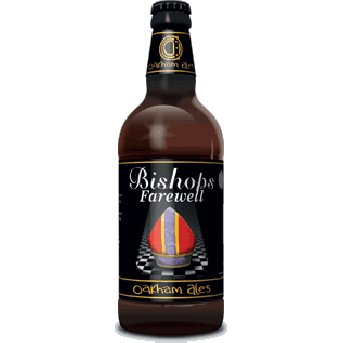
Image result for bishops farewell beer images

Bishop’s Farewell always hits the spot as I wait for the Likes and Comments to flow in.

So, if you ask me what I drink these days I answer – not much but when I do : One Scotch, One Bourbon, One Beer.

One Scotch, One Bourbon, One Beer.

Now, back in the days when I was to be found at my favourite Honkytonks three or four times a week it was often the case that as I approached the bar its custodian would say, ‘A Rudy T as usual Thom?’

Image result for rudy toombs images

and I would sing out, ‘Of course, One Scotch, One Bourbon, One Beer’.

One Scotch, One Bourbon, One Beer in honour of Rudy Toombs who wrote the greatest drinking song of all time.

I don’t want no soda nor bubble gum.

You got what I want just serve me some.

One Scotch, One Bourbon, One Beer.


Now didn’t that go down smoothly!

Amos Milburn, of course, a master of the relaxed groove at the piano and a singer who invites you to lean in and listen to a story you’re gonna want to retell more than a time or two – especially when you’ve had a drink or three.

‘Please Mister Bartender, listen here … I ain’t here for trouble so have no fear.’

Embed from Getty Images

This high proof beauty came out as a 78 in August 1953 and was credited to Amos and His Aladdin Chickenshackers (must get that T Shirt made up for Christmas!).

The name of the backing band was, of course, a nod to Amos’ immortal Number One Record, ‘Chicken Shack Boogie’ from 1948.

That, ‘I ain’t drunk, I’m just real loose, real loose’ guitar comes via the magic fingers of Mickey Baker.

The public took shot after shot taking the record to Number 2 in the R&B Charts during a 14 week residency on the listings.

If you want another nip of this song, as you surely do, I think we should up the proof level considerably and make it strong, real strong.

And, as we all can surely agree, when it comes to Electric Blues no one, no one, packs more punch than The Solid Sender – Mr John Lee Hooker!

Embed from Getty Images

John Lee is your go to guy if you want to be sure to get high, be sure to get mellow, be sure to find yourself feelin’ good, be sure to emphatically, absolutely, categorically Knocked Out!

On his high octane take John Lee benefits from the support of Lafayette Leake on the rippling piano, Fred Below on the pounding drums and Eddie Burns on the slashing guitar.

John Lee gives the song drive and spirit with his patented combination of voice, guitar and foot.

John Lee bent every song he ever played to his own will and the unique metre and tempo of his profound musical imagination.

He had a personal and musical presence that was genuinely awesome.

No use in trying to play like John Lee – you had to BE John Lee to play that way.

When it comes to shaking the floor and rattling the walls John Lee reigns supreme.

Supreme.


I only got to see John Lee four or five times and I treasure the memory of every one.

But, this next take comes from someone who I’ve seen on at least a score of stages, the unforgettable, irrepressible, unstoppable, Delaware Destroyer, George Thorogood.

You’re gonna need to drink a fair few pints when you go to see George just to replace the sweat you’ll exude as he puts the pedal to the metal.

George just loves The Blues and he brings every ounce of energy at his command to bringing his beloved music to life night after night all over the world.

This is a man who did 50 gigs in 50 States in 50 days and never missed a beat!

He’s on a kick and he sure as hell ain’t ever gonna get off until they screw down the casket.

Maybe your baby’s gone and it seems everything is lost.

They been out all night.

Never came back at the break of day.

What can you do?

What can you do?

Well, I don’t like to give advice to the love-lorn but if ol’ George was in town I’d down One Scotch, One Bourbon, One Beer and station myself right in front of the stage and let the music work its magic.


That Jersey audience struck lucky to see George on such fine form with the added bonus of a special appearance by none other than Elvin Bishop.

Wow, that’s some twin carburetor guitar power!

As I said at the outset I don’t really drink now like I did in the old days.

But, I have to admit, blasting Amos, John Lee and George out time after time as I wrote this Post made me work up one hell of a thirst.

Nothing for it but to line up The Lagavulin, The Blanton’s and The Bishop’s and join the party.

One Scotch, One Bourbon, One Beer.

Slainte!


Notes :

Rudy Toombs – was a Louisiana native who became one the most able and prolific songwriters of the 1950s.

His songbook includes such classics as:

‘Teardrops from My Eyes’. ‘One Mint Julep’, ‘5-10-15 Hours’, ‘I’m Shakin” and, ‘Lonesome Whistle Blues’.

Amos Milburn – from Houston made a magnificent series of records for the Aladdin Label in the 40s and 50s.

My favourite tracks include – ‘ Down the Road a Piece’, ‘Rooming House Boogie’, ‘Let’s Make Christmas Merry, Baby’ and’Bad, Bad, Whiskey’.

Being the completest I am I have the Mosaic Label Box Set but there are many fine compilations of Amos available for those who want only the hits.

In Remembrance : June Tabor – The Band Played Waltzing Matilda

In 1914 they came from the hamlets and the villages and the towns and the cities.

They came from the hills and the mountains and the valleys.

Farmers and miners.

Teachers and doctors.

White, Brown and Black.

They  marched away from Home with smiles on their faces.

They knew they would be Home again soon.

Today it is exactly 100 years since the guns fell silent ending World War One.

The emotional, spiritual, pyschic and cultural cost of such a war is beyond all human calculation.

A cataclysm shattering hearts and minds.

Shattering philosophies and faiths.

Shattering nations and societies.

Shattering hopes and dreams.

Shattering comfortable certainties..

The toll in terms of deaths and casualties we can, in awe, to some extent number.

From Australia : Lieutenant Joseph Balfe from Brunswick aged 25 and more than 62, 000 of his comrades.

From Canada : Private Percy Bark aged 18 and more than 64,000 of his comrades.

From India : Zaman Khan and more than 73,000 of his comrades.

From New Zealand : Private William Dunbar aged 29 and more than 18,000 of his comrades.

From South Africa : Overton Mason aged 38 and more than 9,000 of his comrades.

From Belgium : Guillaume Lemmens aged 21 and more than 58,000 of his comrades.

From The United Kingdom : George Ellison and more than 880,000 of his comrades.

From France : Robert Laval aged 21 and more than 1,397,000 of his comrades.

From Italy : Elio Battista and more than 650,000 of his comrades.

From Ireland : Tom Kettle aged 36 and more than 15,000 of his comrades.

From Greece more than 25,000 comrades fell.

From Japan more than 4,500 comrades fell.

From Montenegro more than 13,000 comrades fell.

From Portugal more than 7,000  comrades fell.

From Russia more than 2 Million comrades fell.

From Romania more than 330,000 comrades fell.

From Serbia more than 400,000 comrades fell.

From The United States more than 115,000 comrades fell.

From Austria – Hungary more than 1,400,000 comrades fell.

From Bulgaria more than 85,000 comrades fell.

From Germany more than 2 Million comrades fell.

From The Ottoman Empire more than 700,000 comrades fell.

And what was it for?

And what was it for?

Rain, midnight rain, nothing but the wild rain
On this bleak hut, and solitude, and me
Remembering again that I shall die
And neither hear the rain nor give it thanks
For washing me cleaner than I have been
Since I was born into solitude.
Blessed are the dead that the rain rains upon:
But here I pray that none whom once I loved
Is dying tonight or lying still awake
Solitary, listening to the rain,
Either in pain or thus in sympathy
Helpless among the living and the dead,
Like a cold water among broken reeds,
Myriads of broken reeds all still and stiff,
Like me who have no love which this wild rain
Has not dissolved except the love of death,
If love it be towards what is perfect and
Cannot, the tempest tells me, disappoint. (Edward Thomas)


And then at 11am on November 11 1918  it was over.


Over as far as any war can be for those who survived returning forever scarred in body and mind.

Over as far as can be for those who endured years in prisoner of War camps.

Over as far as can be for the Mothers and Fathers who lost their Sons.

Over as far as can be for the girls who lost their first love.

Over as far as can be for the fiancés who never married the man whose ring they wore.

Over as far as can be for the widows who lived on mourning the vanished husband.

Over as far as can be for the sons and daughters trying to persuade themselves they remember their father – the soldier in the photo on the mantelpiece.

Over as far as it can be for old soldiers years later suddenly remembering the comrade who died in the last hours of that last day.


Remember these Dead.

Remember them.

Remember them.


Remember these dead.

Remember them.

Remember them.